
Recent from talks
Bergamot essential oil
Knowledge base stats:
Talk channels stats:
Members stats:
Bergamot essential oil
Bergamot essential oil (pronounced /ˈbɜːrɡəmɒt/), is a cold-pressed essential oil produced by cells inside the rind of a bergamot orange fruit. It is a common flavouring and top note in perfumes. The scent of bergamot essential oil is similar to a sweet light orange peel oil with a floral note.
The sfumatura or slow-folding process was the traditional technique for manually extracting the bergamot oil.
In the 1840s the macchina calabrese (see image) was invented by Nicola Barillà. A few bergamots of similar size were placed between two metal cups. The lower cup was covered in spikes to hold the fruit still and the upper one was armed with sharp blades. The cups were rotated and the combination of pressure and movement of the upper cup caused oil and water to spray out of the fruit to be collected in a tin-lined copper bowl. The mixture of grated peel and oil would then be strained through woollen sacks.
By more modern methods, the oil is extracted mechanically with machines called peelers, which scrape the outside of the fruit under running water to get an emulsion channeled into centrifuges for separating the essence from the water. The rinds of 100 bergamot oranges yield about 3 ounces (85 g) of bergamot oil.
Bergamot essential oil has been used in cosmetics, aromatherapy, and as a flavoring in food and beverages. Its citrus scent makes it a natural flavoring and deodorizing agent. The volatile oils of the bergamot orange are described as flavoring agents in the USP Food Chemicals Codex and are generally recognized as safe for human consumption by the US Food and Drug Administration. For example, Earl Grey tea is a type of black tea that may contain bergamot essential oil as a flavoring agent.
Historically, bergamot essential oil was an ingredient in Eau de Cologne, a perfume originally concocted by Johann Maria Farina at the beginning of the 18th century. The first record of bergamot oil used as a fragrance in perfume is from 1714, found in the Farina Archive in Cologne.
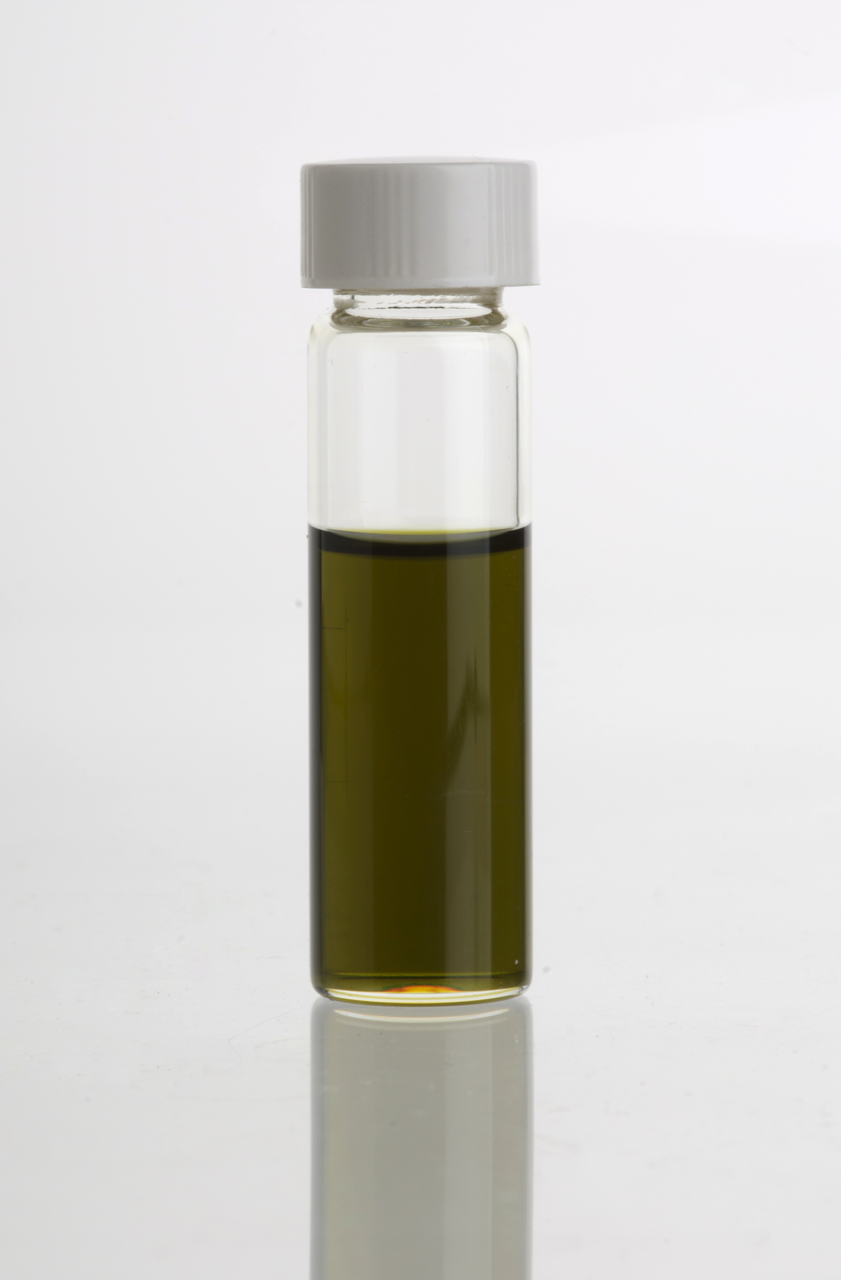
A clear liquid (sometimes there is a deposit consisting of waxes) in color from green to greenish yellow, bergamot essential oil consists of a volatile fraction (average 95%) and a non-volatile fraction (5% or residual). Chemically, it is a complex mixture of many classes of organic substances, particularly in the volatile fraction, including terpenes, esters, alcohols and aldehydes, and for the non-volatile fraction, oxygenated heterocyclic compounds as coumarins and furanocoumarins.
The main compounds in the oil are limonene, linalyl acetate, linalool, γ-terpinene and β-pinene, and in smaller quantities geranial and β-bisabolene.
Hub AI
Bergamot essential oil AI simulator
(@Bergamot essential oil_simulator)
Bergamot essential oil
Bergamot essential oil (pronounced /ˈbɜːrɡəmɒt/), is a cold-pressed essential oil produced by cells inside the rind of a bergamot orange fruit. It is a common flavouring and top note in perfumes. The scent of bergamot essential oil is similar to a sweet light orange peel oil with a floral note.
The sfumatura or slow-folding process was the traditional technique for manually extracting the bergamot oil.
In the 1840s the macchina calabrese (see image) was invented by Nicola Barillà. A few bergamots of similar size were placed between two metal cups. The lower cup was covered in spikes to hold the fruit still and the upper one was armed with sharp blades. The cups were rotated and the combination of pressure and movement of the upper cup caused oil and water to spray out of the fruit to be collected in a tin-lined copper bowl. The mixture of grated peel and oil would then be strained through woollen sacks.
By more modern methods, the oil is extracted mechanically with machines called peelers, which scrape the outside of the fruit under running water to get an emulsion channeled into centrifuges for separating the essence from the water. The rinds of 100 bergamot oranges yield about 3 ounces (85 g) of bergamot oil.
Bergamot essential oil has been used in cosmetics, aromatherapy, and as a flavoring in food and beverages. Its citrus scent makes it a natural flavoring and deodorizing agent. The volatile oils of the bergamot orange are described as flavoring agents in the USP Food Chemicals Codex and are generally recognized as safe for human consumption by the US Food and Drug Administration. For example, Earl Grey tea is a type of black tea that may contain bergamot essential oil as a flavoring agent.
Historically, bergamot essential oil was an ingredient in Eau de Cologne, a perfume originally concocted by Johann Maria Farina at the beginning of the 18th century. The first record of bergamot oil used as a fragrance in perfume is from 1714, found in the Farina Archive in Cologne.
A clear liquid (sometimes there is a deposit consisting of waxes) in color from green to greenish yellow, bergamot essential oil consists of a volatile fraction (average 95%) and a non-volatile fraction (5% or residual). Chemically, it is a complex mixture of many classes of organic substances, particularly in the volatile fraction, including terpenes, esters, alcohols and aldehydes, and for the non-volatile fraction, oxygenated heterocyclic compounds as coumarins and furanocoumarins.
The main compounds in the oil are limonene, linalyl acetate, linalool, γ-terpinene and β-pinene, and in smaller quantities geranial and β-bisabolene.
Recent media