
Recent from talks
Bernicia
Knowledge base stats:
Talk channels stats:
Members stats:
Bernicia
Bernicia (Old English: Bernice, Beornice) was an Anglo-Saxon kingdom established by Anglian settlers of the 6th century in what is now southeastern Scotland and North East England.
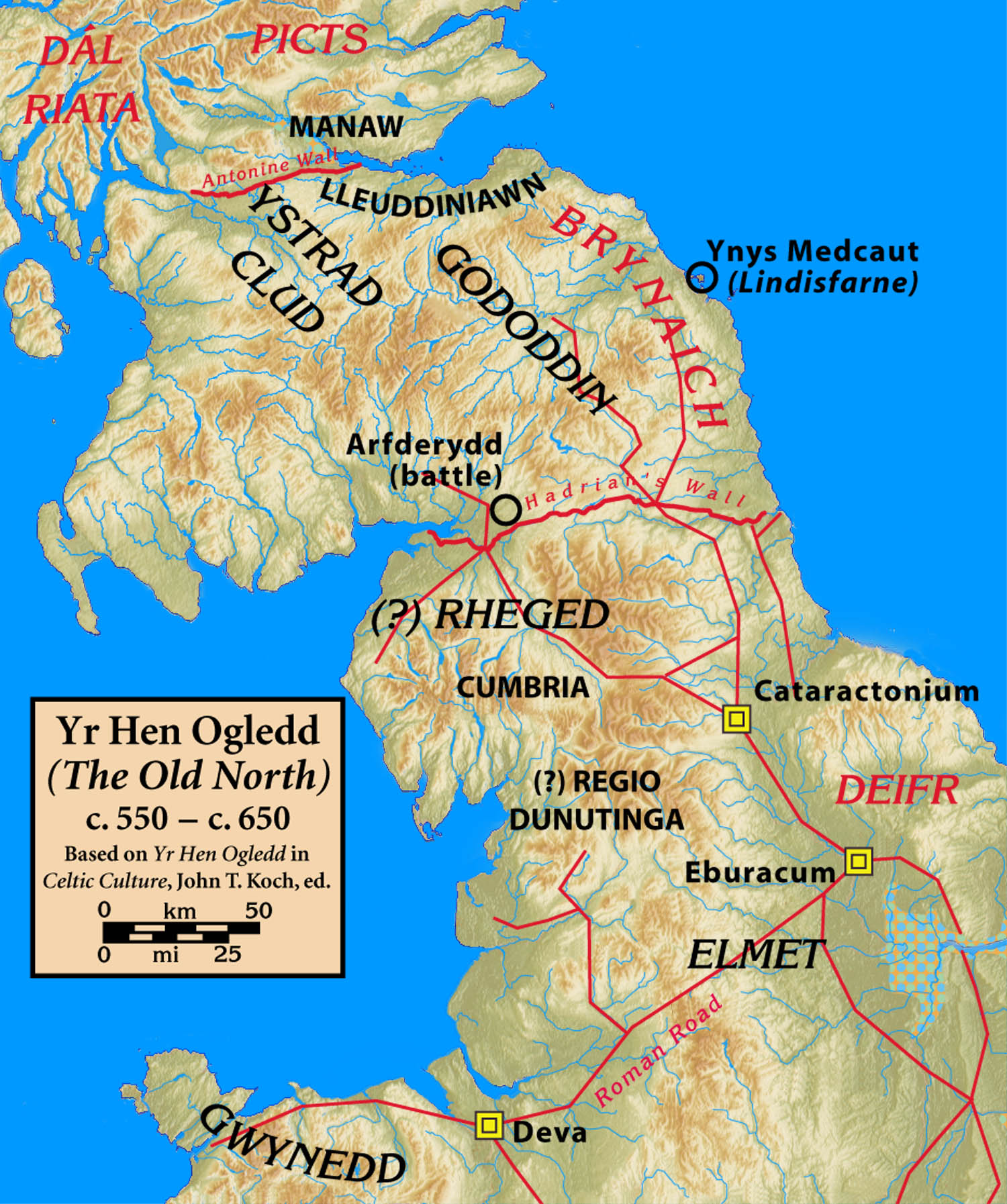
The Anglian territory of Bernicia was approximately equivalent to the modern English counties of Northumberland, Tyne and Wear, and Durham, as well as the Scottish counties of Berwickshire and East Lothian, stretching from the Forth to the Tees. In the early 7th century, it merged with its southern neighbour, Deira, to form the kingdom of Northumbria, and its borders subsequently expanded considerably.
Bernicia occurs in Old Welsh poetry as Bryneich or Byrneich and in the 9th-century Historia Brittonum, (§ 61) as Berneich, Birneich, Bernech and Birnech. Academics agree the name was originally Celtic. This name was then adopted by the Anglian settlers who rendered it in Old English as Bernice (Northumbrian dialect) or Beornice (West Saxon dialect). The counter hypothesis suggesting these names represent a Brythonic adaption of an earlier English form is considered less probable.[citation needed]
Local linguistic evidence suggests continued political activity in the area from the time of the Roman retreat from Britain and before the arrival of the Angles. Important Anglian centres in Bernicia bear names of British origin, or are known by British names elsewhere: Bamburgh is called Din Guaire in the Historia Brittonum; Dunbar (where Saint Wilfrid was once imprisoned) represents Dinbaer; and the name of Coldingham is given by Bede as Coludi urbs ("town of Colud"), where Colud seems to represent the British form, possibly for the hill-fort of St Abb's Head.
Analysis of a potential derivation has not produced a consensus. The most commonly cited etymology gives the meaning as "Land of the Mountain Passes" or "Land of the Gaps" (tentatively proposed by Kenneth H. Jackson). An earlier derivation from the tribal name of the Brigantes has been dismissed as linguistically unsound. In 1997 John T. Koch suggested the conflation of a probable primary form *Bernech with the native form *Brïγent for the old civitas Brigantum as a result of Anglian expansion in that territory during the 7th century.
The Brythonic kingdom of the area was formed from what had once been the southern lands of the Votadini, possibly as part of the division of a supposed 'great northern realm' of Coel Hen in c. AD 420. This northern realm is referred to by Welsh scholars as Yr Hen Ogledd or, literally, "The Old North". The kingdom may have been ruled from the site that later became the English Bamburgh, which certainly features in Welsh sources as Din Guardi. Near this high-status residence lay the island of Lindisfarne (formerly known, in Welsh, as Ynys Medcaut), which became the seat of the Bernician bishops. It is unknown when the Angles finally conquered the whole region, but around 604 is likely.
There are several Old Welsh pedigrees of princely "Men of the North" (Gwŷr y Gogledd) that may represent the kings of the British kingdom in the area, which may have been called Bryneich. John Morris surmised that the line of a certain Morcant Bulc referred to these monarchs, chiefly because he identified this man as the murderer of Urien Rheged who was, at the time, besieging Lindisfarne.
Some of the Angles of Bernicia (Old English: Beornice) may have been employed as mercenaries along Hadrian's Wall during the late Roman period. Others are thought to have migrated north (by sea) from Deira in the early 6th century. The first Anglian king in the historical record is Ida, who is said to have obtained the throne and the kingdom about 547. His sons spent many years fighting a united force from the surrounding Brythonic kingdoms until their alliance collapsed into civil war.
Hub AI
Bernicia AI simulator
(@Bernicia_simulator)
Bernicia
Bernicia (Old English: Bernice, Beornice) was an Anglo-Saxon kingdom established by Anglian settlers of the 6th century in what is now southeastern Scotland and North East England.
The Anglian territory of Bernicia was approximately equivalent to the modern English counties of Northumberland, Tyne and Wear, and Durham, as well as the Scottish counties of Berwickshire and East Lothian, stretching from the Forth to the Tees. In the early 7th century, it merged with its southern neighbour, Deira, to form the kingdom of Northumbria, and its borders subsequently expanded considerably.
Bernicia occurs in Old Welsh poetry as Bryneich or Byrneich and in the 9th-century Historia Brittonum, (§ 61) as Berneich, Birneich, Bernech and Birnech. Academics agree the name was originally Celtic. This name was then adopted by the Anglian settlers who rendered it in Old English as Bernice (Northumbrian dialect) or Beornice (West Saxon dialect). The counter hypothesis suggesting these names represent a Brythonic adaption of an earlier English form is considered less probable.[citation needed]
Local linguistic evidence suggests continued political activity in the area from the time of the Roman retreat from Britain and before the arrival of the Angles. Important Anglian centres in Bernicia bear names of British origin, or are known by British names elsewhere: Bamburgh is called Din Guaire in the Historia Brittonum; Dunbar (where Saint Wilfrid was once imprisoned) represents Dinbaer; and the name of Coldingham is given by Bede as Coludi urbs ("town of Colud"), where Colud seems to represent the British form, possibly for the hill-fort of St Abb's Head.
Analysis of a potential derivation has not produced a consensus. The most commonly cited etymology gives the meaning as "Land of the Mountain Passes" or "Land of the Gaps" (tentatively proposed by Kenneth H. Jackson). An earlier derivation from the tribal name of the Brigantes has been dismissed as linguistically unsound. In 1997 John T. Koch suggested the conflation of a probable primary form *Bernech with the native form *Brïγent for the old civitas Brigantum as a result of Anglian expansion in that territory during the 7th century.
The Brythonic kingdom of the area was formed from what had once been the southern lands of the Votadini, possibly as part of the division of a supposed 'great northern realm' of Coel Hen in c. AD 420. This northern realm is referred to by Welsh scholars as Yr Hen Ogledd or, literally, "The Old North". The kingdom may have been ruled from the site that later became the English Bamburgh, which certainly features in Welsh sources as Din Guardi. Near this high-status residence lay the island of Lindisfarne (formerly known, in Welsh, as Ynys Medcaut), which became the seat of the Bernician bishops. It is unknown when the Angles finally conquered the whole region, but around 604 is likely.
There are several Old Welsh pedigrees of princely "Men of the North" (Gwŷr y Gogledd) that may represent the kings of the British kingdom in the area, which may have been called Bryneich. John Morris surmised that the line of a certain Morcant Bulc referred to these monarchs, chiefly because he identified this man as the murderer of Urien Rheged who was, at the time, besieging Lindisfarne.
Some of the Angles of Bernicia (Old English: Beornice) may have been employed as mercenaries along Hadrian's Wall during the late Roman period. Others are thought to have migrated north (by sea) from Deira in the early 6th century. The first Anglian king in the historical record is Ida, who is said to have obtained the throne and the kingdom about 547. His sons spent many years fighting a united force from the surrounding Brythonic kingdoms until their alliance collapsed into civil war.
Recent media