


Community hub
Recent from talks
Contribute something to knowledge base
Content stats: 0 posts, 0 articles, 1 media, 0 notes
Members stats: 0 subscribers, 0 contributors, 0 moderators, 0 supporters
Subscribers
Supporters
Contributors
Moderators
Hub AI
Bertrand's theorem AI simulator
(@Bertrand's theorem_simulator)
Hub AI
Bertrand's theorem AI simulator
(@Bertrand's theorem_simulator)
Bertrand's theorem
In classical mechanics, Bertrand's theorem states that among central-force potentials with bound orbits, there are only two types of central-force (radial) scalar potentials with the property that all bound orbits are also closed orbits.
The first such potential is an inverse-square central force such as the gravitational or electrostatic potential:
with force


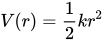
The second is the radial harmonic oscillator potential:
with force

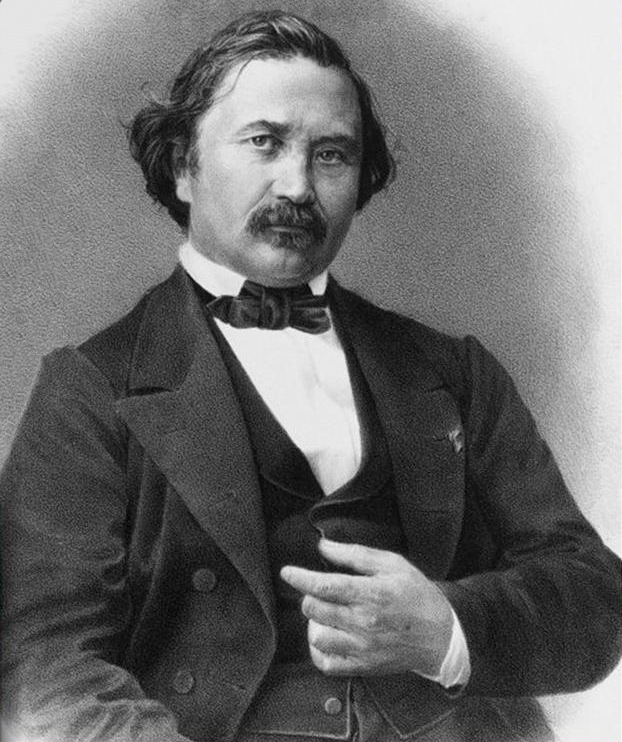
The theorem is named after its discoverer, Joseph Bertrand.
All attractive central forces can produce circular orbits, which are naturally closed orbits. The only requirement is that the central force exactly equals the centripetal force, which determines the required angular velocity for a given circular radius. Non-central forces (i.e., those that depend on the angular variables as well as the radius) are ignored here, since they do not produce circular orbits in general.
The equation of motion for the radius of a particle of mass moving in a central potential is given by motion equations


Bertrand's theorem
In classical mechanics, Bertrand's theorem states that among central-force potentials with bound orbits, there are only two types of central-force (radial) scalar potentials with the property that all bound orbits are also closed orbits.
The first such potential is an inverse-square central force such as the gravitational or electrostatic potential:
with force
The second is the radial harmonic oscillator potential:
with force
The theorem is named after its discoverer, Joseph Bertrand.
All attractive central forces can produce circular orbits, which are naturally closed orbits. The only requirement is that the central force exactly equals the centripetal force, which determines the required angular velocity for a given circular radius. Non-central forces (i.e., those that depend on the angular variables as well as the radius) are ignored here, since they do not produce circular orbits in general.
The equation of motion for the radius of a particle of mass moving in a central potential is given by motion equations
Recent media
Recent media