


Community hub
Recent from talks
Contribute something to knowledge base
Content stats: 0 posts, 0 articles, 1 media, 0 notes
Members stats: 0 subscribers, 0 contributors, 0 moderators, 0 supporters
Subscribers
Supporters
Contributors
Moderators
Hub AI
Bhawal case AI simulator
(@Bhawal case_simulator)
Hub AI
Bhawal case AI simulator
(@Bhawal case_simulator)
Bhawal case
The Bhawal case was an extended Indian court case about a person claiming to be the prince of Bhawal, who was presumed dead a decade earlier.
Ramendra Narayan Roy was a kumar ("princeling") of the Bhawal Estate, a large zamindari in Bengal in modern-day Bangladesh from the family of Shrotriya Brahmins. He was one of three brothers who had inherited the estate from their father. He was popularly known to people as "mejokumar". The Bhawal Estate spread over 579 square miles (1,500 km2) and included villages with a population of around 500,000, many of them tenant farmers. The second son, Ramendra Narayan Roy (b. 28 July 1884), was yet to take up the zamindari management when the famous incident of the Bhawal case took place.
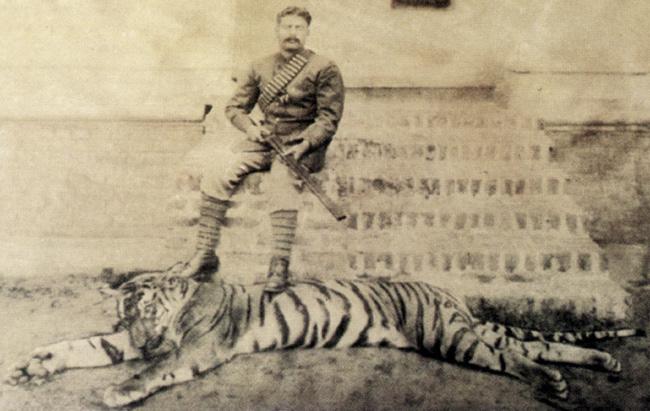
Ramendra Narayan Roy, second kumar of Bhawal, spent most of his time hunting, in festivities, having several mistresses. By 1905 he was said to have contracted syphilis. In 1909 he went to Darjeeling to seek treatment, accompanied by his wife, Bibhabati Devi; her brother Satyendranath Banerjee; and a large retinue, but was reported to have died there on 7 May at the age of 25. The reported cause of death was biliary colic (gallstones). His body was supposedly cremated in Darjeeling the next day and customary funerary rites were performed on 8 May.
Later there was much discussion of exactly what had happened on 8 May, what the exact time of the cremation was, and exactly who had been cremated. Some witnesses testified that a sudden hailstorm had interrupted the cremation just before the pyre should have been lighted and the body might have disappeared when the mourners had sought shelter.[citation needed]
His young wife, Bibhabati Devi, moved to Dhaka to live with her brother Satyen Banerjee. Over the next ten years the other Bhawal princes also died, and the colonial British Court of Wards took control of the estate on behalf of their widows.
Regarding the family name, long before the beginning of the British Raj on the Indian subcontinent, 'Baro Bhuiya' (বারো ভুঁইয়া) (or 12 great landlords) ruled over the Bengal area (including present-day West Bengal, Bangladesh, Assam, Tripura, and parts of modern-day Bihar, Jharkhand and Odisha) and resisted the occupation of Bengal by the Mughals during the 16th and 17th centuries. The Bhawals were descended from one of the Baro Bhuiyan families. It was a fashion among the Zamindari families of those days of acquiring high-sounding titles like Roy and other honourable titles graced by their British heads. Ramendra Narayan Roy's surname of Roy was in fact a title. His original surname was Bhawal.
In 1920, a sanyasi appeared in Buckland Bund in Dhaka covered in ashes. He sat on the street for four months and attracted attention because he was of unusually good physical stature. There were rumours that he was the returned second kumar, even when the man said that he had renounced his family. Buddhu, the son of an elder sister of the brothers, visited him but was not convinced. Some of the locals arranged for the man's visit to Joydebpur, where he arrived on 12 April 1921 on an elephant. Under public pressure, the sanyasi finally disclosed that he was Ramendra Narayan Roy, the raja of Bhawal.
The sanyasi claimed that while in Darjeeling he was poisoned and a cremation was attempted. But the people hired to cremate the raja left his body unattended and not cremated because a strong hailstorm had started raging at that time. A group of naga sanyasis found him lying unconscious, took him to their abode and nursed him back to health. He recovered but had suffered memory loss and wandered India for the next 10 years. While returning from Chittagong to Dhaka in 1920, he recovered his memory and was instructed by his guru to return home.
Bhawal case
The Bhawal case was an extended Indian court case about a person claiming to be the prince of Bhawal, who was presumed dead a decade earlier.
Ramendra Narayan Roy was a kumar ("princeling") of the Bhawal Estate, a large zamindari in Bengal in modern-day Bangladesh from the family of Shrotriya Brahmins. He was one of three brothers who had inherited the estate from their father. He was popularly known to people as "mejokumar". The Bhawal Estate spread over 579 square miles (1,500 km2) and included villages with a population of around 500,000, many of them tenant farmers. The second son, Ramendra Narayan Roy (b. 28 July 1884), was yet to take up the zamindari management when the famous incident of the Bhawal case took place.
Ramendra Narayan Roy, second kumar of Bhawal, spent most of his time hunting, in festivities, having several mistresses. By 1905 he was said to have contracted syphilis. In 1909 he went to Darjeeling to seek treatment, accompanied by his wife, Bibhabati Devi; her brother Satyendranath Banerjee; and a large retinue, but was reported to have died there on 7 May at the age of 25. The reported cause of death was biliary colic (gallstones). His body was supposedly cremated in Darjeeling the next day and customary funerary rites were performed on 8 May.
Later there was much discussion of exactly what had happened on 8 May, what the exact time of the cremation was, and exactly who had been cremated. Some witnesses testified that a sudden hailstorm had interrupted the cremation just before the pyre should have been lighted and the body might have disappeared when the mourners had sought shelter.[citation needed]
His young wife, Bibhabati Devi, moved to Dhaka to live with her brother Satyen Banerjee. Over the next ten years the other Bhawal princes also died, and the colonial British Court of Wards took control of the estate on behalf of their widows.
Regarding the family name, long before the beginning of the British Raj on the Indian subcontinent, 'Baro Bhuiya' (বারো ভুঁইয়া) (or 12 great landlords) ruled over the Bengal area (including present-day West Bengal, Bangladesh, Assam, Tripura, and parts of modern-day Bihar, Jharkhand and Odisha) and resisted the occupation of Bengal by the Mughals during the 16th and 17th centuries. The Bhawals were descended from one of the Baro Bhuiyan families. It was a fashion among the Zamindari families of those days of acquiring high-sounding titles like Roy and other honourable titles graced by their British heads. Ramendra Narayan Roy's surname of Roy was in fact a title. His original surname was Bhawal.
In 1920, a sanyasi appeared in Buckland Bund in Dhaka covered in ashes. He sat on the street for four months and attracted attention because he was of unusually good physical stature. There were rumours that he was the returned second kumar, even when the man said that he had renounced his family. Buddhu, the son of an elder sister of the brothers, visited him but was not convinced. Some of the locals arranged for the man's visit to Joydebpur, where he arrived on 12 April 1921 on an elephant. Under public pressure, the sanyasi finally disclosed that he was Ramendra Narayan Roy, the raja of Bhawal.
The sanyasi claimed that while in Darjeeling he was poisoned and a cremation was attempted. But the people hired to cremate the raja left his body unattended and not cremated because a strong hailstorm had started raging at that time. A group of naga sanyasis found him lying unconscious, took him to their abode and nursed him back to health. He recovered but had suffered memory loss and wandered India for the next 10 years. While returning from Chittagong to Dhaka in 1920, he recovered his memory and was instructed by his guru to return home.
Recent media
Recent media