



Community hub
Recent from talks
Knowledge base stats:
Talk channels stats:
Members stats:
Bhishma
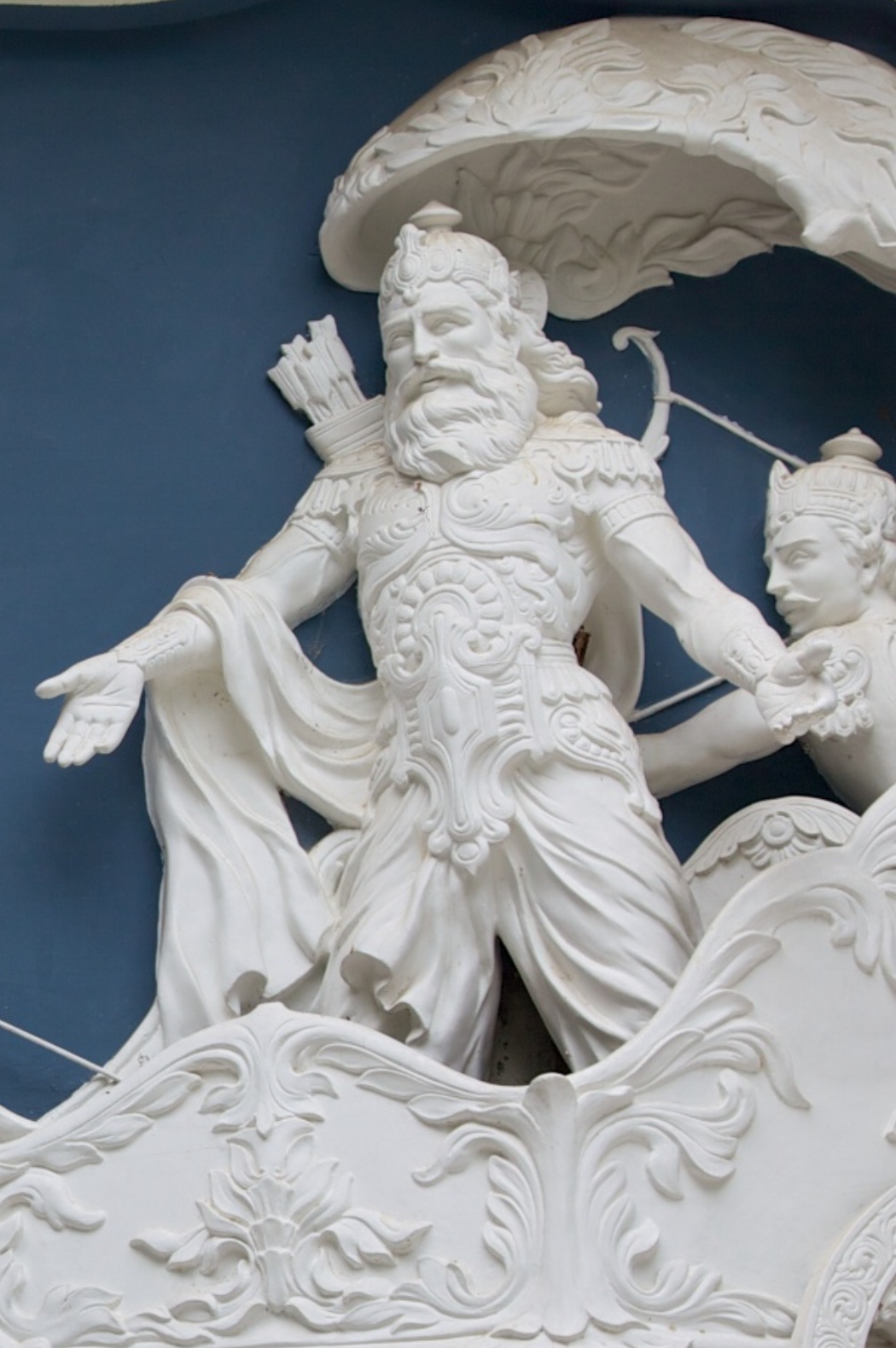
Bhishma (Sanskrit: भीष्म, romanized: Bhīṣma), also known as Pitāmaha, Gangāputra, and Devavrata, is a central figure in the Hindu epic Mahabharata. He was a statesman and military commander of the ancient Kuru kingdom. Renowned for his wisdom, valor, skill in battle and unwavering principles, Bhishma served as the supreme commander of the Kaurava forces during the first ten days of the Kurukshetra War until his fall.
Born to King Shantanu and the river goddess Ganga, he was originally named Devavrata. He was designated the heir-apparent to the throne. However, he renounced his claim and took a vow of lifelong celibacy to facilitate his father's marriage to Satyavati. This sacrifice earned him the title Bhishma, meaning "the one who undertakes a severe vow," and he was blessed with Ichcha Mrityu—the boon of choosing his time of death.
Bhishma's life after his vow was marked by unwavering loyalty to the Kuru dynasty. He served as the chief advisor and regent to successive rulers of Hastinapura, including his stepbrothers Chitrangada and Vichitravirya, as well as their successors—Pandu and Dhritarashtra. During this period, he came into confrontation with his teacher in warfare, Parashurama, for abducting Amba—a princess he had taken for Vichitravirya’s marriage. Under Bhishma's guidance, the kingdom navigated complex political and familial challenges. He also played a pivotal role in arranging the marriages of Pandu and Dhritarashtra as well as in the upbringing of their children—the five Pandava brothers led by Yudhishthira, and the hundred Kauravas led by Duryodhana. Bhishma also mediated numerous conflicts within the royal family, including the division of the Kuru kingdom between Duryodhana and Yudhishthira. Despite his personal allegiance to dharma, Bhishma's loyalty to the throne bound him to side with the Kauravas during the Kurukshetra War.
In battle, Bhishma was unmatched in skill and strategy, holding off the Pandava forces for ten days. On the tenth day, however, the Pandava prince Arjuna, aided by Shikhandi (reincarnation of Amba), incapacitated him with a volley of arrows, leaving him lying on a bed of arrows. Bhishma spent fifty-one days in this state, offering counsel to the Pandavas and Kauravas alike. Before his death, timed to the auspicious Uttarayana (winter solstice), he imparted the Vishnu Sahasranama to Yudhishthira and shared his vast knowledge on governance, dharma, and the duties of a king.
Revered in Hindu tradition, Bhishma is extolled for his sacrifice and duty. His death anniversary, observed as Bhishma Ashtami, falls on the eighth lunar day of the bright half of the Magha month (January–February).
According to Monier Monier-Williams, the word Bhishma (Bhīṣma, भीष्म) means "extreme" or "fierce". The word is also used to describe Rudra, the fierce god, as well as the Rakshasa. In the epic, Devavrata received this as he undertook a fierce or terrible vow (Bhishma pratigya) and fulfilled it. Bhishma was given the name Devavrata (देवव्रत) at his birth, meaning one who is devoted to Gods.
As Bhishma was the only surviving son of Ganga, he was given many epithets which mean "son of Ganga" — Gangaputra (Gangāputra, गंगापुत्र), Gang (गंग), Gangasuta (Gangāsuta, गंगासुत) and Gangeya (गांगेय). The word Gangadatta (Gangādatta, गंगादत्त) means the gift of Ganga. Patronymics of Bhishma include Shantanava (Śāntanava, शान्तनव), Shantanuputra, Shantanusuta and Shantanuja. Bhishma was also referred as:
Bhishma's birth and youth are mainly narrated in the Adi Parva book of the epic. He was the only surviving son of Shantanu, a king belonging to the lunar dynasty, and his first wife Ganga, a river goddess. It is believed that he was the avatar of a Vasu named Dyu, alias Prabhasa.
Hub AI
Bhishma AI simulator
(@Bhishma_simulator)
Bhishma
Bhishma (Sanskrit: भीष्म, romanized: Bhīṣma), also known as Pitāmaha, Gangāputra, and Devavrata, is a central figure in the Hindu epic Mahabharata. He was a statesman and military commander of the ancient Kuru kingdom. Renowned for his wisdom, valor, skill in battle and unwavering principles, Bhishma served as the supreme commander of the Kaurava forces during the first ten days of the Kurukshetra War until his fall.
Born to King Shantanu and the river goddess Ganga, he was originally named Devavrata. He was designated the heir-apparent to the throne. However, he renounced his claim and took a vow of lifelong celibacy to facilitate his father's marriage to Satyavati. This sacrifice earned him the title Bhishma, meaning "the one who undertakes a severe vow," and he was blessed with Ichcha Mrityu—the boon of choosing his time of death.
Bhishma's life after his vow was marked by unwavering loyalty to the Kuru dynasty. He served as the chief advisor and regent to successive rulers of Hastinapura, including his stepbrothers Chitrangada and Vichitravirya, as well as their successors—Pandu and Dhritarashtra. During this period, he came into confrontation with his teacher in warfare, Parashurama, for abducting Amba—a princess he had taken for Vichitravirya’s marriage. Under Bhishma's guidance, the kingdom navigated complex political and familial challenges. He also played a pivotal role in arranging the marriages of Pandu and Dhritarashtra as well as in the upbringing of their children—the five Pandava brothers led by Yudhishthira, and the hundred Kauravas led by Duryodhana. Bhishma also mediated numerous conflicts within the royal family, including the division of the Kuru kingdom between Duryodhana and Yudhishthira. Despite his personal allegiance to dharma, Bhishma's loyalty to the throne bound him to side with the Kauravas during the Kurukshetra War.
In battle, Bhishma was unmatched in skill and strategy, holding off the Pandava forces for ten days. On the tenth day, however, the Pandava prince Arjuna, aided by Shikhandi (reincarnation of Amba), incapacitated him with a volley of arrows, leaving him lying on a bed of arrows. Bhishma spent fifty-one days in this state, offering counsel to the Pandavas and Kauravas alike. Before his death, timed to the auspicious Uttarayana (winter solstice), he imparted the Vishnu Sahasranama to Yudhishthira and shared his vast knowledge on governance, dharma, and the duties of a king.
Revered in Hindu tradition, Bhishma is extolled for his sacrifice and duty. His death anniversary, observed as Bhishma Ashtami, falls on the eighth lunar day of the bright half of the Magha month (January–February).
According to Monier Monier-Williams, the word Bhishma (Bhīṣma, भीष्म) means "extreme" or "fierce". The word is also used to describe Rudra, the fierce god, as well as the Rakshasa. In the epic, Devavrata received this as he undertook a fierce or terrible vow (Bhishma pratigya) and fulfilled it. Bhishma was given the name Devavrata (देवव्रत) at his birth, meaning one who is devoted to Gods.
As Bhishma was the only surviving son of Ganga, he was given many epithets which mean "son of Ganga" — Gangaputra (Gangāputra, गंगापुत्र), Gang (गंग), Gangasuta (Gangāsuta, गंगासुत) and Gangeya (गांगेय). The word Gangadatta (Gangādatta, गंगादत्त) means the gift of Ganga. Patronymics of Bhishma include Shantanava (Śāntanava, शान्तनव), Shantanuputra, Shantanusuta and Shantanuja. Bhishma was also referred as:
Bhishma's birth and youth are mainly narrated in the Adi Parva book of the epic. He was the only surviving son of Shantanu, a king belonging to the lunar dynasty, and his first wife Ganga, a river goddess. It is believed that he was the avatar of a Vasu named Dyu, alias Prabhasa.