



Community hub
Recent from talks
Knowledge base stats:
Talk channels stats:
Members stats:
Biafran airlift
The Biafran Airlift was an international humanitarian relief effort that transported food and medicine to Biafra during the Nigerian Civil War. Relief flights lasted from 1967 to 1969. This was the largest civilian airlift and, after the Berlin airlift of 1948–49, the largest non-combatant airlift of any kind ever carried out. The airlift was largely a series of joint efforts by Protestant and Catholic church groups, and other non-governmental organizations (NGOs), operating civilian and military aircraft with mostly volunteer civilian crews and support personnel. Several national governments also supported the effort, mostly behind the scenes. This sustained joint effort, which lasted one and a half times as long as its Berlin predecessor, is estimated to have saved more than a million lives.
In early 1968, an Irish missionary began a relief effort based in São Tomé Island, under the aegis of the Committee of International Church Relief Organizations. At the time, São Tomé was a Portuguese overseas department and had taken a neutral stance on the Nigerian Civil War. The island's authorities had made its ports available to both belligerents.
The Nigerian government and some Nigerian military leaders stated the threat of genocide was fabricated and was "misguided humanitarian rubbish." They additionally stated that mass starvation was an intended goal, saying "If the children must die first, then that is too bad, just too bad," and "All is fair in war, and starvation is one of the weapons of war".
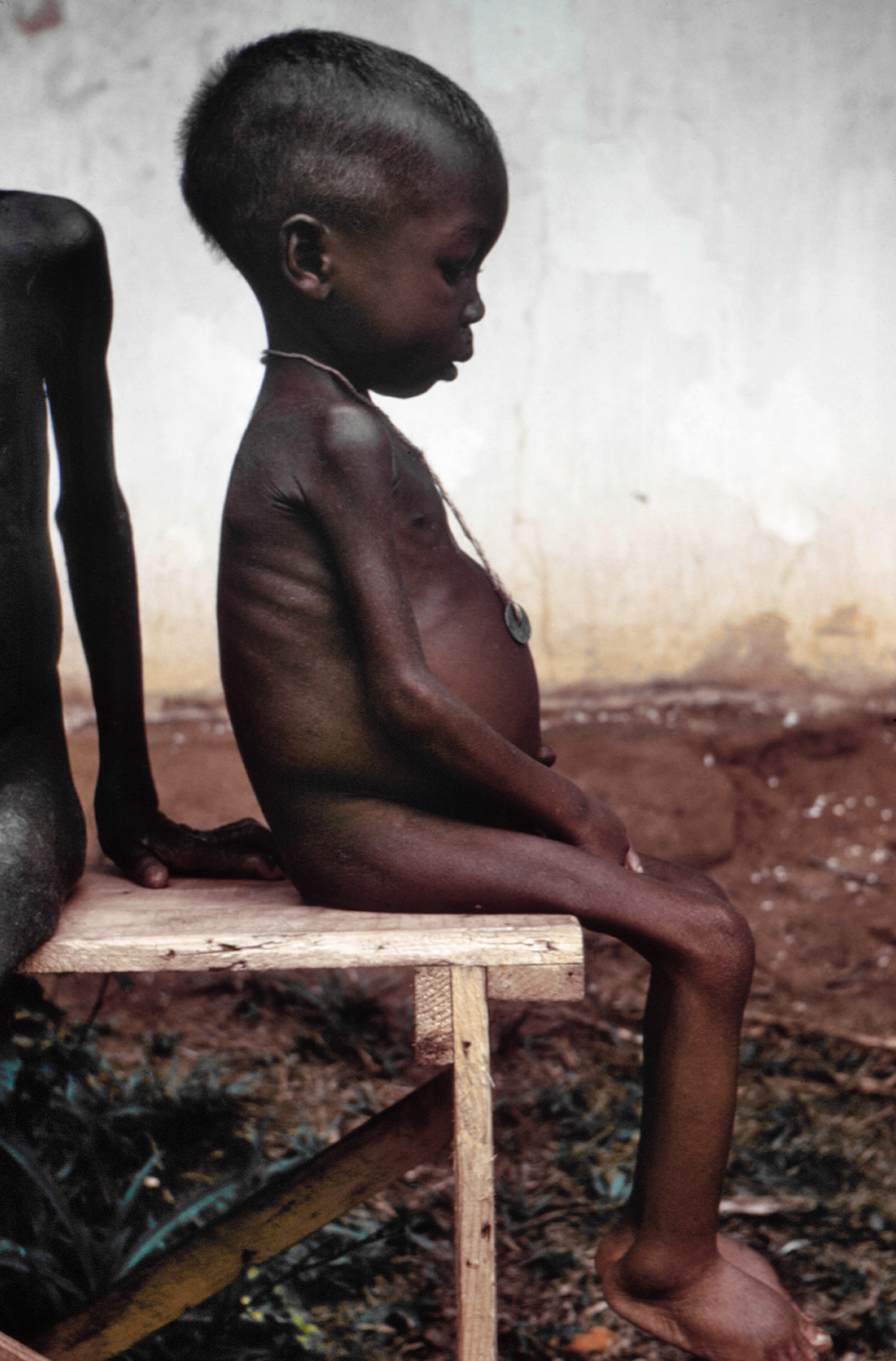
By 1968, a year after the start of the Nigerian Civil War, large numbers of children were reportedly starving to death due to a blockade imposed by the Nigerian Federal Military Government (FMG) and military. By 1969 it was reported that over 1,000 children per day were starving to death. A FMG representative declared, "Starvation is a legitimate weapon of war, and we have every intention of using it." With the advent of global television reporting, for the first time, famine, starvation, and the humanitarian response were seen by millions around the world, demanding that both the government and private sector joint efforts to save as many as possible from starving to death.
International reactions to the plight of the civilian population in the secessionist region were diverse. The United Nations and most national governments, expressing reluctance to become involved in what was officially considered an internal Nigerian affair, remained silent on the escalating humanitarian crisis. Secretary General of the United Nations, U Thant, refused to support the airlift.
The position of the Organization of African Unity was to not intervene in conflicts its members' deemed internal and to support the nation-state boundaries instituted during the colonial era. The ruling Labour Party of the United Kingdom, which together with the USSR was supplying arms to the Nigerian military, dismissed reports of famine as "enemy propaganda". Mark Curtis writes that the UK also reportedly provided military assistance on the 'neutralisation of the rebel airstrips', with the understanding that their destruction would put them out of use for daylight humanitarian relief flights.
The church-funded groups and NGOs became the most outspoken of the international supporters of aid to Biafra. The Joint Church Airlift (JCA) provided relief aid as well as attempted to establish an air force for Biafra. The American NGO Catholic Relief Services (CRS) was the leader and organizer of the JCA operation and Edward Kinney the CRS executive was responsible for securing the fleet of large cargo aircraft donated by the US government. On the ground CRS coordinated with the well positioned and established missionary priests and sisters particularly the Holy Spirit Fathers from Ireland to pull together the highly effective distribution and services on the ground.
This led to a ban by the Federal Military Government on aid flights into the region. The International Committee of the Red Cross (ICRC) accepted the FMG's ban and did not participate in any international publicity about Biafra, a position that was condemned by the more vocal and active NGOs providing aid and here we would highlight the effective voices of CRS and Caritas International. Bernard Kouchner, a French doctor and one of the more outspoken critics, declared that this silence over Biafra made the ICRC's workers "accomplices in the systematic massacre of a population".
Hub AI
Biafran airlift AI simulator
(@Biafran airlift_simulator)
Biafran airlift
The Biafran Airlift was an international humanitarian relief effort that transported food and medicine to Biafra during the Nigerian Civil War. Relief flights lasted from 1967 to 1969. This was the largest civilian airlift and, after the Berlin airlift of 1948–49, the largest non-combatant airlift of any kind ever carried out. The airlift was largely a series of joint efforts by Protestant and Catholic church groups, and other non-governmental organizations (NGOs), operating civilian and military aircraft with mostly volunteer civilian crews and support personnel. Several national governments also supported the effort, mostly behind the scenes. This sustained joint effort, which lasted one and a half times as long as its Berlin predecessor, is estimated to have saved more than a million lives.
In early 1968, an Irish missionary began a relief effort based in São Tomé Island, under the aegis of the Committee of International Church Relief Organizations. At the time, São Tomé was a Portuguese overseas department and had taken a neutral stance on the Nigerian Civil War. The island's authorities had made its ports available to both belligerents.
The Nigerian government and some Nigerian military leaders stated the threat of genocide was fabricated and was "misguided humanitarian rubbish." They additionally stated that mass starvation was an intended goal, saying "If the children must die first, then that is too bad, just too bad," and "All is fair in war, and starvation is one of the weapons of war".
By 1968, a year after the start of the Nigerian Civil War, large numbers of children were reportedly starving to death due to a blockade imposed by the Nigerian Federal Military Government (FMG) and military. By 1969 it was reported that over 1,000 children per day were starving to death. A FMG representative declared, "Starvation is a legitimate weapon of war, and we have every intention of using it." With the advent of global television reporting, for the first time, famine, starvation, and the humanitarian response were seen by millions around the world, demanding that both the government and private sector joint efforts to save as many as possible from starving to death.
International reactions to the plight of the civilian population in the secessionist region were diverse. The United Nations and most national governments, expressing reluctance to become involved in what was officially considered an internal Nigerian affair, remained silent on the escalating humanitarian crisis. Secretary General of the United Nations, U Thant, refused to support the airlift.
The position of the Organization of African Unity was to not intervene in conflicts its members' deemed internal and to support the nation-state boundaries instituted during the colonial era. The ruling Labour Party of the United Kingdom, which together with the USSR was supplying arms to the Nigerian military, dismissed reports of famine as "enemy propaganda". Mark Curtis writes that the UK also reportedly provided military assistance on the 'neutralisation of the rebel airstrips', with the understanding that their destruction would put them out of use for daylight humanitarian relief flights.
The church-funded groups and NGOs became the most outspoken of the international supporters of aid to Biafra. The Joint Church Airlift (JCA) provided relief aid as well as attempted to establish an air force for Biafra. The American NGO Catholic Relief Services (CRS) was the leader and organizer of the JCA operation and Edward Kinney the CRS executive was responsible for securing the fleet of large cargo aircraft donated by the US government. On the ground CRS coordinated with the well positioned and established missionary priests and sisters particularly the Holy Spirit Fathers from Ireland to pull together the highly effective distribution and services on the ground.
This led to a ban by the Federal Military Government on aid flights into the region. The International Committee of the Red Cross (ICRC) accepted the FMG's ban and did not participate in any international publicity about Biafra, a position that was condemned by the more vocal and active NGOs providing aid and here we would highlight the effective voices of CRS and Caritas International. Bernard Kouchner, a French doctor and one of the more outspoken critics, declared that this silence over Biafra made the ICRC's workers "accomplices in the systematic massacre of a population".