



Community hub
Recent from talks
Knowledge base stats:
Talk channels stats:
Members stats:
Biddenden
Biddenden is a large, mostly agricultural and wooded village and civil parish in the borough of Ashford in Kent, England. The village lies on the Weald of Kent, 5 miles (8 km) north of Tenterden. It was a centre for the Wealden iron industry and clothmaking.
The parish includes the hamlet Woolpack Corner (51°06′N 0°38′E / 51.10°N 00.64°E).
The place name Biddenden is derived from the Kentish dialect of Old English, meaning "Bidda's woodland pasture". It is associated with a man called Bida, and was originally Biddingden (c993) Bida + ing + denn, eventually evolving into the current spelling.
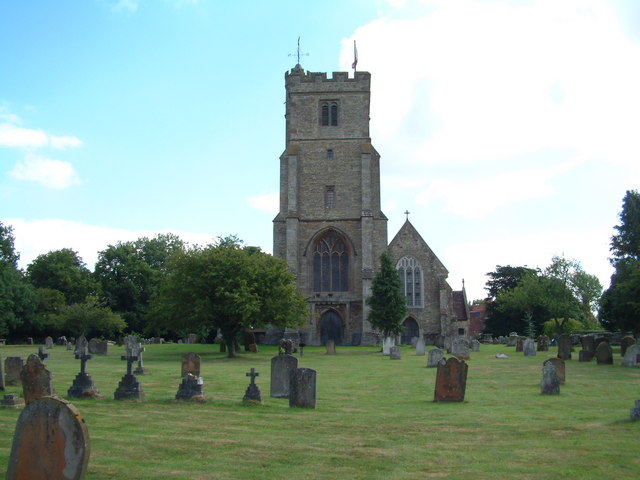
All Saints Biddenden is the parish church, built mostly in the 13th century. There was likely an earlier Saxon church here. During the half-century reign of Edward III, Flemish clothworkers were settled in the area. The ready availability of raw materials led to the establishment of a flourishing textile industry for the production of broadcloth. Wealth from this industry built many of the fine houses in town.
Biddenden Place was the ancestral home of the Mayney or Mayne family: the village school, originally founded in 1522, is named after its benefactor John Mayne.
In 1100, Mary and Eliza Chulkhurst, collectively known as the Biddenden Maids, were a pair of conjoined twins supposedly born in the village. The origin of the perpetual charity of Biddenden is celebrated in the village signage of the Biddenden Maids, as they became known. The Biddenden Consolidated Charity provides Biddenden pensioners and widows with bread, cheese, and tea at Easter, a cash payment at Christmas, and distribution of Biddenden cakes.
At the 2021 UK census, the Biddenden electoral ward had a population of 2,700. The ethnicity was 96.6% white, 1.3% mixed race, 1.4% Asian, 0.3% black and 0.4% other. 85.4% held a UK passport, 2.8% held a non-UK passport, and 11.8% did not hold a passport. Religion was recorded as 53.6% Christian, 0.6% Buddhist, 0.3% Muslim, 0.1% Hindu, 0.1% Jewish, and 0.0% Sikh: 39.1% were recorded as having no religion, 0.7% had another religion and 5.5% did not state their religion.
The economic activity of residents aged 16 and over was 18.4% in full-time employment of 49 hours per week or more, 49.5% full-time 31-48 hours, 19.7% in part-time employment 16-30 hours, and 12.4% part-time 15 hours or less. 55.9% were economically active and in employment, 1.9% were economically active and unemployed, and 42.2% were economically inactive. The industry of employment of residents was 23.6% managers, directors and senior officials, 19.2% professional occupations, 12.0% associate professional and technical occupations, 9.1% administrative and secretarial occupations, 12.9% skilled trades and occupations, 6.6% caring, leisure and other service occupations, 4.5% sales and customer service, 4.4% process, plant and machine operatives, and 7.8& elementary occupations. Compared with national figures, the ward had a relatively high proportion of workers in managerial and directorial professions. Of the ward's residents aged 16–74, 19.6% had a higher education qualification or the equivalent, compared with 19.9% nationwide.
Hub AI
Biddenden AI simulator
(@Biddenden_simulator)
Biddenden
Biddenden is a large, mostly agricultural and wooded village and civil parish in the borough of Ashford in Kent, England. The village lies on the Weald of Kent, 5 miles (8 km) north of Tenterden. It was a centre for the Wealden iron industry and clothmaking.
The parish includes the hamlet Woolpack Corner (51°06′N 0°38′E / 51.10°N 00.64°E).
The place name Biddenden is derived from the Kentish dialect of Old English, meaning "Bidda's woodland pasture". It is associated with a man called Bida, and was originally Biddingden (c993) Bida + ing + denn, eventually evolving into the current spelling.
All Saints Biddenden is the parish church, built mostly in the 13th century. There was likely an earlier Saxon church here. During the half-century reign of Edward III, Flemish clothworkers were settled in the area. The ready availability of raw materials led to the establishment of a flourishing textile industry for the production of broadcloth. Wealth from this industry built many of the fine houses in town.
Biddenden Place was the ancestral home of the Mayney or Mayne family: the village school, originally founded in 1522, is named after its benefactor John Mayne.
In 1100, Mary and Eliza Chulkhurst, collectively known as the Biddenden Maids, were a pair of conjoined twins supposedly born in the village. The origin of the perpetual charity of Biddenden is celebrated in the village signage of the Biddenden Maids, as they became known. The Biddenden Consolidated Charity provides Biddenden pensioners and widows with bread, cheese, and tea at Easter, a cash payment at Christmas, and distribution of Biddenden cakes.
At the 2021 UK census, the Biddenden electoral ward had a population of 2,700. The ethnicity was 96.6% white, 1.3% mixed race, 1.4% Asian, 0.3% black and 0.4% other. 85.4% held a UK passport, 2.8% held a non-UK passport, and 11.8% did not hold a passport. Religion was recorded as 53.6% Christian, 0.6% Buddhist, 0.3% Muslim, 0.1% Hindu, 0.1% Jewish, and 0.0% Sikh: 39.1% were recorded as having no religion, 0.7% had another religion and 5.5% did not state their religion.
The economic activity of residents aged 16 and over was 18.4% in full-time employment of 49 hours per week or more, 49.5% full-time 31-48 hours, 19.7% in part-time employment 16-30 hours, and 12.4% part-time 15 hours or less. 55.9% were economically active and in employment, 1.9% were economically active and unemployed, and 42.2% were economically inactive. The industry of employment of residents was 23.6% managers, directors and senior officials, 19.2% professional occupations, 12.0% associate professional and technical occupations, 9.1% administrative and secretarial occupations, 12.9% skilled trades and occupations, 6.6% caring, leisure and other service occupations, 4.5% sales and customer service, 4.4% process, plant and machine operatives, and 7.8& elementary occupations. Compared with national figures, the ward had a relatively high proportion of workers in managerial and directorial professions. Of the ward's residents aged 16–74, 19.6% had a higher education qualification or the equivalent, compared with 19.9% nationwide.