Recent from talks
Nothing was collected or created yet.
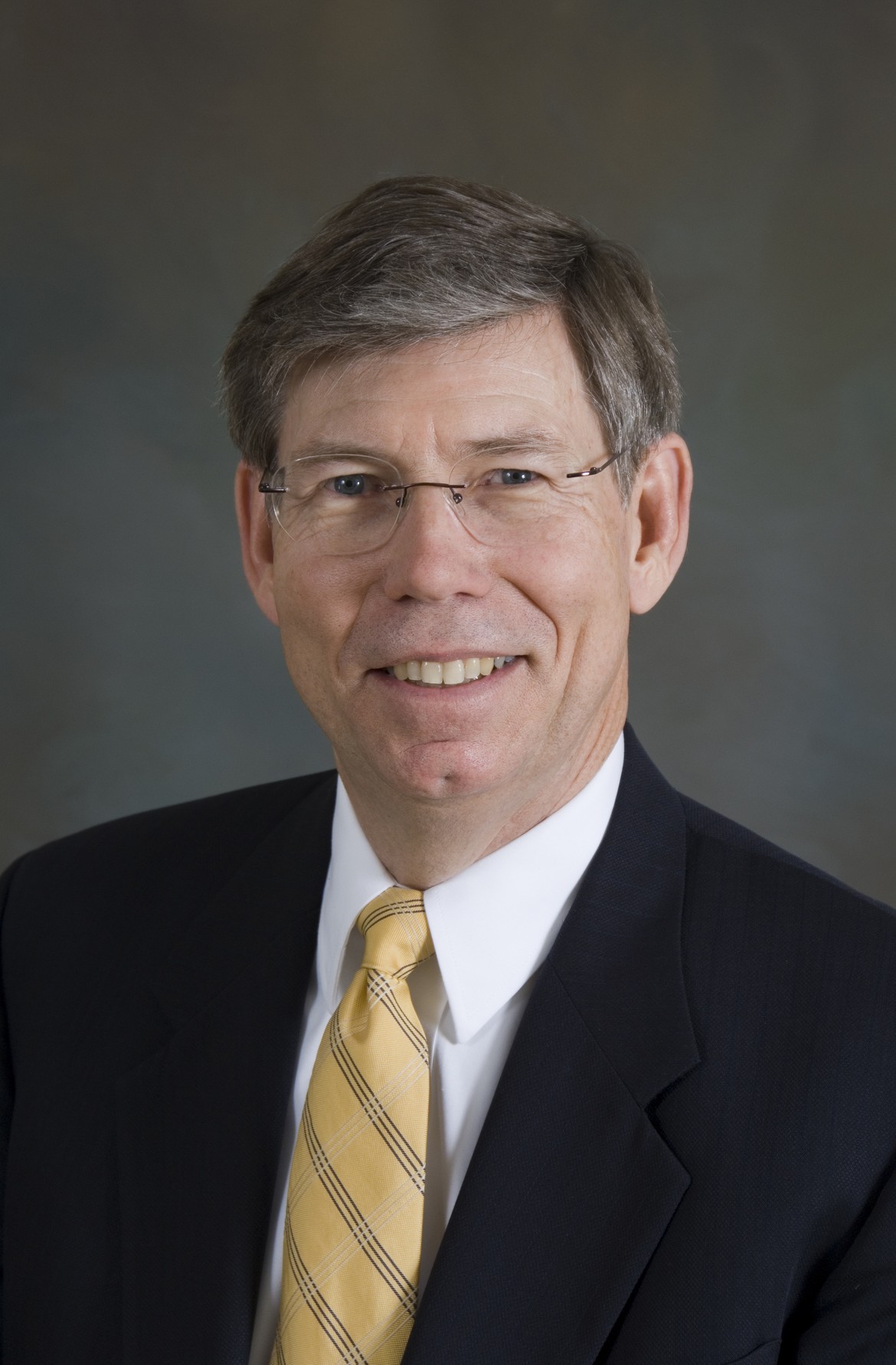
Bill McCollum
View on Wikipedia
Ira William McCollum Jr. (born July 12, 1944) is an American politician who served as the 36th attorney general of Florida from 2007 to 2011 and in the United States House of Representatives from 1981 to 2001, representing Florida's 5th congressional district, which was redistricted to the 8th congressional district in 1993. As a member of the House, McCollum rose to become Vice Chairman of the House Republican Conference, the fifth-highest ranking position in the House Republican leadership. He voted to impeach President Bill Clinton and subsequently took a leadership role in managing Clinton's trial in the Senate, which ended in acquittal.
Key Information
McCollum was the Republican nominee for the United States Senate in 2000, hoping to replace the retiring Republican Connie Mack III, losing to Democratic nominee Bill Nelson. McCollum ran for the Republican nomination for the U.S. Senate again in 2004 but lost to Mel Martínez. He was also an unsuccessful candidate for the Republican nomination in the 2010 Florida gubernatorial election, losing to businessman Rick Scott.[1]
Early life
[edit]Born and raised in Brooksville, Florida, McCollum graduated from Hernando High School and earned his bachelor's degree and J.D. degree from the University of Florida. While at the University of Florida, he was inducted into the University of Florida Hall of Fame, the most prestigious honor a student leader could receive, was a member of The Board,[clarification needed] and served as president of Florida Blue Key.
McCollum's professional career began in 1969 with the United States Navy's Judge Advocate General Corps where he served on active duty until 1972. McCollum was an officer for more than 23 years before retiring from the United States Naval Reserve as a Commander (O-5) in the JAG Corps in 1992. In 1973, he entered private practice in Orlando and became involved in local politics, serving as Chairman of the Seminole County Republican Party from 1976 to 1980.
Congressional career
[edit]
In 1980 McCollum was elected to the U.S. House of Representatives from a district including Walt Disney World and most of Orlando. He defeated incumbent Representative Richard Kelly in the Republican primary.
While in Congress, McCollum founded the House Republican Task Force on Terrorism and Unconventional Warfare, chairing it for six years. He also served three terms on the House Permanent Select Committee on Intelligence, two of which as chairman of its Subcommittee on Human Intelligence, Analysis, and Counterintelligence. Additionally, McCollum served as vice chairman of the House Banking Committee and served on the Judiciary Committee, where he was chairman of the Subcommittee on Crime.
While serving the House, McCollum was also selected for a variety of Republican leadership positions, including three terms as vice chairman of the House Republican Conference. McCollum gained national attention as one of 15 members selected to serve on the House Committee to Investigate the Iran-Contra Affair, and, in 1998–1999, as one of the House managers (prosecutors) in the impeachment trial of President Bill Clinton.
U.S. Senate elections
[edit]Rather than seek reelection to the House in 2000, McCollum ran unsuccessfully for an open United States Senate seat, bringing to an end his 20-year Congressional career.
McCollum ran again in 2004, seeking the Republican nomination for the U.S. Senate seat being vacated by retiring Senator Bob Graham. He was defeated in the Republican primary by HUD Secretary Mel Martinez, who went on to win the seat.
McCollum served as a partner with the Baker & Hostetler LLP law firm, practicing in the federal policy area. In addition to his duties as the state's chief legal officer, he serves as president and chairman of the Healthy Florida Foundation, chartered in 2002 to find consensus on long-term solutions to the nation's health care system. He is a member of the North Florida Committee on Foreign Relations. He is also a board member of the James Madison Institute.
Florida attorney general (2007–2010)
[edit]
In 2006, McCollum ran for Florida Attorney General, defeating State Senator Skip Campbell in the general election.
McCollum led a group of Attorneys General in filing a lawsuit challenging the constitutionality of Obamacare. He also filed a brief in support of Arizona's immigration law.[2]
McCollum opposed the federal Stimulus bill, as well as the $20 billion federal oil fund that limited his office's ability to pursue claims against BP, and requested additional authority from the federal government to address Medicaid fraud.[2]
While Attorney General, McCollum defended Florida's ban on adoptions by homosexuals from a lawsuit, In re: Gill, that challenged the ban. McCollum hired Dr. George Rekers, a controversial clinical psychologist, to testify during the trial that heterosexual parents provide a better environment for children. The trial resulted in the overturning of the ban. When an appellate court upheld the lower court ruling, McCollum declined to appeal the case to the Supreme Court.[3][4]
McCollum was also the Florida Chairman for the Rudy Giuliani presidential campaign in 2008.
2010 gubernatorial candidacy
[edit]
On May 18, 2009, McCollum announced his candidacy for Governor of Florida. The election determined the successor of Charlie Crist who later lost his bid for a seat in the U.S. Senate.[citation needed] McCollum opposed federal health care mandates in Florida, decrying them as an unconstitutional "tax on living," and joined with 13 other state attorneys general in filing a federal lawsuit.[5] The majority of Florida voters opposed such a lawsuit according to polling in April 2010.[6] He has advocated a state constitutional amendment that would opt Florida out of Washington mandates on health care, although questions about whether such an amendment would be constitutional have been raised. On September 8, 2009 McCollum said he supported Medicare and Medicaid programs but opposed a government-run 'public option' for health insurance.[7]
In the Republican primary, McCollum faced businessman Rick Scott, who had never before held elective office. McCollum criticized Scott's tenure as CEO of healthcare company Columbia/HCA, during which the company became entangled in a federal Medicare fraud investigation. Scott countered that the FBI had never targeted him personally. The Miami Herald noted that a 1998 congressional bill sponsored by McCollum would have made it more difficult to prosecute Medicare fraud cases, a fact that undermined McCollum’s criticisms of Scott.[8]
Scott defeated McCollum in the August primary with approximately 46.4% percent of the vote to McCollum's 43.4%.
| Party | Candidate | Votes | % | |
|---|---|---|---|---|
| Republican | Rick Scott | 595,474 | 46.4% | |
| Republican | Bill McCollum | 557,427 | 43.4% | |
| Republican | Mike McCalister | 130,056 | 10.1% | |
| Total votes | 1,282,957 | 100.0% | ||
Private sector
[edit]In 2014, McCollum was named to the board of directors of AML Superconductivity & Magnetics, a privately held company that develops magnet-based and superconducting applications, located in Melbourne, Florida.[10]
Personal life
[edit]McCollum is married to Ingrid Seebohm McCollum. They have three sons: Douglas, Justin, and Andrew.
See also
[edit]- Joe Jacquot (McCollum's Deputy Attorney General and chief of staff)
References
[edit]- ^ "Scott Shakes Up Florida Governor Race With GOP Primary Win Over McCollum". FOXNews.com. April 7, 2010. Archived from the original on August 28, 2010. Retrieved August 29, 2010.
- ^ a b Strassel, Kimberley (August 6, 2010). "McCollum vs. Obamacare". The Wall Street Journal. Retrieved May 29, 2015.
- ^ Billman, Jeffrey C. "News+Features: Florida'S Case Against Gay Adoption". Orlandoweekly.com. Retrieved July 13, 2010.
- ^ Rudolph, Dana (October 23, 2010). "Florida attorney general does not appeal gay adoption ruling". Keen News Service. Retrieved May 28, 2015.
- ^ "States Sue to Block Health-Care Reform as Illegal (Update2)". BusinessWeek. March 23, 2010. Archived from the original on August 15, 2010. Retrieved July 13, 2010.
- ^ Quinnipiac University – Office of Public Affairs (April 19, 2010). "Florida (FL) Poll * April 19, 2010 * McCollum Leads Tight Florida G – Quinnipiac University – Hamden, Connecticut". Quinnipiac.edu. Archived from the original on May 28, 2010. Retrieved July 13, 2010.
- ^ Bousquet, Steve. "Bill McCollum opposes insurance 'public option' – Healthcare Reform". MiamiHerald.com. Retrieved July 13, 2010. [dead link]
- ^ Caputo, Marc. "Bill McCollum's attacks on rival Rick Scott clash with record". Miami Herald. Retrieved August 16, 2015.
- ^ "Florida Gubernatorial Primary Results". Politico. August 24, 2010. Archived from the original on September 1, 2010. Retrieved August 24, 2010.
- ^ "Advanced Magnet Lab announces appointment of Bill McCollum to board of directors". Archived from the original on April 28, 2014. Retrieved April 28, 2014.
External links
[edit]- Bill McCollum, official profile Archived December 5, 2022, at the Wayback Machine, Office of the Florida attorney general
- Bill McCollum, official campaign site
- Biography at the Biographical Directory of the United States Congress
- Financial information (federal office) at the Federal Election Commission
- Campaign contributions at OpenSecrets.org (2004 Senate race)
- Appearances on C-SPAN
Bill McCollum
View on GrokipediaEarly life and military service
Upbringing and education
Ira William "Bill" McCollum Jr. was born on July 12, 1944, in Brooksville, Hernando County, Florida, to Ira William McCollum Sr. and Arline McCollum, part of a pioneer family in the rural area.[1][6] At age six, he lost his mother to a brain tumor, an event that shaped his early years as his father expanded the family's 3,000-acre ranch and enforced a disciplined household environment emphasizing hard work and self-reliance.[7][8] McCollum attended Hernando High School in Brooksville, graduating in 1962.[1][9] He then enrolled at the University of Florida in Gainesville, earning a Bachelor of Arts degree in 1966 and a Juris Doctor degree in 1968 from its College of Law.[9][10]Naval Reserve service
Following his active duty service in the United States Navy Judge Advocate General's Corps from 1969 to 1972, Bill McCollum continued his military commitment in the United States Naval Reserve until his retirement in 1992.[1][11] McCollum attained the rank of commander during his reserve tenure, accumulating a total of 23 years as an officer in the Navy JAG Corps.[2][7] This service overlapped with his civilian legal practice in Florida, where he had been admitted to the bar in 1968, and his subsequent entry into elective office in 1981.[11][1] Specific reserve assignments or mobilizations are not detailed in official records, reflecting a likely focus on inactive or drilling reserve status compatible with his professional obligations.[2]Congressional career (1981–2001)
Elections and representation of Florida's 8th district
Following redistricting after the 1990 United States Census, which reapportioned Florida's congressional districts, McCollum transitioned from representing the 5th district to the newly configured 8th district for the 103rd Congress, effective January 3, 1993.-(M000350)/) The 8th district covered central Florida, including parts of Orange, Seminole, Osceola, and Brevard counties, encompassing the Orlando metropolitan area and major tourism assets such as the Walt Disney World Resort.[12] McCollum secured the Republican nomination and won the general election for the 8th district on November 3, 1992, defeating Democratic nominee Dan Webster after advancing from the primary.[13] He was reelected in the 1994 midterm elections amid a national Republican wave, capturing a decisive victory reflective of the district's conservative leanings.[14] In 1996, McCollum prevailed again in the general election against Democrat Sid Martin, maintaining strong voter support in a district prioritizing family-oriented policies and economic growth tied to tourism.[15] His 1998 reelection demonstrated further consolidation of support, as he defeated Democrat Al Krulick with 66% of the vote (104,146 votes to Krulick's 54,187).[16] McCollum did not seek a further term in 2000, announcing on May 3, 1999, his intention to vacate the seat for a U.S. Senate bid, after which Republican Ric Keller succeeded him.[17] During his tenure representing the 8th district, McCollum emphasized issues resonant with constituents, including a tough-on-crime agenda suited to a region reliant on safe tourism environments.[18] He introduced legislation such as a 1996 bill aimed at revitalizing the tourism industry through targeted federal incentives, addressing economic vulnerabilities in the district's dominant sector.[19] McCollum also advocated for family-values measures, aligning with the district's demographics centered around attractions like Disney World, while securing committee positions that influenced national policies with local benefits, such as financial services oversight impacting regional banking and development.[2] His consistent electoral successes underscored effective constituent representation, with no serious primary challenges and lopsided general election margins indicating robust local backing for his conservative platform.-(M000350)/)Committee assignments and leadership roles
During his tenure in the U.S. House of Representatives from 1981 to 2001, McCollum served on the House Judiciary Committee, where he chaired the Subcommittee on Crime and also led the Subcommittee on Human Rights and International Operations.[20] He additionally held positions on the House Banking and Financial Services Committee, focusing on matters of financial regulation and oversight.[2] McCollum was a member of the House Permanent Select Committee on Intelligence, contributing to national security and counterterrorism deliberations.[9] In party leadership, McCollum was elected Vice Chairman of the House Republican Conference, the party's fifth-ranking position, serving three consecutive terms during the 101st through 103rd Congresses (1989–1995).[21] He founded and chaired the House Republican Task Force on Terrorism, which examined threats from groups like the Irish Republican Army and advised on legislative responses to international terrorism.[3] These roles positioned him as a key figure in Republican strategy on judicial, financial, and security issues, influencing committee agendas and floor debates.[2]Legislative achievements in national security, finance, and judiciary matters
McCollum served on the House Permanent Select Committee on Intelligence, where he contributed to oversight of national security threats, including examinations of foreign espionage activities. In 2000, he sponsored H.R. 3485, the Justice for Victims of Terrorism Act, which passed the House on July 25 and sought to enable U.S. victims of terrorism to pursue civil remedies against perpetrators and state sponsors abroad by waiving sovereign immunity in certain cases.[22] Earlier, in 1989, he introduced H.R. 279, the National Security and Classified Information Protection Act, aimed at strengthening protections for classified information and addressing leaks that compromised U.S. intelligence operations.[23] These efforts reflected his focus on enhancing countermeasures against terrorism and intelligence vulnerabilities during the pre-9/11 era. In finance and banking matters, McCollum's service on the House Banking, Finance and Urban Affairs Committee (later Banking and Financial Services) emphasized regulatory reforms and anti-crime measures intersecting with financial systems. He played a key role in developing the money laundering provisions of the Anti-Drug Abuse Act of 1986, which criminalized the practice for the first time under federal law, combining his dual assignments on Judiciary and Banking to target illicit financial flows funding narcotics trafficking.[24] As vice chairman of the committee in the late 1990s, he supported the Gramm-Leach-Bliley Act of 1999 (H.R. 10), co-sponsoring elements that repealed Glass-Steagall restrictions to modernize financial services by allowing affiliations between commercial banks, investment banks, and insurance companies, a measure enacted on November 12, 1999, to foster competition amid globalization.[25] McCollum also advocated for regulatory burden relief for financial institutions, offering amendments to streamline compliance without compromising safety and soundness.[26] On judiciary matters, McCollum chaired the House Judiciary Subcommittee on Crime from 1995 to 2001, leading hearings and legislation to bolster federal enforcement against violent and organized crime. He advanced tough-on-crime initiatives, including juvenile justice reforms in the late 1990s that permitted easier prosecution of minors as adults for serious offenses, as part of broader efforts to address rising youth violence rates documented in FBI statistics.[27] McCollum contributed to the Antiterrorism and Effective Death Penalty Act of 1996 (H.R. 3610), enacted April 24, 1996, which expedited habeas corpus reviews, expanded wiretap authority for terrorism probes, and imposed the death penalty for certain federal crimes, measures he defended as essential for national security despite criticisms of limiting due process.[28] His subcommittee conducted oversight on federal agency security breaches, such as FBI handling of classified data, prompting recommendations for improved protocols to prevent espionage risks. These actions prioritized causal links between stringent penalties and deterrence, drawing on empirical trends in crime data over politically motivated leniency.Role as House manager in the impeachment trial of President Bill Clinton
Bill McCollum served as one of thirteen House managers appointed by a 228–195 vote under H. Res. 24 on January 6, 1999, to prosecute the articles of impeachment against President Bill Clinton in the Senate trial, following the House's passage of two articles on December 19, 1998, charging perjury before a grand jury and obstruction of justice related to the Monica Lewinsky affair. As a member of the House Judiciary Committee, McCollum contributed to the evidentiary presentation, focusing on the factual record of Clinton's August 17, 1998, grand jury testimony and January 17, 1998, deposition in the Paula Jones lawsuit, where Clinton denied under oath having sexual relations with Lewinsky or encouraging her to file a false affidavit.[29] His role involved coordinating with other managers, such as Henry Hyde and Lindsey Graham, to argue that Clinton's statements—contradicted by Lewinsky's subsequent testimony, physical evidence like the semen-stained dress, and Clinton's own admissions—met the constitutional threshold for high crimes and misdemeanors warranting removal.[30] On January 15, 1999, McCollum delivered a summation of the factual case during the managers' three-day presentation phase, methodically outlining over twenty instances of alleged perjury and obstruction, including Clinton's coaching of Lewinsky to minimize their encounters and his evasion of questions about "sexual relations" defined under 28 U.S.C. § 1821.[31] He contended that no reasonable interpretation excused Clinton's denials, stating, "Both of these are the August the 6th grand jury testimony, where in the context of her affidavit she makes the now-famous statement, 'no one ever asked me to lie,'" to highlight inconsistencies with recovered gifts and job assistance efforts as inducements.[31] McCollum emphasized causal links between Clinton's actions and undermined judicial processes, arguing that allowing a president to perjure himself without consequence eroded public trust in oaths and the rule of law, irrespective of the underlying conduct's morality.[32] The Senate trial, presided over by Chief Justice William Rehnquist from January 7 to February 12, 1999, rejected motions for live witnesses and depositions despite managers' requests, limiting arguments to transmitted House evidence and briefs; McCollum later described this as a procedural constraint that hindered proving intent but affirmed the factual disputes' gravity.[33] On February 12, the Senate acquitted Clinton, voting 45–55 against conviction on perjury (Article I) and 50–50 on obstruction (Article II), falling short of the two-thirds threshold under Article I, Section 3 of the Constitution. McCollum viewed the outcome as a partisan failure to enforce accountability, reflecting in 2019 that the trial demanded intense preparation akin to no other congressional duty, yet underscored the empirical reality of Clinton's falsehoods under oath as established by independent counsel Kenneth Starr's referral and Lewinsky's corroborated account.[34][35]2004 U.S. Senate election
Campaign development and platform
Bill McCollum formally announced his candidacy for the U.S. Senate seat vacated by retiring Democrat Bob Graham on September 30, 2003, entering a competitive Republican primary field that included former HUD Secretary Mel Martinez and state House Speaker Johnnie Byrd.[36] Drawing on his two decades of experience as a U.S. Representative, McCollum emphasized his legislative record in national security, judiciary, and banking committees to differentiate himself from less experienced rivals.[37] His campaign strategy involved early fundraising, securing endorsements from party leaders, and launching television advertisements in July 2004 to reintroduce his background to statewide voters amid low name recognition outside Central Florida.[38] McCollum's platform centered on national security and counterterrorism, which he elevated as the campaign's top priority following the September 11 attacks, contrasting it with his 2000 Senate bid where such warnings received little attention.[37] He advocated for robust support of President George W. Bush's post-9/11 policies, including enhanced intelligence capabilities and military action against terrorist threats, while criticizing Democratic opponents for insufficient resolve. On economic issues, McCollum promoted tax cuts, deregulation, and free-market reforms to foster job growth and Florida's business climate, aligning with Republican priorities to counter perceived Democratic overreach in spending.[39] Social conservatism formed another pillar, though McCollum encountered intra-party criticism from prominent figures like Phyllis Schlafly and Gary Bauer, who in August 2004 accused him of inconsistent opposition to abortion and same-sex marriage based on past votes and associations.[40] He affirmed traditional family values and pro-life stances but defended his record against attacks portraying him as insufficiently rigid, aiming to consolidate the GOP base while appealing to moderate voters in Florida's diverse electorate. Immigration and education received secondary emphasis, with calls for border security enhancements tied to terrorism prevention and support for school choice initiatives.[39]Primary and general election outcomes
In the Republican primary election for the U.S. Senate in Florida on August 31, 2004, Bill McCollum faced former U.S. Housing and Urban Development Secretary Mel Martínez and several lesser-known challengers, including Doug Gallagher.[41] Martínez, endorsed by President George W. Bush, secured the nomination with a narrow victory over McCollum by approximately 2 percentage points, equivalent to about 15,000 votes out of roughly 740,000 cast in the primary.[42][43] McCollum conceded defeat shortly after the polls closed, praising Martínez and urging party unity ahead of the general election.[42] His loss ended his campaign for the Senate seat, preventing participation in the November 2, 2004, general election, where Martínez went on to defeat Democratic nominee Betty Castor by a margin of 1.1 percentage points (3,672,864 votes to 3,590,201).[44] The primary outcome reflected divisions within the Florida Republican Party, with Martínez appealing to Hispanic voters and Bush loyalists, while McCollum drew support from congressional conservatives but fell short in turnout-heavy areas.[43]Tenure as Florida Attorney General (2007–2011)
Election and transition to office
Following unsuccessful bids for the U.S. Senate in 2000 and 2004, Bill McCollum, who had retired from the U.S. House of Representatives in 2001, announced his candidacy for Florida Attorney General in 2006, emphasizing public safety and crime reduction as key priorities.[9] He faced no significant opposition in the Republican primary held on September 5, 2006, securing the nomination unanimously.[45] In the general election on November 7, 2006, McCollum defeated Democratic state Senator Walter "Skip" Campbell, receiving 2,448,008 votes to Campbell's 2,197,959, for a margin of 52.69% to 47.31%.[45] This victory marked McCollum's first successful statewide campaign, succeeding Charlie Crist, who had been elected Governor.[46] Voter turnout and the competitive nature of the race reflected Florida's shifting political dynamics, with McCollum benefiting from his long congressional tenure and Republican incumbency advantages in state offices.[47] McCollum was sworn into office as the 36th Attorney General of Florida on January 2, 2007, by Florida Supreme Court Chief Justice R. Fred Lewis in Tallahassee.[48] Prior to assuming the role, he had been a partner at the law firm Baker & Hostetler, marking a return to public service after five years in private practice.[2] The transition involved assembling a leadership team focused on consumer protection, gang violence prevention, and challenging federal policies, setting the stage for his tenure's emphasis on state sovereignty and law enforcement enhancements.[49]Key legal actions against federal overreach and state initiatives
As Florida Attorney General, Bill McCollum spearheaded a multi-state lawsuit challenging the Patient Protection and Affordable Care Act (ACA), signed into law by President Barack Obama on March 23, 2010, arguing that its individual mandate provision constituted unconstitutional federal overreach by compelling individuals to engage in commerce.[50][51] McCollum filed the complaint in the U.S. District Court for the Northern District of Florida just minutes after the signing, with Florida leading a coalition of 26 states, positioning the case as a defense of state sovereignty against expansive federal authority under the Commerce Clause.[52][53] The suit contended that the mandate's requirement for individuals to purchase health insurance or face penalties intruded into realms of personal inactivity beyond Congress's enumerated powers, potentially eroding limits on federal intervention in state matters.[54] U.S. District Judge Roger Vinson ruled in favor of the plaintiffs on January 31, 2011, declaring the entire ACA unconstitutional and enjoining its enforcement, a decision McCollum hailed as vindicating states' rights against coercive federal policy that could impose hundreds of millions in additional costs on state budgets.[55][56] However, the ruling was stayed pending appeals, and the U.S. Supreme Court in NFIB v. Sebelius (2012) ultimately upheld the mandate as a valid exercise of Congress's taxing power while striking down the ACA's Medicaid expansion coercion on states, partially affirming McCollum's arguments on federal limits but preserving core elements of the law.[57] This litigation, involving extensive briefing and arguments before Judge Vinson, marked one of the earliest and most prominent challenges to the ACA, influencing subsequent state-led resistances to federal mandates.[58] On state initiatives, McCollum pursued legal actions to curb deceptive practices in consumer sectors, including a 2008 initiative against Florida's debt relief industry, where his office sued Orlando-based firms for misleading promises of debt reduction without delivering services, securing settlements and injunctions to protect residents from predatory schemes.[59] He also enforced transparency in state-contracted private attorney fees through advocacy for legislation like House Bill 437 and Senate Bill 712, which capped contingency fees and mandated cost-benefit reviews for lawsuits funded by state recoveries, aiming to prevent misuse of public resources in litigation.[60] These efforts recovered significant funds, such as $58.2 million from Pfizer in 2009 for off-label drug marketing fraud, bolstering state coffers while prioritizing fiscal accountability in legal strategies.[61] Additionally, McCollum's office sued global LCD manufacturers in 2010 for price-fixing conspiracies that inflated consumer electronics costs, joining antitrust actions to yield recoveries for affected Florida entities.[62]Oversight of state agencies and financial responsibilities
As Florida's Attorney General from 2007 to 2011, Bill McCollum oversaw the Department of Legal Affairs, which provided legal representation and counsel to state agencies, enforced consumer protection laws, and managed civil litigation on behalf of the state, including financial recovery efforts from fraud and settlements.[63] His office handled responsibilities such as advising agencies on compliance, prosecuting economic crimes like Medicaid fraud and child support enforcement, and coordinating multi-agency responses to statewide issues, ensuring alignment with state fiscal and legal priorities amid the 2008 financial crisis.[64] McCollum emphasized financial oversight through aggressive consumer protection initiatives targeting predatory practices in debt relief and mortgage sectors, where his office received thousands of complaints annually. In October 2008, he launched a coordinated enforcement sweep against debt-relief companies accused of defrauding distressed Floridians, aiming to shut down operations that charged upfront fees without delivering promised services, amid a 62% rise in such scams.[59] [65] Similarly, in response to surging mortgage fraud—likened by McCollum to a "state of emergency"—he established a cross-agency Mortgage Fraud Task Force in 2009, involving law enforcement and regulatory bodies to investigate scams, file civil suits against loan-modification fraudsters, and secure asset recoveries for victims and the state.[66] [67] [68] On budgetary matters, McCollum managed the Attorney General's office amid state fiscal pressures, implementing an approximately 18% reduction in its operating budget through staff cuts, operational streamlining, and efficiency measures, though some reductions were legislatively mandated; this included reallocating resources to prioritize high-impact enforcement like fraud prosecutions over administrative overhead.[69] His efforts yielded tangible financial outcomes, such as a 2008 assurance agreement with Wells Fargo for mortgage-related relief and prosecutions dismantling multi-million-dollar fraud rings, contributing to state recoveries and homeowner assistance programs funded in part by office initiatives.[70] [71]2010 Florida gubernatorial campaign
Republican primary competition with Rick Scott
Bill McCollum, serving as Florida's Attorney General since 2007, announced his candidacy for governor in February 2009 and entered the Republican primary as the presumed frontrunner, backed by party establishment figures including former Governor Jeb Bush.[72] In contrast, Rick Scott, a former health care executive and political novice, declared his bid on April 1, 2010, emphasizing aggressive job growth targets and self-funding his campaign with personal loans exceeding $25 million by the primary date to bypass traditional donor networks.[73] This financial disparity allowed Scott to dominate airwaves with ads portraying McCollum as insufficiently conservative, including attacks on McCollum's congressional vote for the 2008 Troubled Assets Relief Program (TARP) bailout.[74] McCollum responded aggressively, highlighting Scott's leadership at Columbia/HCA during the 1990s, when the company faced federal investigations leading to a record $1.7 billion settlement for Medicare fraud and kickback violations in 2000—though Scott was not personally charged and received a $10 million severance upon resignation.[75] McCollum's campaign labeled Scott's tactics "appalling" and questioned his outsider credentials given his wealth estimated at $219 million.[74] [76] Polls reflected volatility: McCollum led by double digits in May 2010 (e.g., 38% to Scott's 24%), but Scott surged to a slim edge by late July, aided by his ad spending outpacing McCollum's traditional fundraising by roughly 3-to-1 in key markets.[72] [77] The August 24, 2010, primary saw unusually low turnout of about 20% among registered Republicans, favoring Scott's mobilized base of conservative activists over McCollum's broader establishment support.[78] Scott secured a narrow upset victory, capturing roughly 38% of the vote to McCollum's 36% statewide, with the remainder split among minor candidates like Mike McCallum (13%).[79] McCollum conceded early the next morning without endorsing Scott, citing the race's bitterness and privately expressing concerns over Scott's electability in the general election against Democrat Alex Sink.[80] The outcome underscored the rising influence of self-funded outsiders in GOP primaries amid post-2008 economic discontent, though Scott's win drew scrutiny for its reliance on negative advertising rather than policy depth.[81]Policy proposals and general election implications
McCollum's policy proposals emphasized fiscal conservatism, including a pledge against any new taxes during his governorship.[82] On June 18, 2010, he proposed a two-year freeze on property tax rates to provide relief amid economic recovery efforts.[83] In education, McCollum supported Senate Bill 6, a controversial measure linking teacher pay to student performance, positioning himself against Democratic opponent Alex Sink who opposed the reform.[84] A central late-campaign initiative was immigration enforcement, unveiled on August 11, 2010, proposing legislation stricter than Arizona's SB 1070. The plan required law enforcement to verify immigration status during lawful stops, mandated immigrants carry identification under penalty of up to 20 days in jail, and introduced additional tools to deter illegal immigration, which McCollum argued would save Florida billions in costs.[85][86] This move aimed to differentiate from primary rival Rick Scott but drew criticism from Hispanic lawmakers and potentially alienated moderate voters.[87] McCollum also led as Attorney General in suing the federal government over the Affordable Care Act, framing it as overreach, a stance aligned with broader Republican opposition.[88] McCollum's primary defeat by Scott on August 24, 2010—despite establishment support and shared conservative policies on economy and taxes—highlighted the impact of Scott's $78 million self-funded campaign, the heaviest in Florida primary history.[80][81] The acrimonious race, marked by mutual attacks on records and "insider" status, left the GOP nominee vulnerable; McCollum's initial refusal to endorse complicated party unity efforts.[80][89] In the general election, Scott's outsider appeal and aggressive spending prevailed narrowly over Sink (48.9% to 47.7%), but analysts noted the primary's toxicity and Scott's relative inexperience—contrasting McCollum's long public service—intensified Democratic attacks and narrowed the margin compared to pre-primary polling favoring Republicans.[77][78] McCollum's immigration push, while energizing the base, underscored limits of hardline stances in diverse Florida electorates, contributing to perceptions of GOP internal divisions influencing the tight contest.[90]Post-public office career
Transition to private legal practice
Following the end of his term as Florida Attorney General on January 4, 2011, McCollum transitioned from public office to private legal practice after his defeat in the 2010 Republican gubernatorial primary.[2] In June 2011, he joined SNR Denton (later rebranded as Dentons following mergers) as a partner in the firm's Washington, D.C. office, where he co-led the newly established state attorneys general practice alongside former Indiana Attorney General Jeff Modisett.[91][92][93] McCollum's role focused on counseling clients facing state-led investigations and enforcement actions, drawing on his experience as a former attorney general and congressman to advise on corporate compliance, government probes, and consumer protection issues in sectors such as financial services, energy, healthcare, telecommunications, and internet-related matters.[91][2] He emphasized the increasing prominence of state attorneys general in multistate litigation and regulatory oversight as a driver for the practice's development.[91]Ongoing involvement in regulatory and political commentary
Following his tenure as Florida Attorney General, McCollum joined Dentons US LLP (formerly SNR Denton) as a partner and later senior counsel in its public policy and regulation practice, specializing in corporate compliance and investigations, complex state-level regulatory and legislative challenges, and antitrust enforcement.[94][95] In this role, he has advised clients navigating state regulatory frameworks, drawing on his prior experience challenging federal mandates such as the Affordable Care Act.[2] McCollum has contributed public commentary on regulatory and policy matters, including a June 17, 2013, Washington Times op-ed critiquing inefficiencies in the U.S. immigration court system, where he highlighted a backlog exceeding 300,000 cases and advocated for structural reforms like increased judicial resources and streamlined procedures to address national security and due process concerns.[96] His analysis emphasized the system's overload from policy-driven caseloads rather than inherent flaws in adjudication. On political processes, McCollum provided analysis during the 2020 Trump impeachment proceedings, appearing in a January 26 Fox News interview to caution fellow Republicans against forgoing witnesses, citing his role as a House manager in the 1998–1999 Clinton impeachment trial and arguing that such a move could undermine procedural credibility and public perception of fairness.[97] He testified before Congress in 2012 on conflicts of interest in state attorneys general litigation involving contingent fees, urging greater transparency to prevent private incentives from influencing public enforcement actions.[98] These engagements underscore McCollum's post-office focus on critiquing regulatory bottlenecks and institutional reforms, often from a perspective prioritizing limited government and procedural integrity over expansive federal or state interventions.[99]Personal life
Family background and relationships
Ira William "Bill" McCollum Jr. was born on July 12, 1944, in Brooksville, Hernando County, Florida, to Ira William McCollum Sr., a rancher and later Hernando County tax assessor who developed the family's 3,000-acre cattle operation.[7] His mother died of cancer when McCollum was six years old in 1950.[7][100] Following her death, McCollum and his father resided with his maternal grandparents, the Lockharts, where he was primarily raised.[101][100] His grandfather, a demanding and disciplinarian figure often referred to as "the Colonel," exerted significant influence on McCollum's strict upbringing and emphasis on personal responsibility.[7][100] McCollum met his wife, Ingrid Seebohm, while serving as a naval officer at the Great Lakes Naval Training Center in Illinois; the couple married in 1972 and remained together for over four decades.[8] They have three sons—Andrew, Douglas, and Justin—and, as of 2010, two grandchildren.[8][102] McCollum is a practicing Episcopalian.[102]Later residences and affiliations
Following his tenure as Florida Attorney General ending in January 2011, McCollum established residence in Orlando, Florida, where he has lived as of 2024.[6] Previously based in nearby Longwood during his 2010 gubernatorial campaign, his move to the Orlando area aligned with his ongoing professional activities in the region.[103] In private practice, McCollum serves as senior counsel at Dentons US LLP, co-chairing the firm's U.S. State Attorneys General Practice with a focus on corporate compliance, investigations, and regulatory matters.[2] He has also held the position of chairman of the Republican State Leadership Committee, a 527 organization aimed at advancing Republican majorities in state legislatures, since 2013.[2] McCollum maintains affiliations with educational and legal institutions, including serving as member emeritus on the University of Florida Law Center Association Board of Trustees, a role following his board membership from 2011 to 2019.[94] He remains a member of the American Bar Association.[3]References
- https://commons.wikimedia.org/wiki/File:Attorney_General_Bill_McCollum_being_sworn_into_office.jpg
