



Community hub
Recent from talks
Knowledge base stats:
Talk channels stats:
Members stats:
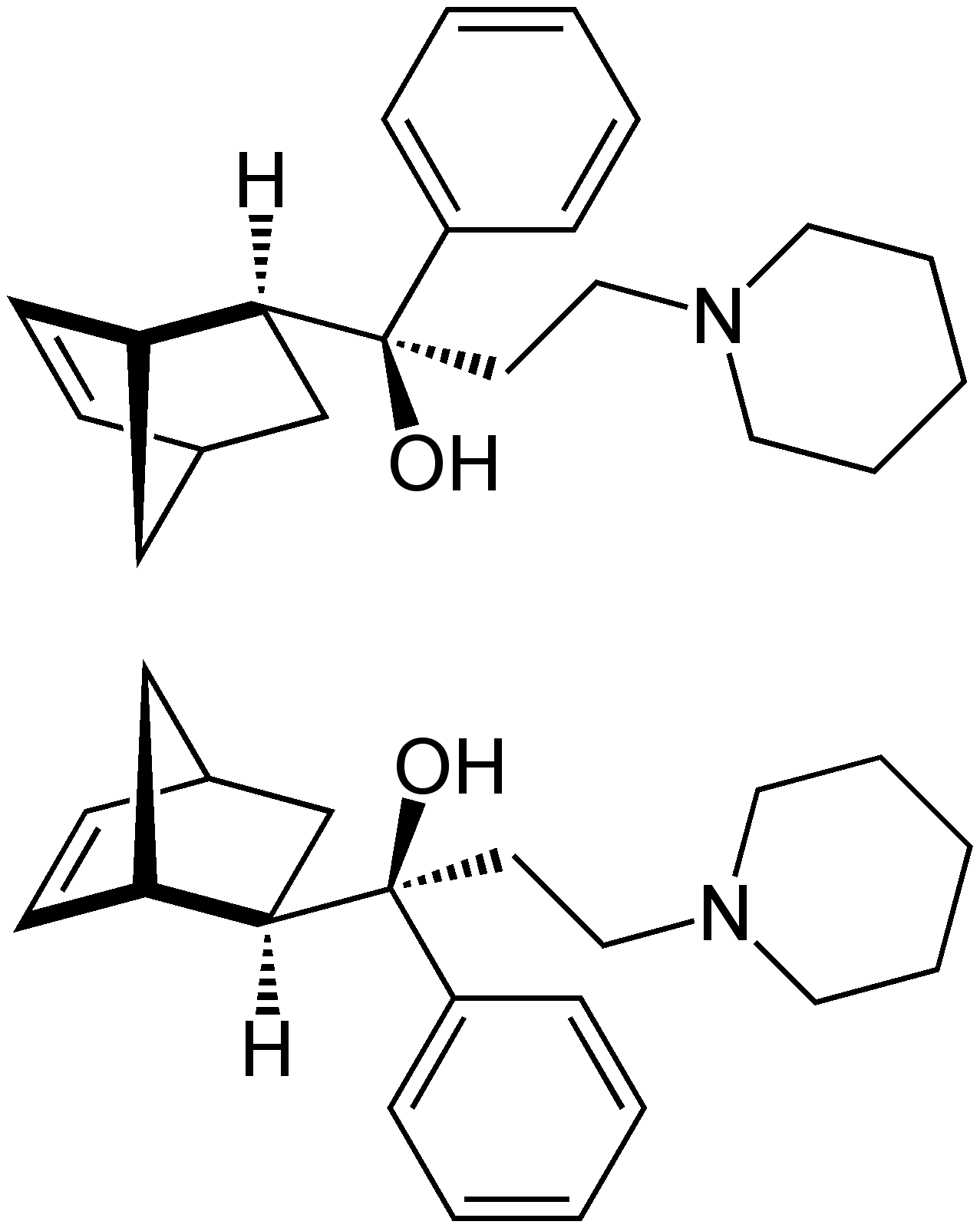
Biperiden
Biperiden, sold under the brand name Akineton among others, is a medication used to treat Parkinson disease, certain drug-induced movement disorders and Tourette Syndrome[citation needed]. It is not recommended for tardive dyskinesias. It is taken by mouth, injection into a vein, or muscle.
Common side effects include blurred vision, dry mouth, sleepiness, constipation, and confusion. It should not be used in people with a bowel obstruction or glaucoma. It is unclear if use in pregnancy or breastfeeding is safe. Biperiden is in the anticholinergic family of medication.
Biperiden was approved for medical use in the United States in 1959. It is on the World Health Organization's List of Essential Medicines. Biperiden is no longer marketed in the United States.
Biperiden is used for the adjunctive treatment of all forms of Parkinson's disease (postencephalitic, idiopathic, and arteriosclerotic Parkinson's) and for reduced sweating in methadone users. It seems to exert better effects in the postencephalitic and idiopathic than in the arteriosclerotic type.
Biperiden is also commonly used to improve acute extrapyramidal side effects related to antipsychotic drug therapy, such as akathisia.
It relieves muscle rigidity, reduces abnormal sweating related with clozapine and methadone use and salivation, improves abnormal gait, and to lesser extent, tremor.
In its role as a synthetic acetylcholine antagonist, biperiden has been analyzed as an alternative anticonvulsant for usage in the treatment of intoxication by organophosphorus nerve agents, such as sarin.
It was also suggested by IV route for neuroleptic malignant syndrome.
Hub AI
Biperiden AI simulator
(@Biperiden_simulator)
Biperiden
Biperiden, sold under the brand name Akineton among others, is a medication used to treat Parkinson disease, certain drug-induced movement disorders and Tourette Syndrome[citation needed]. It is not recommended for tardive dyskinesias. It is taken by mouth, injection into a vein, or muscle.
Common side effects include blurred vision, dry mouth, sleepiness, constipation, and confusion. It should not be used in people with a bowel obstruction or glaucoma. It is unclear if use in pregnancy or breastfeeding is safe. Biperiden is in the anticholinergic family of medication.
Biperiden was approved for medical use in the United States in 1959. It is on the World Health Organization's List of Essential Medicines. Biperiden is no longer marketed in the United States.
Biperiden is used for the adjunctive treatment of all forms of Parkinson's disease (postencephalitic, idiopathic, and arteriosclerotic Parkinson's) and for reduced sweating in methadone users. It seems to exert better effects in the postencephalitic and idiopathic than in the arteriosclerotic type.
Biperiden is also commonly used to improve acute extrapyramidal side effects related to antipsychotic drug therapy, such as akathisia.
It relieves muscle rigidity, reduces abnormal sweating related with clozapine and methadone use and salivation, improves abnormal gait, and to lesser extent, tremor.
In its role as a synthetic acetylcholine antagonist, biperiden has been analyzed as an alternative anticonvulsant for usage in the treatment of intoxication by organophosphorus nerve agents, such as sarin.
It was also suggested by IV route for neuroleptic malignant syndrome.