
Recent from talks
Block 5A, South Sudan
Knowledge base stats:
Talk channels stats:
Members stats:
Block 5A, South Sudan
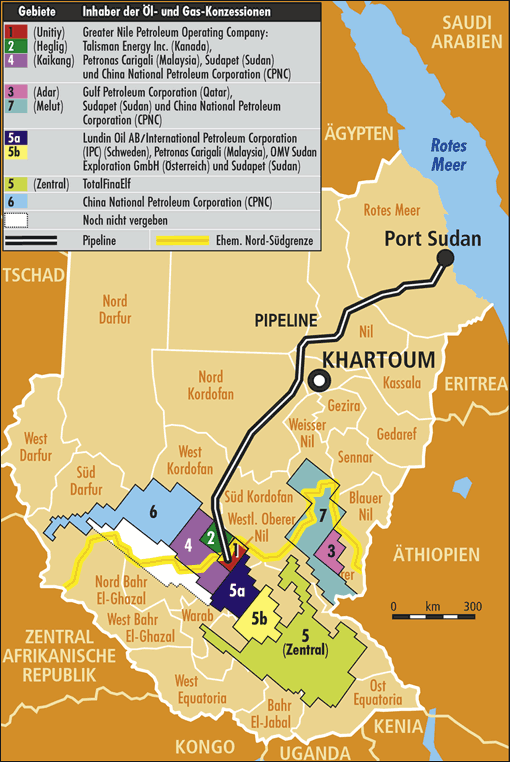
Block 5A is an oil concession in South Sudan. After oil field development began during the Second Sudanese Civil War, Block 5A was the scene of extensive fighting as rival militias struggled for control. Out of an original population of 240,000, an estimated 12,000 were killed or died of starvation and 160,000 were displaced by force. Production started in 2006. There is evidence that the environmentally sensitive marshlands beside the Nile are becoming polluted.
The Block 5A concession covers the central part of Unity State on the west of the White Nile, extending west into Warrap State and East into Jonglei State to the east of the Nile. Block 5A is part of a huge, fertile floodplain fed by rivers from the Congo, Uganda, Kenya and Ethiopia. In the dry season the land becomes parched. Pastoralists move their herds from one area to another in search of grazing, usually staying close to a river or permanent wetland. In the wet season, the low-lying lands are covered in flood water, and the herders move to higher ground. Block 5A is populated by Nuer people of the Bul, Leek, Jagei, Western Jikany and Dok sections. The town of Leer, in Dok Nuer territory, is in a key position in the block. On the east of the Nile the southern part of Zeraf island lies in Block 5a, populated mostly by Thiang Nuer.
Geologically, Block 5A is located in the Muglad Basin, which extends from South Sudan north into Sudan and is rich in oil deposits. The Tharjiath field in Block 5A has an area of 54 square kilometres (21 sq mi). Reserves at the Tharjiath field are said to be 250 million barrels. Mala field was expected to start production with 10,000 bpd in 2007 which would go up to 20,000 bpd by 2008. Mala was thought to have 44 million barrels of reserves. Oil has also been found in Jarayan field.
Sudan was in a state of civil war for most of the years following independence in 1956, apart from a temporary respite between 1972 and 1983. After hostilities resumed, the Sudan People's Liberation Movement/Army (SPLM/A) captured Leer from the government in March 1986, and the town became a stronghold of the rebel commander Riek Machar, who had been born there. In August 1991 Riek Machar broke away from John Garang's mainstream branch of the SPLM/A. Machar's breakaway faction was called the SPLM/A-Nasir faction from 1991 to 1993, and then the South Sudan Independence Army (SSIA) from 1994 to 1997. In 1996 Riek signed a Political Charter and in 1997 the Khartoum Peace Agreement with the government. Riek was made commander in chief of the South Sudan Defense Force (SSDF), which included most of the ex-rebels who had signed the Khartoum agreement. His forces controlled Block 5A.
The swampy and inaccessible region had no strategic value to the Khartoum government before the approach of the pipeline that was built from Port Sudan on the Red Sea to Heglig, not far to the north. The 1,540 kilometres (960 mi) underground pipeline opened in 1999. In 1998, oil exploration began to ramp up in the Block 5A concession area, and Paulino Matiep's South Sudan Unity Movement (SSUM) militia began pushing civilians out. There was growing tension between Riek Machar's SSDF and Paulino Matip's SSUM. Both groups wanted the rewards from providing security to the oil companies. In 1998–1999, Paulino's fighters and government troops clashed several times with Riek's forces in a struggle for control of the Unity state oilfields. Peter Gadet led Paulino Matiep's militia as they marauded through Block 5A in early 1999. His fighters forced Tito Biel, a high-ranking SSDF commander, to evacuate Leer.
By April 1999 Tito Biel's SSDF forces in Western Upper Nile were cooperating with the Sudan People's Liberation Army (SPLA) forces in Bahr el Ghazal, who were supplying arms. On arrival in Yirol early in May 1999 Tito formally declared that he had switched to the SPLA, along with his officers and men. In September 1999 Peter Gadet also mutinied, going over to the SPLA. On 29 September 1999 Gadet shelled Paulino's base of Mayom, causing flight of civilians to Block 5A in the east of the state. For several months after September 1999 Tito coordinated with Gadet in attacking various oil-related targets in Unity State.
With the end of the civil war in January 2005 the fighting died down. However, security problems continue. After the April 2010 elections, Colonel Gatluak Gai of Koch County in Block 5A was dissatisfied with the results and rebelled. He eventually made peace with the SPLA in July 2011, but was killed three days later. On 11 April 2011 Gatluak Gai's son-in-law, Major General Peter Gadet, now of the "South Sudan Liberation Army", published the "Mayom Declaration". He denounced government by the "current corrupt gangs in Juba" and called for the government of Southern Sudan to be replaced by a national broad-base transitional government. Gadet began an assault on the SPLA in Unity state, leaving at least 45 people dead. According to the military, 20 of the victims were southern army soldiers.
The Chevron Corporation prospected for oil in Block 5A, and in 1982 reportedly found oil about fours hours walk northwest of Koch. However, Chevron stopped oil exploration after three of their expatriate oil workers were killed by rebels in February 1984.
Hub AI
Block 5A, South Sudan AI simulator
(@Block 5A, South Sudan_simulator)
Block 5A, South Sudan
Block 5A is an oil concession in South Sudan. After oil field development began during the Second Sudanese Civil War, Block 5A was the scene of extensive fighting as rival militias struggled for control. Out of an original population of 240,000, an estimated 12,000 were killed or died of starvation and 160,000 were displaced by force. Production started in 2006. There is evidence that the environmentally sensitive marshlands beside the Nile are becoming polluted.
The Block 5A concession covers the central part of Unity State on the west of the White Nile, extending west into Warrap State and East into Jonglei State to the east of the Nile. Block 5A is part of a huge, fertile floodplain fed by rivers from the Congo, Uganda, Kenya and Ethiopia. In the dry season the land becomes parched. Pastoralists move their herds from one area to another in search of grazing, usually staying close to a river or permanent wetland. In the wet season, the low-lying lands are covered in flood water, and the herders move to higher ground. Block 5A is populated by Nuer people of the Bul, Leek, Jagei, Western Jikany and Dok sections. The town of Leer, in Dok Nuer territory, is in a key position in the block. On the east of the Nile the southern part of Zeraf island lies in Block 5a, populated mostly by Thiang Nuer.
Geologically, Block 5A is located in the Muglad Basin, which extends from South Sudan north into Sudan and is rich in oil deposits. The Tharjiath field in Block 5A has an area of 54 square kilometres (21 sq mi). Reserves at the Tharjiath field are said to be 250 million barrels. Mala field was expected to start production with 10,000 bpd in 2007 which would go up to 20,000 bpd by 2008. Mala was thought to have 44 million barrels of reserves. Oil has also been found in Jarayan field.
Sudan was in a state of civil war for most of the years following independence in 1956, apart from a temporary respite between 1972 and 1983. After hostilities resumed, the Sudan People's Liberation Movement/Army (SPLM/A) captured Leer from the government in March 1986, and the town became a stronghold of the rebel commander Riek Machar, who had been born there. In August 1991 Riek Machar broke away from John Garang's mainstream branch of the SPLM/A. Machar's breakaway faction was called the SPLM/A-Nasir faction from 1991 to 1993, and then the South Sudan Independence Army (SSIA) from 1994 to 1997. In 1996 Riek signed a Political Charter and in 1997 the Khartoum Peace Agreement with the government. Riek was made commander in chief of the South Sudan Defense Force (SSDF), which included most of the ex-rebels who had signed the Khartoum agreement. His forces controlled Block 5A.
The swampy and inaccessible region had no strategic value to the Khartoum government before the approach of the pipeline that was built from Port Sudan on the Red Sea to Heglig, not far to the north. The 1,540 kilometres (960 mi) underground pipeline opened in 1999. In 1998, oil exploration began to ramp up in the Block 5A concession area, and Paulino Matiep's South Sudan Unity Movement (SSUM) militia began pushing civilians out. There was growing tension between Riek Machar's SSDF and Paulino Matip's SSUM. Both groups wanted the rewards from providing security to the oil companies. In 1998–1999, Paulino's fighters and government troops clashed several times with Riek's forces in a struggle for control of the Unity state oilfields. Peter Gadet led Paulino Matiep's militia as they marauded through Block 5A in early 1999. His fighters forced Tito Biel, a high-ranking SSDF commander, to evacuate Leer.
By April 1999 Tito Biel's SSDF forces in Western Upper Nile were cooperating with the Sudan People's Liberation Army (SPLA) forces in Bahr el Ghazal, who were supplying arms. On arrival in Yirol early in May 1999 Tito formally declared that he had switched to the SPLA, along with his officers and men. In September 1999 Peter Gadet also mutinied, going over to the SPLA. On 29 September 1999 Gadet shelled Paulino's base of Mayom, causing flight of civilians to Block 5A in the east of the state. For several months after September 1999 Tito coordinated with Gadet in attacking various oil-related targets in Unity State.
With the end of the civil war in January 2005 the fighting died down. However, security problems continue. After the April 2010 elections, Colonel Gatluak Gai of Koch County in Block 5A was dissatisfied with the results and rebelled. He eventually made peace with the SPLA in July 2011, but was killed three days later. On 11 April 2011 Gatluak Gai's son-in-law, Major General Peter Gadet, now of the "South Sudan Liberation Army", published the "Mayom Declaration". He denounced government by the "current corrupt gangs in Juba" and called for the government of Southern Sudan to be replaced by a national broad-base transitional government. Gadet began an assault on the SPLA in Unity state, leaving at least 45 people dead. According to the military, 20 of the victims were southern army soldiers.
The Chevron Corporation prospected for oil in Block 5A, and in 1982 reportedly found oil about fours hours walk northwest of Koch. However, Chevron stopped oil exploration after three of their expatriate oil workers were killed by rebels in February 1984.
Recent media