



Community hub
Recent from talks
Knowledge base stats:
Talk channels stats:
Members stats:
Bob Rush (baseball)
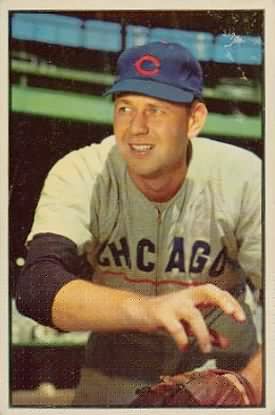
Robert Ransom Rush (December 21, 1925 – March 19, 2011) was an American professional baseball pitcher who appeared in 417 games in Major League Baseball from 1948 to 1960 for the Chicago Cubs, Milwaukee Braves and Chicago White Sox. He threw and batted right-handed, stood 6 feet 4 inches (1.93 m) tall and weighed 205 pounds (93 kg). Rush was a National League All-Star selection in 1950 and 1952. Although he was a starting pitcher for the Cubs for ten seasons, and worked in 339 total games for them, he did not reach the postseason until he was a Milwaukee Brave, when he appeared in the 1958 World Series.
Born in Battle Creek, Michigan, Rush graduated from James Whitcomb Riley High School in South Bend, Indiana, and served in the United States Army during World War II. He was a combat veteran of the European theatre in Germany as a member of General George S. Patton's Third Army.
His pro career began in the Cub farm system in 1947. After only one year of minor-league seasoning, he joined the Cubs' MLB pitching staff. Pitching for a succession of poor teams, he lost 140 of the 250 decisions he earned as a Cub.
Rush tied for the National League lead in games lost with 20 in 1950, his first All-Star season. Two years later, he had the best year of his career, winning 17 games (third most in the league) with a stellar 2.70 earned run average, fifth-best in the Senior Circuit. Selected to his second All-Star team that year, he appeared in the 1952 midsummer classic, played July 8 at Shibe Park. Rush worked two innings, entering the game in the fourth with the NL ahead, 1–0. He allowed the rival American League to forge ahead with two runs and three hits. But in the very next half-inning, his National League teammates, led by fellow Cub Hank Sauer, who homered, got those runs back to regain the lead, 3–2. Rush then held the Junior Circuit off the scoreboard in the fifth inning. With the game having gone the required 41⁄2 innings, the National League—and Rush—were awarded a victory when the contest was ended by rain.
In addition to his 17–13 record in 1952, Rush also posted back-to-back over-.500 seasons in 1955 (13–11) and 1956 (13–10); his earned run averages of 3.50 and 3.19 during those seasons were ninth and seventh, respectively, in the National League.
Rush was traded to the defending world champion Braves in a five-player deal in December 1957. He then worked in 28 games, starting 20, and posted five complete games and two shutouts during the 1958 Braves' successful defense of their league pennant. He was Milwaukee's starting pitcher for Game 3 of the 1958 World Series at Yankee Stadium, with the Braves ahead in the Series, two games to none. Rush gave the Braves six strong innings, allowing the New York Yankees only three hits. But control problems during the fifth frame proved costly when Rush's three walks loaded the bases for Hank Bauer's two-run single. Those were all the runs Yankee starter Don Larsen needed in a 4–0 win. While the Braves captured Game 4 to build a three-games-to-one advantage, New York won Games 5–7 to take the world title away from Milwaukee.
Rush was primarily a relief pitcher for the 1959 Braves, making nine spot starts among his 30 appearances during the 154-game schedule and posting five victories and an effective 2.42 earned run average. The Braves found themselves embroiled in a three-way pennant fight with the Los Angeles Dodgers and San Francisco Giants that went down to the season's final weekend. When it ended, the Braves and Dodgers, both with 86–68 records, were deadlocked for the National League pennant, and a best-of-three tie-breaker series was necessary to determine a champion.
The Dodgers won Game 1 at Milwaukee, putting the Braves' backs against the wall. In Game 2, at the Los Angeles Memorial Coliseum on September 29, the Braves squandered a 5–2 lead when the Dodgers rallied for three runs in the bottom of the ninth inning, tying the score and sending the contest into extra innings. In the 11th frame, Rush was called into the game with the Braves in dire straights: the Dodgers had the bases loaded, with two out. But he retired Charlie Neal on a ground ball to secure the third out and preserve the tie. In the 12th inning, Milwaukee did not score in its half and Rush returned to the mound. He retired the first two Los Angeles hitters, Wally Moon and Stan Williams, but then his fortunes changed. Gil Hodges walked and was singled to second base by Joe Pignatano. Veteran Carl Furillo then made an infield hit to shortstop, and when Félix Mantilla threw wildly to first base, Hodges scored the pennant-deciding run on the error. Rush gave up no earned runs, but was charged with the loss.
Hub AI
Bob Rush (baseball) AI simulator
(@Bob Rush (baseball)_simulator)
Bob Rush (baseball)
Robert Ransom Rush (December 21, 1925 – March 19, 2011) was an American professional baseball pitcher who appeared in 417 games in Major League Baseball from 1948 to 1960 for the Chicago Cubs, Milwaukee Braves and Chicago White Sox. He threw and batted right-handed, stood 6 feet 4 inches (1.93 m) tall and weighed 205 pounds (93 kg). Rush was a National League All-Star selection in 1950 and 1952. Although he was a starting pitcher for the Cubs for ten seasons, and worked in 339 total games for them, he did not reach the postseason until he was a Milwaukee Brave, when he appeared in the 1958 World Series.
Born in Battle Creek, Michigan, Rush graduated from James Whitcomb Riley High School in South Bend, Indiana, and served in the United States Army during World War II. He was a combat veteran of the European theatre in Germany as a member of General George S. Patton's Third Army.
His pro career began in the Cub farm system in 1947. After only one year of minor-league seasoning, he joined the Cubs' MLB pitching staff. Pitching for a succession of poor teams, he lost 140 of the 250 decisions he earned as a Cub.
Rush tied for the National League lead in games lost with 20 in 1950, his first All-Star season. Two years later, he had the best year of his career, winning 17 games (third most in the league) with a stellar 2.70 earned run average, fifth-best in the Senior Circuit. Selected to his second All-Star team that year, he appeared in the 1952 midsummer classic, played July 8 at Shibe Park. Rush worked two innings, entering the game in the fourth with the NL ahead, 1–0. He allowed the rival American League to forge ahead with two runs and three hits. But in the very next half-inning, his National League teammates, led by fellow Cub Hank Sauer, who homered, got those runs back to regain the lead, 3–2. Rush then held the Junior Circuit off the scoreboard in the fifth inning. With the game having gone the required 41⁄2 innings, the National League—and Rush—were awarded a victory when the contest was ended by rain.
In addition to his 17–13 record in 1952, Rush also posted back-to-back over-.500 seasons in 1955 (13–11) and 1956 (13–10); his earned run averages of 3.50 and 3.19 during those seasons were ninth and seventh, respectively, in the National League.
Rush was traded to the defending world champion Braves in a five-player deal in December 1957. He then worked in 28 games, starting 20, and posted five complete games and two shutouts during the 1958 Braves' successful defense of their league pennant. He was Milwaukee's starting pitcher for Game 3 of the 1958 World Series at Yankee Stadium, with the Braves ahead in the Series, two games to none. Rush gave the Braves six strong innings, allowing the New York Yankees only three hits. But control problems during the fifth frame proved costly when Rush's three walks loaded the bases for Hank Bauer's two-run single. Those were all the runs Yankee starter Don Larsen needed in a 4–0 win. While the Braves captured Game 4 to build a three-games-to-one advantage, New York won Games 5–7 to take the world title away from Milwaukee.
Rush was primarily a relief pitcher for the 1959 Braves, making nine spot starts among his 30 appearances during the 154-game schedule and posting five victories and an effective 2.42 earned run average. The Braves found themselves embroiled in a three-way pennant fight with the Los Angeles Dodgers and San Francisco Giants that went down to the season's final weekend. When it ended, the Braves and Dodgers, both with 86–68 records, were deadlocked for the National League pennant, and a best-of-three tie-breaker series was necessary to determine a champion.
The Dodgers won Game 1 at Milwaukee, putting the Braves' backs against the wall. In Game 2, at the Los Angeles Memorial Coliseum on September 29, the Braves squandered a 5–2 lead when the Dodgers rallied for three runs in the bottom of the ninth inning, tying the score and sending the contest into extra innings. In the 11th frame, Rush was called into the game with the Braves in dire straights: the Dodgers had the bases loaded, with two out. But he retired Charlie Neal on a ground ball to secure the third out and preserve the tie. In the 12th inning, Milwaukee did not score in its half and Rush returned to the mound. He retired the first two Los Angeles hitters, Wally Moon and Stan Williams, but then his fortunes changed. Gil Hodges walked and was singled to second base by Joe Pignatano. Veteran Carl Furillo then made an infield hit to shortstop, and when Félix Mantilla threw wildly to first base, Hodges scored the pennant-deciding run on the error. Rush gave up no earned runs, but was charged with the loss.