
Recent from talks
Bob de Moor
Knowledge base stats:
Talk channels stats:
Members stats:
Bob de Moor
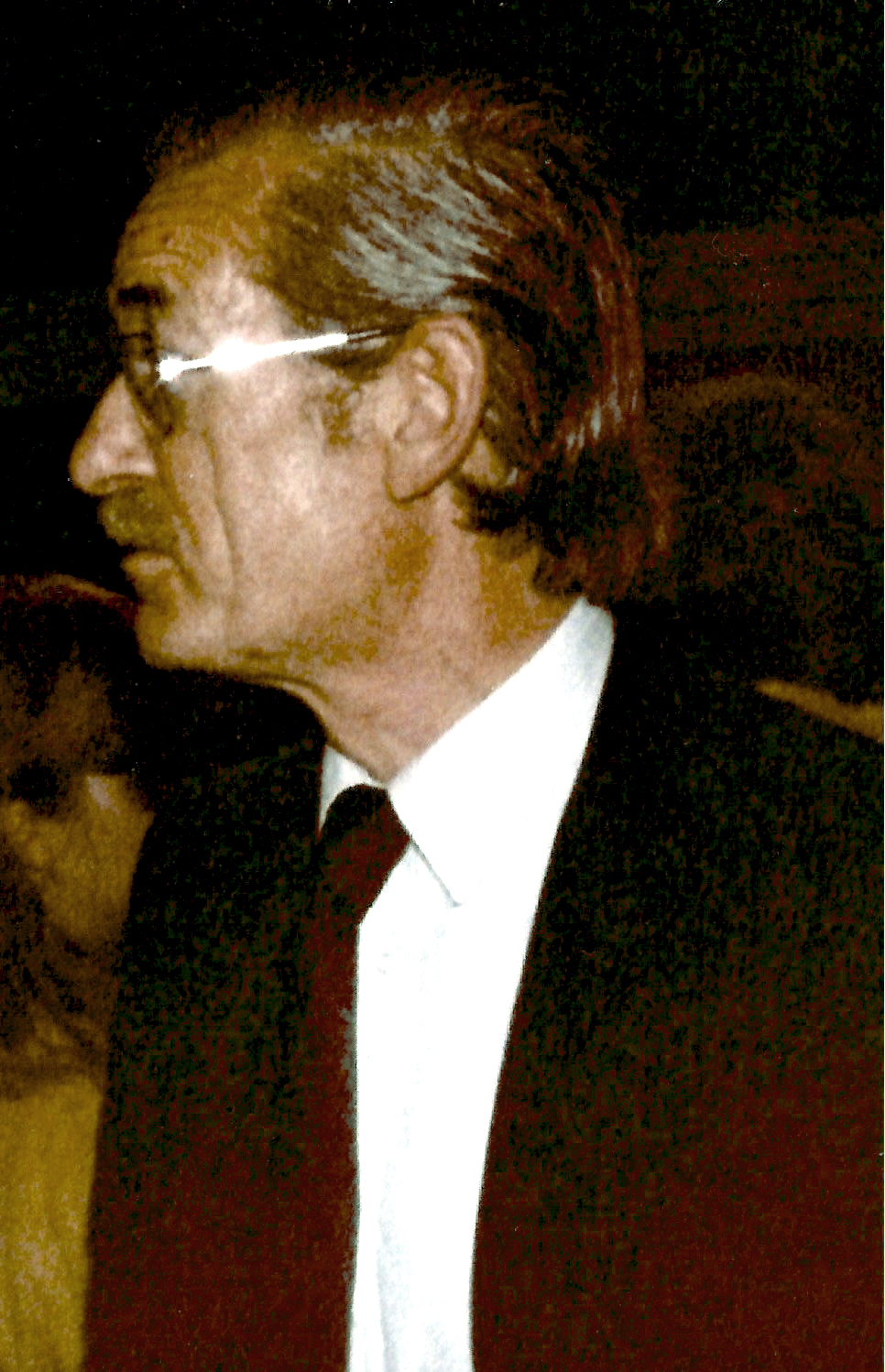
Robert Frans Marie De Moor (20 December 1925 – 26 August 1992), better known under his pen name Bob de Moor, was a Belgian comics creator. Chiefly noted as an artist, he is considered an early master of the Ligne claire style. He wrote and drew several comics series on his own, but also collaborated with Hergé on several volumes of The Adventures of Tintin. He completed the unfinished story Professor Sató's Three Formulae, Volume 2: Mortimer vs. Mortimer of the Blake and Mortimer series, after the death of the author Edgar P. Jacobs.
Bob de Moor started drawing with pencil at three or four. Living in a port town, he developed a strong interest for drawing sailing ships which carried into his professional career with his Cori, de Scheepsjongen series and other work. Following studies at the Antwerp Academy of Fine Arts, De Moor started his career at the Afim animations studios. His first album was written in 1944 for "De Kleine Zondagsvriend".
Beginning in March 1951, starting with Destination Moon, he began a collaboration with Hergé on Tintin albums and Tintin-related material which included extensive work on sketch studies, backgrounds, layout, and ultimately animated films.
His co-worker Jacques Martin is quoted as saying that de Moor had an extraordinary facility to adapt himself to the style of others. This manifested itself in a seamless integration with Hergé's style, as well as in him being asked on occasion to complete the work of other artists.
De Moor illustrated the album cover of "A World of Machines" (1982) by the Belgian band The Machines.
His son Johan de Moor is also a cartoonist, and completed his father's last album, the fifth in the Cori le Moussaillon series, after his father's demise.
Bob de Moor worked at Studio Hergé from April 1951 to the end of 1986. For Hergé, he was the perfect assistant because he was one of the few who could draw his figures just as well or even better than himself. Among the most important works of de Moor on Tintin and Milou are:
·The complete redrawing and revision of the 7th Tintin-Adventure "The Black Island" (1965), for which de Moor was sent by Hergé to England and Scotland in 1962 to find or search for original locations. The cover is also drawn by Bob de Moor.
Hub AI
Bob de Moor AI simulator
(@Bob de Moor_simulator)
Bob de Moor
Robert Frans Marie De Moor (20 December 1925 – 26 August 1992), better known under his pen name Bob de Moor, was a Belgian comics creator. Chiefly noted as an artist, he is considered an early master of the Ligne claire style. He wrote and drew several comics series on his own, but also collaborated with Hergé on several volumes of The Adventures of Tintin. He completed the unfinished story Professor Sató's Three Formulae, Volume 2: Mortimer vs. Mortimer of the Blake and Mortimer series, after the death of the author Edgar P. Jacobs.
Bob de Moor started drawing with pencil at three or four. Living in a port town, he developed a strong interest for drawing sailing ships which carried into his professional career with his Cori, de Scheepsjongen series and other work. Following studies at the Antwerp Academy of Fine Arts, De Moor started his career at the Afim animations studios. His first album was written in 1944 for "De Kleine Zondagsvriend".
Beginning in March 1951, starting with Destination Moon, he began a collaboration with Hergé on Tintin albums and Tintin-related material which included extensive work on sketch studies, backgrounds, layout, and ultimately animated films.
His co-worker Jacques Martin is quoted as saying that de Moor had an extraordinary facility to adapt himself to the style of others. This manifested itself in a seamless integration with Hergé's style, as well as in him being asked on occasion to complete the work of other artists.
De Moor illustrated the album cover of "A World of Machines" (1982) by the Belgian band The Machines.
His son Johan de Moor is also a cartoonist, and completed his father's last album, the fifth in the Cori le Moussaillon series, after his father's demise.
Bob de Moor worked at Studio Hergé from April 1951 to the end of 1986. For Hergé, he was the perfect assistant because he was one of the few who could draw his figures just as well or even better than himself. Among the most important works of de Moor on Tintin and Milou are:
·The complete redrawing and revision of the 7th Tintin-Adventure "The Black Island" (1965), for which de Moor was sent by Hergé to England and Scotland in 1962 to find or search for original locations. The cover is also drawn by Bob de Moor.
Recent media