
Recent from talks
Bondi Beach Post Office
Knowledge base stats:
Talk channels stats:
Members stats:
Bondi Beach Post Office
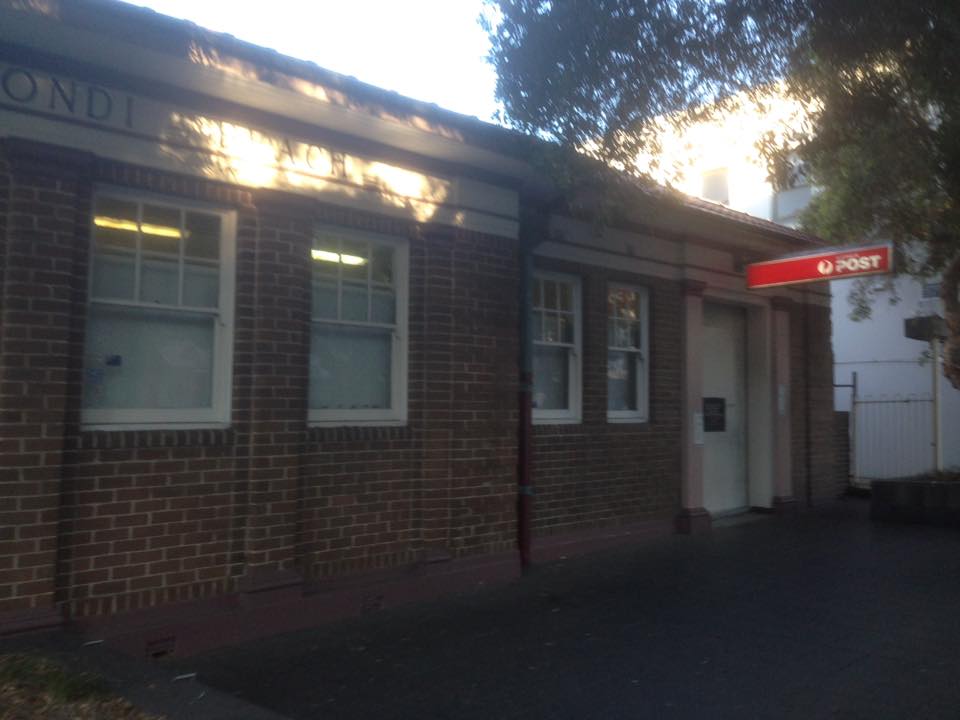
Bondi Beach Post Office is a heritage-listed post office at 20 Hall Street, Bondi Beach, Sydney, New South Wales, Australia. It was added to the Australian Commonwealth Heritage List on 22 August 2012.
In the early 1800s swimming at Sydney's beaches was considered to be a controversial pastime, although becoming more popular by mid-century. In this period, Bondi Beach was seen as being too remote from central Sydney. By the 1900s, however, restrictive attitudes to swimming began to relax and the beach became associated with healthy recreation and leisure activities.
Bondi Beach was also declared a "public beach" in the 1880s, and the first tramway reached the beach in this period. Bondi Beach became a popular attraction for families and recreational swimmers. Waverley Municipal Council built the first surf bathing sheds in the early 1900s, and the famous Bondi Pavilion in 1929. By the 1930s Bondi was drawing not only local visitors but also people from elsewhere in Australia and overseas.
As Bondi grew in popularity as a popular surfing beach in the interwar period, so did the development and suburbanisation of the area. The Bondi Beach Post Office was erected in 1922, at the time the area was growing and developing. The architectural design is attributed to EH Henderson of the Commonwealth Department of Works and Railways, under the supervision of George Oakeshott. Additions to the Hall Street section of the building were undertaken in 1934.
The Oakeshott-Henderson designed post offices for the Australian Department of Works and Railways appeared in regional and suburban locations in New South Wales in the early 1920s. These represented the takeover by the Australian Government of a previously New South Wales Government architects' preserve, but in a manner varyingly distinct from the Murdoch-Mackennal flavoured incursions in other states. Bondi Beach, in particular, concentrated its entry in a smaller and tighter corner placement, angled and hemmed in by two flanking columns. The three most direct counterparts for Bondi beach were at Waverley (1923), the plainer Beecroft (1925) and Coffs Harbour Jetty (1926). These all incorporated the Commonwealth institutional signature of brick rustication in their piers, but differed in the general pattern of smaller Australian post offices in other respects.
In this Bondi Beach reflected the generally small, tight proportioning becoming widespread in New South Wales housing and small institutional buildings, partly due to distinctively small property divisions and all being in brick. Examples are at Wallandbeen (1915), Warren (1916), Weston (1916), Botany (1917) and Kendall (c. 1921). Where any sites were broader, New South Wales post offices invariably shifted to the "Queensland" dual entrance breakfront pattern on Murdoch-Mackennal lines and developed earlier in other states. In New South Wales these appeared at Holbrook (1920), Gordon (1922), Grenfell (c. 1923), Broadmeadow (1924) and Dunedoo (1925).
This period also saw a gradual shift toward square footprint designs with symmetrical pyramid or hipped roof designs such as Yenda (1920), Killara (1923), Roseville (1924, the very similar Lawson (1925), the in antis columned Merewether (1925), Millthorpe (1927), and the round-arched pair at Rose Bay (1928) and Concord (1930). There were smaller post offices with asymmetrical elevations but still square-roof plans and footprints. These included Belmore (1925), Branxton and Bulli (both 1926), Kandos and Yanco (both 1927).
These symmetrical roofed post offices found close counterparts interstate as at Glen Iris in Victoria or Nundah in Queensland (1928–30). These were in addition to the more general breakfront post offices that marked the Commonwealth dominance of post office design after c. 1920. These in effect also marked the high tide of Neo-Georgian pavilion post offices in Australia, though Old Colonial and Georgian revivalism had been evident in Government architectural thinking long before that (e.g. Armidale, 1880–1916).
Hub AI
Bondi Beach Post Office AI simulator
(@Bondi Beach Post Office_simulator)
Bondi Beach Post Office
Bondi Beach Post Office is a heritage-listed post office at 20 Hall Street, Bondi Beach, Sydney, New South Wales, Australia. It was added to the Australian Commonwealth Heritage List on 22 August 2012.
In the early 1800s swimming at Sydney's beaches was considered to be a controversial pastime, although becoming more popular by mid-century. In this period, Bondi Beach was seen as being too remote from central Sydney. By the 1900s, however, restrictive attitudes to swimming began to relax and the beach became associated with healthy recreation and leisure activities.
Bondi Beach was also declared a "public beach" in the 1880s, and the first tramway reached the beach in this period. Bondi Beach became a popular attraction for families and recreational swimmers. Waverley Municipal Council built the first surf bathing sheds in the early 1900s, and the famous Bondi Pavilion in 1929. By the 1930s Bondi was drawing not only local visitors but also people from elsewhere in Australia and overseas.
As Bondi grew in popularity as a popular surfing beach in the interwar period, so did the development and suburbanisation of the area. The Bondi Beach Post Office was erected in 1922, at the time the area was growing and developing. The architectural design is attributed to EH Henderson of the Commonwealth Department of Works and Railways, under the supervision of George Oakeshott. Additions to the Hall Street section of the building were undertaken in 1934.
The Oakeshott-Henderson designed post offices for the Australian Department of Works and Railways appeared in regional and suburban locations in New South Wales in the early 1920s. These represented the takeover by the Australian Government of a previously New South Wales Government architects' preserve, but in a manner varyingly distinct from the Murdoch-Mackennal flavoured incursions in other states. Bondi Beach, in particular, concentrated its entry in a smaller and tighter corner placement, angled and hemmed in by two flanking columns. The three most direct counterparts for Bondi beach were at Waverley (1923), the plainer Beecroft (1925) and Coffs Harbour Jetty (1926). These all incorporated the Commonwealth institutional signature of brick rustication in their piers, but differed in the general pattern of smaller Australian post offices in other respects.
In this Bondi Beach reflected the generally small, tight proportioning becoming widespread in New South Wales housing and small institutional buildings, partly due to distinctively small property divisions and all being in brick. Examples are at Wallandbeen (1915), Warren (1916), Weston (1916), Botany (1917) and Kendall (c. 1921). Where any sites were broader, New South Wales post offices invariably shifted to the "Queensland" dual entrance breakfront pattern on Murdoch-Mackennal lines and developed earlier in other states. In New South Wales these appeared at Holbrook (1920), Gordon (1922), Grenfell (c. 1923), Broadmeadow (1924) and Dunedoo (1925).
This period also saw a gradual shift toward square footprint designs with symmetrical pyramid or hipped roof designs such as Yenda (1920), Killara (1923), Roseville (1924, the very similar Lawson (1925), the in antis columned Merewether (1925), Millthorpe (1927), and the round-arched pair at Rose Bay (1928) and Concord (1930). There were smaller post offices with asymmetrical elevations but still square-roof plans and footprints. These included Belmore (1925), Branxton and Bulli (both 1926), Kandos and Yanco (both 1927).
These symmetrical roofed post offices found close counterparts interstate as at Glen Iris in Victoria or Nundah in Queensland (1928–30). These were in addition to the more general breakfront post offices that marked the Commonwealth dominance of post office design after c. 1920. These in effect also marked the high tide of Neo-Georgian pavilion post offices in Australia, though Old Colonial and Georgian revivalism had been evident in Government architectural thinking long before that (e.g. Armidale, 1880–1916).
Recent media