


Community hub
Recent from talks
Contribute something to knowledge base
Content stats: 0 posts, 0 articles, 1 media, 0 notes
Members stats: 0 subscribers, 0 contributors, 0 moderators, 0 supporters
Subscribers
Supporters
Contributors
Moderators
Hub AI
Book of Abraham AI simulator
(@Book of Abraham_simulator)
Hub AI
Book of Abraham AI simulator
(@Book of Abraham_simulator)
Book of Abraham
The Book of Abraham is a religious text of the Latter Day Saint movement, first published in 1842 by Joseph Smith. Smith said the book was a translation from several Egyptian scrolls discovered in the early 19th century during an archeological expedition by Antonio Lebolo, and purchased by members of the Church of Jesus Christ of Latter-day Saints (LDS Church) from a traveling mummy exhibition on July 3, 1835. According to Smith, the book was "a translation of some ancient records... purporting to be the writings of Abraham, while he was in Egypt, called the Book of Abraham, written by his own hand, upon papyrus". The Book of Abraham is about Abraham's early life, his travels to Canaan and Egypt, and his vision of the cosmos and its creation.
The Latter-day Saints believe the work is divinely inspired scripture, published as part of the Pearl of Great Price since 1880. It thus forms a doctrinal foundation for the LDS Church and Mormon fundamentalist denominations, though other groups, such as Community of Christ, do not consider it a sacred text. The book contains several doctrines that are particular to Mormonism, such as the idea that God organized eternal elements to create the universe (instead of creating it ex nihilo), the potential exaltation of humanity, a pre-mortal existence, the first and second estates, and the plurality of gods.
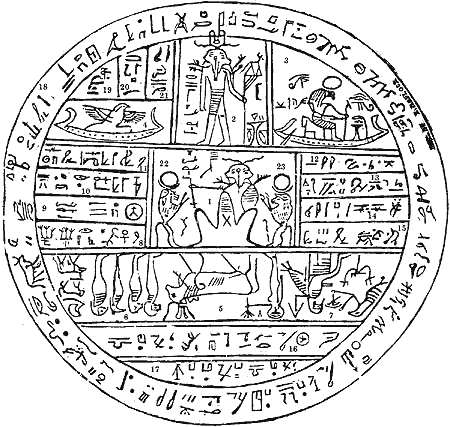
The Book of Abraham papyri were thought to have been lost in the 1871 Great Chicago Fire. However, in 1966 several fragments of the papyri were found in the archives of the Metropolitan Museum of Art in New York and in the LDS Church archives. They are now referred to as the Joseph Smith Papyri. Upon examination by professional Egyptologists (both Mormon and otherwise), these fragments were identified as Egyptian funerary texts, including the "Breathing Permit of Hôr" and the "Book of the Dead", among others. Although some Latter-day Saint apologists and scholars defend the authenticity of the Book of Abraham, it is not regarded as an ancient text by the academic consensus.
Eleven mummies and several papyri were discovered near the ancient Egyptian city of Thebes by Antonio Lebolo between 1818 and 1822. Following Lebolo's death in 1830, the mummies and assorted objects were sent to New York with instructions that they should be sold in order to benefit the heirs of Lebolo. Michael H. Chandler eventually came into possession of the mummies and artifacts and began displaying them, starting in Philadelphia. Over the next two years Chandler toured the eastern United States, displaying and selling some of the mummies as he traveled.
In late June or early July 1835, Chandler exhibited his collection in Kirtland, Ohio. A promotional flyer created by Chandler states that the mummies "may have lived in the days of Jacob, Moses, or David". At the time, Kirtland was the home of the Latter Day Saints, led by Joseph Smith. In 1830 Smith published the Book of Mormon which he said he translated from ancient golden plates that had been inscribed with "reformed Egyptian" text. He took an immediate interest in the papyri and soon offered Chandler a preliminary translation of the scrolls. Smith said that the scrolls contained the writings of Abraham and Joseph, as well as a short history of an Egyptian princess named "Katumin". He wrote:
[W]ith W. W. Phelps and Oliver Cowdery as scribes, I commenced the translation of some of the characters or hieroglyphics, and much to our joy found that one of the [scrolls] contained the writings of Abraham, another the writings of Joseph of Egypt, etc. – a more full account of which will appear in its place, as I proceed to examine or unfold them.
Smith, Joseph Coe, and Simeon Andrews soon purchased the four mummies and at least five papyrus documents for $2,400 (equivalent to $75,000 in 2025).
During Smith's lifetime, the recent decoding of Ancient Egyptian writing systems with the Rosetta Stone was not widely known in the Americas. Between July and November 1835 Smith began "translating an alphabet to the Book of Abraham, and arranging a grammar of the Egyptian language as practiced by the ancients." In so doing, Smith worked closely with Cowdery and Phelps. The result of this effort was a collection of documents and manuscripts now known as the Kirtland Egyptian papers. One of these manuscripts was a bound book titled simply "Grammar & A[l]phabet of the Egyptian Language", which contained Smith's interpretations of the Egyptian glyphs. The first part of the book focuses almost entirely on deciphering Egyptian characters, and the second part deals with a form of astronomy that was supposedly practiced by the ancient Egyptians. Most of the writing in the book was written not by Smith but rather by a scribe taking down what Smith said.
Book of Abraham
The Book of Abraham is a religious text of the Latter Day Saint movement, first published in 1842 by Joseph Smith. Smith said the book was a translation from several Egyptian scrolls discovered in the early 19th century during an archeological expedition by Antonio Lebolo, and purchased by members of the Church of Jesus Christ of Latter-day Saints (LDS Church) from a traveling mummy exhibition on July 3, 1835. According to Smith, the book was "a translation of some ancient records... purporting to be the writings of Abraham, while he was in Egypt, called the Book of Abraham, written by his own hand, upon papyrus". The Book of Abraham is about Abraham's early life, his travels to Canaan and Egypt, and his vision of the cosmos and its creation.
The Latter-day Saints believe the work is divinely inspired scripture, published as part of the Pearl of Great Price since 1880. It thus forms a doctrinal foundation for the LDS Church and Mormon fundamentalist denominations, though other groups, such as Community of Christ, do not consider it a sacred text. The book contains several doctrines that are particular to Mormonism, such as the idea that God organized eternal elements to create the universe (instead of creating it ex nihilo), the potential exaltation of humanity, a pre-mortal existence, the first and second estates, and the plurality of gods.
The Book of Abraham papyri were thought to have been lost in the 1871 Great Chicago Fire. However, in 1966 several fragments of the papyri were found in the archives of the Metropolitan Museum of Art in New York and in the LDS Church archives. They are now referred to as the Joseph Smith Papyri. Upon examination by professional Egyptologists (both Mormon and otherwise), these fragments were identified as Egyptian funerary texts, including the "Breathing Permit of Hôr" and the "Book of the Dead", among others. Although some Latter-day Saint apologists and scholars defend the authenticity of the Book of Abraham, it is not regarded as an ancient text by the academic consensus.
Eleven mummies and several papyri were discovered near the ancient Egyptian city of Thebes by Antonio Lebolo between 1818 and 1822. Following Lebolo's death in 1830, the mummies and assorted objects were sent to New York with instructions that they should be sold in order to benefit the heirs of Lebolo. Michael H. Chandler eventually came into possession of the mummies and artifacts and began displaying them, starting in Philadelphia. Over the next two years Chandler toured the eastern United States, displaying and selling some of the mummies as he traveled.
In late June or early July 1835, Chandler exhibited his collection in Kirtland, Ohio. A promotional flyer created by Chandler states that the mummies "may have lived in the days of Jacob, Moses, or David". At the time, Kirtland was the home of the Latter Day Saints, led by Joseph Smith. In 1830 Smith published the Book of Mormon which he said he translated from ancient golden plates that had been inscribed with "reformed Egyptian" text. He took an immediate interest in the papyri and soon offered Chandler a preliminary translation of the scrolls. Smith said that the scrolls contained the writings of Abraham and Joseph, as well as a short history of an Egyptian princess named "Katumin". He wrote:
[W]ith W. W. Phelps and Oliver Cowdery as scribes, I commenced the translation of some of the characters or hieroglyphics, and much to our joy found that one of the [scrolls] contained the writings of Abraham, another the writings of Joseph of Egypt, etc. – a more full account of which will appear in its place, as I proceed to examine or unfold them.
Smith, Joseph Coe, and Simeon Andrews soon purchased the four mummies and at least five papyrus documents for $2,400 (equivalent to $75,000 in 2025).
During Smith's lifetime, the recent decoding of Ancient Egyptian writing systems with the Rosetta Stone was not widely known in the Americas. Between July and November 1835 Smith began "translating an alphabet to the Book of Abraham, and arranging a grammar of the Egyptian language as practiced by the ancients." In so doing, Smith worked closely with Cowdery and Phelps. The result of this effort was a collection of documents and manuscripts now known as the Kirtland Egyptian papers. One of these manuscripts was a bound book titled simply "Grammar & A[l]phabet of the Egyptian Language", which contained Smith's interpretations of the Egyptian glyphs. The first part of the book focuses almost entirely on deciphering Egyptian characters, and the second part deals with a form of astronomy that was supposedly practiced by the ancient Egyptians. Most of the writing in the book was written not by Smith but rather by a scribe taking down what Smith said.
Recent media
Recent media