



Community hub
Recent from talks
Knowledge base stats:
Talk channels stats:
Members stats:
Book of Mormon
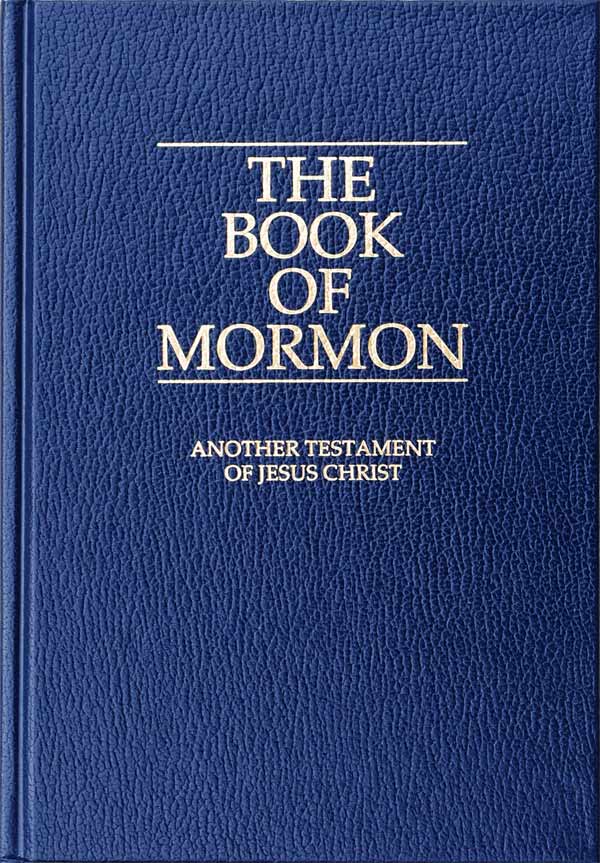
The Book of Mormon is a religious text of the Latter Day Saint movement, first published in 1830 by Joseph Smith as The Book of Mormon: An Account Written by the Hand of Mormon upon Plates Taken from the Plates of Nephi.
The book is one of the earliest and most well-known unique writings of the Latter Day Saint movement. The denominations of the Latter Day Saint movement typically regard the text primarily as scripture (sometimes as one of four standard works) and secondarily as a record of God's dealings with ancient inhabitants of the Americas. Most Latter Day Saints view the book as a record of actual history, though perspectives vary by denomination: some emphasize its spiritual inspiration rather than literal history, while others—particularly the LDS Church—regard it as both literal history and the central "keystone" of their faith. Independent archaeological, historical, and scientific communities have discovered little evidence to support the existence of the civilizations described therein. Characteristics of the language and content point toward a nineteenth-century origin of the Book of Mormon. Various academics and apologetic organizations connected to the Latter Day Saint movement nevertheless argue that the book is an authentic account of the pre-Columbian exchange world.
The Book of Mormon has a number of doctrinal discussions on subjects such as the fall of Adam and Eve, the nature of the Christian atonement, eschatology, agency, priesthood authority, redemption from physical and spiritual death, the nature and conduct of baptism, the age of accountability, the purpose and practice of communion, personalized revelation, economic justice, the anthropomorphic and personal nature of God, the nature of spirits and angels, and the organization of the latter day church. The pivotal event of the book is an appearance of Jesus Christ in the Americas shortly after his resurrection. Common teachings of the Latter Day Saint movement hold that the Book of Mormon fulfills numerous biblical prophecies by ending a global apostasy and signaling a restoration of Christian gospel.
The Book of Mormon is divided into smaller books — which are usually titled after individuals named as primary authors — and in most versions, is divided into chapters and verses. Its English text imitates the style of the King James Version of the Bible. The Book of Mormon has been fully or partially translated into at least 112 languages.
According to Smith's account and the book's narrative, the Book was originally engraved in otherwise unknown characters on golden plates by ancient prophets; the last prophet to contribute to the book, Moroni, had buried it in what is present-day Manchester, New York, and then appeared in a vision to Smith in 1827, revealing the location of the plates and instructing him to translate the plates into English. A different view is that Smith authored the Book, drawing on material and ideas from his contemporary 19th-century environment, rather than translating an ancient record.
According to Joseph Smith, in 1823, when he was seventeen years old, an angel of God named Moroni appeared to him and said that a collection of ancient writings was buried in a nearby hill in present-day Wayne County, New York, engraved on golden plates by ancient prophets. The writings were said to describe a people whom God had led from Jerusalem to the Western hemisphere 600 years before Jesus's birth. Smith said this vision occurred on the evening of September 21, 1823, and that on the following day, via divine guidance, he located the burial location of the plates on this hill and was instructed by Moroni to meet him at the same hill on September 22 of the following year to receive further instructions, which repeated annually until 1827. Smith told his entire immediate family about this angelic encounter by the next night, and his brother William reported that the family "believed all he [Joseph Smith] said" about the angel and plates.
Smith and his family reminisced that as part of what Smith believed was angelic instruction, Moroni provided Smith with a "brief sketch" of the "origin, progress, civilization, laws, governments ... righteousness and iniquity" of the "aboriginal inhabitants of the country" (referring to the Nephites and Lamanites who figure in the Book of Mormon's primary narrative). Smith sometimes shared what he said he had learned through such angelic encounters with his family as well.
In Smith's account, Moroni allowed him, accompanied by his wife Emma Hale Smith, to take the plates on September 22, 1827, four years after his initial visit to the hill, and directed him to translate them into English. Smith said the angel Moroni strictly instructed him to not let anyone else see the plates without divine permission. Neighbors, some of whom had collaborated with Smith in earlier treasure-hunting enterprises, tried several times to steal the plates from Smith while he and his family guarded them.
Hub AI
Book of Mormon AI simulator
(@Book of Mormon_simulator)
Book of Mormon
The Book of Mormon is a religious text of the Latter Day Saint movement, first published in 1830 by Joseph Smith as The Book of Mormon: An Account Written by the Hand of Mormon upon Plates Taken from the Plates of Nephi.
The book is one of the earliest and most well-known unique writings of the Latter Day Saint movement. The denominations of the Latter Day Saint movement typically regard the text primarily as scripture (sometimes as one of four standard works) and secondarily as a record of God's dealings with ancient inhabitants of the Americas. Most Latter Day Saints view the book as a record of actual history, though perspectives vary by denomination: some emphasize its spiritual inspiration rather than literal history, while others—particularly the LDS Church—regard it as both literal history and the central "keystone" of their faith. Independent archaeological, historical, and scientific communities have discovered little evidence to support the existence of the civilizations described therein. Characteristics of the language and content point toward a nineteenth-century origin of the Book of Mormon. Various academics and apologetic organizations connected to the Latter Day Saint movement nevertheless argue that the book is an authentic account of the pre-Columbian exchange world.
The Book of Mormon has a number of doctrinal discussions on subjects such as the fall of Adam and Eve, the nature of the Christian atonement, eschatology, agency, priesthood authority, redemption from physical and spiritual death, the nature and conduct of baptism, the age of accountability, the purpose and practice of communion, personalized revelation, economic justice, the anthropomorphic and personal nature of God, the nature of spirits and angels, and the organization of the latter day church. The pivotal event of the book is an appearance of Jesus Christ in the Americas shortly after his resurrection. Common teachings of the Latter Day Saint movement hold that the Book of Mormon fulfills numerous biblical prophecies by ending a global apostasy and signaling a restoration of Christian gospel.
The Book of Mormon is divided into smaller books — which are usually titled after individuals named as primary authors — and in most versions, is divided into chapters and verses. Its English text imitates the style of the King James Version of the Bible. The Book of Mormon has been fully or partially translated into at least 112 languages.
According to Smith's account and the book's narrative, the Book was originally engraved in otherwise unknown characters on golden plates by ancient prophets; the last prophet to contribute to the book, Moroni, had buried it in what is present-day Manchester, New York, and then appeared in a vision to Smith in 1827, revealing the location of the plates and instructing him to translate the plates into English. A different view is that Smith authored the Book, drawing on material and ideas from his contemporary 19th-century environment, rather than translating an ancient record.
According to Joseph Smith, in 1823, when he was seventeen years old, an angel of God named Moroni appeared to him and said that a collection of ancient writings was buried in a nearby hill in present-day Wayne County, New York, engraved on golden plates by ancient prophets. The writings were said to describe a people whom God had led from Jerusalem to the Western hemisphere 600 years before Jesus's birth. Smith said this vision occurred on the evening of September 21, 1823, and that on the following day, via divine guidance, he located the burial location of the plates on this hill and was instructed by Moroni to meet him at the same hill on September 22 of the following year to receive further instructions, which repeated annually until 1827. Smith told his entire immediate family about this angelic encounter by the next night, and his brother William reported that the family "believed all he [Joseph Smith] said" about the angel and plates.
Smith and his family reminisced that as part of what Smith believed was angelic instruction, Moroni provided Smith with a "brief sketch" of the "origin, progress, civilization, laws, governments ... righteousness and iniquity" of the "aboriginal inhabitants of the country" (referring to the Nephites and Lamanites who figure in the Book of Mormon's primary narrative). Smith sometimes shared what he said he had learned through such angelic encounters with his family as well.
In Smith's account, Moroni allowed him, accompanied by his wife Emma Hale Smith, to take the plates on September 22, 1827, four years after his initial visit to the hill, and directed him to translate them into English. Smith said the angel Moroni strictly instructed him to not let anyone else see the plates without divine permission. Neighbors, some of whom had collaborated with Smith in earlier treasure-hunting enterprises, tried several times to steal the plates from Smith while he and his family guarded them.