
Recent from talks
Book of Enoch
Knowledge base stats:
Talk channels stats:
Members stats:
Book of Enoch
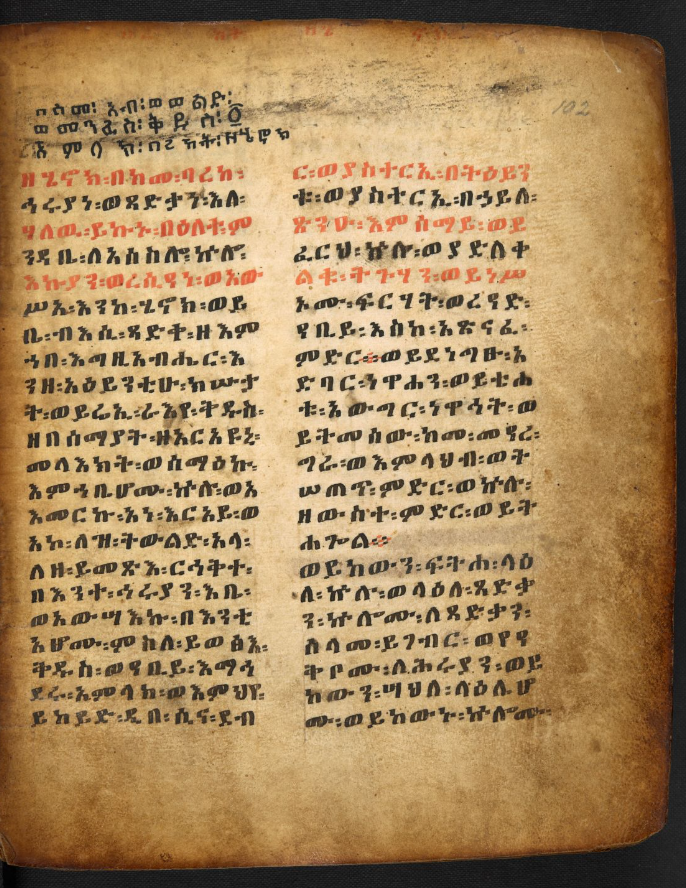
The Book of Enoch (also 1 Enoch; Hebrew: סֵפֶר חֲנוֹךְ, Sēfer Ḥănōḵ; Ge'ez: መጽሐፈ ሄኖክ, Maṣḥafa Hēnok) is an ancient Jewish apocalyptic religious text, ascribed by tradition to the patriarch Enoch who was the father of Methuselah and the great-grandfather of Noah. The Book of Enoch contains unique material on the origins of demons and Nephilim, why some angels fell from heaven, an explanation of why the Genesis flood was morally necessary, and a prophetic exposition of the thousand-year reign of the Messiah. Three books are traditionally attributed to Enoch, including the distinct works 2 Enoch and 3 Enoch.
1 Enoch is not considered to be canonical scripture by most Jewish or Christian church bodies, although it is part of the biblical canon used by the Ethiopian Jewish community Beta Israel, as well as the Ethiopian Orthodox Tewahedo Church and Eritrean Orthodox Tewahedo Church.
The older sections of 1 Enoch are estimated to date from about 300–200 BCE, and the latest part (Book of Parables) is probably from around 100 BCE. Scholars believe Enoch was originally written in either Aramaic or Hebrew, the languages first used for Jewish texts. Ephraim Isaac suggests that the Book of Enoch, like the Book of Daniel, was composed partially in Aramaic and partially in Hebrew. No Hebrew version is known to have survived. Copies of the earlier sections of 1 Enoch were preserved in Aramaic among the Dead Sea Scrolls in the Qumran Caves.
Authors of the New Testament were also familiar with some content of the book. A short section of 1 Enoch is cited in the Epistle of Jude, Jude 1:14–15, and attributed there to "Enoch the Seventh from Adam" (1 Enoch 60:8), although this section of 1 Enoch is a midrash on Deuteronomy 33:2, which was written long after the supposed time of Enoch. The full Book of Enoch survives in its entirety only in the Geʽez translation.
The first part of the Book of Enoch describes the fall of the Watchers, the angels who fathered the angel-human hybrids called Nephilim. The remainder of the book describes Enoch's revelations and his visits to heaven in the form of travels, visions, and dreams.
The book consists of five major sections (see each section for details):
Most scholars believe that these five sections were originally independent works (with different dates of composition), themselves a product of much editorial arrangement, and were only later redacted into what is now called 1 Enoch. Because the Book of Parables is unattested in all except the Ethiopic manuscripts, and because a copy of The Book of Giants appears to be written on the same manuscript as a portion of Enoch, it seems likely that the former may have replaced the latter from the original Enochic Pentateuch.
This first section of the Book of Enoch describes the fall of the Watchers, the angels who fathered the Nephilim (cf. the bene Elohim, Genesis 6:1–4) and narrates the travels of Enoch in the heavens. This section is said to have been composed in the 4th or 3rd century BC according to Western scholars.
Hub AI
Book of Enoch AI simulator
(@Book of Enoch_simulator)
Book of Enoch
The Book of Enoch (also 1 Enoch; Hebrew: סֵפֶר חֲנוֹךְ, Sēfer Ḥănōḵ; Ge'ez: መጽሐፈ ሄኖክ, Maṣḥafa Hēnok) is an ancient Jewish apocalyptic religious text, ascribed by tradition to the patriarch Enoch who was the father of Methuselah and the great-grandfather of Noah. The Book of Enoch contains unique material on the origins of demons and Nephilim, why some angels fell from heaven, an explanation of why the Genesis flood was morally necessary, and a prophetic exposition of the thousand-year reign of the Messiah. Three books are traditionally attributed to Enoch, including the distinct works 2 Enoch and 3 Enoch.
1 Enoch is not considered to be canonical scripture by most Jewish or Christian church bodies, although it is part of the biblical canon used by the Ethiopian Jewish community Beta Israel, as well as the Ethiopian Orthodox Tewahedo Church and Eritrean Orthodox Tewahedo Church.
The older sections of 1 Enoch are estimated to date from about 300–200 BCE, and the latest part (Book of Parables) is probably from around 100 BCE. Scholars believe Enoch was originally written in either Aramaic or Hebrew, the languages first used for Jewish texts. Ephraim Isaac suggests that the Book of Enoch, like the Book of Daniel, was composed partially in Aramaic and partially in Hebrew. No Hebrew version is known to have survived. Copies of the earlier sections of 1 Enoch were preserved in Aramaic among the Dead Sea Scrolls in the Qumran Caves.
Authors of the New Testament were also familiar with some content of the book. A short section of 1 Enoch is cited in the Epistle of Jude, Jude 1:14–15, and attributed there to "Enoch the Seventh from Adam" (1 Enoch 60:8), although this section of 1 Enoch is a midrash on Deuteronomy 33:2, which was written long after the supposed time of Enoch. The full Book of Enoch survives in its entirety only in the Geʽez translation.
The first part of the Book of Enoch describes the fall of the Watchers, the angels who fathered the angel-human hybrids called Nephilim. The remainder of the book describes Enoch's revelations and his visits to heaven in the form of travels, visions, and dreams.
The book consists of five major sections (see each section for details):
Most scholars believe that these five sections were originally independent works (with different dates of composition), themselves a product of much editorial arrangement, and were only later redacted into what is now called 1 Enoch. Because the Book of Parables is unattested in all except the Ethiopic manuscripts, and because a copy of The Book of Giants appears to be written on the same manuscript as a portion of Enoch, it seems likely that the former may have replaced the latter from the original Enochic Pentateuch.
This first section of the Book of Enoch describes the fall of the Watchers, the angels who fathered the Nephilim (cf. the bene Elohim, Genesis 6:1–4) and narrates the travels of Enoch in the heavens. This section is said to have been composed in the 4th or 3rd century BC according to Western scholars.
Recent media