
Recent from talks
Borrelia
Knowledge base stats:
Talk channels stats:
Members stats:
Borrelia
Borrelia is a genus of bacteria of the spirochete phylum. Several species cause Lyme disease, also called Lyme borreliosis, a zoonotic, vector-borne disease transmitted by ticks. Other species of Borrelia cause relapsing fever, and are transmitted by ticks or lice, depending on the species of bacteria.
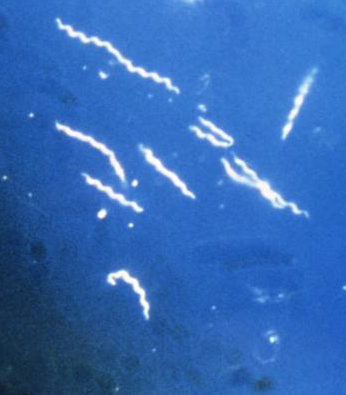
The genus is named after French biologist Amédée Borrel (1867–1936), who first documented the distinction between a species of Borrelia anserina and the other known type of spirochete at the time, Treponema pallidum. This bacterium must be viewed using dark-field microscopy, which make the cells appear white against a dark background. Borrelia species are grown in Barbour-Stoenner-Kelly medium.
Of 52 known species of Borrelia, 20 are members of the Lyme disease group (with an additional 3 proposed), 29 belong to the relapsing fever group, and two are members of a genetically distinct third group typically found in reptiles. A proposal has been made to split the Lyme disease group based on genetic diversity and move them to their own genus, Borelliella, but this change is not widely accepted. This bacterium uses hard and soft ticks and lice as vectors. Testing for the presence of the bacteria in a human includes two-tiered serological testing, including immunoassays and immunoblotting.
A few Borrelia species as "Candidatus Borrelia mahuryensis" harbor intermediate genetic features between Lyme disease and relapsing fever Borrelia.
Borrelia species are members of the family Spirochaetaceae, so present the characteristic spirochete (spiral) shape. Most species are obligate anaerobes, although some are aerotolerant. Borrelia species have an outer membrane that contains a substance similar to lipopolysaccharides, an inner membrane, and a layer of peptidoglycan in a periplasmic space, which classifies them as Gram-negative. However, this result is not easily visualized using Gram staining. They are typically 20–30 μm long and 0.2–0.3 μm wide.
Spirochetes move using axial filaments called endoflagella in their periplasmic space. The filaments rotate in this space, between the outer membrane and the peptidoglycan layer, propelling the bacterium forward in a corkscrew-like motion. The outer membrane of Borrelia species contains outer surface proteins (Osp) that play a role in their virulence.
The currently accepted taxonomy is based on the List of Prokaryotic names with Standing in Nomenclature (LPSN) and National Center for Biotechnology Information (NCBI).
Species incertae sedis::
Hub AI
Borrelia AI simulator
(@Borrelia_simulator)
Borrelia
Borrelia is a genus of bacteria of the spirochete phylum. Several species cause Lyme disease, also called Lyme borreliosis, a zoonotic, vector-borne disease transmitted by ticks. Other species of Borrelia cause relapsing fever, and are transmitted by ticks or lice, depending on the species of bacteria.
The genus is named after French biologist Amédée Borrel (1867–1936), who first documented the distinction between a species of Borrelia anserina and the other known type of spirochete at the time, Treponema pallidum. This bacterium must be viewed using dark-field microscopy, which make the cells appear white against a dark background. Borrelia species are grown in Barbour-Stoenner-Kelly medium.
Of 52 known species of Borrelia, 20 are members of the Lyme disease group (with an additional 3 proposed), 29 belong to the relapsing fever group, and two are members of a genetically distinct third group typically found in reptiles. A proposal has been made to split the Lyme disease group based on genetic diversity and move them to their own genus, Borelliella, but this change is not widely accepted. This bacterium uses hard and soft ticks and lice as vectors. Testing for the presence of the bacteria in a human includes two-tiered serological testing, including immunoassays and immunoblotting.
A few Borrelia species as "Candidatus Borrelia mahuryensis" harbor intermediate genetic features between Lyme disease and relapsing fever Borrelia.
Borrelia species are members of the family Spirochaetaceae, so present the characteristic spirochete (spiral) shape. Most species are obligate anaerobes, although some are aerotolerant. Borrelia species have an outer membrane that contains a substance similar to lipopolysaccharides, an inner membrane, and a layer of peptidoglycan in a periplasmic space, which classifies them as Gram-negative. However, this result is not easily visualized using Gram staining. They are typically 20–30 μm long and 0.2–0.3 μm wide.
Spirochetes move using axial filaments called endoflagella in their periplasmic space. The filaments rotate in this space, between the outer membrane and the peptidoglycan layer, propelling the bacterium forward in a corkscrew-like motion. The outer membrane of Borrelia species contains outer surface proteins (Osp) that play a role in their virulence.
The currently accepted taxonomy is based on the List of Prokaryotic names with Standing in Nomenclature (LPSN) and National Center for Biotechnology Information (NCBI).
Species incertae sedis::
Recent media