
Recent from talks
Lyme disease
Knowledge base stats:
Talk channels stats:
Members stats:
Lyme disease
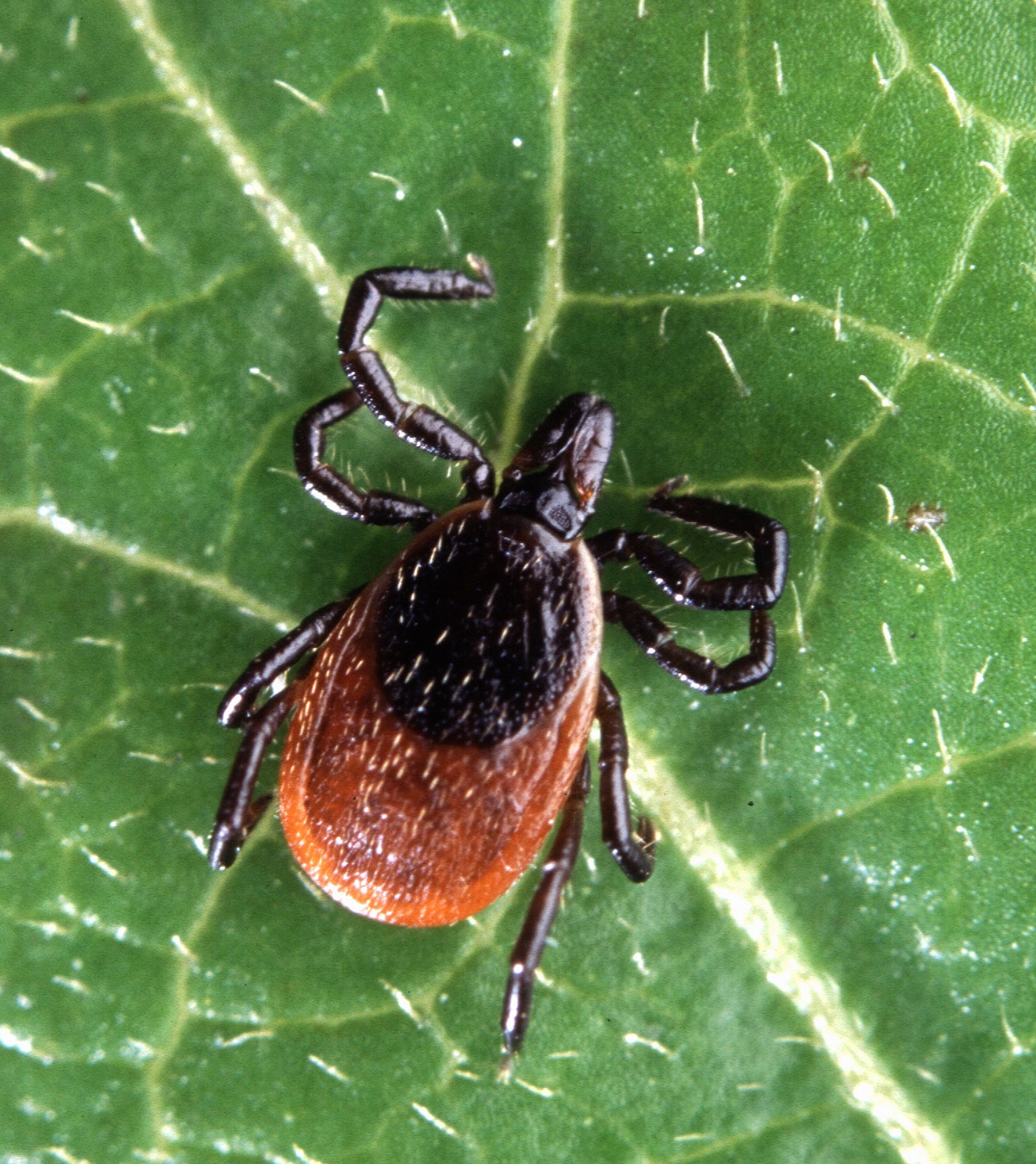
Lyme disease, also known as Lyme borreliosis, is a tick-borne disease caused by species of Borrelia bacteria, transmitted by blood-feeding ticks in the genus Ixodes. It is the most common disease spread by ticks in the Northern Hemisphere. Infections are most common in the spring and early summer.
The most common sign of infection is an expanding red rash, known as erythema migrans (EM), which appears at the site of the tick bite about a week afterwards. The rash is typically neither itchy nor painful. Approximately 70–80% of infected people develop a rash. Other early symptoms may include fever, headaches and tiredness. If untreated, symptoms may include loss of the ability to move one or both sides of the face, joint pains, severe headaches with neck stiffness or heart palpitations. Months to years later, repeated episodes of joint pain and swelling may occur. Occasionally, shooting pains or tingling in the arms and legs may develop.
Diagnosis is based on a combination of symptoms, history of tick exposure, and possibly testing for specific antibodies in the blood. If an infection develops, several antibiotics are effective, including doxycycline, amoxicillin and cefuroxime. Standard treatment usually lasts for two or three weeks. People with persistent symptoms after appropriate treatments are said to have Post-Treatment Lyme Disease Syndrome (PTLDS).
Prevention includes efforts to prevent tick bites by wearing clothing to cover the arms and legs and using DEET or picaridin-based insect repellents. As of 2023[update], clinical trials of proposed human vaccines for Lyme disease were being carried out, but no vaccine was available. A vaccine, LYMERix, was produced but discontinued in 2002 due to insufficient demand. There are several vaccines for the prevention of Lyme disease in dogs.
Lyme disease can produce a broad range of symptoms.
The incubation period is usually one to two weeks, but can be much shorter (days) or much longer (months to years). Lyme symptoms most often occur from May to September in the Northern Hemisphere because the nymphal stage of the tick is responsible for most cases.
Approximately 80% of Lyme infections begin with a rash of some sort at the site of a tick bite, often near skin folds such as the armpit, groin, back of the knee, or the trunk under clothing straps, or in children's hair, ears, or neck. Most people who get infected do not remember seeing a tick or a bite. The rash appears typically one or two weeks (range 3–32 days) after the bite and expands 2–3 cm (around 1 inch) per day up to a diameter of 5–70 cm (2 to 28 inches) (median is 16 cm; 6 inches).
The rash is usually circular or oval, red or bluish, and may have an elevated or darker center. This rash is termed an erythema migrans (EM), which translates as "migrating redness." In approximately 79% of cases in Europe, this rash gradually clears from the center toward the edges, possibly forming a "bull's eye" or "target-like" pattern. This clearing only happens in 19% of cases in endemic areas of the United States. The rash may feel warm, usually is not itchy, is rarely tender or painful, and takes up to four weeks to resolve if untreated.
Hub AI
Lyme disease AI simulator
(@Lyme disease_simulator)
Lyme disease
Lyme disease, also known as Lyme borreliosis, is a tick-borne disease caused by species of Borrelia bacteria, transmitted by blood-feeding ticks in the genus Ixodes. It is the most common disease spread by ticks in the Northern Hemisphere. Infections are most common in the spring and early summer.
The most common sign of infection is an expanding red rash, known as erythema migrans (EM), which appears at the site of the tick bite about a week afterwards. The rash is typically neither itchy nor painful. Approximately 70–80% of infected people develop a rash. Other early symptoms may include fever, headaches and tiredness. If untreated, symptoms may include loss of the ability to move one or both sides of the face, joint pains, severe headaches with neck stiffness or heart palpitations. Months to years later, repeated episodes of joint pain and swelling may occur. Occasionally, shooting pains or tingling in the arms and legs may develop.
Diagnosis is based on a combination of symptoms, history of tick exposure, and possibly testing for specific antibodies in the blood. If an infection develops, several antibiotics are effective, including doxycycline, amoxicillin and cefuroxime. Standard treatment usually lasts for two or three weeks. People with persistent symptoms after appropriate treatments are said to have Post-Treatment Lyme Disease Syndrome (PTLDS).
Prevention includes efforts to prevent tick bites by wearing clothing to cover the arms and legs and using DEET or picaridin-based insect repellents. As of 2023[update], clinical trials of proposed human vaccines for Lyme disease were being carried out, but no vaccine was available. A vaccine, LYMERix, was produced but discontinued in 2002 due to insufficient demand. There are several vaccines for the prevention of Lyme disease in dogs.
Lyme disease can produce a broad range of symptoms.
The incubation period is usually one to two weeks, but can be much shorter (days) or much longer (months to years). Lyme symptoms most often occur from May to September in the Northern Hemisphere because the nymphal stage of the tick is responsible for most cases.
Approximately 80% of Lyme infections begin with a rash of some sort at the site of a tick bite, often near skin folds such as the armpit, groin, back of the knee, or the trunk under clothing straps, or in children's hair, ears, or neck. Most people who get infected do not remember seeing a tick or a bite. The rash appears typically one or two weeks (range 3–32 days) after the bite and expands 2–3 cm (around 1 inch) per day up to a diameter of 5–70 cm (2 to 28 inches) (median is 16 cm; 6 inches).
The rash is usually circular or oval, red or bluish, and may have an elevated or darker center. This rash is termed an erythema migrans (EM), which translates as "migrating redness." In approximately 79% of cases in Europe, this rash gradually clears from the center toward the edges, possibly forming a "bull's eye" or "target-like" pattern. This clearing only happens in 19% of cases in endemic areas of the United States. The rash may feel warm, usually is not itchy, is rarely tender or painful, and takes up to four weeks to resolve if untreated.
Recent media