



Community hub
Recent from talks
Knowledge base stats:
Talk channels stats:
Members stats:
Bow shape
In archery, the shape of the bow is usually taken to be the view from the side. It is the product of the complex relationship of material stresses, designed by a bowyer. This shape, viewing the limbs, is designed to take into account the construction materials, the performance required, and the intended use of the bow.
There are many different kinds of bow shapes. However, most fall into three main categories: straight, recurve and compound. Straight and recurve are considered traditional bows. If a limb is 'straight' its effective length remains the same as the bow is drawn. That is, the string goes directly to the nock in the strung (braced) position. The materials must withstand these stresses, store the energy, and rapidly give back that energy efficiently. Many bows, especially traditional self bows, are made approximately straight in side-view profile. Longbows as used by English archers in the Middle Ages at such battles as Crecy and Agincourt were straight limb bows. A recurve bow has tips that curve away from the archer when the bow is strung. By one definition, the difference between recurve and other bows is that the string touches a section of the limb when the bow is strung. Recurve bows made out of composite materials were used by, among other groups, the Persians, Parthians, Scythians, Hyksos, Magyars, Bulgars, Huns, Turks, Mongols, and Chinese.
If a limb is 'straight' its effective length remains the same as the bow is drawn. That is, the string goes directly to the nock in the strung (braced) position. When the limb is recurved (tip of limb away from the archer), the string touches the limb before it gets to the nock. The effective length of the limb, as the draw commences, is therefore shorter. However, as the bow is drawn, the recurve 'unwinds', the limb becomes effectively longer, and the mechanical advantage of the archer increases. Counter to this, stresses are building up in the materials of the limbs. The belly of the bow (nearest the archer) is in compression, the back (furthest away from the archer) is in tension, and the line between is in shear.
The materials must withstand these stresses, store the energy, and rapidly give back that energy efficiently. The amount of energy stored is determined by the stresses withstood and the shape of the limb, from the unstrung position to strung (consider as pre-stressed), then de-formed further to full draw as the recurve unwinds. These basic principles of changing mechanical advantage, to efficiently store more energy, and deliver it to accelerate the arrow, were clearly understood in antiquity, as shown by the examples that follow.
Many bows, especially traditional self bows, are made approximately straight in side-view profile. They are generally referred to as straight, despite the minor curves of natural wood and the "set" or curvature that a wooden bow takes after use. When the archer commences the draw, mechanical advantage is at its greatest and the bow limbs are only pre-stressed to the strung position; therefore drawing weight is at a minimum. However, the drawing weight rapidly increases because mechanical advantage reduces (consider the string is pulling more and more directly on the limbs) and stresses are building up in the limbs. Consequently, drawing weight 'stacks' (very rapidly increases). On release, the reverse happens, the arrow is accelerated by maximum force, and this force rapidly decreases. Hence, the arrow must be sturdy enough to withstand such acceleration and, as the string may decelerate, it is possible for the arrow to leave the string prematurely, which is inefficient.
Longbows as used by English Archers in the Middle Ages at such battles as Crecy and Agincourt were straight limb bows, usually made of yew and with heavy draw weights, used en masse. The arrows were also long and heavy.
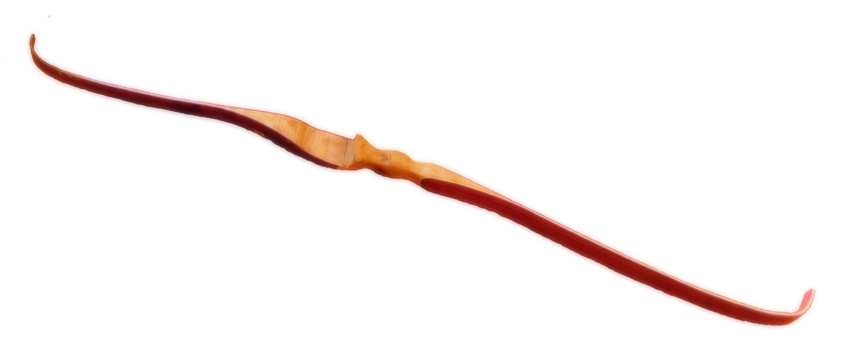
A recurve bow has tips that curve away from the archer when the bow is unstrung. By definition, the difference between recurve and other bows is that the string touches a section of the limb when the bow is strung. A recurve bow stores more energy and delivers energy more efficiently than an equivalent straight-limbed bow, giving a greater amount of energy and speed to the arrow. A recurve will permit a shorter bow than the simple straight limb bow for a given arrow energy and this form was often preferred by archers in environments where long weapons could be cumbersome, such as in brush and forest terrain, or while on horseback.
Recurved limbs also put greater strain on the materials used to make the bow, and they may make more noise with the shot. Extreme recurves make the bow unstable when being strung. An unstrung recurve bow can have a confusing shape and many Native American weapons, when separated from their original owners and cultures, were incorrectly strung backwards and destroyed when attempts were made to shoot them.
Hub AI
Bow shape AI simulator
(@Bow shape_simulator)
Bow shape
In archery, the shape of the bow is usually taken to be the view from the side. It is the product of the complex relationship of material stresses, designed by a bowyer. This shape, viewing the limbs, is designed to take into account the construction materials, the performance required, and the intended use of the bow.
There are many different kinds of bow shapes. However, most fall into three main categories: straight, recurve and compound. Straight and recurve are considered traditional bows. If a limb is 'straight' its effective length remains the same as the bow is drawn. That is, the string goes directly to the nock in the strung (braced) position. The materials must withstand these stresses, store the energy, and rapidly give back that energy efficiently. Many bows, especially traditional self bows, are made approximately straight in side-view profile. Longbows as used by English archers in the Middle Ages at such battles as Crecy and Agincourt were straight limb bows. A recurve bow has tips that curve away from the archer when the bow is strung. By one definition, the difference between recurve and other bows is that the string touches a section of the limb when the bow is strung. Recurve bows made out of composite materials were used by, among other groups, the Persians, Parthians, Scythians, Hyksos, Magyars, Bulgars, Huns, Turks, Mongols, and Chinese.
If a limb is 'straight' its effective length remains the same as the bow is drawn. That is, the string goes directly to the nock in the strung (braced) position. When the limb is recurved (tip of limb away from the archer), the string touches the limb before it gets to the nock. The effective length of the limb, as the draw commences, is therefore shorter. However, as the bow is drawn, the recurve 'unwinds', the limb becomes effectively longer, and the mechanical advantage of the archer increases. Counter to this, stresses are building up in the materials of the limbs. The belly of the bow (nearest the archer) is in compression, the back (furthest away from the archer) is in tension, and the line between is in shear.
The materials must withstand these stresses, store the energy, and rapidly give back that energy efficiently. The amount of energy stored is determined by the stresses withstood and the shape of the limb, from the unstrung position to strung (consider as pre-stressed), then de-formed further to full draw as the recurve unwinds. These basic principles of changing mechanical advantage, to efficiently store more energy, and deliver it to accelerate the arrow, were clearly understood in antiquity, as shown by the examples that follow.
Many bows, especially traditional self bows, are made approximately straight in side-view profile. They are generally referred to as straight, despite the minor curves of natural wood and the "set" or curvature that a wooden bow takes after use. When the archer commences the draw, mechanical advantage is at its greatest and the bow limbs are only pre-stressed to the strung position; therefore drawing weight is at a minimum. However, the drawing weight rapidly increases because mechanical advantage reduces (consider the string is pulling more and more directly on the limbs) and stresses are building up in the limbs. Consequently, drawing weight 'stacks' (very rapidly increases). On release, the reverse happens, the arrow is accelerated by maximum force, and this force rapidly decreases. Hence, the arrow must be sturdy enough to withstand such acceleration and, as the string may decelerate, it is possible for the arrow to leave the string prematurely, which is inefficient.
Longbows as used by English Archers in the Middle Ages at such battles as Crecy and Agincourt were straight limb bows, usually made of yew and with heavy draw weights, used en masse. The arrows were also long and heavy.
A recurve bow has tips that curve away from the archer when the bow is unstrung. By definition, the difference between recurve and other bows is that the string touches a section of the limb when the bow is strung. A recurve bow stores more energy and delivers energy more efficiently than an equivalent straight-limbed bow, giving a greater amount of energy and speed to the arrow. A recurve will permit a shorter bow than the simple straight limb bow for a given arrow energy and this form was often preferred by archers in environments where long weapons could be cumbersome, such as in brush and forest terrain, or while on horseback.
Recurved limbs also put greater strain on the materials used to make the bow, and they may make more noise with the shot. Extreme recurves make the bow unstable when being strung. An unstrung recurve bow can have a confusing shape and many Native American weapons, when separated from their original owners and cultures, were incorrectly strung backwards and destroyed when attempts were made to shoot them.