Hubbry Logo
Bow windowBow windowMain
Open search
Bow window
Community hub
Bow window
logo
8 pages, 0 posts
0 subscribers
Be the first to start a discussion here.
Bow window
Bow window
from Wikipedia
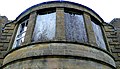
Decorative bow window facade, U.K.

A bow window or compass window[1] is a curved bay window.[2] Like bay windows, bow windows add space to a room by projecting beyond the exterior wall of a building and provide a wider view of the garden or street outside than flush windows, but combine four or more facets, differentiating them from the more common three-sided bay window.[3] Casement windows are often used for ventilation.

Bow windows first appeared in the eighteenth century in the United Kingdom (and in the Federal period in the United States).

See also

[edit]

References

[edit]
[edit]
Revisions and contributorsEdit on WikipediaRead on Wikipedia
from Grokipedia
A bow window is a curved architectural feature that projects outward from a building's in a smooth, arc-shaped configuration, typically comprising four to six individual panels arranged to form a gentle . Unlike the angular , this design creates a panoramic view and adds usable interior space while allowing more natural light to enter the room. Originating in during the Georgian period of the , bow windows—also known as compass windows—were initially employed in larger, stately homes to provide expansive sightlines and a sense of grandeur. Their popularity extended to the in the Federal era, where they influenced residential designs emphasizing symmetry and elegance. In contemporary architecture, bow windows remain a favored element in traditional and Victorian-style homes, valued for their ability to enhance ventilation, maximize daylight penetration, and create functional interior extensions such as seating areas or plant displays. Constructed from materials like wood, vinyl, or aluminum, they offer improved energy efficiency through modern glazing techniques, though their installation requires structural support to bear the outward projection.

Definition and Characteristics

Definition

A bow window is a curved projection from a building's exterior , typically forming a gentle arc and composed of multiple window panels—usually four to six—joined at gentle angles. This design creates a continuous arc that extends outward from the main facade, distinguishing it from straight or flat window arrangements. Unlike a , which features angular facets typically formed by three panels at sharp angles, a bow window emphasizes a smooth, rounded contour without pronounced edges. It also differs from an , which is a protruding structure supported by brackets or corbels and does not extend to the ground level, often appearing cantilevered on upper stories. In architecture, the bow window serves as a foundational element for admitting natural light into interior spaces while expanding usable room area without significantly altering the primary wall plane. This dual function enhances both illumination and spatial perception in a building's design.

Key Features

Bow windows are characterized by their curved, radial arrangement of multiple window units, typically consisting of four to six sashes that form a gentle arc projecting outward from the wall. These sashes are commonly casement or double-hung types, allowing for a seamless, continuous curve that distinguishes bow windows from more angular designs. Often, a top light or transom is incorporated above the main sashes to enhance illumination and provide additional architectural detail. In terms of dimensions, bow windows generally span a width of 7 feet 4 inches to 15 feet 5 inches, with heights ranging from 2 feet 2 inches to 6 feet 2 inches, aligning with standard residential window proportions for versatility in installation. The projection, or depth from the wall, typically measures 1 foot 2 inches to 2 feet, creating a subtle extension that maximizes interior space without excessive protrusion. These proportions contribute to the window's balanced profile, suitable for various room sizes. Functionally, bow windows feature operable sashes in casement or double-hung configurations, enabling ventilation through side or top-opening panels that promote . The radial curvature facilitates panoramic views by offering an expansive field of vision across multiple angles, enhancing the sense of openness in a . Additionally, the projecting design naturally integrates with interior elements, such as built-in seating nooks beneath the sill, which capitalize on the added space for comfortable lounging areas.

Historical Development

Origins and Early Use

The concept of projecting windows, which later evolved into bay and bow forms, can be traced to medieval , where Gothic structures incorporated oriel windows that protruded from upper walls on supports. These features, common in cathedrals and elite residences from the 12th to 15th centuries, enhanced interior lighting and added ornamental elements, symbolizing status in otherwise dim buildings. During the of the 16th century, bay windows—angular projecting forms—gained prominence in grand domestic architecture, often placed at the end of great halls to improve views, airflow, and spatial opulence. Examples in Tudor and Elizabethan mansions highlighted their role in classical revival designs. These early projecting windows laid the groundwork for the distinctly curved bow windows that emerged in the following centuries.

Evolution in Architectural Styles

Bow windows originated in during the of the 18th century, where they were used symmetrically in country houses to enhance light and maintain classical proportions influenced by Palladianism. Featuring multi-paned sash glazing, they provided subtle interior extensions while preserving geometric harmony. Their popularity spread to the United States in the Federal period (late 18th to early 19th century), influencing symmetric residential designs. During the Victorian and Edwardian periods of the 19th and early 20th centuries, bow windows peaked in use, particularly in Queen Anne and Arts & Crafts styles, with ornate glazing and semicircular forms becoming hallmarks of middle-class urban homes, often incorporating decorative ironwork and leaded glass. The 20th century brought a decline with modernist architecture's focus on minimalism and flat surfaces, sidelining curved projections. A resurgence appeared in postmodern and neo-traditional designs from the 1980s, reviving bow windows for historical context and aesthetic variety.

Design and Variations

Structural Design

The structural design of a bow window relies on a radial geometric configuration composed of four or more equal-sized window panels joined together at precise angles, typically 10 degrees per joint, to create a smooth, curved projection from the building facade. This arrangement forms a gentle arc, typically spanning 4 to 6 panels wide, which promotes uniform light distribution across the interior space while minimizing visual distortion from the curvature. The equal panel sizing and incremental angles ensure the overall form approximates a segment of a circle, with the projection depth limited by factors such as roof overhang to maintain proportional aesthetics and functionality. Support mechanisms in bow window design address the cantilevered loads imposed by the outward projection, beginning with a —often a laminated seat board—that anchors securely to the building's foundation or framing to bear the unit's weight and resist vertical forces. Above, header beams, typically constructed as a rigid head board, span the top of the assembly to distribute loads evenly to the surrounding structure, preventing sagging or uneven stress. To handle the lateral and torsional forces from the curve, internal lintels or reinforced mullions are essential; these often incorporate dual systems, such as steel rods combined with like TimberStrand, tensioned via cables attached to structural members capable of supporting at least 1,300 pounds, ensuring stability without relying on the window unit to bear roof loads. Integration with the building's wall framing requires targeted modifications to preserve overall structural integrity, particularly in accommodating the bow's projection and wider rough opening. King studs, extending full height from the to the top plate, provide continuous vertical support on the exterior sides of the opening, while jack studs—shorter studs beneath the header—transfer the concentrated loads from the header to the sill without introducing weak points. For curved designs, the support platform or rough opening framing must be segmented or tapered to match the panel angles, often requiring additional bracing or rebuilt sections to align with the arc and prevent shear stresses on the wall assembly. These adaptations ensure the bow window integrates seamlessly, distributing forces back to the foundation while avoiding compromise to the load-bearing capacity of the adjacent walls.

Materials and Styles

Bow windows have historically been constructed using for frames, with and being preferred for their durability and workability in curved designs. These materials allow for intricate that supports the window's radial structure while maintaining aesthetic appeal in period architecture. Leaded or panes are commonly incorporated in traditional bow windows, particularly during historical restorations, to replicate the decorative elements of earlier eras. In contemporary applications, bow windows utilize to enhance longevity and performance. Vinyl frames offer low-maintenance and cost-effective options with good properties. provides superior strength and dimensional stability, resisting warping in varying climates, while aluminum-clad wood combines the natural interior finish of wood with an exterior aluminum layer for weather resistance. Low-emissivity (low-E) glass coatings on panes further improve energy efficiency by reducing and ultraviolet light exposure. Stylistic variations in bow windows range from ornate Victorian designs featuring elaborate muntins and divided lights to create a sense of opulence, to sleek contemporary frameless or minimally gridded profiles that emphasize clean lines and expansive views. Customization options include divided light configurations for a traditional subdivided appearance or geometric patterns in muntins to add subtle architectural interest without overwhelming the overall form.

Construction and Installation

Building Methods

Historical bow windows were typically constructed using wooden sashes and installed on-site, particularly for upper-story projections, where structural supports were affixed beneath the window to bear the load and prevent sagging. The framing process involved cutting openings to accommodate the bow's , followed by installing rough framing to support the curved structure and distribute weight to the building's load-bearing elements.

Modern Installation Techniques

Modern installation techniques for bow windows emphasize prefabrication and modular assembly to enhance efficiency, reduce on-site labor, and ensure structural integrity compared to traditional framing methods. Factory-assembled units, often consisting of multiple window panels mulled together with pre-installed seals and gaskets, are shipped to the site for straightforward fitting into prepared rough openings. This approach, commonly used by manufacturers like Marvin and Harvey, allows for precise customization of angles—typically 10 degrees per panel for a smooth curve—and minimizes errors during assembly. Key processes involve advanced tools for alignment and sealing, such as laser levels to ensure plumb and level installation across the curved structure, preventing stress on joints. Gaps between the frame and rough opening are filled with low-expansion foam insulation, often combined with batts, to provide and acoustic performance without distorting the frame. Installations must adhere to the 2024 International Residential Code (IRC) Section R609 (or current applicable edition as of 2025), which requires s to withstand specified wind loads and structural demands, including component and cladding pressures per Table R301.2(2). Additionally, proper sealing integrates the with the , supporting HVAC system efficiency by minimizing air infiltration and maintaining energy performance in compliance with the International Energy Conservation Code (IECC). For into existing structures, particularly energy-efficient homes, adaptations focus on moisture management through the use of metal flashings, sill pans, and water-resistive barriers to direct water away from the assembly. Rigid foam insulation is applied exteriorly to enhance thermal performance while preserving interior space, and vapor barriers are installed over the frame to prevent issues in varying climates. These techniques ensure compliance with modern codes and structural reinforcements, such as additional for load support in older walls.

Benefits and Applications

Architectural Advantages

Bow windows contribute to aesthetic enhancement through their curved form, which softens building facades and introduces a sense of fluidity and elegance to exterior elevations. This gentle arc adds depth and rhythmic variation, particularly complementing symmetrical classical or eclectic architectural styles by creating visual focal points that harmonize with ornate detailing. By projecting outward from the wall, bow windows generate a spatial that forms interior alcoves, effectively improving room proportions and perceived volume without requiring an increase in the building's overall footprint. This design element enhances interior design harmony by delineating cozy, multifunctional zones while maintaining structural efficiency. Bow windows elevate curb appeal by introducing distinctive silhouettes that heighten architectural interest, often leading to increased property values in residential settings through their unique contribution to a home's exterior character. Updated or added bow windows can boost resale value, with industry reports indicating potential returns of 60-75% on investment for such features in comparable markets.

Functional Benefits

Bow windows provide enhanced natural illumination due to their curved , which features multiple panels arranged in a wider arc to capture from various angles throughout the day. This configuration allows more diffuse and even light distribution into interior spaces compared to standard flat windows. As a result, occupants experience reduced reliance on artificial sources, with general studies on daylighting indicating potential energy savings of up to 30% in lighting usage during daylight hours. In addition to illumination, bow windows improve ventilation through their multiple operable panels, typically casement or styles on the sides, which facilitate cross-breezes by allowing fresh air to enter and circulate effectively. This natural airflow helps maintain , reduces humidity, and promotes a healthier environment without mechanical systems. The expansive, panoramic sightlines offered by the curved glass further enhance occupant by fostering a stronger visual and psychological connection to the outdoors, which research links to lower stress levels and improved mood. Finally, the protruding structure of bow windows optimizes space utilization by creating functional nooks or alcoves within the home, ideal for seating, reading, or displaying items, effectively adding 10-20 square feet of flexible interior area depending on the window's width and projection. This added not only maximizes in compact rooms but also integrates seamlessly with the home's layout to support everyday activities.

Notable Examples

Historical Examples

One prominent example of bow windows in English is found at the in Syon Park, part of the Syon House estate and residence of the in . Built in the late to designs by J. Wyatt, the features a central bow window comprising three semi-circular arched French windows supported by four Ionic columns, an , , and balustrade. This design exemplifies neoclassical , blending classical proportions with elegant curves to enhance interior light and views, while maintaining the restrained grandeur typical of Georgian structures. In Victorian urban architecture, projecting windows were key in adapting to challenging terrains, as seen in San Francisco's iconic . These late-19th-century row houses, built primarily in the , incorporate angular bay windows that project outward, providing structural stability on the city's steep hills while maximizing natural light in the foggy climate. The forms of these windows, often featuring multiple panes, contribute to the ornate Queen Anne and aesthetics, allowing for expanded interior space without encroaching on narrow lots. European precedents for curved window forms trace back to the Baroque period, influencing later designs, though specific bow windows emerged more prominently in English architecture.

Contemporary Uses

In contemporary residential architecture, bow windows have experienced a revival in style custom homes, particularly in suburban developments across the and during the . These designs integrate curved window arrays to evoke historical elegance while incorporating modern energy-efficient glazing, such as double- or triple-pane units with low-emissivity coatings, to minimize heat loss and comply with stringent building codes. For instance, in suburbs, architects have reimagined projecting windows in extensions to Victorian terraces, using slim frames for enhanced thermal performance and diffusion. Similarly, in markets like , bow windows in new builds feature customizable profiles with argon-filled glazing to reduce energy consumption compared to older options. Bow windows have also been adapted for commercial applications post-2000, particularly in retail storefronts and boutique hotels, where their expansive curvature maximizes display space and customer engagement. In retail settings, these windows serve as prominent facades for showcasing merchandise, drawing pedestrians with panoramic views and integrated LED lighting to highlight products. For boutique hotels, modern interpretations enhance guest experiences; the Pendry Manhattan West (2023) employs convex glass curves as a modern take on projecting windows to provide unobstructed city vistas, boosting occupancy through immersive aesthetics while supporting sustainable ventilation. In , bow windows are increasingly utilized in eco-homes for optimized and daylighting, aligning with standards to promote energy efficiency and occupant . Their radial configuration allows for improved passive solar heating and daylight penetration compared to flat windows, while low-solar-heat-gain-coefficient glazing prevents overheating, contributing points in 's Energy and Atmosphere category. Projects certified under Homes v4 incorporate bow windows to achieve high daylight autonomy, reducing artificial lighting needs through strategic orientation and shading integration. This approach not only lowers operational carbon footprints but also enhances indoor environmental quality, as evidenced in net-zero designs where bow windows facilitate natural ventilation and views.

References

Add your contribution
Related Hubs
User Avatar
No comments yet.