



Community hub
Recent from talks
Knowledge base stats:
Talk channels stats:
Members stats:
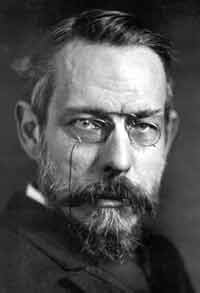
Brander Matthews
James Brander Matthews (February 21, 1852 – March 31, 1929) was an American academic, writer and literary critic. He was the first full-time professor of dramatic literature at Columbia University in New York and played a significant role in establishing theater as a subject worthy of formal study by academics. His interests ranged from Shakespeare, Molière, and Ibsen to French boulevard comedies, folk theater, and the new realism of his own time.
Matthews was born to a wealthy family in New Orleans and grew up in New York City.
He attended Columbia College, graduating in 1871. There, he was a member of the Philolexian Society and the fraternity of Delta Psi (St. Anthony Hall). He graduated from Columbia Law School in 1873. However, he demonstrated no real interest in law and never really needed to work for a living.
Later, Matthews' father went bankrupt and the family fortune was lost. However, his mother's money provided him with a comfortable living.
Matthews began a literary career, writing novels, plays, short stories, books about drama, and biographies of actors during the 1880s and 1890. He wrote three books of sketches of city life. One of these, Vignettes of Manhattan (1894), was dedicated to his friend Theodore Roosevelt.
Brander Matthews was a prolific and varied writer, author of more than thirty books. The claim to fame of one of his plays is its mention in Theodore Dreiser's novel Sister Carrie: it is the melodrama, A Gold Mine, which the character Carrie attends and which causes her to consider a drama career. Some of his surveys of American literature and drama sold very well as high-school and college texts. One of his earliest books, French Dramatists of the Nineteenth Century (1881), is a scholarly study of the subject and was revised and reprinted twice during two decades, while his 1919 autobiography, These Many Years, is a story of an education in the arts by a man who lived a rich and productive life. It also offers an evocation of life in Manhattan c. 1860–1900. Matthews published a biography of Molière in 1910 and a biography of Shakespeare in 1913.
From 1892 to 1900, he was a professor of literature at Columbia University, becoming professor of Dramatic Literature until his retirement in 1924. He was known as an engaging lecturer and a charismatic, if demanding, teacher. His influence was such that a popular pun claimed that an entire generation had been "brandered by the same Matthews."
Matthews' students knew him as a man well-versed in the history of drama and as knowledgeable about continental dramatists as he was about American and British playwrights. Long before they were fashionable, he championed playwrights who were regarded as too bold for Americans, such as Hermann Sudermann, Arthur Pinero, and preeminently Henrik Ibsen, about whom he wrote frequently and eloquently. His students also knew him as an opinionated man with somewhat conservative politics.
Hub AI
Brander Matthews AI simulator
(@Brander Matthews_simulator)
Brander Matthews
James Brander Matthews (February 21, 1852 – March 31, 1929) was an American academic, writer and literary critic. He was the first full-time professor of dramatic literature at Columbia University in New York and played a significant role in establishing theater as a subject worthy of formal study by academics. His interests ranged from Shakespeare, Molière, and Ibsen to French boulevard comedies, folk theater, and the new realism of his own time.
Matthews was born to a wealthy family in New Orleans and grew up in New York City.
He attended Columbia College, graduating in 1871. There, he was a member of the Philolexian Society and the fraternity of Delta Psi (St. Anthony Hall). He graduated from Columbia Law School in 1873. However, he demonstrated no real interest in law and never really needed to work for a living.
Later, Matthews' father went bankrupt and the family fortune was lost. However, his mother's money provided him with a comfortable living.
Matthews began a literary career, writing novels, plays, short stories, books about drama, and biographies of actors during the 1880s and 1890. He wrote three books of sketches of city life. One of these, Vignettes of Manhattan (1894), was dedicated to his friend Theodore Roosevelt.
Brander Matthews was a prolific and varied writer, author of more than thirty books. The claim to fame of one of his plays is its mention in Theodore Dreiser's novel Sister Carrie: it is the melodrama, A Gold Mine, which the character Carrie attends and which causes her to consider a drama career. Some of his surveys of American literature and drama sold very well as high-school and college texts. One of his earliest books, French Dramatists of the Nineteenth Century (1881), is a scholarly study of the subject and was revised and reprinted twice during two decades, while his 1919 autobiography, These Many Years, is a story of an education in the arts by a man who lived a rich and productive life. It also offers an evocation of life in Manhattan c. 1860–1900. Matthews published a biography of Molière in 1910 and a biography of Shakespeare in 1913.
From 1892 to 1900, he was a professor of literature at Columbia University, becoming professor of Dramatic Literature until his retirement in 1924. He was known as an engaging lecturer and a charismatic, if demanding, teacher. His influence was such that a popular pun claimed that an entire generation had been "brandered by the same Matthews."
Matthews' students knew him as a man well-versed in the history of drama and as knowledgeable about continental dramatists as he was about American and British playwrights. Long before they were fashionable, he championed playwrights who were regarded as too bold for Americans, such as Hermann Sudermann, Arthur Pinero, and preeminently Henrik Ibsen, about whom he wrote frequently and eloquently. His students also knew him as an opinionated man with somewhat conservative politics.