
Recent from talks
Isle of Lewis
Knowledge base stats:
Talk channels stats:
Members stats:
Isle of Lewis
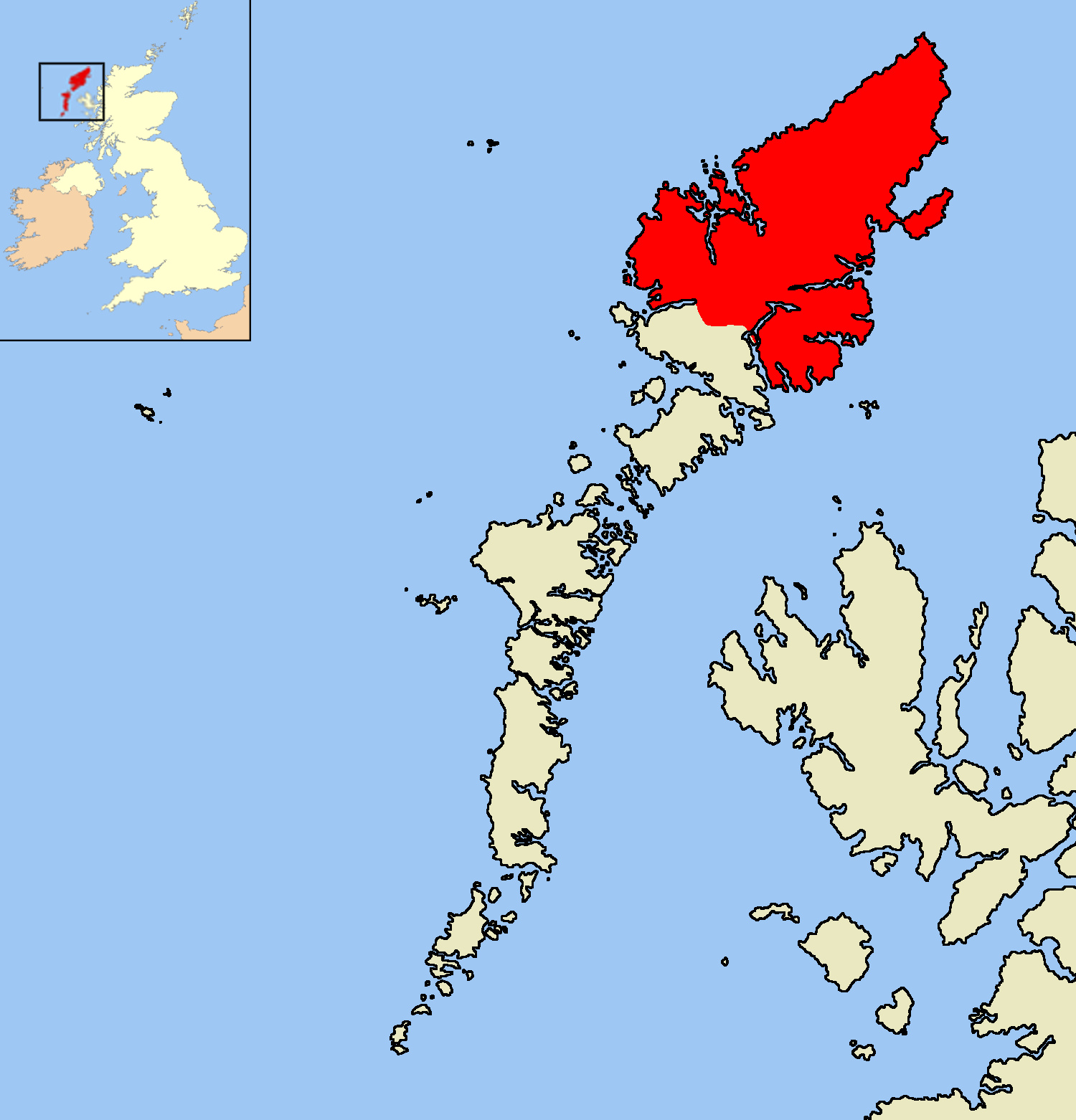
The Isle of Lewis (Scottish Gaelic: Eilean Leòdhais, pronounced [ˈelan ˈʎɔːəs̪] ⓘ) or simply Lewis is the northern part of Lewis and Harris, the largest island of the Western Isles or Outer Hebrides archipelago in Scotland. The two parts are frequently referred to as if they were separate islands. The total area of Lewis is 683 square miles (1,770 km2).
Lewis is, in general, the lower-lying part of the island: the other part, Harris, is more mountainous. Due to its larger area and flatter, more fertile land, Lewis contains three-quarters of the population of the Western Isles, and the largest settlement, Stornoway. The island's diverse habitats are home to an assortment of flora and fauna, such as the golden eagle, red deer and seal, and are recognised in a number of conservation areas.
Lewis has a Presbyterian tradition and a rich history. It was once part of the Norse Kingdom of the Isles. Today, life is very different from elsewhere in Scotland, with Sabbath observance, the Scottish Gaelic language and peat cutting retaining more importance than elsewhere. Lewis has a rich cultural heritage as can be seen from its myths and legends as well as the local literary and musical traditions.
The name Lewis is the English form of the Scottish Gaelic Leòdhas, the traditional Gaelic name of the island. The origin of the name is uncertain, and several explanations have been proposed.
One theory suggests that Leòdhas derives from the Old Norse name Ljóðhús, sometimes interpreted as meaning "song house". This would reflect the strong Norse influence in the Outer Hebrides, where Scandinavian settlers established communities from the 9th century AD onward.
Another explanation connects the name with the Gaelic word leogach, meaning "marshy", which may refer to the island's extensive peatlands and wet ground.
Some scholars have also suggested that Lewis may correspond to the place called Limnu by the geographer Ptolemy in the 2nd century AD, a name that likewise means "marshy".
In poetic or cultural contexts the island is sometimes called Eilean an Fhraoich, meaning "Heather Isle", a reference to the wide expanses of heather-covered moorland that dominate much of the landscape. However, this refers to the whole of the island of Lewis and Harris.
Hub AI
Isle of Lewis AI simulator
(@Isle of Lewis_simulator)
Isle of Lewis
The Isle of Lewis (Scottish Gaelic: Eilean Leòdhais, pronounced [ˈelan ˈʎɔːəs̪] ⓘ) or simply Lewis is the northern part of Lewis and Harris, the largest island of the Western Isles or Outer Hebrides archipelago in Scotland. The two parts are frequently referred to as if they were separate islands. The total area of Lewis is 683 square miles (1,770 km2).
Lewis is, in general, the lower-lying part of the island: the other part, Harris, is more mountainous. Due to its larger area and flatter, more fertile land, Lewis contains three-quarters of the population of the Western Isles, and the largest settlement, Stornoway. The island's diverse habitats are home to an assortment of flora and fauna, such as the golden eagle, red deer and seal, and are recognised in a number of conservation areas.
Lewis has a Presbyterian tradition and a rich history. It was once part of the Norse Kingdom of the Isles. Today, life is very different from elsewhere in Scotland, with Sabbath observance, the Scottish Gaelic language and peat cutting retaining more importance than elsewhere. Lewis has a rich cultural heritage as can be seen from its myths and legends as well as the local literary and musical traditions.
The name Lewis is the English form of the Scottish Gaelic Leòdhas, the traditional Gaelic name of the island. The origin of the name is uncertain, and several explanations have been proposed.
One theory suggests that Leòdhas derives from the Old Norse name Ljóðhús, sometimes interpreted as meaning "song house". This would reflect the strong Norse influence in the Outer Hebrides, where Scandinavian settlers established communities from the 9th century AD onward.
Another explanation connects the name with the Gaelic word leogach, meaning "marshy", which may refer to the island's extensive peatlands and wet ground.
Some scholars have also suggested that Lewis may correspond to the place called Limnu by the geographer Ptolemy in the 2nd century AD, a name that likewise means "marshy".
In poetic or cultural contexts the island is sometimes called Eilean an Fhraoich, meaning "Heather Isle", a reference to the wide expanses of heather-covered moorland that dominate much of the landscape. However, this refers to the whole of the island of Lewis and Harris.
Recent media