Hubbry Logo
Isle of LewisIsle of LewisMain
Open search
Isle of Lewis
Community hub
Isle of Lewis
logo
8 pages, 0 posts
0 subscribers
Be the first to start a discussion here.
Isle of Lewis
Isle of Lewis
from Wikipedia

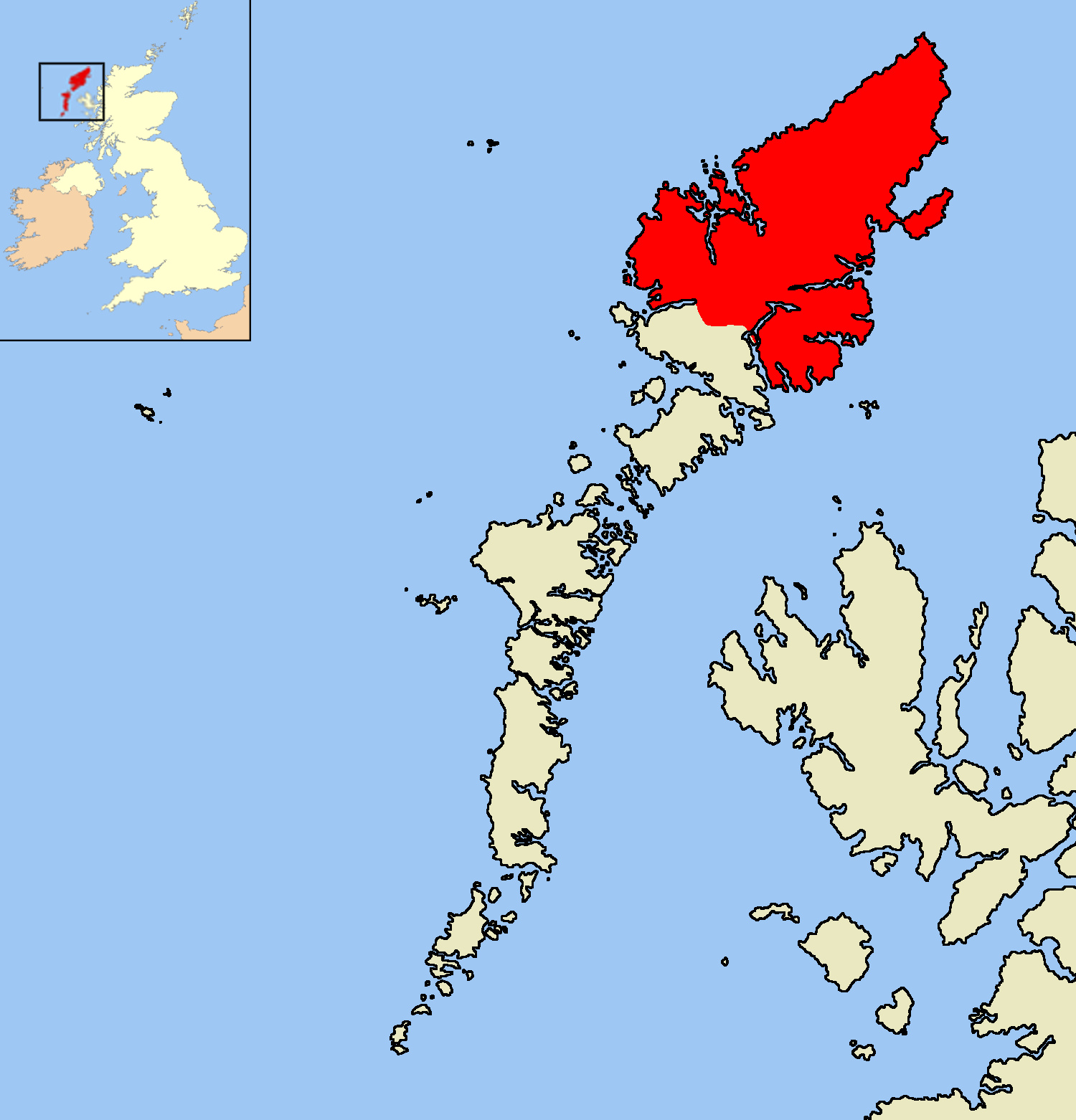
The Isle of Lewis[2] (Scottish Gaelic: Eilean Leòdhais, pronounced [ˈelan ˈʎɔːəs̪] ) or simply Lewis is the northern part of Lewis and Harris, the largest island of the Western Isles or Outer Hebrides archipelago in Scotland. The two parts are frequently referred to as if they were separate islands. The total area of Lewis is 683 square miles (1,770 km2).[3]

Key Information

Lewis is, in general, the lower-lying part of the island: the other part, Harris, is more mountainous. Due to its larger area and flatter, more fertile land, Lewis contains three-quarters of the population of the Western Isles, and the largest settlement, Stornoway. The island's diverse habitats are home to an assortment of flora and fauna, such as the golden eagle, red deer and seal, and are recognised in a number of conservation areas.

Lewis has a Presbyterian tradition and a rich history. It was once part of the Norse Kingdom of the Isles. Today, life is very different from elsewhere in Scotland, with Sabbath observance, the Scottish Gaelic language and peat cutting retaining more importance than elsewhere. Lewis has a rich cultural heritage as can be seen from its myths and legends as well as the local literary and musical traditions.

Name

[edit]
Pronunciation
Scots Gaelic: Eilean Leòdhais
Pronunciation: [elan ˈʎɔːəʃ]
Scots Gaelic: Eilean an Fhraoich
Pronunciation: [ˈelan ən̪ˠ rˠɯːç]

The Scottish Gaelic name Leòdhas may be derived from Norse Ljoðahús ('song house'),[4] although other origins have been suggested – most notably the Gaelic leogach ('marshy').[5] It is probably the place referred to as Limnu by Ptolemy, which also means 'marshy'.[6] It is also known as the Isle of Lewis (Gaelic: Eilean Leòdhais). Another name usually used in a cultural or poetic context is Eilean an Fhraoich ('Heather Isle'),[4] although this refers to the whole of the island of Lewis and Harris.

History

[edit]

The earliest evidence of human habitation on Lewis is found in peat samples which indicate that about 8,000 years ago much of the native woodland was torched to make way for plants to allow deer to browse. The earliest archaeological remains date from about 5,000 years ago. At that time, people began to settle in permanent farms rather than following their herds. The small houses of these people have been found throughout the Western Isles; in particular, at Dail Mòr, Carloway. The more striking great monuments of this period are the temples and communal burial cairns at places like Calanais (English: Callanish).

The Callanish Stones (Tursachan Chalanais)

About 500 BC, island society moved into the Iron Age. The buildings became larger and more prominent, culminating in the brochs – circular, dry-stone towers belonging to the local chieftains – which testify to the uncertain nature of life then. The best remaining example of a broch in Lewis is at Dùn Chàrlabhaigh (English: Dun Carloway). The Scots arrived during the first centuries AD, bringing the Scottish Gaelic language with them.[7] As Christianity began to spread through the islands in the 6th and later centuries, following Columban missionaries, Lewis was inhabited by the Picts.[7]

Two kings and two queens from the Lewis chessmen at the British Museum
Lewis Chessmen; Top Row: King; Queen, Bishop Bottom Row:Knight; Rook PAwn

In the 9th century AD, the Vikings began to settle on Lewis, after years of raiding from the sea. The Norse invaders intermarried with local people and abandoned their pagan beliefs. At that time, rectangular buildings began to supersede round ones, following the Scandinavian style. Lewis became part of the Kingdom of Mann and the Isles, an offshoot of Norway. The Lewis chessmen, found on the island in 1831, date from the time of Viking rule.[8] The people were called the Norse Gaels or Gall-Ghàidheil (lit. "Foreigner Gaels"), reflecting their mixed Scandinavian/Gaelic background, and probably their bilingual speech.[9] The Norse language persists in many island placenames and some personal names to this day, although the latter are fairly evenly spread across the Gàidhealtachd.

Lewis (and the rest of the Western Isles) became part of Scotland once more in 1266: under the Treaty of Perth it was ceded by the Kingdom of Norway. Under Scottish rule, the Lordship of the Isles emerged as the most important power in north-western Scotland by the 14th century. The Lords of the Isles were based on Islay, but controlled all of the Hebrides. They were descended from Somerled (Somhairle) Mac Gillibride, a Gall-Ghàidheil lord who had held the Hebrides and West Coast two hundred years earlier. Control of Lewis itself was initially exercised by the Macleod clan, but after years of feuding and open warfare between and even within local clans, the lands of Clan MacLeod were forfeited to the Scottish Crown in 1597 and were awarded by King James VI to a group of Lowland colonists known as the Fife adventurers in an attempt to anglicise the islands. However the adventurers were unsuccessful, and possession passed to the Mackenzies of Kintail in 1609, when Coinneach, Lord MacKenzie, bought out the lowlanders.[7]

Admiralty yacht HMY Iolaire (named as Amalthaea in 1908 photo).

Following the 1745 rebellion, and Prince Charles Edward Stewart's flight to France, the use of Scottish Gaelic was discouraged, rents were demanded in cash rather than kind, and the wearing of folk dress was made illegal. Emigration to the New World increasingly became an escape for those who could afford it during the latter half of the century. In 1844 Lewis was bought by Sir James Matheson, co-founder of Jardine Matheson, but subsequent famine and changing land use forced vast numbers off their lands and increased the flood of emigrants again. Paradoxically, those who remained became ever more congested[clarification needed] and impoverished, as large tracts of arable land were set aside for sheep, deerstalking or grouse shooting. Agitation for land resettlement became acute on Lewis during the economic slump of the 1880s, with several land raids (in common with Skye, Uist and Tiree); this quietened down as the island economy recovered.

During the First World War, thousands of islanders served in the forces, many losing their lives, including 208 naval reservists from the island who were returning home after the war when the Admiralty yacht HMY Iolaire sank within sight of Stornoway harbour. Many servicemen from Lewis served in the Royal Navy and the Merchant Navy during the Second World War, and again many people died. Afterwards, many more inhabitants emigrated to the Americas and mainland Scotland.

In May 1918 the Isle of Lewis was purchased by the soap magnate Lord Leverhulme, who intended to make Stornoway an industrial town and build a fish cannery. His plans were initially popular, but his opposition to land resettlement led to further land raids, especially around the farms of Coll, Gress and Tong. These raids, commemorated in monuments in several villages,[7] were ultimately successful, as the government was prepared to take legal action in support of land resettlement. Faced with this, Leverhulme gave up on his plans for Lewis and concentrated his efforts on Harris, where the town of Leverburgh takes his name.

Historical sites

[edit]

The Isle of Lewis has a variety of locations of historical and archaeological interest, including:

There are also numerous lesser stone circles and the remains of five further brochs.

Geography and geology

[edit]
Satellite photograph of Lewis and Harris

Much of Lewis consists of mostly sandy beaches backed by dunes and machair on the Atlantic west coast, giving way to an expansive peat-covered plateau in the centre of the island. The eastern coastline is markedly more rugged and is mostly rocky cliffs broken by small coves and beaches. The more fertile nature of the eastern side led to the majority of the population settling there, including the largest settlement and only town, Stornoway. Aside from the village of Achmore in the centre of the island, all settlements are on the coast.[10]

Looking towards the uplands in the centre of the Island of Lewis

Compared with Harris, Lewis is relatively flat, except in the south-west, where Mealaisbhal, 574 m (1,883 ft), is the highest point, and in the south-east, where Beinn Mhor reaches 572 m (1,877 ft); but there are 16 high points exceeding 300 m (980 ft) in height.[11] Southern Lewis also has a large number of freshwater lochs compared to the north of the island.

South Lewis, Harris and North Uist together comprise a National Scenic Area. There are four geographical Sites of Special Scientific Interest (SSSI) on Lewis – Glen Valtos, Cnoc a' Chapuill, Port of Ness and Tolsta Head.[12][13]

The coastline is severely indented, creating a number of large sea lochs, such as Lochs Resort and Seaforth, which form part of the border with Harris, Loch Roag, which surrounds the island of Great Bernera, and Loch Erisort. The principal capes are the Butt of Lewis, in the extreme north, with hundred foot (30 m) cliffs (the high point is 142 ft (43 m) high)[14] and crowned with a lighthouse, the light of which is visible for 19 miles (31 km); Tolsta Head, Tiumpan Head and Cabag Head, on the east; Renish Point, in the extreme south; and, on the west, Toe Head and Gallon Head.[15] The largest island associated with Lewis is Bernera or Great Bernera in the district of Uig and is linked to the mainland of Lewis by a bridge opened in 1953.

Geology

[edit]
Abandoned house and croft in SW Lewis, with exposed gneiss visible.

The geology of Lewis is dominated by the Archean aged metamorphic gneisses of the eponymous Lewisian complex.[16] Despite sharing a name with the mainland Lewisian Complex, the Lewisian on Lewis is often considered to be from a different block, generally interpreted as the lower plate of a orogeny, than most of the mainland examples of Lewisian.[17] Exceptions are a patch of granite near Carloway, small bands of intrusive basalt at Gress and in Eye Peninsula and some sandstone at Stornoway, Tong, Vatisker and Carloway, which was originally thought to be Torridonian,[15] but is now considered more likely to be Permo-Triassic in age.[18] The North of the Island contains a Paleoproterozoic, predominantly amphibolite, supracrustal belt, the Ness Complex, which contains meta-anorthosite and has disputedly been correlated to the South Harris Granulite Belt.[19]

Climate

[edit]

Exposure to the Atlantic Ocean and the Gulf Stream lead to a cool, moist climate on Lewis. There is relatively little temperature difference between summer and winter, both of which are moderately cloudy (although cloud and wet weather often blows over quickly in summer). Both seasons also have significant rainfall and frequent high winds, particularly during the autumn equinox. These winds have led to Lewis being designated a potential site for a significant wind-farm, which has caused much controversy amongst the population.

Climate data for Lewis
Month Jan Feb Mar Apr May Jun Jul Aug Sep Oct Nov Dec Year
Mean daily maximum °C (°F) 7.0
(44.6)
7.4
(45.3)
8.7
(47.7)
11.0
(51.8)
12.7
(54.9)
15.0
(59.0)
16.7
(62.1)
16.2
(61.2)
14.7
(58.5)
12.2
(54.0)
9.5
(49.1)
7.5
(45.5)
11.6
(52.8)
Mean daily minimum °C (°F) 2.8
(37.0)
3.0
(37.4)
3.1
(37.6)
4.6
(40.3)
6.4
(43.5)
9.1
(48.4)
10.9
(51.6)
10.8
(51.4)
9.6
(49.3)
7.4
(45.3)
5.0
(41.0)
2.8
(37.0)
6.3
(43.3)
Average rainfall mm (inches) 118.8
(4.68)
136.4
(5.37)
150.4
(5.92)
84.8
(3.34)
124.8
(4.91)
98.0
(3.86)
119.0
(4.69)
150.6
(5.93)
141.2
(5.56)
187.0
(7.36)
165.0
(6.50)
224.4
(8.83)
1,700.4
(66.95)
Mean monthly sunshine hours 34.5 63.4 104.9 147.1 192.2 166.4 127.9 132.6 106.6 77.2 44.3 26.2 1,223.3
Source 1: Met Office (Data January 1874 – November 2006)

Temperature figures are average figures for that month; other figures are averages of monthly totals.

Source 2: Hebrides Weather[20]

Nature

[edit]

There are 15 Sites of Special Scientific Interest on Lewis in the biology category, spread across the island. Additionally, the Lewis Peatlands are recognised by Scottish Natural Heritage as a Special Protection Area, Special Area of Conservation and a Ramsar site, showing their importance as a wetland habitat for migratory and resident bird life.[13]

Birds

[edit]

Many species of seabirds inhabit the coastal areas of Lewis, including shag, gannet, fulmar, kittiwake, guillemot, and gulls. Red grouse and woodcock are found in the interior.

In the Uig hills, it is possible to spot both golden and white-tailed eagles.[21] In the Pairc area, oystercatchers and curlews can be seen. A few pairs of peregrine falcons inhabit the coastal cliffs and merlin and buzzard are common everywhere on hill and moor. An important feature of the winter bird life is the great diversity of wildfowl. Several species of waterfowl, including eider and long-tailed duck, are found in the shallow water around Lewis.[22]

Marine life

[edit]
Atlantic salmon

Salmon frequent several Lewis rivers after crossing the Atlantic. Many of the fresh-water lochs are home to fish such as trout. Other freshwater fish present include Arctic char, European eel, 3 and 9 spined sticklebacks, thick-lipped mullet and flounder.

Offshore, it is common to see grey seals, particularly in Stornoway harbour, and with luck, dolphins, harbour porpoises, sharks and even the occasional whale can be encountered.[23]

Land mammals

[edit]

There are only two native land mammals in the Western Isles: red deer and otter. The rabbit, mountain hare, hedgehog, feral cat, polecat and both brown and black rats were introduced. The origin of mice and voles is uncertain.[22]

American mink, another introduced species (escapees from fur farms), cause problems for native ground-nesting birds, the local fishing industry and poultry farmers.[24] Mink have been successfully eradicated[25] from the Uists and Barra. The second and ongoing phase of the Hebridean Mink Project aims to rid Lewis and Harris of mink in similar fashion.[26]

There are claims that the Stornoway castle grounds are home to bats.[27] In addition, some residents keep farm animals such as Hebridean sheep, Highland cattle or kyloe and a few pigs.

Reptiles and amphibians

[edit]
Damselfly near Valtos, Uig

In common with Ireland, no snakes inhabit Lewis,[28] only the slowworm which is merely mistaken for a snake. Actually, a legless lizard, it is the sole member of its order present. The common frog may be found in the centre of the island[28] though it, along with any newts or toads present are introduced species.[22]

Insects

[edit]

The island's most famous insect resident is the Scottish midge which is ever-present near water at certain times of the year.

During the summer months, several species of butterflies and dragonflies can be found, especially around Stornoway.

The richness of insect life in Lewis is evident from the abundance of carnivorous plants that thrive in parts of the island.

Flora

[edit]
Sundew near Valtos

The machair is noted for different species of orchid and associated vegetation such as various grasses. Three heathers; ling, bell heather and cross-leaved heath are predominant in the large areas of moorland vegetation which also holds large numbers of insectivorous plants such as sundews. The expanse of heather-covered moorland explains the name Eilean an Fhraoich, Scottish Gaelic for "The Heather Isle".[29]

Lewis was once covered by woodland, but the only natural woods remaining are in small pockets on inland cliffs and on islands within lochs, away from fire and sheep. In recent years, Forestry Commission plantations of spruce and pine were planted, although most of the pines were destroyed by moth infestation. The most important mixed woods are those planted around Lews Castle in Stornoway, dating from the mid-19th century.[30]

Politics and government

[edit]
Flag of Comhairle nan Eilean Siar[31]

Historically, while Harris was part of Inverness-shire, Lewis was part of Ross-shire or Ross and Cromarty. The Western Isles Islands Council was established in 1975. Now called Comhairle nan Eilean Siar, its remit covers the whole of the Outer Hebrides and its headquarters are in Stornoway.

Lewis is home to the majority of the Western Isles' electorate and six of the nine multi-member council wards are within Lewis and one is shared with Harris. 22 councillors are effectively elected by Lewis residents using the Single Transferable Vote system, and following the 2007 elections 19 are independents, one has Labour and two SNP party affiliation.[32]

The Isle of Lewis is in the Highlands electoral region and is part of the identical Na h-Eileanan an Iar Scottish Parliamentary and Na h-Eileanan an Iar Westminster constituencies, currently represented by a member of the Scottish National Party (SNP) and by a member of the Labour Party after the last election.

Current representatives

[edit]

Demographics

[edit]

Lewis' main settlement, the only burgh on the Outer Hebrides, is Stornoway (Scottish Gaelic: Steòrnabhagh), from which ferries sail to Ullapool on the Scottish mainland. In the 2011 census Lewis had a population of 19,658.

The island's settlements are on or near the coasts or sea lochs, being particularly concentrated on the north east coast. The interior of the island is a large area of moorland from which peat was traditionally cut as fuel, although this practice has become less common. The southern part of the island, adjoining Harris, is more mountainous with inland lochs.

Parishes and districts of Lewis

[edit]
  • There are four parishes: Barvas (Barabhas), Lochs (Na Lochan), Stornoway (Steòrnabhagh), and Uig on which the original civil registration districts were based. The district of Carloway (after the village of that name) which hitherto had fallen partly within the parishes of Lochs and Uig, became a separate civil registration district in 1859.
  • The districts of Lewis are Ness (Nis), Carloway (Càrlabhagh), Back, Lochs (Na Lochan), Park (A' Phàirc), Point (An Rubha), Stornoway, West Side, Bernera and Uig. These designations are traditional and in use by the entire population.
  • For civil registration purposes Lochs (Na Lochan) is nowadays split into North Lochs (Na Lochan a Tuath) and South Lochs (Na Lochan a Deas).
  • The West Side is a generic designation for the area covering the villages from Borve to Dalbeg (Siabost).

It is claimed that the site of the Stornoway War Memorial was chosen as it would be visible from at least one location in each of the four parishes; therefore, it may be possible to see all four parishes of Lewis from the top of the monument.[33]

Settlements

[edit]

While Lewis has only one town, Stornoway, with a population of approx 8,000, there are also several large villages and groupings of villages on Lewis, such as North Tolsta, Carloway and Leurbost with significant populations. Near Stornoway, Laxdale, Sandwick and Holm, although still de facto villages, have now become quasi-suburbs of Stornoway. The population of the greater-Stornoway area including these (and other) villages would be nearer 12,000. The island of Great Bernera contains the first planned crofting township created in the Outer Hebrides, Kirkibost created in 1805. This village was subsequently 'cleared' in 1823 and re-settled in 1878 using the exact land lotting divisions from 1805.

The following is a non-exhaustive list of villages in Lewis according to their location:

Back
Back, Coll, Gress, North Tolsta, Tong
Ness
Melbost, South Galson, North Galson, South Dell, North Dell, Cross, Swainbost, Habost, Lionel, Port of Ness, Eoropie, Fivepenny, Knockaird, Adabrock, Eorodale, Skigersta, Cross-Skigersta Road
North Lochs
Achmore, Grimshader, Leurbost, Ranish, Crossbost, Keose, Keose Glebe, Laxay, Balallan, Airidhbhruaich
Park (South Lochs)
Shieldenish, Habost, Kershader, Garyvard, Caverstay, Cromore, Marvig, Calbost, Gravir, Lemreway, Orinsay
Point
Aird, Aignish, Flesherin, Lower Bayble, Portnaguran, Portvoller, Sheshader, Shulishader, Upper Bayble, Eagleton
Uig
Aird Uig, Cliff, Kneep, Timsgarry, Valtos, Breanish, Islivik, Meavag, Mangursta, Crowlista, Geishader, Carishader, Gisla, Carloway, Garynahine, Callanish, Breasclete, Breaclete, Kirkibost, Tobson, Hacklete
West Side
Arnol, Ballantrushal, Barvas, Borve, Bragar, Brue, Shader, Shawbost, Dalbeg
Stornoway area
Branahuie, Holm, Laxdale, Marybank, Melbost, Newmarket, Newvalley, Parkend, Plasterfield, Sandwick, Steinish

Economy

[edit]
Arnish Industrial Estate

Traditional industries on Lewis are crofting, fishing and weaving. Though historically important, they are currently in decline and crofting in particular is little more than a subsistence venture today. Over 40% of the working population is employed by the public sector (chiefly Comhairle nan Eilean Siar, the local authority; and NHS Western Isles). Tourism is the only growing commercial industry.

According to the Scottish Government, "tourism is by far and away the mainstay industry" of the Outer Hebrides, "generating £65m in economic value for the islands, sustaining around 1000 jobs". The report adds that the "islands receive 219,000 visitors per year".[34] The Outer Hebrides tourism bureau states that 10–15% of economic activity on the islands was made up of tourism in 2017. The agency states that the "exact split between islands is not possible" when calculating the number of visits, but "the approximate split is Lewis (45%), Uist (25%), Harris (20%), Barra (10%)".[35]

Despite the name, the Harris tweed industry is today focused in Lewis, with the major finishing mills in Shawbost and Stornoway. Every length of cloth produced is stamped with the official Orb symbol, trademarked by the Harris Tweed Association in 1909, when Harris Tweed was defined as "hand-spun, hand-woven and dyed by the crofters and cottars in the Outer Hebrides"; Machine-spinning and vat dyeing have since replaced hand methods, and only weaving is now conducted in the home, under the governance of the Harris Tweed Authority, established by an Act of Parliament in 1993. Harris Tweed is now defined as "hand woven by the islanders at their homes in the Outer Hebrides, finished in the islands of Harris, Lewis, North Uist, Benbecula, South Uist and Barra and their several purtenances (The Outer Hebrides) and made from pure virgin wool dyed and spun in the Outer Hebrides."[36]

Aside from the concentration of industry and services in the Stornoway area, many of the historical sites have associated visitor centres, shops or cafes.[37] There is a pharmaceutical plant near Breasclete which specialises in fatty acid research.[38]

The main fishing fleet (and associated shoreside services) in Stornoway is somewhat reduced from its heyday, but many smaller boats perform inshore creel fishing and operate from smaller, local harbours right around Lewis. There are fish farms in many of the sea lochs, and along with the onshore processing and transportation required the industry as a whole is a major employer.

Commerce

[edit]

Stornoway is the commercial centre of Lewis; there are several national chains with shops in the town, two national supermarket chains as well as numerous local businesses. Outwith Stornoway, many villages have an all-purpose shop (often combined with a post office). Some villages have more than one, with these usually being specialist stores such as pharmacies or petrol stations. There are almost no rural public houses (for the sale of alcohol); instead, local hotels or inns function as meeting, eating and drinking places, often with accommodation provided. Recently, Abhainn Dearg distillery at Carnish, Uig, on the Isle of Lewis is producing Scotch whisky, the first legal whisky in over 200 years.

Itinerant, travelling shops also tour the island visiting some of the more remote locations. The ease of transport to Stornoway and the advent of the internet have led to many of the village shops closing in recent times. Mobile banking services are provided to remote villages by the Royal Bank of Scotland's travelling bank.

Transport

[edit]
Stornoway Airport, a former NATO base
MV Loch Seaforth

A daily Caledonian MacBrayne ferry (MV Loch Seaforth) sails from Stornoway to Ullapool on the Scottish mainland, taking 2 hours 30 minutes connecting Lewis with the mainland. There are two return crossings a day, with one on a Sunday in the winter. Other ferries sailing from Harris are easily accessible by road, enabling transport to Skye and Uist.

Suggestions for the possibility of an undersea tunnel linking Lewis to the Scottish mainland were raised in early 2007. One of the possible routes, between Stornoway and Ullapool, would be over 50 miles (80 km) long and hence the longest road tunnel in the world;[39][40] however, shorter routes would be possible.

Stornoway is the public transport hub of Lewis, with bus services to Point, Ness, Back and Tolsta, Uig, the West Side, Lochs and Tarbert, Harris. These services are provided by the local authority and several private operators as well as some community-run organisations.

Stornoway Airport is 2 miles (3 km) away from the town itself and is located next to the village of Melbost. Loganair operate services to Edinburgh, Inverness and Glasgow. Hebridean Air Services operate a service to Benbecula. Eastern Airways flights to Aberdeen ended in November 2018. The airport is the base of a HM Coastguard Search & Rescue Sikorsky S-92 helicopter and was previously home to RAF Stornoway.

Peats

[edit]
A peat stack in Ness

Peat is still cut as a fuel in many areas of Lewis. Peat is usually cut in late spring with a tool called a tairsgeir (that is, a peat iron, peat spade, peat knife or tosg; sometimes toirsgian) which has a long wooden handle with an angled blade on one end. The peat bank is first cleared of heather turfs. The peat, now exposed, is cut using the tairsgeir and the peats thrown out on the bank to dry. A good peat cutter can cut 1000 peats in a day.[41]

Once dried, the peats are carted to the croft and built into a large stack. These often resembled the shape of the croft house – broad, curved at each end and tapered to a point about 2 metres high. They varied in length from about 4 to 14 metres. Peat stacking also follows local customs and a well-built peat stack can be a work of art. Peat stacks provide additional shelter to houses. A croft can burn as many as 15,000–18,000 peats in a year.[41]

The odour of the peat-smoke, especially in wintertime, can add to the general atmosphere of the island. While peat burning still goes on, there has been a significant decline in recent years as people move to other, less labour-intensive forms of heating; however, it remains an important symbol of island life. In 2008, with the large increase in the price (and theft) of liquefied petroleum gas and heating oil, there were signs that there may be a return to peat cutting.

Religion

[edit]
St Columba's Church, Aignish, Isle of Lewis

Religion is important in Lewis, with much of the population belonging to the Free Church or the Church of Scotland (both Presbyterian in tradition). The Sabbath is generally observed, with most shops and licensed premises closed on that day, although there has been a scheduled air service to mainland Scotland as well as a scheduled ferry service since 19 July 2009.[42]

While Presbyterianism dominates Lewis, other denominations and other religions have a presence, with a Catholic church, a Scottish Episcopal Church (part of the Anglican Communion); there is also a Catholic priest of the Anglican Ordinariate in Stornoway,[43] a Salvation Army corps, a Pentecostal church (New Wine Church), a Plymouth Brethren church, a Baptist church, a meetinghouse of the LDS Church and a Jehovah's Witness Kingdom Hall all present in Stornoway.[citation needed] The island's first mosque opened in Stornoway in May 2018.[44]

Some churches in Lewis practise precenting the line, a distinctive, heterophonic style of congregational psalm singing in Scottish Gaelic.[45][46]

Education

[edit]

School education in Lewis is under the remit of Comhairle nan Eilean Siar. There are a total of 15 schools covering the 5–18 age range.[47] Unusual features are the prevalence of Scottish Gaelic medium education (offered in 12 of 14 primary schools)[48] and the Nicolson Institute, the only secondary school on the island. The large number of village schools led to necessarily small rolls, and falls in pupil numbers led to the closures of all of the rural secondary departments and some of the primary schools.[49]

Stornoway is home to a small campus of the University of Stirling, teaching nursing, which is based in Ospadal nan Eilean (Western Isles Hospital). There is also a further education college, Lews Castle College, which is part of the UHI Millennium Institute. The college is the umbrella organisation for other vocational and community education, offered in several rural learning centres as well as on the main campus and covering subjects such as basic computer skills, Scottish Gaelic language classes and maritime qualifications.[50]

Culture and sport

[edit]

Language

[edit]
Garenin blackhouse village

Lewis has a linguistic heritage rooted in Scottish Gaelic and Old Norse, which both continue to influence life in Lewis. Today, both Scottish Gaelic and English are spoken in Lewis, but in day-to-day life, a hybrid of English and Scottish Gaelic is very common.[51] As a result of the Scottish Gaelic influence, the Lewis accent of Highland English is frequently considered to sound more Irish or Welsh than stereotypically Scottish in some quarters. The Scottish Gaelic culture in the Western Isles is more prominent than in any other part of Scotland. Scottish Gaelic is the language of choice amongst many islanders and around 60% of islanders speak Scottish Gaelic as a daily language, whilst 70% of the resident population have some knowledge of Scottish Gaelic (including reading, writing, speaking or a combination of the three). The Gaelic Language is considered to be unstable in the Western Isles,[52] though there are some efforts to stabilise, including Gaelic medium education and the Gaelic cultural centre and community café, An Taigh Cèilidh, in Stornoway.

Most of the place names in Lewis and Harris come from Old Norse. The name "Lewis" is the English spelling of the Scottish Gaelic Leòdhas which comes from the Old Norse Ljóðhús, as Lewis is named in medieval Norwegian maps of the island. Various suggestions have been made as to a Norse meaning such as "song house". The name is not of Gaelic origin, the Norse credentials are questionable and it may have a pre-Celtic root.[53][54]

Media and the arts

[edit]

As well as regularly playing host to the Royal National Mòd, there are annual local mòds. Stornoway Castle Green hosts the annual 3-day Hebridean Celtic Festival in July, attracting over 10,000 visitors. The festival includes events such as cèilidhs, dances and special concerts featuring storytelling, song and music with performers from all round the Isles and beyond. Sad Day We Left the Croft is a 2007 compilation album of punk bands from Lewis.

The radio station Isles FM is based in Stornoway and broadcasts on 103FM, featuring a mixture of Scottish Gaelic and English programming. The town is also home to a studio operated by BBC Radio nan Gàidheal, and Studio Alba, an independent television studio from where the Scottish Gaelic TV channel TeleG was broadcast.

The Stornoway Gazette is the main local paper, covering Lewis and beyond and is published weekly. The Hebridean is a sister paper of the Gazette and also provides local coverage.[55] Some community organisations in the rural districts have their own publications with news and features for these particular areas, such as the Rudhach for the Point district.[56][57]

Lewis has been home to, or inspired, many writers, including bestselling contemporary author Kevin MacNeil, whose cult novel The Stornoway Way was set in the island's capital. In April 2020, the Isle of Lewis Distillery published a list of 10 recommended books that feature the Outer Hebrides.[58] Parts of the crime/mystery series by author GR Jordan are also set in this area, with the action in Water's Edge and Horror Weekend taking place primarily on the Isle.

Sport

[edit]
Badge of Lewis Camanachd

There is a good provision of sporting grounds and sports centres in Lewis. Sports such as football, rugby union and golf are popular:

  • Football, which grew in popularity after the first World War, is the most popular amateur sport in Lewis with Goathill Park in Stornoway hosting special matches involving select teams and visiting clubs and other organisations. Local teams currently participate in the Lewis and Harris Football League.
  • Shinty which was traditionally played in the island as in the rest of the Scottish Gaelic-speaking areas of Scotland, died out by the mid-20th century at the latest. However, it was revived in the 1990s and there is now a strong local club known as Lewis Camanachd which competes in national competition.
  • The village of Tong about 2 miles (3 km) from Stornoway plays host to the Highland Games and the Western Isles Strongest man competition each summer.
  • Attached to the Nicolson Institute School is the Ionad Spors Leòdhais (Lewis Sports Centre), an all-weather pitch and running track.
  • The Lews Castle Grounds is the home of Stornoway Golf Club (the only 18-hole golf course in the Outer Hebrides).
  • Angling is a very popular pastime in Lewis as there are several good lochs and rivers for fishing.
  • As Lewis is an island, various water sports, such as surfing are popular activities.
  • Lewis has a terrain very suited to hillwalking, particularly in Uig and near the border with Harris.

Myths and legends

[edit]

The Isle of Lewis has a rich folklore, including Seonaidh – a water-spirit who had to be offered ale in the area of Teampull Mholuaidh in Ness – and The Blue Men who inhabited the Minch, between Lewis and the Shiants.[59]

Gastronomy

[edit]
  • Each year, men from Ness go out to the island of Sula Sgeir in late August for two weeks to harvest young gannets known locally as Guga, which are a local delicacy.

Notable residents

[edit]

References

[edit]
[edit]
Revisions and contributorsEdit on WikipediaRead on Wikipedia
from Grokipedia
The Isle of Lewis (Scottish Gaelic: Eilean Leòdhais) constitutes the northern two-thirds of the island of , the largest in Scotland's archipelago, covering 1,770 square kilometres with a of approximately 17,000 to 18,500 residents primarily residing in the port town of . Geographically dominated by flat, boggy moors interspersed with lochs, grasslands, and sandy Atlantic beaches, Lewis features a mild conducive to traditional agriculture and fuel harvesting, though economic activity centres on , , and limited renewable energy development. Prehistoric sites define its archaeological significance, including the 5,000-year-old —a complex of standing stones predating —and the 12th-century , walrus-ivory gaming pieces unearthed in 1831 that reflect Norse cultural influence during medieval Viking lordships. Culturally, the island sustains one of Europe's strongest Gaelic-speaking communities, with predominant in daily life and , alongside a pervasive Free Presbyterian ethos rooted in the 19th-century Disruption, manifesting in strict Sabbath observance that historically curtailed Sunday transport and commerce to uphold biblical literalism. This religious framework, emphasizing personal piety and communal moral codes over secular progressivism, has preserved blackhouse architecture, weaving traditions like Harris Tweed, and oral folklore amid ongoing population decline from emigration and low birth rates. Stornoway serves as the administrative hub of the council, facilitating ferry and air links to the mainland while hosting the annual Hebridean Celtic Festival, which celebrates enduring Celtic musical heritage.

Etymology

Origins and Historical Usage

The name Lewis derives from the Old Norse Ljóðhús, a compound of ljóð ("sound," "poem," or "song") and hús ("house"), attested in medieval Norse sources as the designation for the island during the period of Viking settlement and linguistic influence from the 9th to 13th centuries. This etymology reflects the Norse colonization of the Hebrides, where place names of Scandinavian origin predominate, with surveys indicating that approximately 78% of village names in Lewis stem from Old Norse elements. The equivalent, Leòdhas, adopted the Norse form and underwent phonetic evolution into the English Lewis, while the full Gaelic name for the locale is Eilean Leòdhais (" of Lewis"). This adaptation preserved the Norse root amid the Gaelic-speaking population that emerged post-Norse era, with no evidence of a native Gaelic precursor for the name itself. Historically, Lewis has denoted the northern two-thirds of the single landmass shared with Harris, a distinction emphasizing the former's extensive peatlands and coastal settlements against the latter's hillier terrain, treated in medieval records and clan divisions—such as the separate branches of —as quasi-separate entities despite geographic continuity. This usage persisted into modern administrative contexts, where Lewis functions as the primary identifier for the northern region under the .

History

Prehistory and Ancient Sites

The earliest evidence of human activity in the , including areas near the , dates to the period, with archaeological finds from coastal dunes at Northton on Harris indicating occupation between 7060 and 6650 cal BC, characterized by microliths and charred hazelnut shells suggesting exploitation of coastal resources. While direct evidence on Lewis itself remains sparse, pollen and charcoal analyses from the Western Isles point to woodland clearance and resource use consistent with early post-glacial colonization around 8000 years ago. Neolithic settlement intensified around 3500 BC, marked by the construction of the Calanais (Callanish) Stones, a complex of over 40 megaliths arranged in a pattern with a central circle, erected primarily between 2900 and 2600 BC. These stones, predating Stonehenge's main phase, align with lunar standstills and solar events, including possible Venus crossover points during their construction period, implying astronomical or functions tied to celestial observations. Excavations reveal associated activity extending into the , with the site embedded in a featuring at least 11 other stone circles and standing stones within a few kilometers, evidencing dense ceremonial activity. Bronze Age communities on Lewis transitioned to settled farming, as evidenced by machair excavations uncovering farmsteads with field systems and artifacts dated to circa 2000–1000 BC, including pottery and tools indicative of agriculture and animal husbandry. Iron Age developments featured defensive and domestic structures like brochs—tall, dry-stone towers such as Dùn Chàrlabhaigh (Dun Carloway), constructed around 200 BC—and wheelhouses, radial-piered roundhouses at sites like Cnip and Valtos, reflecting advanced building techniques and communal living from approximately 600 BC to AD 200. Archaeological continuity from the into the early historic period is demonstrated by stratified pottery sequences at sites like Loch na Beirgh, showing evolution from coarse Iron Age wares to later forms without interruption by Roman material culture, as the lay beyond Roman imperial reach and exhibit no imported Roman artifacts or influence. This persistence of local traditions, including tools and ceramics, aligns with a Pictish cultural horizon in northern , though Lewis-specific Pictish symbols or inscriptions remain absent, underscoring regional isolation from eastern Pictland's more documented .

Norse Influence and Medieval Period

Norse settlers established control over the Isle of Lewis from the mid-9th century, following initial raids, with exerting influence as part of broader Scandinavian expansion into the . Lewis formed a key component of the Norse-Gaelic , a maritime realm encompassing the , , and adjacent territories, ruled by Norwegian kings until the 13th century. This period saw dense Viking settlement, evidenced by the prevalence of Old Norse-derived place names such as those incorporating elements like bost (farmstead) and ay (island), reflecting a reshaped by Norse agrarian and maritime practices. Archaeological and faunal records indicate shifts toward sheep-rearing and deep-sea fishing, altering pre-existing Celtic economies. The documents interactions involving Lewis, portraying it as integral to Norse political networks, with figures like Ljótólfr holding influence amid chieftain rivalries and raids. Norse legal and land systems, particularly the udal (or odal) tenure, were introduced, granting allodial rights to holders without feudal overlordship, a practice originating in and persisting in the longer than elsewhere due to limited Scottish centralization. This contrasted with incoming feudal structures post-annexation, fostering fragmented holdings that influenced later clan dynamics. Inter-clan conflicts and maritime raids persisted, as Norse-Gaelic lords navigated alliances between Norwegian earls and emerging Gaelic elements. The Norse era waned after the in 1263, where Scottish forces under Alexander III clashed with a Norwegian fleet led by , intent on reasserting claims over the western isles. Though inconclusive militarily, the battle precipitated Haakon's withdrawal and death, culminating in the in 1266, whereby ceded the to for 4,000 merks. This annexation integrated Lewis into Scottish , though Norse cultural imprints endured. Emerging clans like of Lewis, tracing descent from Leòd, a 13th-century Norse-Gael son of , King of Man, consolidated power through such transitions, while Morrisons served as hereditary brieves (judges), likely of Norse lineage, adjudicating disputes until the .

Clan Era, Clearances, and 19th-Century Land Reforms

During the 16th and early 17th centuries, the Isle of Lewis was controlled by , whose chiefs held the island as a semi-independent lordship amid ongoing feuds with neighboring clans. In 1610, following the forfeiture of MacLeod lands due to rebellion and debt, , under the Earls of Seaforth, seized control of Lewis, establishing their influence through military conquest and royal grants. The Mackenzie chiefs governed via a feudal structure of tacksmen—middlemen leasing large estates—and subtenants practicing runrig agriculture, a communal system that supported dense populations but fostered subdivision and over-reliance on subsistence crops like potatoes. This clan-based tenure, rooted in hereditary loyalties rather than formal , encouraged rapid —reaching approximately 20,000 by 1821—as chiefs valued large families for military levies and labor, exacerbating land pressure when traditional economies faltered post-Jacobite defeats in , which stripped clan powers and exposed holdings to commercialization. The industry, peaking from the 1780s to 1815 amid wartime demand for in and , temporarily sustained coastal communities on Lewis by employing thousands in seaweed harvesting and burning, but its collapse after peace led to widespread unemployment and debt for tenants. Combined with potato blight outbreaks in 1836–1837 and the severe famine of 1846–1848, which destroyed up to 90% of crops and caused starvation for an estimated 3,000 deaths across the , these pressures prompted large-scale evictions known as the . Landlords, including who purchased much of Lewis in 1844 after the Mackenzies' financial ruin, converted inland areas to for wool exports, displacing over 5,000 residents from Lewis between 1840 and 1860, many assisted to emigrate to and via organized ships like the Georgiana in 1849 carrying 200 souls. Empirical records show these clearances stemmed from causal failures in smallholder —over-subdivision yielding uneconomic plots averaging 5–10 acres—and not mere malice, as sheep runs generated higher rents amid Britain's industrial demand, though enforcement involved burning homes to prevent return, reducing use by 40% in affected districts. By the 1880s, economic depression halved wool prices and left hundreds of landless cottars squatting on Lewis, sparking land raids such as the 1887 Pairc Deer Raid in Lochs parish, where 400 crofters hunted estate deer and seized pastures to protest enclosures for sport hunting. These actions, amid riots in Skye and , pressured the Napier Commission inquiry (1883–1884), culminating in the Crofters' Holdings () Act of 1886, which granted secure hereditary tenancies, fair rent fixes via (often cutting rents 20–30%), and compensation for tenant improvements upon leaving. On Lewis, the Act formalized —small coastal holdings of 2–5 acres supplemented by and —halting further clearances and stabilizing populations at around 28,000 by 1901, though persistent from marginal soils and waves (over 10,000 departed 1851–1901) underscored unresolved overpopulation rooted in pre-clearance clan demographics. This reform prioritized tenancy security over redistribution, reflecting government calculus to avert rebellion without undermining private land rights, as raids demonstrated tenants' willingness to use force absent legal recourse.

20th Century to Present: Wars, Economic Shifts, and Recent Infrastructure

During , the Isle of Lewis suffered heavy losses, with approximately 1,000 island men dying in the conflict, representing a significant proportion of the male population. The subsequent Iolaire disaster on 1 January 1919 claimed 201 lives when the vessel carrying demobilized Lewis servicemen sank near harbor, profoundly affecting fishing communities and delaying demographic recovery. In , the island hosted key military installations, including the radar station at RAF Aird Uig on Gallan Head for monitoring Atlantic convoys and RAF Stornoway airfield for Coastal Command operations, which laid foundations for post-war civilian infrastructure like the enduring . Post-war economic reliance on , inshore fishing, and peat fuel extraction persisted amid challenges, as the 1970s developments largely excluded Lewis despite proximity to emerging fields. waves, notably in the early 1920s following WWI with hundreds departing for via ships like SS Metagama, contributed to ongoing ; by the 21st century, the experienced net negative natural change outpacing migration gains, projecting a 6% drop from 2018 to 2028. Arnish Industrial Estate near emerged as a hub for , initially supporting oil-related fabrication before pivoting to renewables. Recent infrastructure emphasizes renewable energy exports, with Scottish Ministers approving the 189 MW Uisenis in September 2025—comprising up to 25 turbines on Eishken Estate, southwest of —for operation by 2030, contingent on grid connections. The Western Isles HVDC , a 1.8 GW subsea cable from Arnish Point to the mainland with commissioning targeted for 2030, will facilitate this by linking Lewis to the national grid and supporting production. Port handles ferry services and cargo, while housing initiatives address shortages, including September 2025 approval for 160 social homes by Hebridean Housing Partnership near Sandwick, enhancing pedestrian links to .

Geography

Topography and Landscape Features

The Isle of Lewis exhibits a predominantly low-lying and subdued topography, characterized by a flat, peat-covered plateau in the north that rises gently to elevations between 80 and 140 meters above sea level. This northern interior, known as the Barvas Moor, features minimal relief with the highest point in that region at Muirneag, reaching 248 meters. In contrast, the southwestern portion transitions to more rugged terrain, culminating in Mealaisbhal, the island's highest peak at 574 meters. The western coast, exposed to the Atlantic Ocean, is marked by dramatic cliffs and indented bays, while the eastern shore along the Minch is relatively sheltered with sandy beaches and gentler slopes. Blanket bog dominates the landscape, covering approximately 79% of the northern plateau area, which spans about 430 square kilometers and contributes to the island's waterlogged, undulating . This extensive formation influences surface , with numerous lochs and interconnected river systems such as the Grimersta, Creed, and Laxay providing drainage and freshwater resources. The forms the northern extremity, featuring steep cliffs up to 190 meters high that are actively eroding due to wave action and weathering, shaping distinctive stack and features. In distinction to the hillier southern Harris region, which boasts bolder peaks and greater dissection, Lewis's flatter profile has historically limited agricultural potential and accessibility, confining viable to coastal fringes and necessitating reliance on extraction for fuel. This topographic variance across the unified island underscores regional differences in and settlement patterns, with Lewis's expansive moors supporting sparse habitation inland.

Geology and Soil Composition

The Isle of Lewis is underlain primarily by the Lewisian Complex, a metamorphic rock formation dating to approximately 3 billion years old, representing one of the oldest exposed crustal sequences on Earth. These es, formed through intense and deformation of earlier igneous and sedimentary protoliths, consist mainly of banded , , and , with local intrusions of ultramafic rocks and pegmatites. The complex's resistance to contributes to the island's rugged substrate, but surficial soils derived from it are characteristically thin, acidic, and nutrient-poor, with low base saturation and high aluminum content limiting . Overlying this ancient basement are glacial deposits from multiple ice advances, including sheets, glaciofluvial sands, and gravels that infill topographic lows and shape sediment distribution without dominating the landscape. Post-glacial accumulation, initiated around 8000 BCE following and rising sea levels, has blanketed much of the island in layers up to several meters thick, formed from moss and sedge remains under waterlogged, anaerobic conditions. These ombrotrophic peats are highly acidic ( typically 3.5–4.5) and oligotrophic, with exceeding 90% by volume, exacerbating soil infertility by immobilizing essential cations like calcium and magnesium. Peatlands across the , including Lewis, store substantial carbon reserves—contributing to Scotland's total of approximately 1.7 billion tonnes—through slow accumulation rates of about 1 mm per year, preserving biomass against decomposition. However, this organic layer poses stability challenges: drained or eroded bogs experience at rates up to 1–2 cm annually due to consolidation and oxidation, while the underlying 's durability supports localized coastal quarrying for aggregate and roadstone, as seen in historical extractions yielding durable crushed rock for . Such activities highlight risks where cover is stripped, exposing friable to wave action and accelerating sediment loss.

Climate

Weather Patterns and Seasonal Variations

The Isle of Lewis exhibits a temperate oceanic climate, marked by mild temperatures moderated by the North Atlantic Drift, consistent rainfall, and frequent strong winds. Long-term records from Stornoway Airport indicate an annual mean temperature of approximately 8.8°C, with January-February averages around 5°C (daily maxima near 7°C, minima 2-3°C) and August maxima reaching 13-16°C. Annual precipitation averages 1,100-1,400 mm, concentrated in autumn and winter months when over 200 days exceed 1 mm of rain, while summers are relatively drier with 65-88 mm monthly. Prevailing westerly winds average 10-14 knots year-round, peaking at 14 knots in winter, with gales (Beaufort Force 8 or higher, mean speeds ≥34 knots) occurring on roughly 20% of October-March days due to Atlantic depressions. Microclimatic variations arise from and exposure: the western Atlantic-facing coasts receive higher rainfall (up to 1,400 mm annually) from , while the eastern sheltered areas around are marginally drier at around 1,100-1,200 mm. Daylight hours exhibit pronounced seasonal extremes at 58°, extending to 17-18 hours around (late ) and contracting to 6-7 hours near the (late ). Meteorological trends since the 1960s reflect broader Scottish patterns, including a warming of approximately 0.8°C overall (with greater winter increases) and stable or slightly declining frequency amid reduced mean speeds. These shifts align with UK-wide observations from the , though local data emphasize persistent variability driven by maritime influences.

Impacts of Climate on Daily Life and Economy

Frequent storms and high winds disrupt ferry services essential for the Isle of Lewis's connectivity and supply chain, with cancellations occurring during events like Storm Amy on October 3, 2025, affecting multiple routes across the Outer Hebrides. Research indicates that wave heights and wind speeds directly influence service reliability, with routes exposed to Atlantic swells showing high inter-annual variability in operational disruptions. Aviation faces similar challenges, as gusts exceeding safe thresholds led to flight cancellations at Stornoway Airport during high-wind episodes in December 2024. These interruptions compound isolation, delaying goods delivery and impacting residents' travel. Peat harvesting, a key traditional economic pursuit supplying household fuel, depends critically on dry spells for cutting and drying; persistent rain in the damp often postpones operations, reducing annual yields. Historical records from school logbooks document blizzards and heavy snow causing closures and low attendance, isolating communities and halting daily activities in the late 19th and early 20th centuries. Such events underscore ongoing vulnerability to , affecting education and local mobility. The island's agriculture reflects climatic constraints, with wind exposure and storm damage empirically favoring livestock over arable farming; crofting systems emphasize sheep and cattle rearing, as crops suffer frequent failures from gales and salt spray. High wind resources enable expansion, projecting up to 378 MW of generation capacity by 2050, though developments encounter aviation hurdles including interference from turbines. Peat bogs act as carbon sinks but pose fire risks in drier periods; controlled burns, as outlined in 2020 management reports, regenerate vegetation and curb uncontrolled wildfires by maintaining bog hydrology. These practices balance ecological storage with economic uses like fuel production amid variable weather.

Biodiversity

Terrestrial Flora and Vegetation

The Isle of Lewis features vegetation adapted to its acidic, nutrient-poor soils and high exposure, with extensive blanket bogs dominating the interior landscape. These peatlands, classified as a Special Area of Conservation, support communities of Calluna vulgaris (heather), Eriophorum species (cotton grasses), sphagnum mosses, and bog rosemary (Andromeda polifolia), which thrive in waterlogged conditions and contribute to peat accumulation. A large proportion of the island's surface is peat-covered, fostering specialized flora reliant on mycorrhizal associations for nutrient uptake in oligotrophic environments. Western coastal areas exhibit grasslands, formed from shell-sand deposits, hosting diverse herbaceous plants including orchids, wild thyme (Thymus polytrichus), and marsh lousewort (Pedicularis palustris). These low-nutrient, calcareous habitats transition inland to wetter and bog edges, with over 200 flowering plant species recorded in similar reserves. Carnivorous plants like the Hebridean sundew () occur in boggy margins, supplementing via insect capture. Native trees are scarce due to wind exposure and poor soils, limited to scattered rowan (Sorbus aucuparia) and birch (Betula spp.) in sheltered glens and ravines. Non-native invasives, notably Rhododendron ponticum, pose threats by outcompeting natives and altering soil chemistry, with populations noted in the Outer Hebrides requiring ongoing control efforts. Conservation measures prioritize maintaining active peat-forming vegetation to preserve carbon stores and habitat integrity, though degradation from historical drainage affects resilience.

Fauna: Birds, Mammals, Marine Life, and Invertebrates

The avifauna of the Isle of Lewis features several notable breeding and migratory species. The corncrake (Crex crex), classified as endangered, breeds in the , utilizing tall vegetation such as nettle and iris beds for nesting, with arrivals typically in late April. Conservation efforts by the RSPB, including the Corncrake Calling project, focus on habitat creation across Hebridean islands to support populations that have faced declines from agricultural intensification. Golden eagles (Aquila chrysaetos) are regularly sighted, particularly along designated trails in and areas. Seabirds, including puffins (Fratercula arctica), nest on offshore stacks and islands near Lewis, such as the Shiants, with breeding colonies visible via boat from the mainland; migratory patterns are prominent at coastal sites like the . Terrestrial mammals on the Isle of Lewis are sparse, with (Cervus elaphus) as one of only two native land mammals, numbering approximately 4,000 across and often observed in open moorlands. Eurasian otters (Lutra lutra) maintain a robust population, exploiting coastal inlets, rock pools, and freshwater lochs for on fish and invertebrates. Introduced mammals include hedgehogs (Erinaceus europaeus), released in recent decades and now established. The island hosts no native reptiles, and amphibian diversity is limited to the (Rana temporaria), an present in ponds and wetlands. Marine life in surrounding waters includes grey and common seals (Halichoerus grypus and Phoca vitulina), which haul out on rocky shores, alongside cetaceans such as bottlenose and common dolphins (Tursiops truncatus and Delphinus delphis) frequenting coastal feeding grounds. Basking sharks (Cetorhinus maximus), the second-largest fish species globally, appear seasonally from May to October in nutrient-rich surface waters off the Hebrides. Cod (Gadus morhua) stocks in west-of-Scotland areas, including those accessible from Lewis fisheries, have experienced prolonged declines since the 1990s attributable to overexploitation, with assessments indicating persistently low biomass levels. Invertebrate communities thrive in Lewis's peatlands and wetlands, with nine Odonata species recorded across the , including adapted to boggy habitats. Peatland specialists, such as certain hoverflies associated with acidic mires, contribute to the diversity, though specific rarities like bog-associated taxa face broader pressures from habitat alteration.

Demographics

Population Dynamics: Growth, Decline, and Emigration

The population of the Isle of Lewis has experienced long-term decline since the mid-20th century, driven primarily by net out-migration of younger residents seeking and opportunities on mainland Scotland, compounded by rates. According to the 2022 Scotland Census data aggregated for the area, the resident population stood at approximately 21,574, reflecting a contraction from historical peaks around 25,000 in the early for Lewis specifically, before in and reduced demand for manual labor and prompted rural depopulation. This emigration trend, particularly acute among those aged 16-29, stems from structural economic constraints, including limited diversification beyond traditional and seasonal fisheries, leading to a negative estimated at several hundred annually in recent years for the broader . Post-Clearances recovery in the , which saw growth to over 14,000 by 1831, was reversed in the as technological advances displaced labor-intensive roles, with records showing a cumulative decline of over 40% in the from 1901 to 2001. Fertility rates in the Western Isles, encompassing Lewis, have fallen sharply, with registered births dropping nearly 21% from pre-2018 averages of 229.5 annually to lower figures by 2023, yielding a below Scotland's national low of 1.25 children per woman—well under the 2.1 replacement level required for stability without . This has accelerated aging, with 27% of the now aged 65 or over as of 2022 updates, compared to 18% in 2001 across Scottish islands, straining local services amid a shrinking working-age cohort projected to decrease by 6% by 2028. Recent years show tentative stabilization, with population estimates holding near 26,000 for the as of 2024, partly attributed to uptake following disruptions and minor in-migration to rural areas, though projections indicate a potential 13.7% further drop by 2039 absent policy interventions to bolster local job creation. These dynamics underscore causal links to opportunity scarcity rather than exogenous factors, with empirical data from National Records of Scotland consistently highlighting out-migration as the dominant driver over natural decrease alone.

Linguistic Composition: Gaelic Decline and Bilingualism

In the 2022 Scottish Census, 44.2% of the population aged three and over in the Western Isles (Eilean Siar), which encompasses the Isle of Lewis, reported the ability to speak Scottish Gaelic, down from 52.3% in 2011 and marking the first time Gaelic speakers formed a minority in the region. This continues a long-term erosion from historical highs, where Gaelic speakers comprised over 75% of the Outer Hebrides population in the 1901 census, with rural parishes on Lewis exceeding 90% in 1881 and 1891 enumerations. Native-level proficiency today clusters in remote rural areas of Lewis, such as Ness and the West Side, where traditional crofting communities sustain higher domestic usage, while urban centers like Stornoway exhibit sharper declines. The primary drivers of this decline include the post-World War II ascendancy of English in education, media, and governance, which has interrupted parent-child transmission by prioritizing English for and social integration. , fueled by limited local opportunities, has compounded this by introducing non-Gaelic-speaking incomers and reducing the needed for community-wide use, with returnees often defaulting to English-dominant habits. Bilingualism prevails among proficient speakers, with near-universal English competence, but sociolinguistic surveys reveal Gaelic's instability: usage hovers below 10% in many settings, and even home transmission falters under English media saturation. Revival efforts center on Gaelic-medium education (GME), with units integrated into 18 of 20 primary schools across the Western Isles, enrolling 49% of primary pupils in 2025 projections and delivering up to eight subjects through Gaelic. These programs have boosted learner skills, contributing to Scotland-wide Gaelic proficiency gains, yet native fluency among youth remains limited to about 20% in GME cohorts, insufficient to reverse broader attrition. This pattern aligns with parallel disaffiliation from Gaelic-linked Presbyterian institutions, where declining church participation among younger generations—historically a bastion of reinforcement—erodes cultural incentives for maintenance.

Settlements, Parishes, and Urban Centers

constitutes the principal urban center and administrative hub of the Isle of Lewis, situated at the head of a sheltered harbor that facilitates maritime access and serves as the focal point for local governance under . The town integrates historical elements, such as , with functional infrastructure, forming the core of organized settlement amid otherwise scattered locales. The Isle of Lewis divides into four civil parishes—Barvas, Lochs, Stornoway, and Uig—which provide administrative boundaries delineating rural townships and coastal districts. Barvas parish spans the northwest coast from Shawbost northward, encompassing dispersed crofting communities aligned with pre-crofting irregular patterns. Lochs parish covers inland lochans and eastern moorlands, featuring township clusters adapted to fragmented terrain. Uig parish occupies the southwest, including valleys and bays with historical settlement tied to weaving sites and carding mills established by the early 20th century. Stornoway parish centers on the eponymous town while extending to adjacent coastal areas. Distinct districts highlight localized settlement forms, such as or (An Rubha), a narrow linked by to the main island, comprising around 17 villages and hamlets like Aignish, Garrabost, and Knock in a linear coastal arrangement. Uig district preserves traces of communal clusters, contrasting with broader transitions to individual modern bungalows. Overall, Lewis exhibits a dispersed rural settlement pattern, with over three-quarters of locales as scattered crofting townships rather than nucleated villages, reflecting adaptations to coastal and moorland topography without additional large towns beyond Stornoway. Traditional blackhouses—thick-walled, thatched structures shared with livestock—predominated until the mid-20th century but have yielded to single-story, energy-efficient modern dwellings in most active settlements.

Government and Politics

Local Administration and Governance Structure

Comhairle nan Eilean Siar serves as the unitary local authority for the , including the Isle of Lewis, with its headquarters located in . The council comprises 29 elected councillors representing 11 multi-member wards, following boundary reviews that adjusted from 31 members across nine wards prior to the 2022 local elections. These wards, such as Sgìre a' Bhac and Na h-earrannan a-mach, facilitate representation across the archipelago's dispersed population of approximately 26,000, though the small scale limits service delivery scope compared to mainland authorities. The council exercises devolved responsibilities typical of Scottish unitary authorities, including education, road maintenance, and development control, social care, , and housing, all subject to oversight by the . However, operational constraints arise from geographic isolation and low population density, necessitating centralized support for specialized functions like major infrastructure projects. A network of community councils, such as those in Point, Ness, and Uig on Lewis, operates as statutory advisory bodies to channel grassroots input on local issues, consulting with the Comhairle on planning applications and service priorities without formal decision-making powers. Fiscal autonomy is curtailed by heavy reliance on external funding, with the majority of the budget derived from grants allocated by the , supplemented by UK-level support for island-specific costs; local revenues from and non-domestic rates cover only a fraction, as evidenced by recent requiring tax hikes amid grant shortfalls to balance accounts. For 2025/26, the approved addressed a projected £6 million deficit through £1.4 million in efficiencies and a 7.5% rise, underscoring vulnerability to central funding fluctuations. The Crofting Commission, an independent statutory body, complements local governance by regulating croft tenancies and enforcing rights under frameworks tracing to the Crofters Holdings (Scotland) Act 1886, administering over 20,000 crofts across regions like Lewis where small-scale landholdings predominate.

Electoral Representation and Political Leanings

The Na h-Eileanan an Iar constituency, which includes the Isle of Lewis, elects one MP to the UK Parliament and one MSP to the . In the July 2024 UK general election, Labour candidate Torcuil Crichton secured victory with 6,692 votes (48.5% of the valid vote), marking the first Labour win since 1997 and ending over a decade of SNP control; the SNP received 2,856 votes (20.7%), while former SNP MP Angus , running as an independent, garnered 1,370 (9.9%). In the May 2021 election, SNP MSP Alasdair Allan was re-elected with 4,578 votes (42.3%), ahead of the Conservatives (19.6%) and Labour (13.3%). At the local level, the 2022 elections to resulted in independent candidates winning 19 of 29 seats, forming the council's plurality and leadership; the SNP took 6 seats, Conservatives 2, and others including Labour and Greens held the remainder, underscoring a tradition of non-partisan representation often aligned with community-specific priorities. These independents frequently reflect conservative social stances influenced by the of Scotland and other Presbyterian denominations prevalent on Lewis, which prioritize traditional values over party ideologies. In the , Na h-Eileanan Siar voters favored No by 53.8% (12,231 votes) to Yes 46.2% (10,497 votes), with an 83.7% turnout—contrasting Scotland's overall 55.3% No margin and indicating stronger local reservations about separation. The 2016 EU referendum saw 54.0% Remain (13,254 votes) against 46.0% Leave (11,275 votes), below Scotland's 62% Remain but above the -wide 48.1%, linked to the islands' economic reliance on UK supply chains and fisheries rather than pan-European or separatist alignments. These patterns reveal conservative Presbyterian influences tempering SNP dominance, with religious institutions like the fostering skepticism toward nationalism and social liberalism; this dynamic contributed to the 2024 parliamentary shift, amid local debates on and development that test traditionalist opposition to rapid change.

Land Ownership Debates and Community Buyouts

The Stornoway Trust, established in 1923 following Leverhulme's gift of approximately 69,000 acres (28,000 hectares) surrounding , represents the earliest major transfer of land to control on the Isle of Lewis, with the trust managing the estate for local benefit rather than commercial exploitation. Subsequent buyouts, such as the Pairc Trust's acquisition of 26,775 acres (10,835 hectares) in 2015 for £500,000 after a 13-year dispute invoking Scotland's first hostile community right-to-buy, have expanded this model, enabling resident-led decisions on . These shifts contrast with remaining private estates like Galson, bought out in 2007, where trusts now prioritize and over large-scale . Crofting tenure, secured by the Crofters Holdings (Scotland) Act 1886 in response to 1880s land raids—such as the 1887 Pairc Deer Raid where locals occupied deer forests to protest clearances—grants heritable security of tenure but enforces smallholdings averaging under 10 hectares, fostering fragmentation through inheritance practices that dilute plot viability despite legal restrictions on subdivision. This system, while averting evictions, perpetuates inefficiencies: croft productivity remains low, with outputs dominated by subsistence pastoralism yielding limited surplus, as fragmented holdings preclude mechanization or consolidation seen in privately managed mainland farms where larger scales boost yields by 20-50% per empirical agricultural benchmarks. Community trusts like Pairc have invested in renovations and renewables leases, yet data indicate persistent underutilization, with trust lands showing no marked productivity gains over prior private ownership and ongoing challenges from absentee crofters holding multiple small plots without active farming. Debates over tenure models highlight tensions between communal control and efficiency, with proponents of buyouts arguing they foster investment in social assets, as in Pairc's post-2015 funds, but critics point to causal links between secure yet rigid and stagnation: smallholdings' partible legacies exacerbate subdivision risks, reducing arable intensification compared to private estates where owners can amalgamate for higher-output deer or . Empirical contrasts from Scottish Land Commission reviews reveal -owned Hebridean lands retaining higher densities (75% of residents on such holdings) but lower economic output per than private counterparts, undermining narratives of inherent communal superiority by illustrating how tenure without scale enables persistence of low-yield traditions over adaptive commercialization. Contemporary controversies underscore these divides, particularly in wind energy leases where community trusts and crofters have opposed large-scale developments, citing industrialization of peatlands and visual despoliation— as in stalled Lewis projects facing decades of local resistance despite potential revenues—prioritizing preservation over revenue streams that private owners might pursue for estate viability. Such stances reflect causal realism in land stewardship: while buyouts empower vetoes against perceived overdevelopment, they may constrain productivity-enhancing , perpetuating reliance on subsidies amid crofting's structural limits.

Economy

Traditional Sectors: Crofting, Fishing, and Peat Extraction

, a small-scale tenant farming system originating from 19th-century land reforms, remains central to the Isle of Lewis's rural economy, with approximately 900 active crofters managing holdings primarily on Lewis and adjacent Harris. Typical crofts average 5 hectares in size, focused on low-intensity rearing, particularly sheep and , with shared common grazings supporting communal herds. These operations generate modest outputs, often insufficient for full livelihoods, as average annual income from crofting activities stands at around £4,500 per crofter, supplemented by EU-derived agricultural grants like the Crofting Agricultural Grant Scheme, which covers up to 80% of eligible investments such as fencing or machinery. Post-1973 integration has provided critical subsidies to offset poor soil fertility and harsh weather, yet persistent low productivity underscores the sector's unsustainability without external support, contributing to as younger generations seek off-island . Fishing, historically the backbone of Stornoway's port economy, has seen whitefish landings decline sharply since the 1990s due to European Union quotas aimed at stock recovery, with overall Scottish whitefish effort dropping over 60% between 2001 and 2005 amid reduced total allowable catches. In the Western Isles, this has halved local fleets' viability, shifting focus from demersal species like cod and haddock to less regulated shellfish, though total landings volume has contracted as vessels decommission or relocate. Quota restrictions, enforced to address overfishing evidenced by depleted North Atlantic stocks, have rendered traditional inshore fisheries economically marginal, exacerbating reliance on subsidies and prompting diversification pressures not covered here. Peat extraction, a longstanding for in the peat-rich interior, supplies a diminishing share of household needs as imported becomes prevalent, though it persists among rural communities facing high poverty rates exceeding 60% in the Western Isles. While forms renewably over millennia in anaerobic bog conditions, its releases stored carbon, contributing to equivalent to degraded peatlands' net output, with Scotland's bogs—covering vast Lewis expanses—emitting CO2 when disturbed rather than sequestering it. Associated practices, including by sheep on grasslands, accelerate of this fragile coastal habitat, reducing soil stability and as stocking densities exceed sustainable levels.

Emerging Industries: Renewables, Tourism, and Housing

The Uisenis Wind Farm, approved by Scottish Ministers in September 2025, represents a key development in onshore renewables on the Isle of Lewis, with a capacity of 189 MW from up to 25 turbines reaching 200 meters in height, construction slated for 2027 and operations by 2030. This project, located in the Eishken Estate, is expected to generate export revenue in the millions annually once operational, contributing to Scotland's net-zero goals via grid connections like the planned Western Isles HVDC link, though precise ROI figures remain project-specific and dependent on energy prices and grid upgrades. Construction phases could create hundreds of temporary jobs, balancing short-term economic boosts against long-term environmental trade-offs such as altered peatland habitats and reduced carbon sequestration, with critics highlighting insufficient mitigation for biodiversity loss despite developer assurances. Local opposition has emphasized visual intrusion on Lewis's peat moorland landscapes, potentially conflicting with tourism appeal, though studies on Scottish wind developments indicate minimal overall tourism revenue impacts under 0.2% even in worst-case visual scenarios. Tourism has emerged as a growth sector, injecting approximately £65 million annually into the economy through 219,000 visitors, accounting for about 10% of local GDP and sustaining rural businesses amid declining traditional industries. Attractions like the draw peak summer crowds, with the sector's extension to 7-8 months of activity reflecting improved accessibility, yet heavy seasonality—concentrated in warmer months—limits year-round employment stability and fails to reverse depopulation trends, as transient jobs do not retain young residents long-term. This temporal mismatch exacerbates off-season economic voids, with critiques noting that while visitor spending supports immediate ROI via accommodations and services, it strains without addressing underlying driven by limited diversified opportunities. Housing initiatives target acute shortages linked to population stagnation and project-driven worker influxes, exemplified by the Hebridean Housing Partnership's approved phased development of 160 affordable units near Sandwick and Stornoway in September 2025, designed for households of 2-7 people with energy-efficient features to accommodate 400-500 residents. These builds directly respond to crofting constraints and returning emigrant demands, facilitating labor for renewables construction by easing accommodation bottlenecks, though scalability remains challenged by high costs and land availability in a region where empty homes initiatives have revived only 46 properties in the past year. Trade-offs include potential croft land conversion pressures, with ROI measured in stabilized communities rather than immediate fiscal returns, as sustained housing correlates causally with retaining skilled workers for emerging sectors amid broader Western Isles depopulation forecasts of 6% by 2028.

Infrastructure: Transport, Energy Grids, and Connectivity Challenges

![MV Loch Seaforth approaching Stornoway][float-right] The primary sea link to the Isle of Lewis is the (CalMac) ferry service between and on the Scottish mainland, operated by the MV Loch Seaforth, with a typical crossing duration of approximately 2 hours and 45 minutes. This route faces frequent disruptions from adverse weather, with some services experiencing up to 27% of winter sailings cancelled due to conditions rendering operations unsafe. Air connectivity is provided by flights from to mainland hubs like and , but operations are constrained by windshear and crosswinds exceeding 30-35 knots, often leading to diversions or cancellations. The island's road network, spanning rural and coastal areas, consists predominantly of single-track roads equipped with passing places, which limit vehicle speeds to around 30-40 mph and complicate logistics for larger vehicles or during peak traffic. This infrastructure exacerbates delays in intra-island transport and freight distribution, contributing to higher operational costs compared to mainland Scotland. Energy supply has traditionally depended on diesel-fired generators, but this reliance is diminishing through integration with renewable sources and the planned Western Isles HVDC link, a 1.8 GW subsea cable connecting Lewis to the mainland grid, with energisation targeted for 2030 to facilitate offshore and onshore wind exports. Broadband connectivity remains uneven, with superfast access (speeds ≥30 Mbps) covering substantial urban areas like Stornoway but leaving rural zones with gaps; Scottish islands overall reported steady increases in superfast availability by 2025, though Western Isles speeds averaged 23-63 Mbps, below the UK median. These elements collectively amplify isolation-related challenges, including elevated freight costs from unreliability—potentially adding 20-30% to expenses—and scalability issues for construction projects, where temporary worker accommodations are deployed to manage remote workforce amid limited housing and transport capacity. Ongoing investments, such as resilience upgrades, aim to mitigate these but highlight persistent vulnerabilities in networks.

Religion

Historical Development of Presbyterian Dominance

The , formalized in 1560 through the adoption of the and the abolition of papal authority, gradually extended to the remote Isle of Lewis despite initial resistance from Catholic clan lords. The first recorded post-Reformation minister, Sir Patrick McMaster Martin, arrived in the parish of Barvas around 1566, marking the tentative establishment of Presbyterian structures amid lingering episcopal influences and local Gaelic traditions. By the mid-17th century, Presbyterian had solidified, with the first dedicated Presbyterian minister noted in Barvas in 1644, as Covenanter sympathizers introduced stricter Calvinist doctrines emphasizing and moral discipline. This progression was uneven, constrained by the island's geographic isolation, which delayed full implementation of presbyterian governance until after the Restoration and subsequent ecclesiastical consolidations. The pivotal event reinforcing Presbyterian dominance occurred during the , when 450 ministers, including key figures from the Highlands, seceded from the to form the , protesting state interference via patronage and asserting congregational independence in ministerial selection. On Lewis, this schism resonated deeply, with the rapidly securing allegiance from the majority of parishioners—evidenced by church records showing near-universal shifts in parishes like and Barvas—due to its evangelical emphasis on personal piety, , and rejection of moderate establishment compromises. The 's doctrinal rigor manifested in enforced observance, prohibiting travel, commerce, and recreation, alongside advocacy for as a bulwark against moral laxity, practices that island ministers codified through synodal decrees and communal covenants. This dominance was empirically reflected in mid-19th-century adherence patterns, where Free Church communicants comprised the bulk of the population, outnumbering Established Church remnants by wide margins in local tallies. Presbyterian ministers wielded outsized influence in pre-state education systems, managing parish schools under the Church of Scotland's hereditary model until 1872, with clergy assuming similar roles post-Disruption to instill Reformed theology alongside basic . In Lewis, these church-led initiatives, often Gaelic-medium, leveraged the 1801 full Gaelic Bible translation—building on the 1767 —to drive reading proficiency, as families prioritized scriptural access for devotional purposes, thereby elevating overall rates in a traditionally oral Gaelic society. The island's peripheral location amplified this insularity, minimizing diluting exposures to Anglican or secular currents from the mainland and sustaining a causally self-reinforcing cycle of doctrinal conformity through kin-based congregations and ministerial oversight of daily conduct.

Social and Cultural Influences of Faith Practices

The dominant Presbyterian faith practices on the Isle of Lewis enforce strict observance, traditionally barring , sports, and commercial operations on Sundays, a norm challenged in the 2000s as economic and pressures mounted. Sunday ferry services commenced in 2009 despite opposition from the , which emphasized preserving the day for worship and rest. Similarly, Sunday flights to began in 2002, prompting protests from church elders to uphold Sabbath sanctity. Local councils resisted Sunday openings for facilities like the sports center in 2004 and golf courses until 2010, reflecting faith's regulatory influence on leisure. These restrictions foster communal focus on family and spiritual activities, correlating with one of 's lowest rates, at approximately half the national average in recent assessments. Moral codes rooted in Calvinist doctrine promote temperance and family stability, with some parishes enforcing alcohol sales bans that align with surveys showing less frequent excessive drinking in the Outer Hebrides than in mainland Scotland. Despite this, alcohol-related hospital admissions exceed national norms, highlighting tensions between prescriptive norms and isolated binge patterns. Social gatherings like ceilidhs integrate religious psalmody and storytelling, blending Gaelic heritage with evangelical restraint to reinforce interpersonal bonds without secular excesses. Faith practices cultivate high community involvement, evidenced by robust volunteering in organizations such as the RNLI, where local crews man stations like Stornoway, embodying a duty ethic derived from Presbyterian communalism. This cohesion supports mutual aid but draws critiques for fostering insularity that resists external influences, including limited accommodation of non-traditional social visibilities conflicting with biblically defined family structures. Such dynamics yield social stability—low reported deviance—but constrain adaptation to broader norms, prioritizing doctrinal fidelity over inclusivity.

Contemporary Shifts: Secularization and Interfaith Dynamics

In the Western Isles, which encompass the , the 2022 Scottish recorded "no " as the response of 29.9% of the population, a sharp rise from 11.4% in 2001, even as affiliation stood at 35.3%, reflecting broader disaffiliation amid persistent Presbyterian influence. This trend aligns with sociological analyses attributing not to inherent moral decay but to structural factors like to urban centers on the Scottish mainland, where job opportunities in sectors such as energy and services erode traditional community ties and expose individuals to pluralistic environments. Surveys indicate uneven attendance, with estimates from earlier data showing monthly churchgoing among young adults at around 12-21%, though recent localized revivals among Lewis suggest pockets of resilience rather than uniform collapse. Parallel declines in Scottish Gaelic usage, from 1.1% of Scotland's population as a main in 2011 to further erosion by 2022, mirror , as both depend on intergenerational social reinforcement within insular communities; studies by sociologist highlight how Gaelic's retreat from daily and liturgical contexts undermines the cultural scaffolding of faith practices like unaccompanied psalmody. Ecumenical initiatives post-2000 have been limited, with inter-church cooperation overshadowed by intra-Presbyterian divisions, though shared opposition to encroachments fostered temporary alliances. Tensions peaked over transport liberalization, as initiated Sunday ferry services to in 2009, citing equality legislation, despite protests from groups enforcing traditional observance; this shift, debated since 2007, symbolized eroding communal enforcement of piety. Minority faiths remain marginal on Lewis, with negligible Catholic presence compared to southern islands and no documented Norse pagan revival, though historical Norse roots occasionally inspire cultural interest without organized resurgence. These dynamics have diminished religion's role in social regulation, facilitating tourism growth by relaxing Sunday restrictions but contributing to fragmentation, as returning migrants and influxes challenge homogeneous norms without replacing lost cohesion. Urban-driven thus fosters economic adaptation at the cost of cultural continuity, per analyses linking out-migration to weakened institutional faith.

Culture

Gaelic Heritage: Language, Music, and Oral Traditions

, known locally as Gàidhlig, forms the bedrock of expressive traditions on the Isle of Lewis, where it has sustained cultural continuity through spoken performance despite pressures from English dominance since the . This linguistic heritage emphasizes rhythmic oral delivery over written forms, embedding identity in everyday recitation and communal gatherings. In music, puirt à beul—literally "tunes from the mouth"—exemplifies Lewis's Gaelic soundscape, a percussive vocal style adapted for dancing when instruments were scarce, featuring syllables to mimic rhythms. Recordings from the , including Lewis, capture this tradition in medleys like those by Angus C. MacLeod, highlighting its improvisational energy rooted in 17th-century practices. Fiddling complements this, with historical accounts noting up to 18 players on Lewis around 1700, blending Norse-influenced reels with Gaelic laments in local ceilidhs. The Royal National Mòd, an annual festival since 1892, showcases these through competitive singing and playing; Lewis performers, such as Alice MacMillan winning the women's Traditional in 2024, underscore the island's prowess in preserving authentic Gaelic vocals. Oral traditions transmit historical sagas and grievances, often via unaccompanied storytelling (sgeulachdan) that recount events like the , where 19th-century evictions from crofts in areas such as Pairc displaced families, preserved in local testimonies of sub-divided lands and forced relocations. Folklore entwines with artifacts, as in the Gaelic tale An Gille Ruadh (The Red ), a 17th-century legend linking the 12th-century —walrus-ivory pieces unearthed in Uig Bay in 1831—to themes of cunning and loss during their burial in dunes. Contemporary adaptations include Gaelic rap, pioneered by artists like Griogair Labhruidh, whose 2016 album marked Scotland's first hip-hop release in the language, fusing traditional rhythms with modern beats to engage younger audiences on Lewis and beyond. Preservation relies on institutions like , which received £110,000 in 2025 for studios to produce Gaelic content, yet organic decline persists amid emigration and limited transmission to youth. These efforts prioritize authentic recordings over contrived revival, safeguarding Lewis's Gaelic essence against assimilation.

Literature, Arts, and Media

The Lewis Chessmen, a collection of 12th-century walrus ivory carvings discovered in a sand dune at Uig on the Isle of Lewis in 1831, exemplify medieval artistry linked to the region, with pieces depicting kings, queens, and bishops now held in major museums. Literature associated with the Isle of Lewis includes Peter May's Lewis Trilogy, a series of crime novels set amid the island's peat bogs and Presbyterian communities, comprising The Blackhouse (2010), The Lewis Man (2011), and The Chessmen (2013), which draw on local customs and landscapes for atmospheric detail. Science fiction author Ken MacLeod, born in Stornoway in 1954, incorporates themes of Scottish identity in works like the Fall Revolution series, reflecting influences from his Hebridean upbringing. Visual arts on the island feature ecclesiastical works, such as the window in St. Moluag's Church at Eoropaidh, a 12th-century site contributing to the sparse but enduring tradition of religious in local churches. Contemporary support comes from An Lanntair, a Stornoway-based hosting exhibitions by island writers and visual s since its establishment in 1986. Media outlets include the Stornoway Gazette, founded on 5 January 1917 by William Grant as a weekly publication covering Western Isles news, which remains a key source for local reporting despite digital shifts. Complementary publications like Fios, a fortnightly focused on North Lewis communities since its by Spòrsnis Ltd., provide researched coverage of regional issues. Digital media preserves cultural outputs through such as The Hebridean Baker, hosted by Coinneach MacLeod, which explores Hebridean , Gaelic language, and historical anecdotes drawn from island traditions, offering unfiltered narratives amid broader media trends. Episodes often highlight lesser-known tales, like the White Cow of Lewis legend, maintaining fidelity to oral sources over popularized retellings.

Sports, Recreation, and Community Events

Shinty, a traditional Gaelic sport resembling , maintains strong local participation on the Isle of Lewis through Lewis Camanachd, the senior club that entered the national league system in 2011 and currently competes in the Mowi North Division 2. The club fields teams across various age groups, fostering community involvement despite the island's remote location. Hillwalking and hiking trails abound across Lewis, offering routes from coastal paths like the circuit to inland ascents such as Tiumpan Head, with distances ranging from 1.75 km to over 6 km and elevations accommodating different fitness levels. These paths highlight the island's rugged terrain and provide access to sites like Uig Sands and Mangersta , popular for both recreational walkers and observers. Annual events, such as those held at Tong since 1977, feature athletic competitions including tossing the caber and , drawing local participants and preserving cultural traditions. derbies, organized by groups like Lewis & Harris Shore Anglers, occur seasonally, with events such as the May competition at Scarista attracting anglers for shore-based catches. Historical Presbyterian dominance imposed strict Sabbath observance, prohibiting Sunday sports and recreation, a constraint that lingers at facilities like Stornoway Golf Club's 18-hole course, which remains closed on Sundays per its lease terms despite past liberalization debates in other domains. Community pipe bands, including the Lewis and Harris Youth Pipe Band, perform at local gatherings and compete nationally, with the youth ensemble securing victories in categories at the 2025 Scottish Schools Pipe Band Championships amid broader challenges in retaining young participants due to emigration trends.

Cuisine, Folklore, and Seasonal Customs

, a coarse-grained variety made from beef suet, , onions, and blood seasoned with salt and pepper, holds Protected Geographical Indication (PGI) status granted in 2013, restricting production to the town and parish of on the Isle of Lewis. This product reflects the island's reliance on local livestock and traditional butchery methods unchanged for generations. forms a dietary staple, with fresh catches of langoustines, scallops, and supplemented by hot- and cold-smoked from smokehouses, utilizing the island's coastal access to Atlantic fisheries. Oatcakes, baked from —a hardy grain suited to the peaty soils—serve as an everyday accompaniment, often paired with cheese or preserved meats in Hebridean households. Folklore of the Isle of Lewis draws from Gaelic maritime and highland traditions, prominently featuring the , a cadre of blue-skinned storm spirits inhabiting the between the island and the Scottish mainland, who test sailors by posing riddles and summoning waves to capsize vessels. These entities, possibly personifications of treacherous tidal currents reaching 10 knots, embody the perils of in waters prone to sudden gales and riptides. Inland beliefs include the ùruisg, solitary, shaggy spirits akin to brownies that haunt remote moors and glens, aiding isolated travelers or farmsteads at night but fleeing if glimpsed or offered clothing. Seasonal customs center on peat cutting, a communal labor commencing in late April or May when the turf softens, involving families using the tairsgear—a specialized spade—to slice 1-meter blocks from bog faces up to 2 meters deep, then foot-drying them in situ for two weeks before stacking into pyramidal fealms for home fuel. This practice, persisting amid modern energy options due to fuel costs and cultural continuity, fosters social bonds as groups rotate sites allocated by crofting townships. On Halloween (Oidhche Shamhna), guisers—disguised in straw masks, blackened faces, or sheepskins including skulls—process house-to-house reciting rhymes or performing antics for treats, a rite echoing pre-Christian appeasement of spirits while integrated into community gatherings. Yule observances, historically subdued under Presbyterian influence viewing midwinter festivities as pagan remnants, gradually incorporated solstice-era elements like feasting and communal visits post-20th century, blending with Christian New Year customs in rural townships. ![Peat stacks in Ness]float-right

Notable Residents

Historical Figures

The chiefs of of Lewis dominated the Isle of Lewis from the 13th century until the early 17th century, exerting feudal control amid conflicts with the Scottish Crown and rival clans. Their lineage traced to , a Norse-Gaelic figure active around 1200–1260, from whom the clan's name derives. A notable chief was Ruaraidh Mòr MacLeod (died 1626), the 15th in succession, who patronized Gaelic poetry and bards, preserving cultural traditions during turbulent times. The clan's power waned after failed rebellions and the exhaustion of the male line, leading to the island's transfer to the Mackenzies in 1610. In 1831, local crofter Malcolm MacLeod unearthed a buried stone chamber containing 93 intricately carved figures at Uig Sands, revealing the hoard. These 12th-century artifacts, likely of Norse origin from or , depict kings, queens, bishops, knights, and warders, offering evidence of chess's role in medieval Hebridean society. MacLeod's discovery, initially kept secret before sale to dealers, provided invaluable archaeological insight into trade and craftsmanship in the , with pieces now held by the and National Museums Scotland.

Modern Contributors

Calum MacDonald, born in Garrabost on the Isle of Lewis, represented the Western Isles as a Labour from 1987 to 2005, focusing on and fisheries policy during his tenure. After leaving , he founded the Point and Sandwick Development Trust in 2007, leading the development of the Beinn Ghrideag —a 9 MW community-owned project commissioned in 2009 that became the largest of its kind in the UK at the time, generating revenue for local reinvestment in infrastructure and services. In music, (1928–2006), born in , rose to prominence as a singer and entertainer in the mid-20th century, achieving chart success with recordings such as "A Satisfied Mind" in 1955, which topped Scottish charts, and performing on stages across the and abroad, including at the Royal Command Performance in 1956. Contemporary singer-songwriter Colin MacLeod, originating from the Isle of Lewis, has contributed to the modern Gaelic music scene through albums like The Island (2019), blending traditional influences with original compositions, and maintains an active presence in promoting Hebridean cultural heritage via live performances and recordings.

References

Add your contribution
Related Hubs
User Avatar
No comments yet.