
Recent from talks
Brian Tyler
Knowledge base stats:
Talk channels stats:
Members stats:
Brian Tyler
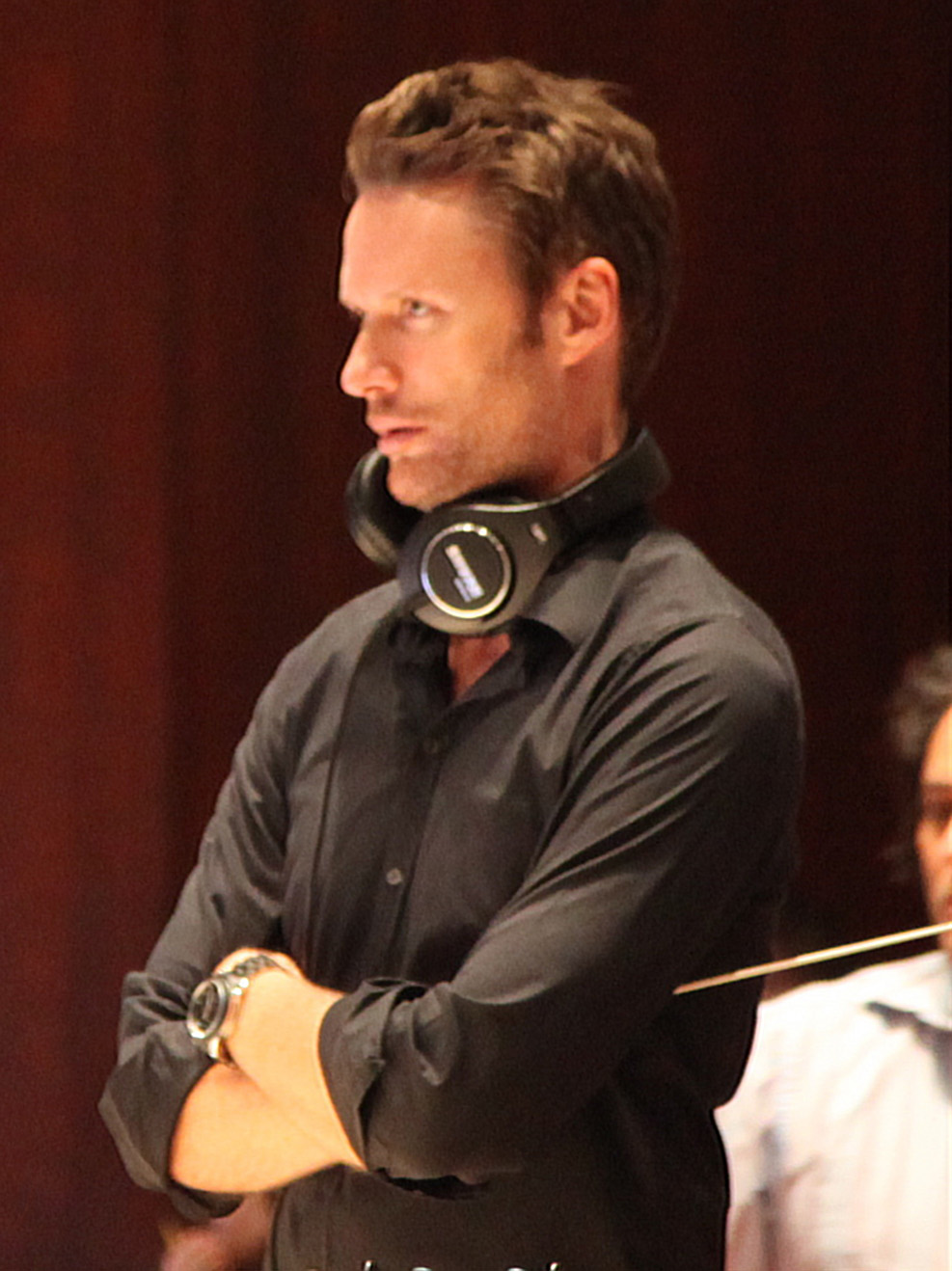
Brian Theodore Tyler (born May 8, 1972) is an American composer, conductor, arranger and multi-instrumentalist best known for his film, television, and video game scores. In his 26-year career, Tyler has scored seven installments of the Fast & Furious franchise, Aliens vs. Predator: Requiem, the fourth and fifth films of the Rambo franchise, Eagle Eye, the fourth and fifth films of the Final Destination franchise, the first three films of The Expendables franchise, Iron Man 3, the Now You See Me franchise, Avengers: Age of Ultron alongside Danny Elfman, Crazy Rich Asians, The Super Mario Bros. Movie, and its upcoming sequel, The Super Mario Galaxy Movie, among others. He also composed and re-arranged the current fanfare of the Universal Pictures logo, originally composed by Jerry Goldsmith, for Universal Pictures' 100th anniversary, which debuted with The Lorax (2012), and composed the 2013–2016 Marvel Studios logo, which debuted with Thor: The Dark World (2013), which he also composed the film's score. He composed the NFL Sunday Countdown Theme for ESPN, the Formula One theme (also used in Formula 2 and Formula 3), and the anthem for the Esports World Cup. He is also behind the soundtrack of many television series including Yellowstone, 1883 and 1923, all with Breton Vivian. For his work as a film composer, he won the IFMCA Awards 2014 Composer of the Year.
His composition for the film Last Call earned him the first of three Emmy nominations, a gold record, and induction into the music branch of the Academy of Motion Picture Arts and Sciences. As of November 2017, his films have grossed $12 billion worldwide, putting him in the top 10 highest-grossing film composers of all time.
He also has an electronic music alias, "Are We Dreaming".
Tyler was born and raised in Orange County, California. His grandfather was art director Walter H. Tyler. One of his first major influences was his pianist grandmother. He holds a bachelor's degree from the University of California, Los Angeles and a master's from Harvard University. Growing up, he taught himself to play dozens of musical instruments, including drums, piano, guitar, bass, cello, world percussion, synthesizer, charango and bouzouki.
Tyler began scoring features shortly after graduating from Harvard. Robert Kraft, who was impressed with Tyler's music, encouraged him to pursue a career in film scoring. Tyler's first film score was for the independent film Bartender (1997), directed by Gabe Torres. The following year, he and Red Elvises composed the score for Six-String Samurai (1998).
Tyler's breakthrough came in the early 2000s, after composing for the Frailty (2001). His work on Last Call (2002) earned him an induction into the music branch of the Academy of Motion Picture Arts and Sciences. Director William Friedkin, impressed with Tyler's work on Frailty, engaged him to compose for The Hunted (2003), which earned Tyler a World Soundtrack Award in 2002 for Best New Film Composer of the Year. Starting in 2003, Tyler began working on big-budget films, including Timeline (2003), Godsend (2004), The Greatest Game Ever Played (2005), and Constantine (2005). His cues for Children of Dune were used in multiple other theatrical film trailers, including Master and Commander (2003), Sahara (2005), Cinderella Man (2005), The Chronicles of Narnia: The Lion, the Witch and the Wardrobe (2005), Indiana Jones and the Kingdom of the Crystal Skull (2008), and Star Trek (2009). The track "Summon the Worms" was used as a leader for the Dutch show Peking Express, and in the first leaked promotional reel for The Golden Compass (2007).
In 2007, he was hired to compose for Partition (2007), where he integrated Indian and Middle Eastern music with orchestral writing. He conducted the orchestral portion of the score with the Hollywood Studio Symphony in Los Angeles.
On September 5, 2011, Tyler announced that he was in talks to score the 2011 remake of Highlander, and pilot episodes for the animated series Transformers: Prime. He scored four episodes of the latter.
Hub AI
Brian Tyler AI simulator
(@Brian Tyler_simulator)
Brian Tyler
Brian Theodore Tyler (born May 8, 1972) is an American composer, conductor, arranger and multi-instrumentalist best known for his film, television, and video game scores. In his 26-year career, Tyler has scored seven installments of the Fast & Furious franchise, Aliens vs. Predator: Requiem, the fourth and fifth films of the Rambo franchise, Eagle Eye, the fourth and fifth films of the Final Destination franchise, the first three films of The Expendables franchise, Iron Man 3, the Now You See Me franchise, Avengers: Age of Ultron alongside Danny Elfman, Crazy Rich Asians, The Super Mario Bros. Movie, and its upcoming sequel, The Super Mario Galaxy Movie, among others. He also composed and re-arranged the current fanfare of the Universal Pictures logo, originally composed by Jerry Goldsmith, for Universal Pictures' 100th anniversary, which debuted with The Lorax (2012), and composed the 2013–2016 Marvel Studios logo, which debuted with Thor: The Dark World (2013), which he also composed the film's score. He composed the NFL Sunday Countdown Theme for ESPN, the Formula One theme (also used in Formula 2 and Formula 3), and the anthem for the Esports World Cup. He is also behind the soundtrack of many television series including Yellowstone, 1883 and 1923, all with Breton Vivian. For his work as a film composer, he won the IFMCA Awards 2014 Composer of the Year.
His composition for the film Last Call earned him the first of three Emmy nominations, a gold record, and induction into the music branch of the Academy of Motion Picture Arts and Sciences. As of November 2017, his films have grossed $12 billion worldwide, putting him in the top 10 highest-grossing film composers of all time.
He also has an electronic music alias, "Are We Dreaming".
Tyler was born and raised in Orange County, California. His grandfather was art director Walter H. Tyler. One of his first major influences was his pianist grandmother. He holds a bachelor's degree from the University of California, Los Angeles and a master's from Harvard University. Growing up, he taught himself to play dozens of musical instruments, including drums, piano, guitar, bass, cello, world percussion, synthesizer, charango and bouzouki.
Tyler began scoring features shortly after graduating from Harvard. Robert Kraft, who was impressed with Tyler's music, encouraged him to pursue a career in film scoring. Tyler's first film score was for the independent film Bartender (1997), directed by Gabe Torres. The following year, he and Red Elvises composed the score for Six-String Samurai (1998).
Tyler's breakthrough came in the early 2000s, after composing for the Frailty (2001). His work on Last Call (2002) earned him an induction into the music branch of the Academy of Motion Picture Arts and Sciences. Director William Friedkin, impressed with Tyler's work on Frailty, engaged him to compose for The Hunted (2003), which earned Tyler a World Soundtrack Award in 2002 for Best New Film Composer of the Year. Starting in 2003, Tyler began working on big-budget films, including Timeline (2003), Godsend (2004), The Greatest Game Ever Played (2005), and Constantine (2005). His cues for Children of Dune were used in multiple other theatrical film trailers, including Master and Commander (2003), Sahara (2005), Cinderella Man (2005), The Chronicles of Narnia: The Lion, the Witch and the Wardrobe (2005), Indiana Jones and the Kingdom of the Crystal Skull (2008), and Star Trek (2009). The track "Summon the Worms" was used as a leader for the Dutch show Peking Express, and in the first leaked promotional reel for The Golden Compass (2007).
In 2007, he was hired to compose for Partition (2007), where he integrated Indian and Middle Eastern music with orchestral writing. He conducted the orchestral portion of the score with the Hollywood Studio Symphony in Los Angeles.
On September 5, 2011, Tyler announced that he was in talks to score the 2011 remake of Highlander, and pilot episodes for the animated series Transformers: Prime. He scored four episodes of the latter.
Recent media