
Recent from talks
Brian Aldiss
Knowledge base stats:
Talk channels stats:
Members stats:
Brian Aldiss
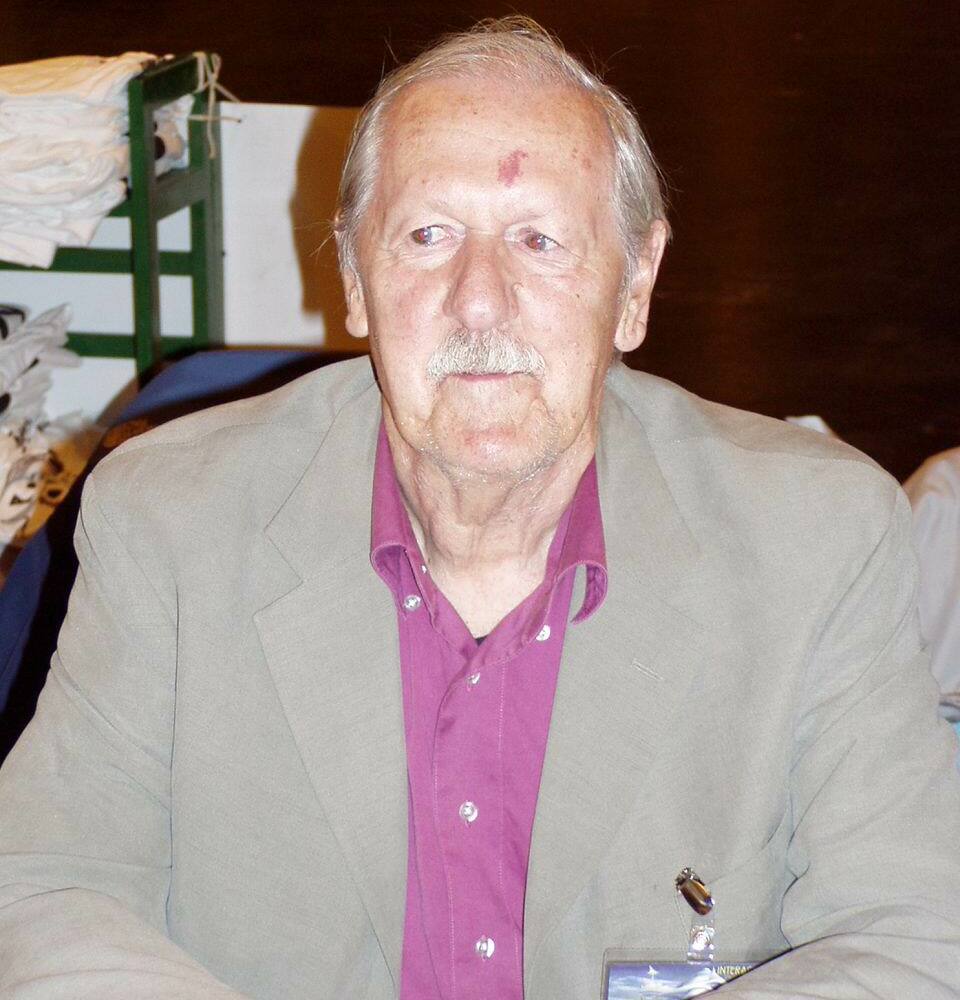
Brian Wilson Aldiss (/ˈɔːldɪs/; 18 August 1925 – 19 August 2017) was an English writer, artist and anthology editor, best known for science-fiction novels and short stories. His byline reads either Brian W. Aldiss or simply Brian Aldiss, except for occasional pseudonyms during the mid-1960s.
Greatly influenced by science fiction pioneer H. G. Wells, Aldiss was a vice-president of the international H. G. Wells Society. He was co-president of the Birmingham Science Fiction Group with Harry Harrison. Aldiss was named a Grand Master by the Science Fiction Writers of America in 1999 and inducted by the Science Fiction Hall of Fame in 2004. He received two Hugo Awards, one Nebula Award and one John W. Campbell Memorial Award. He wrote the short story "Supertoys Last All Summer Long" (1969), the basis for the Stanley Kubrick-developed Steven Spielberg film A.I. Artificial Intelligence (2001). Aldiss was associated with the British New Wave of science fiction.
Brian Wilson Aldiss was born on 18 August 1925, above his paternal grandfather's draper's shop in Dereham, Norfolk. When Aldiss's grandfather died, his father, Bill (the younger of two sons), sold his share in the shop and the family left Dereham. Aldiss's mother, Dot, was the daughter of a builder. He had an older sister who was stillborn and a younger sister. As a four-year-old, Aldiss started to write stories which his mother would bind and put on a shelf.
At the age of 6, Aldiss went to Framlingham College, but moved to Devon and was sent to board at West Buckland School in 1939 after the outbreak of World War II.[failed verification] As a child, he discovered the pulp magazine Astounding Science Fiction. He eventually read all the novels by H. G. Wells, Robert Heinlein, and Philip K. Dick. In 1943, he joined the Royal Signals and saw military action in Burma.
His army experience inspired the novel Hothouse and the Horatio Stubbs second and third books, A Soldier Erect and A Rude Awakening, respectively.
After the war, he worked as a bookseller in Oxford. He also wrote a number of short pieces for a booksellers' trade journal about life in a fictitious bookshop, which attracted the attention of Charles Monteith, an editor at the publisher Faber and Faber. As a result, Faber and Faber published Aldiss's first book, The Brightfount Diaries (1955), a 200-page novel in diary form about the life of a sales assistant in a bookshop.
About this time, he also began to write science fiction for various magazines. According to ISFDB, his first speculative fiction in print was the short story Criminal Record, published by John Carnell in the July 1954 issue of Science Fantasy. Several of his stories appeared in 1955, including three in monthly issues of New Worlds, also edited by Carnell.
In 1954, The Observer newspaper ran a competition for a short story set in the year 2500. Aldiss's story Not For An Age was ranked third following a reader vote.
Hub AI
Brian Aldiss AI simulator
(@Brian Aldiss_simulator)
Brian Aldiss
Brian Wilson Aldiss (/ˈɔːldɪs/; 18 August 1925 – 19 August 2017) was an English writer, artist and anthology editor, best known for science-fiction novels and short stories. His byline reads either Brian W. Aldiss or simply Brian Aldiss, except for occasional pseudonyms during the mid-1960s.
Greatly influenced by science fiction pioneer H. G. Wells, Aldiss was a vice-president of the international H. G. Wells Society. He was co-president of the Birmingham Science Fiction Group with Harry Harrison. Aldiss was named a Grand Master by the Science Fiction Writers of America in 1999 and inducted by the Science Fiction Hall of Fame in 2004. He received two Hugo Awards, one Nebula Award and one John W. Campbell Memorial Award. He wrote the short story "Supertoys Last All Summer Long" (1969), the basis for the Stanley Kubrick-developed Steven Spielberg film A.I. Artificial Intelligence (2001). Aldiss was associated with the British New Wave of science fiction.
Brian Wilson Aldiss was born on 18 August 1925, above his paternal grandfather's draper's shop in Dereham, Norfolk. When Aldiss's grandfather died, his father, Bill (the younger of two sons), sold his share in the shop and the family left Dereham. Aldiss's mother, Dot, was the daughter of a builder. He had an older sister who was stillborn and a younger sister. As a four-year-old, Aldiss started to write stories which his mother would bind and put on a shelf.
At the age of 6, Aldiss went to Framlingham College, but moved to Devon and was sent to board at West Buckland School in 1939 after the outbreak of World War II.[failed verification] As a child, he discovered the pulp magazine Astounding Science Fiction. He eventually read all the novels by H. G. Wells, Robert Heinlein, and Philip K. Dick. In 1943, he joined the Royal Signals and saw military action in Burma.
His army experience inspired the novel Hothouse and the Horatio Stubbs second and third books, A Soldier Erect and A Rude Awakening, respectively.
After the war, he worked as a bookseller in Oxford. He also wrote a number of short pieces for a booksellers' trade journal about life in a fictitious bookshop, which attracted the attention of Charles Monteith, an editor at the publisher Faber and Faber. As a result, Faber and Faber published Aldiss's first book, The Brightfount Diaries (1955), a 200-page novel in diary form about the life of a sales assistant in a bookshop.
About this time, he also began to write science fiction for various magazines. According to ISFDB, his first speculative fiction in print was the short story Criminal Record, published by John Carnell in the July 1954 issue of Science Fantasy. Several of his stories appeared in 1955, including three in monthly issues of New Worlds, also edited by Carnell.
In 1954, The Observer newspaper ran a competition for a short story set in the year 2500. Aldiss's story Not For An Age was ranked third following a reader vote.
Recent media