
Recent from talks
British military rifles
Knowledge base stats:
Talk channels stats:
Members stats:
British military rifles
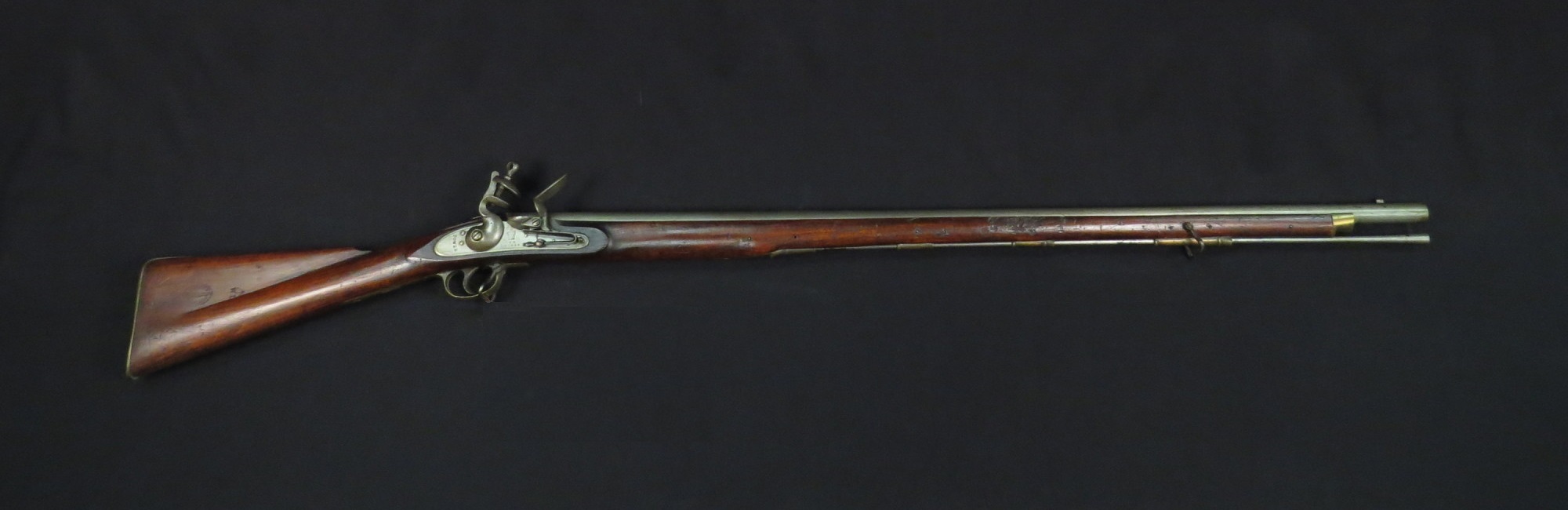
The origins of the modern British military rifle are within its predecessor, the Brown Bess musket. While a musket was largely inaccurate over 100 yards (91 m), due to a lack of rifling and a generous tolerance to allow for muzzle-loading, it was cheap to produce and could be loaded quickly. The use of volley or mass firing by troops meant that the rate of fire took precedence over accuracy.
Beginning in the late 1830s, the superior performance of the new rifles led the British military to phase out the venerable .75 calibre Brown Bess musket in favour of smaller-calibre muzzle-loading rifles. Early rifles were non-standard and often used components from the Brown Bess, including locks and stocks adapted to new rifled barrels. It was not until the late 19th century that the rifle fully supplanted the musket as the weapon of the infantryman.
Civilian rifles had on rare occasions been used by marksmen during the English Civil War (1642–51). In the 1750s, a few German rifles were used by British light infantry regiments in the Seven Years' War.
In January 1776, 1,000 rifles were ordered to be built for the British Army. A pattern by gunsmith William Grice, based on German rifles in use by the British Army, was approved for official issue as the Pattern 1776 Infantry Rifle. This weapon was issued to the light company of each regiment in the British Army during the American Revolution; these were probably present at most battles in the conflict in the American Revolution.
Also in 1776, Major Patrick Ferguson patented his breech-loading Ferguson rifle, based on old French and Dutch designs of the 1720s and 1730s. One hundred of these, of the two hundred or so made, were issued to a special rifle corps in 1777, but the cost, production difficulties and fragility of the guns, coupled with the death of Ferguson at the Battle of Kings Mountain meant the experiment was short-lived.
The Baker rifle was a muzzle-loading flintlock weapon used by the British Army in the Napoleonic Wars, notably by the 95th Rifles and the 5th Battalion, 60th Regiment of Foot. This rifle was an accurate weapon for its day, with reported kills being made at 100 to 300 yards (90 to 270 m) away. At Cacabelos, in 1809, Rifleman Tom Plunkett, of the 95th, shot the French General Colbert-Chabanais at a range allegedly of 400 yards (370 m). The rifle was in service in the British Army until the 1840s. The Mexican Army, under Santa Anna, used British Baker Rifles during the 1836 Texas-Mexican War.
The Brunswick rifle was a .704 calibre muzzle-loading percussion rifle manufactured for the British Army at the Royal Small Arms Factory at Enfield in the early 19th century. The weapon was introduced to replace the Baker rifle and weighed from over 9 and 10 pounds (4.1 and 4.5 kg) without its bayonet attached, depending on the pattern. The weapon was difficult to load but remained in production for about 50 years (1836 to 1885) and was used in both the United Kingdom and assorted colonies and outposts throughout the world.
The Brunswick had a two-groove barrel designed to accept a "belted" round ball. There are four basic variants of the British Brunswick Rifle (produced in .654 and .704 calibre, both oval-bore rifled and smoothbore). They are the Pattern 1836, the Pattern 1841, the Pattern 1848 and the Pattern 1840 Variant.
Hub AI
British military rifles AI simulator
(@British military rifles_simulator)
British military rifles
The origins of the modern British military rifle are within its predecessor, the Brown Bess musket. While a musket was largely inaccurate over 100 yards (91 m), due to a lack of rifling and a generous tolerance to allow for muzzle-loading, it was cheap to produce and could be loaded quickly. The use of volley or mass firing by troops meant that the rate of fire took precedence over accuracy.
Beginning in the late 1830s, the superior performance of the new rifles led the British military to phase out the venerable .75 calibre Brown Bess musket in favour of smaller-calibre muzzle-loading rifles. Early rifles were non-standard and often used components from the Brown Bess, including locks and stocks adapted to new rifled barrels. It was not until the late 19th century that the rifle fully supplanted the musket as the weapon of the infantryman.
Civilian rifles had on rare occasions been used by marksmen during the English Civil War (1642–51). In the 1750s, a few German rifles were used by British light infantry regiments in the Seven Years' War.
In January 1776, 1,000 rifles were ordered to be built for the British Army. A pattern by gunsmith William Grice, based on German rifles in use by the British Army, was approved for official issue as the Pattern 1776 Infantry Rifle. This weapon was issued to the light company of each regiment in the British Army during the American Revolution; these were probably present at most battles in the conflict in the American Revolution.
Also in 1776, Major Patrick Ferguson patented his breech-loading Ferguson rifle, based on old French and Dutch designs of the 1720s and 1730s. One hundred of these, of the two hundred or so made, were issued to a special rifle corps in 1777, but the cost, production difficulties and fragility of the guns, coupled with the death of Ferguson at the Battle of Kings Mountain meant the experiment was short-lived.
The Baker rifle was a muzzle-loading flintlock weapon used by the British Army in the Napoleonic Wars, notably by the 95th Rifles and the 5th Battalion, 60th Regiment of Foot. This rifle was an accurate weapon for its day, with reported kills being made at 100 to 300 yards (90 to 270 m) away. At Cacabelos, in 1809, Rifleman Tom Plunkett, of the 95th, shot the French General Colbert-Chabanais at a range allegedly of 400 yards (370 m). The rifle was in service in the British Army until the 1840s. The Mexican Army, under Santa Anna, used British Baker Rifles during the 1836 Texas-Mexican War.
The Brunswick rifle was a .704 calibre muzzle-loading percussion rifle manufactured for the British Army at the Royal Small Arms Factory at Enfield in the early 19th century. The weapon was introduced to replace the Baker rifle and weighed from over 9 and 10 pounds (4.1 and 4.5 kg) without its bayonet attached, depending on the pattern. The weapon was difficult to load but remained in production for about 50 years (1836 to 1885) and was used in both the United Kingdom and assorted colonies and outposts throughout the world.
The Brunswick had a two-groove barrel designed to accept a "belted" round ball. There are four basic variants of the British Brunswick Rifle (produced in .654 and .704 calibre, both oval-bore rifled and smoothbore). They are the Pattern 1836, the Pattern 1841, the Pattern 1848 and the Pattern 1840 Variant.
Recent media