



Community hub
Recent from talks
Contribute something to knowledge base
Content stats: 0 posts, 0 articles, 1 media, 0 notes
Members stats: 0 subscribers, 0 contributors, 0 moderators, 0 supporters
Subscribers
Supporters
Contributors
Moderators
Hub AI
Brusilov offensive AI simulator
(@Brusilov offensive_simulator)
Hub AI
Brusilov offensive AI simulator
(@Brusilov offensive_simulator)
Brusilov offensive
The Brusilov offensive (Russian: Брусиловский прорыв, romanized: Brusilovskiĭ proryv, lit. 'Brusilov's breakthrough'), also known as the June advance, or Battle of Galicia-Volhynia, of June to September 1916 was the Russian Empire's greatest feat of arms during World War I, and among the most lethal offensives in world history. The historian Graydon Tunstall called the Brusilov offensive the worst crisis of World War I for Austria-Hungary and the Triple Entente's greatest victory, but it came at a tremendous loss of life. It was arguably the most successful offensive in the entirety of the First World War. The victory contributed to a morale upsurge among the Russian troops. In 1917, Nicholas II planned a general offensive along the entire front in order to end the Central Powers. After the victory, the Petrograd conference was held at which the post-war structure of the world was discussed. Even despite the losses, the Russian armies were still being reinforced with new forces, the number of weapons increased, and new railways were being built. The offensive's success led Russia's allies to reconsider their positions on postwar territorial concessions, including the status of Anatolia and the Bosphorus Strait.
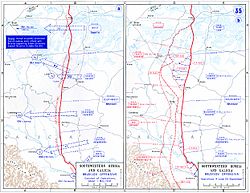
The offensive involved a major Russian attack against the armies of the Central Powers on the Eastern Front. Launched on 4 June 1916, it lasted until late September. It took place in eastern Galicia (present-day northwestern Ukraine), in the Lviv and Volyn Oblasts. The offensive is named after the commander in charge of the Southwestern Front of the Imperial Russian Army, General Aleksei Brusilov. The largest and most lethal offensive of the war, the effects of the Brusilov offensive were far-reaching. It relieved German pressure on French forces at Verdun, and helped to relieve the Austro-Hungarian pressure on the Italians. It inflicted irreparable losses on the Austro-Hungarian Army, and induced Romania to finally enter the war on the side of the Entente. The human and material losses on the Russian side also greatly contributed to the onset of the Russian Revolution the following year. It was the largest battle in World War I according to the total losses and forces of the parties.
Under the terms of the Chantilly Agreement of December 1915, Russia, France, Britain and Italy committed to simultaneous attacks against the Central Powers in the summer of 1916. Russia felt reluctantly obliged to lend troops to fight in France and Salonika, and to attack on the Eastern Front, in the hope of obtaining munitions from Britain and France.
In March 1916 the Russians initiated the disastrous Lake Naroch offensive in the Vilnius area, during which the Germans suffered only one-fifth as many casualties as the Russians. This offensive took place at French request – General Joseph Joffre had hoped that the Imperial German Army would transfer more units to the east after the Battle of Verdun began in February 1916.
Besides the complacency felt by the Germans and Austro-Hungarians after their successful defense of Russian attacks that winter and March, the Austro-Hungarians were in the midst of implementing their plans to knock Italy out of the war. Franz Conrad von Hötzendorf had transferred Kövess' troops from the Balkans as well as four divisions from the Eastern Front. According to Prit Buttar, "To make matters worse, many of the experienced divisions on the Eastern Front were withdrawn and sent to the Alps, and replaced by formations largely composed of new inexperienced recruits."
At a war council held with senior commanders and the tsar in April 1916, General Aleksei Brusilov presented a plan to the Stavka (the Russian high command), proposing a massive offensive by his Southwestern Front against the Austro-Hungarian forces in Galicia. Brusilov's plan aimed to take some of the pressure off French and British armies in France and the Royal Italian Army along the Isonzo Front and, if possible, to knock Austria-Hungary out of the war.
General Alexei Evert, commander of the Russian Western Army Group based in Smolensk, favored a defensive strategy and opposed Brusilov's proposed offensive. Tsar Nicholas II had taken personal command of the Imperial Russian Army in September 1915. Evert was a strong supporter of Nicholas and the Romanovs, but the emperor approved Brusilov's plan. The offensive aimed to capture the cities of Kovel and Lviv (in present-day western Ukraine); the Central Powers had recovered both these cities in 1915. Although the Stavka had approved Brusilov's plan, his request for supporting offensives by the neighboring fronts (the Western under Evert and Northern under Aleksey Kuropatkin) was denied.
On 26 May, the tsar issued orders for accelerating the start of the Russian summer offensive, in response to pleas from the Italians facing Conrad's offensive. Brusilov would attack on 4 June, and the rest of the Russian army ten days later. Brusilov chose Alexey Kaledin's Eighth Army to spearhead the capture of Lutsk and Kovel. Kaledin's attacking force included the XXXII Corps in the south, the VIII and XL Corps in the center, and XXXIX Corps in the north. The Russians fielded 148 infantry battalions against the 53 battalions in Archduke Joseph Ferdinand's Fourth Army. Further south on the Austro-Hungarian front were Paul Puhallo von Brlog's 1st Army, Eduard von Böhm-Ermolli's 2nd Army, and Karl von Pflanzer-Baltin's 7th Army.
Brusilov offensive
The Brusilov offensive (Russian: Брусиловский прорыв, romanized: Brusilovskiĭ proryv, lit. 'Brusilov's breakthrough'), also known as the June advance, or Battle of Galicia-Volhynia, of June to September 1916 was the Russian Empire's greatest feat of arms during World War I, and among the most lethal offensives in world history. The historian Graydon Tunstall called the Brusilov offensive the worst crisis of World War I for Austria-Hungary and the Triple Entente's greatest victory, but it came at a tremendous loss of life. It was arguably the most successful offensive in the entirety of the First World War. The victory contributed to a morale upsurge among the Russian troops. In 1917, Nicholas II planned a general offensive along the entire front in order to end the Central Powers. After the victory, the Petrograd conference was held at which the post-war structure of the world was discussed. Even despite the losses, the Russian armies were still being reinforced with new forces, the number of weapons increased, and new railways were being built. The offensive's success led Russia's allies to reconsider their positions on postwar territorial concessions, including the status of Anatolia and the Bosphorus Strait.
The offensive involved a major Russian attack against the armies of the Central Powers on the Eastern Front. Launched on 4 June 1916, it lasted until late September. It took place in eastern Galicia (present-day northwestern Ukraine), in the Lviv and Volyn Oblasts. The offensive is named after the commander in charge of the Southwestern Front of the Imperial Russian Army, General Aleksei Brusilov. The largest and most lethal offensive of the war, the effects of the Brusilov offensive were far-reaching. It relieved German pressure on French forces at Verdun, and helped to relieve the Austro-Hungarian pressure on the Italians. It inflicted irreparable losses on the Austro-Hungarian Army, and induced Romania to finally enter the war on the side of the Entente. The human and material losses on the Russian side also greatly contributed to the onset of the Russian Revolution the following year. It was the largest battle in World War I according to the total losses and forces of the parties.
Under the terms of the Chantilly Agreement of December 1915, Russia, France, Britain and Italy committed to simultaneous attacks against the Central Powers in the summer of 1916. Russia felt reluctantly obliged to lend troops to fight in France and Salonika, and to attack on the Eastern Front, in the hope of obtaining munitions from Britain and France.
In March 1916 the Russians initiated the disastrous Lake Naroch offensive in the Vilnius area, during which the Germans suffered only one-fifth as many casualties as the Russians. This offensive took place at French request – General Joseph Joffre had hoped that the Imperial German Army would transfer more units to the east after the Battle of Verdun began in February 1916.
Besides the complacency felt by the Germans and Austro-Hungarians after their successful defense of Russian attacks that winter and March, the Austro-Hungarians were in the midst of implementing their plans to knock Italy out of the war. Franz Conrad von Hötzendorf had transferred Kövess' troops from the Balkans as well as four divisions from the Eastern Front. According to Prit Buttar, "To make matters worse, many of the experienced divisions on the Eastern Front were withdrawn and sent to the Alps, and replaced by formations largely composed of new inexperienced recruits."
At a war council held with senior commanders and the tsar in April 1916, General Aleksei Brusilov presented a plan to the Stavka (the Russian high command), proposing a massive offensive by his Southwestern Front against the Austro-Hungarian forces in Galicia. Brusilov's plan aimed to take some of the pressure off French and British armies in France and the Royal Italian Army along the Isonzo Front and, if possible, to knock Austria-Hungary out of the war.
General Alexei Evert, commander of the Russian Western Army Group based in Smolensk, favored a defensive strategy and opposed Brusilov's proposed offensive. Tsar Nicholas II had taken personal command of the Imperial Russian Army in September 1915. Evert was a strong supporter of Nicholas and the Romanovs, but the emperor approved Brusilov's plan. The offensive aimed to capture the cities of Kovel and Lviv (in present-day western Ukraine); the Central Powers had recovered both these cities in 1915. Although the Stavka had approved Brusilov's plan, his request for supporting offensives by the neighboring fronts (the Western under Evert and Northern under Aleksey Kuropatkin) was denied.
On 26 May, the tsar issued orders for accelerating the start of the Russian summer offensive, in response to pleas from the Italians facing Conrad's offensive. Brusilov would attack on 4 June, and the rest of the Russian army ten days later. Brusilov chose Alexey Kaledin's Eighth Army to spearhead the capture of Lutsk and Kovel. Kaledin's attacking force included the XXXII Corps in the south, the VIII and XL Corps in the center, and XXXIX Corps in the north. The Russians fielded 148 infantry battalions against the 53 battalions in Archduke Joseph Ferdinand's Fourth Army. Further south on the Austro-Hungarian front were Paul Puhallo von Brlog's 1st Army, Eduard von Böhm-Ermolli's 2nd Army, and Karl von Pflanzer-Baltin's 7th Army.
Recent media
Recent media