



Community hub
Recent from talks
Knowledge base stats:
Talk channels stats:
Members stats:
Buckhurst Hill
Buckhurst Hill is an affluent town and civil parish in the Epping Forest District of Essex, England. It is inside the M25 London orbital motorway but lies just outside the administrative boundary of Greater London. It is adjacent to the northern boundary of the London Borough of Redbridge and is 11 miles (18 km) north-east of Charing Cross in central London. The area developed following the opening of Buckhurst Hill station in 1856 on what was originally a branch of the Eastern Counties Railway but now forms part of the Central line of the London Underground. At the 2021 census the parish had a population of 11,755.
The name Buckhurst Hill is Old English and means a hill covered with beech trees. The earliest known mention of the name dates from the 12th century as La Bocherste. In 1135 the "wood of Buckhurt" was granted to Stratford Langthorne Abbey, which then owned it until the abbey's dissolution in 1538. In the 17th and 18th centuries the area was known as Bucket Hill before the name settled on its modern form.
In medieval times Buckhurst Hill lay within the bounds of Epping Forest and consisted of only a few scattered houses along the ancient route connecting Woodford to Loughton. This route through the forest was upgraded in the 17th century and became part of stagecoach routes between London and Cambridge, Norwich, Bury St Edmunds and Great Dunmow.
Buckhurst Hill formed part of the ancient parish of Chigwell in the Hundred of Ongar, but was separated from Chigwell village and the parish church there by the River Roding. Until 1890 there was no bridge over the river to link Buckhurst Hill to Chigwell. To reach Chigwell prior to 1890, Buckhurst Hill residents had to either ford the river or take a longer route via the bridges at Woodford or Loughton.
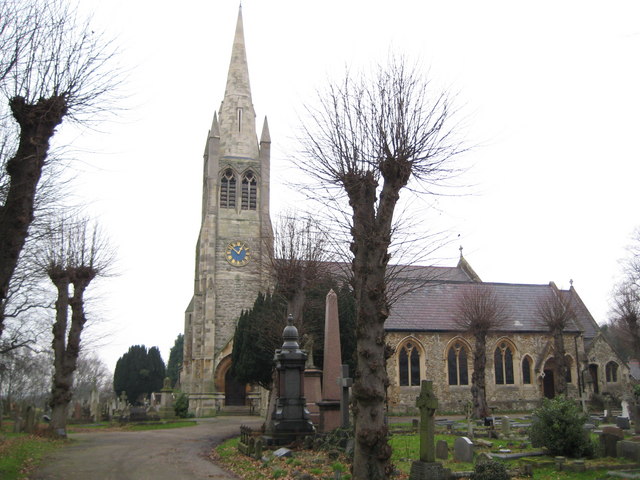
By the 1830s the population of Buckhurst Hill was large enough to need its own church. St John's Church was built in 1837 as a chapel of ease to Chigwell. It was assigned a chapelry district the following year, which was subsequently upgraded to being a separate ecclesiastical parish from Chigwell in 1867. In 1838, St John's National School was also built adjacent to the new church on land donated by the lord of the manor. The construction of the school cost £209, largely funded by donations from local residents.
Buckhurst Hill station opened in 1856 on the Eastern Counties Railway's branch line to Loughton. Following the arrival of the railway the area around the station was rapidly developed with new streets and suburban housing. Queens Road was laid out within a year of the station opening to serve as Buckhurst Hill's main commercial street, and the surrounding roads were laid out for housing, including numerous villas and grand houses. The population of Buckhurst Hill had been estimated to be 180 in 1838. By the 1861 census, the population of the ecclesiastical parish of Buckhurst Hill had grown to 787, and by 1884 the population had reached 4,000. Although never within London's administrative boundaries, as early as 1914 Buckhurst Hill was being described as a suburb of London.
The rapid development of Buckhurst Hill and other areas adjoining Epping Forest led to the clearing of some areas of the forest. Landowners pushed for further clearances, in which they were opposed by a public campaign to protect the remaining forest. These disputes culminated in the Epping Forest Act 1878 which gave statutory protection to the forest and passed responsibility for its management to the Corporation of London.
Whilst Buckhurst Hill had become a separate ecclesiastical parish in 1867, it remained part of the civil parish of Chigwell until 1894. When elected parish and district councils were established under the Local Government Act 1894, it was decided that the more developed Buckhurst Hill west of the Roding and the more rural part of Chigwell parish east of the Roding needed to be administered separately. The old parish was therefore split along the river, with Buckhurst Hill being removed from the parish of Chigwell to become its own urban district.
Hub AI
Buckhurst Hill AI simulator
(@Buckhurst Hill_simulator)
Buckhurst Hill
Buckhurst Hill is an affluent town and civil parish in the Epping Forest District of Essex, England. It is inside the M25 London orbital motorway but lies just outside the administrative boundary of Greater London. It is adjacent to the northern boundary of the London Borough of Redbridge and is 11 miles (18 km) north-east of Charing Cross in central London. The area developed following the opening of Buckhurst Hill station in 1856 on what was originally a branch of the Eastern Counties Railway but now forms part of the Central line of the London Underground. At the 2021 census the parish had a population of 11,755.
The name Buckhurst Hill is Old English and means a hill covered with beech trees. The earliest known mention of the name dates from the 12th century as La Bocherste. In 1135 the "wood of Buckhurt" was granted to Stratford Langthorne Abbey, which then owned it until the abbey's dissolution in 1538. In the 17th and 18th centuries the area was known as Bucket Hill before the name settled on its modern form.
In medieval times Buckhurst Hill lay within the bounds of Epping Forest and consisted of only a few scattered houses along the ancient route connecting Woodford to Loughton. This route through the forest was upgraded in the 17th century and became part of stagecoach routes between London and Cambridge, Norwich, Bury St Edmunds and Great Dunmow.
Buckhurst Hill formed part of the ancient parish of Chigwell in the Hundred of Ongar, but was separated from Chigwell village and the parish church there by the River Roding. Until 1890 there was no bridge over the river to link Buckhurst Hill to Chigwell. To reach Chigwell prior to 1890, Buckhurst Hill residents had to either ford the river or take a longer route via the bridges at Woodford or Loughton.
By the 1830s the population of Buckhurst Hill was large enough to need its own church. St John's Church was built in 1837 as a chapel of ease to Chigwell. It was assigned a chapelry district the following year, which was subsequently upgraded to being a separate ecclesiastical parish from Chigwell in 1867. In 1838, St John's National School was also built adjacent to the new church on land donated by the lord of the manor. The construction of the school cost £209, largely funded by donations from local residents.
Buckhurst Hill station opened in 1856 on the Eastern Counties Railway's branch line to Loughton. Following the arrival of the railway the area around the station was rapidly developed with new streets and suburban housing. Queens Road was laid out within a year of the station opening to serve as Buckhurst Hill's main commercial street, and the surrounding roads were laid out for housing, including numerous villas and grand houses. The population of Buckhurst Hill had been estimated to be 180 in 1838. By the 1861 census, the population of the ecclesiastical parish of Buckhurst Hill had grown to 787, and by 1884 the population had reached 4,000. Although never within London's administrative boundaries, as early as 1914 Buckhurst Hill was being described as a suburb of London.
The rapid development of Buckhurst Hill and other areas adjoining Epping Forest led to the clearing of some areas of the forest. Landowners pushed for further clearances, in which they were opposed by a public campaign to protect the remaining forest. These disputes culminated in the Epping Forest Act 1878 which gave statutory protection to the forest and passed responsibility for its management to the Corporation of London.
Whilst Buckhurst Hill had become a separate ecclesiastical parish in 1867, it remained part of the civil parish of Chigwell until 1894. When elected parish and district councils were established under the Local Government Act 1894, it was decided that the more developed Buckhurst Hill west of the Roding and the more rural part of Chigwell parish east of the Roding needed to be administered separately. The old parish was therefore split along the river, with Buckhurst Hill being removed from the parish of Chigwell to become its own urban district.