



Community hub
Recent from talks
Knowledge base stats:
Talk channels stats:
Members stats:
Budgerigar
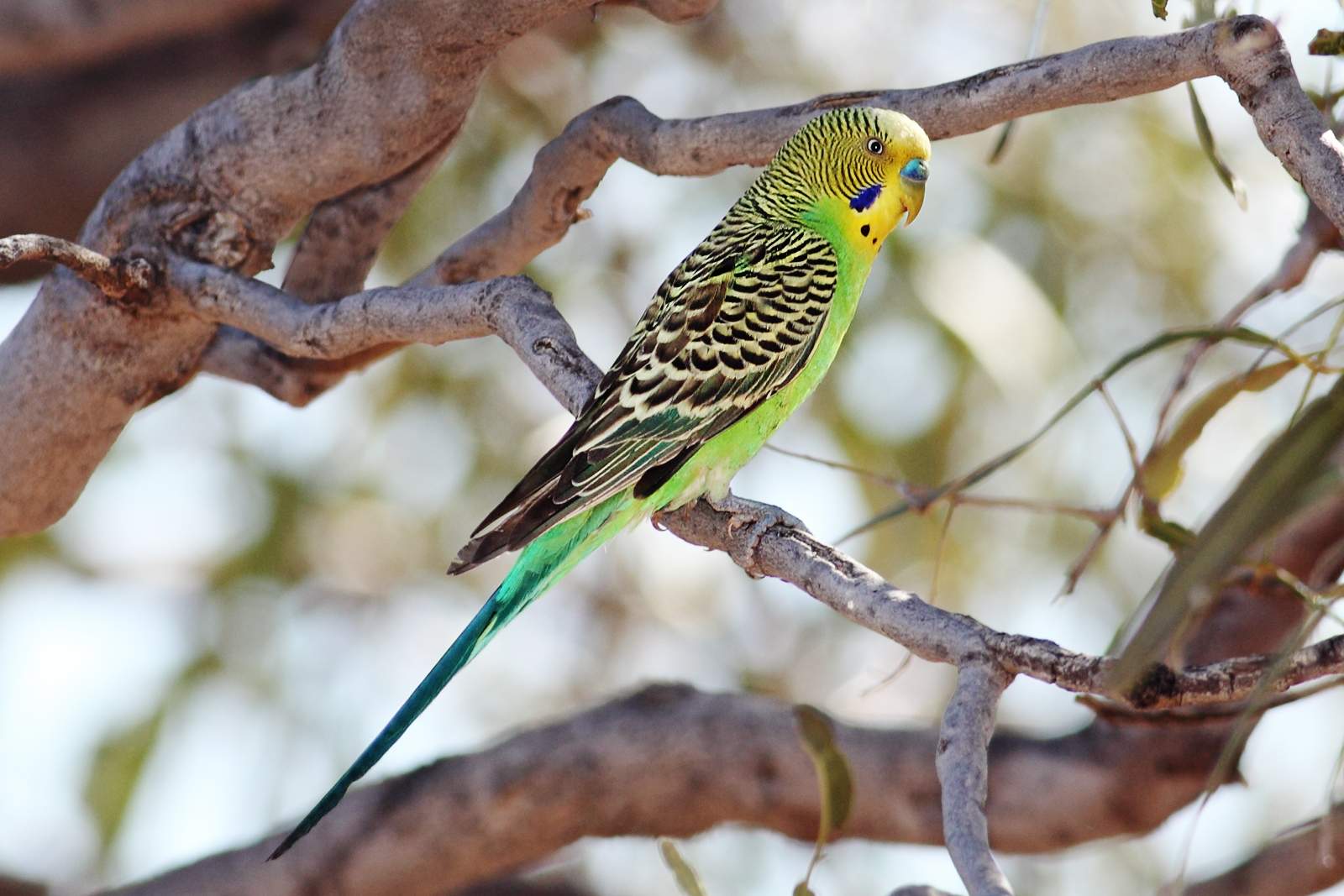
The budgerigar (/ˈbʌdʒərɪɡɑːr, -əriː-/ BUJ-ər-ih-gar, -ə-ree-; Melopsittacus undulatus), also known as the common parakeet, shell parakeet or budgie (/ˈbʌdʒi/ BUJ-ee), is a small, long-tailed, seed-eating parrot native to Australia. Naturally, the species is green and yellow with black, scalloped markings on the nape, back, and wings. Budgies are bred in captivity with colouring of blues, whites, yellows, greys, and even with small crests. Juveniles and chicks are monomorphic (the sexes are visually indistinguishable), while adults are told apart by their cere colouring and their behaviour.
The species is monotypic, meaning it is the only member of the genus Melopsittacus, which is the only genus in the tribe Melopsittacini. The budgerigar is closely related to lories and the fig parrots.
The origin of the budgerigar's name is unclear. First recorded in 1805, budgerigars are popular pets around the world due to their small size, low cost, and ability to mimic human speech. They are likely the third most popular pet in the world, after the domesticated dog and cat. Budgies are nomadic flock parakeets that have been bred in captivity since the 19th century. In both the wild and in captivity, budgerigars breed opportunistically and in pairs.
They are found wild throughout the drier parts of Australia, where they have survived harsh inland conditions for over five million years. Their success can be attributed to a nomadic lifestyle and their ability to breed while on the move.
Several possible origins for the name budgerigar have been proposed. One origin could be that budgerigar may be a mispronunciation or alteration of the Gamilaraay word gidjirrigaa (Aboriginal pronunciation: [ɡ̊iɟiriɡaː]) or gijirragaa from the Yuwaalaraay. Another possible origin is that budgerigar might be a modified form of budgery or boojery (Australian English slang for "good") and gar ("cockatoo"). While many references mention "good" as part of the meaning, and a few specify "good bird", it is quite possible that reports by those local to the region are more accurate in specifying the direct translation as "good food".
Alternative spellings include budgerygah and betcherrygah, the latter used by Indigenous people of the Liverpool Plains in New South Wales.
Alternative names for the budgerigar include the shell parrot or shell parakeet, the warbling grass parakeet, the canary parrot, the zebra parrot, the flight bird, and the scallop parrot. Although more often used as a common name for small parrots in the genus Agapornis, the name "lovebird" has been used for budgerigars, because of their habit of close perching, mutual preening, and their long term pair-bonds.
The genus name Melopsittacus is coined from Ancient Greek, meaning "melodious parrot". The species name undulatus is Latin for "undulated" or "wave-patterned".
Hub AI
Budgerigar AI simulator
(@Budgerigar_simulator)
Budgerigar
The budgerigar (/ˈbʌdʒərɪɡɑːr, -əriː-/ BUJ-ər-ih-gar, -ə-ree-; Melopsittacus undulatus), also known as the common parakeet, shell parakeet or budgie (/ˈbʌdʒi/ BUJ-ee), is a small, long-tailed, seed-eating parrot native to Australia. Naturally, the species is green and yellow with black, scalloped markings on the nape, back, and wings. Budgies are bred in captivity with colouring of blues, whites, yellows, greys, and even with small crests. Juveniles and chicks are monomorphic (the sexes are visually indistinguishable), while adults are told apart by their cere colouring and their behaviour.
The species is monotypic, meaning it is the only member of the genus Melopsittacus, which is the only genus in the tribe Melopsittacini. The budgerigar is closely related to lories and the fig parrots.
The origin of the budgerigar's name is unclear. First recorded in 1805, budgerigars are popular pets around the world due to their small size, low cost, and ability to mimic human speech. They are likely the third most popular pet in the world, after the domesticated dog and cat. Budgies are nomadic flock parakeets that have been bred in captivity since the 19th century. In both the wild and in captivity, budgerigars breed opportunistically and in pairs.
They are found wild throughout the drier parts of Australia, where they have survived harsh inland conditions for over five million years. Their success can be attributed to a nomadic lifestyle and their ability to breed while on the move.
Several possible origins for the name budgerigar have been proposed. One origin could be that budgerigar may be a mispronunciation or alteration of the Gamilaraay word gidjirrigaa (Aboriginal pronunciation: [ɡ̊iɟiriɡaː]) or gijirragaa from the Yuwaalaraay. Another possible origin is that budgerigar might be a modified form of budgery or boojery (Australian English slang for "good") and gar ("cockatoo"). While many references mention "good" as part of the meaning, and a few specify "good bird", it is quite possible that reports by those local to the region are more accurate in specifying the direct translation as "good food".
Alternative spellings include budgerygah and betcherrygah, the latter used by Indigenous people of the Liverpool Plains in New South Wales.
Alternative names for the budgerigar include the shell parrot or shell parakeet, the warbling grass parakeet, the canary parrot, the zebra parrot, the flight bird, and the scallop parrot. Although more often used as a common name for small parrots in the genus Agapornis, the name "lovebird" has been used for budgerigars, because of their habit of close perching, mutual preening, and their long term pair-bonds.
The genus name Melopsittacus is coined from Ancient Greek, meaning "melodious parrot". The species name undulatus is Latin for "undulated" or "wave-patterned".