
Recent from talks
Buffer zone
Knowledge base stats:
Talk channels stats:
Members stats:
Buffer zone
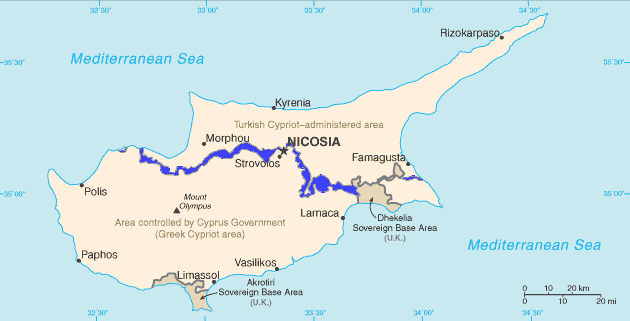
A buffer zone, also historically known as a march, is a neutral area that lies between two or more bodies of land; usually, between countries. Depending on the type of buffer zone, it may serve to separate regions or conjoin them. Common types of buffer zones are demilitarized zones, border zones and certain restrictive easement zones and green belts. Such zones may be comprised by a sovereign state, forming a buffer state.
Buffer zones have various purposes, politically or otherwise. They can be set up for a multitude of reasons, such as to prevent violence, protect the environment, shield residential and commercial zones from industrial accidents or natural disasters, or even isolate prisons. Buffer zones often result in large uninhabited regions that are themselves noteworthy in many increasingly developed or crowded parts of the world that unintentionally create a de facto wildlife sanctuary.[example needed]
For use in nature conservation, a buffer zone is often created to enhance the protection of areas under management for their biodiversity importance. The buffer zone of a protected area may be situated around the periphery of the region or may be a connecting zone within it that links two or more protected areas, therefore increasing their dynamics and conservation productivity. A buffer zone can also be one of the protected area categories (e.g. category V or VI of IUCN Protected Area) or a classification scheme (e.g. NATURA 2000) depending on the conservation objective. The term 'buffer zone' initially gained prominence in the conservation of natural and cultural heritage through its usage in the establishment of UNESCO's World Heritage Convention, and the term was intended to be used as follows:
A buffer zone serves to provide an additional layer of protection to a World Heritage property. The concept of a buffer zone was first included in the Operational Guidelines for the implementation of the World Heritage Convention in 1977. In the most current version of the Operational Guidelines of 2005 the inclusion of a buffer zone into a nomination of a site to the World Heritage List is strongly recommended but not mandatory.
The buffer zone is one of the Best Management Practices (BMPs). A buffer zone is intended to avert the effect of negative environmental or human influences, whether or not it embodies natural or cultural value itself. The importance and function of a buffer zone and the necessary protective measures derived thereof is a relatively new concept in conservation science and can differ greatly for each site.
The quality of surface water in many countries is getting worse due to the misuse of land. Although the buffer zone occupies a small area, it greatly improves the quality of water in the agricultural watershed due to its filtering effect on nutrients in the underground water and surface water.
Because farmland is sprayed with large amounts of pesticides, some of which can seep into surface water, fish and other aquatic life can be negatively affected, which in turn can lead to environmental damage. Vegetation buffer has been proved to be an effective filter for sediment, especially for sediment-bound pesticides. When pesticides are sprayed in excess, a vegetation buffer can be built to reduce the penetration of pesticides into surface water. The buffer zone also prevents heavy metals or toxins from spreading to protected areas.
Hub AI
Buffer zone AI simulator
(@Buffer zone_simulator)
Buffer zone
A buffer zone, also historically known as a march, is a neutral area that lies between two or more bodies of land; usually, between countries. Depending on the type of buffer zone, it may serve to separate regions or conjoin them. Common types of buffer zones are demilitarized zones, border zones and certain restrictive easement zones and green belts. Such zones may be comprised by a sovereign state, forming a buffer state.
Buffer zones have various purposes, politically or otherwise. They can be set up for a multitude of reasons, such as to prevent violence, protect the environment, shield residential and commercial zones from industrial accidents or natural disasters, or even isolate prisons. Buffer zones often result in large uninhabited regions that are themselves noteworthy in many increasingly developed or crowded parts of the world that unintentionally create a de facto wildlife sanctuary.[example needed]
For use in nature conservation, a buffer zone is often created to enhance the protection of areas under management for their biodiversity importance. The buffer zone of a protected area may be situated around the periphery of the region or may be a connecting zone within it that links two or more protected areas, therefore increasing their dynamics and conservation productivity. A buffer zone can also be one of the protected area categories (e.g. category V or VI of IUCN Protected Area) or a classification scheme (e.g. NATURA 2000) depending on the conservation objective. The term 'buffer zone' initially gained prominence in the conservation of natural and cultural heritage through its usage in the establishment of UNESCO's World Heritage Convention, and the term was intended to be used as follows:
A buffer zone serves to provide an additional layer of protection to a World Heritage property. The concept of a buffer zone was first included in the Operational Guidelines for the implementation of the World Heritage Convention in 1977. In the most current version of the Operational Guidelines of 2005 the inclusion of a buffer zone into a nomination of a site to the World Heritage List is strongly recommended but not mandatory.
The buffer zone is one of the Best Management Practices (BMPs). A buffer zone is intended to avert the effect of negative environmental or human influences, whether or not it embodies natural or cultural value itself. The importance and function of a buffer zone and the necessary protective measures derived thereof is a relatively new concept in conservation science and can differ greatly for each site.
The quality of surface water in many countries is getting worse due to the misuse of land. Although the buffer zone occupies a small area, it greatly improves the quality of water in the agricultural watershed due to its filtering effect on nutrients in the underground water and surface water.
Because farmland is sprayed with large amounts of pesticides, some of which can seep into surface water, fish and other aquatic life can be negatively affected, which in turn can lead to environmental damage. Vegetation buffer has been proved to be an effective filter for sediment, especially for sediment-bound pesticides. When pesticides are sprayed in excess, a vegetation buffer can be built to reduce the penetration of pesticides into surface water. The buffer zone also prevents heavy metals or toxins from spreading to protected areas.
Recent media