
Recent from talks
C. Aubrey Smith
Knowledge base stats:
Talk channels stats:
Members stats:
C. Aubrey Smith
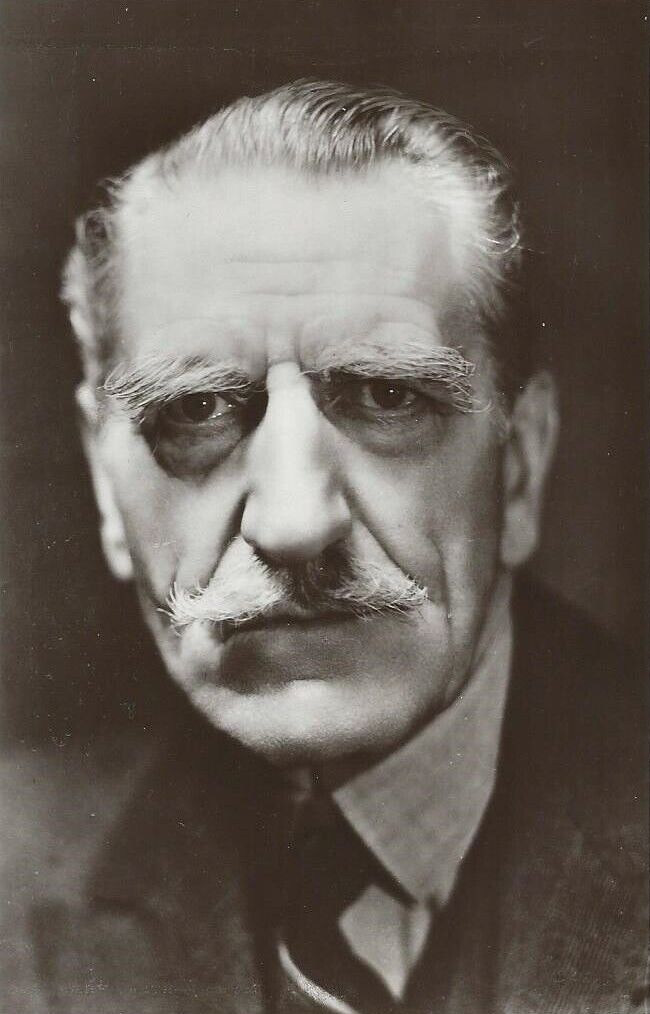
Sir Charles Aubrey Smith (21 July 1863 – 20 December 1948) was an English test cricketer and actor of stage and screen. During his acting career, he acquired a niche as the officer-and-gentleman type, as in the first sound version of The Prisoner of Zenda (1937). In Hollywood, he organised British actors into a cricket team, much intriguing local spectators.
Smith was born in London, England, to Charles John Smith (1838–1928), a medical doctor, and Sarah Ann (née Clode, 1836–1922). His sister, Beryl Faber (died 1912), was married to Cosmo Hamilton.
Smith was educated at Charterhouse School and St John's College, Cambridge. He settled in South Africa to prospect for gold in 1888–89. While there he developed pneumonia and was wrongly pronounced dead by doctors. He married Isabella Wood in 1896.
As a cricketer, Smith was primarily a right arm fast bowler, though he was also a useful right-hand lower-order batsman and a good slip fielder. His oddly curved bowling run-up, which started from deep mid-off, earned him the nickname "Round the Corner Smith". When he bowled round the wicket his approach was concealed from the batsman by the umpire until he emerged, leading W. G. Grace to comment "it is rather startling when he suddenly appears at the bowling crease." He is widely regarded as one of the very best amateur bowlers of his day. He played for Cambridge University (1882–1885) and for Sussex at various times from 1882 to 1892.
While in South Africa he captained the Johannesburg English XI. He captained England to victory in his only Test match, against South Africa at Port Elizabeth in March 1889, taking five wickets for nineteen runs in the first innings. The English team who played were by no means representative of the best players of the time and nobody at the time realised that the match would enter the cricket records as an official Test match. His home club for much of his career was West Drayton Cricket club. Actors would arrive from London to the purpose-built train station in West Drayton and taken by horse-drawn carriage to the ground.
In 1932, he founded the Hollywood Cricket Club and created a pitch with imported English grass. He attracted fellow expatriates such as David Niven, Laurence Olivier, Nigel Bruce (who served as captain), Leslie Howard and Boris Karloff to the club as well as local American players. Smith's stereotypical Englishness spawned several amusing anecdotes: while fielding at slip for the Hollywood Club, he dropped a difficult catch and ordered his English butler to fetch his spectacles; they were brought on to the field on a silver platter. The next ball looped gently to slip, to present the kind of catch that "a child would take at midnight with no moon." Smith dropped it and, snatching off his lenses, commented, "Damned fool brought my reading glasses." Decades after his cricket career had ended, when he had long been a famous face in films, Smith was spotted in the pavilion on a visit to Lord's. "That man over there seems familiar", remarked one member to another. "Yes", said the second, seemingly oblivious to his Hollywood fame, "Chap called Smith. Used to play for Sussex."
Smith began acting on the London stage in 1895. His first major role was in Prisoner of Zenda the following year, playing the dual lead roles of king and look-alike. Forty-one years later, he appeared in the most acclaimed film version of the novel, this time as the wise old adviser to Ronald Colman. When Raymond Massey asked him to help him understand the role of Black Michael, he answered "My dear Ray, in my time I have played every part in The Prisoner of Zenda except Princess Flavia. And I always had trouble with Black Michael!" He made his Broadway debut as early as 1895 in The Notorious Mrs. Ebbsmith. In 1907 he appeared with Marie Doro in The Morals of Marcus, a play Doro later made into a silent film. Smith later appeared in a revival of George Bernard Shaw's Pygmalion in the starring role of Henry Higgins.
Smith appeared in early films for the nascent British film industry, starring in The Bump in 1920 (written by A. A. Milne for the company Minerva Films, which was founded in 1920 by the actor Leslie Howard and his friend and story editor Adrian Brunel). Smith later went to Hollywood where he had a successful career as a character actor playing either officer or gentleman roles. One role in 1937 was as Colonel Williams in Wee Willie Winkie, starring Shirley Temple, Victor McLaglen, Cesar Romero and June Lang. He was regarded as being the unofficial leader of the British film industry colony in Hollywood, which Sheridan Morley characterised as the Hollywood Raj, a select group of British actors who were seen to be colonising the capital of the film business in the 1930s. Other film stars considered to be "members" of this select group were David Niven (whom Smith treated like a son), Ronald Colman, Rex Harrison, Robert Coote, Basil Rathbone, Nigel Bruce (whose daughter's wedding he had attended as best man), Leslie Howard (whom Smith had known since working with him on early films in London), and Patric Knowles.
Hub AI
C. Aubrey Smith AI simulator
(@C. Aubrey Smith_simulator)
C. Aubrey Smith
Sir Charles Aubrey Smith (21 July 1863 – 20 December 1948) was an English test cricketer and actor of stage and screen. During his acting career, he acquired a niche as the officer-and-gentleman type, as in the first sound version of The Prisoner of Zenda (1937). In Hollywood, he organised British actors into a cricket team, much intriguing local spectators.
Smith was born in London, England, to Charles John Smith (1838–1928), a medical doctor, and Sarah Ann (née Clode, 1836–1922). His sister, Beryl Faber (died 1912), was married to Cosmo Hamilton.
Smith was educated at Charterhouse School and St John's College, Cambridge. He settled in South Africa to prospect for gold in 1888–89. While there he developed pneumonia and was wrongly pronounced dead by doctors. He married Isabella Wood in 1896.
As a cricketer, Smith was primarily a right arm fast bowler, though he was also a useful right-hand lower-order batsman and a good slip fielder. His oddly curved bowling run-up, which started from deep mid-off, earned him the nickname "Round the Corner Smith". When he bowled round the wicket his approach was concealed from the batsman by the umpire until he emerged, leading W. G. Grace to comment "it is rather startling when he suddenly appears at the bowling crease." He is widely regarded as one of the very best amateur bowlers of his day. He played for Cambridge University (1882–1885) and for Sussex at various times from 1882 to 1892.
While in South Africa he captained the Johannesburg English XI. He captained England to victory in his only Test match, against South Africa at Port Elizabeth in March 1889, taking five wickets for nineteen runs in the first innings. The English team who played were by no means representative of the best players of the time and nobody at the time realised that the match would enter the cricket records as an official Test match. His home club for much of his career was West Drayton Cricket club. Actors would arrive from London to the purpose-built train station in West Drayton and taken by horse-drawn carriage to the ground.
In 1932, he founded the Hollywood Cricket Club and created a pitch with imported English grass. He attracted fellow expatriates such as David Niven, Laurence Olivier, Nigel Bruce (who served as captain), Leslie Howard and Boris Karloff to the club as well as local American players. Smith's stereotypical Englishness spawned several amusing anecdotes: while fielding at slip for the Hollywood Club, he dropped a difficult catch and ordered his English butler to fetch his spectacles; they were brought on to the field on a silver platter. The next ball looped gently to slip, to present the kind of catch that "a child would take at midnight with no moon." Smith dropped it and, snatching off his lenses, commented, "Damned fool brought my reading glasses." Decades after his cricket career had ended, when he had long been a famous face in films, Smith was spotted in the pavilion on a visit to Lord's. "That man over there seems familiar", remarked one member to another. "Yes", said the second, seemingly oblivious to his Hollywood fame, "Chap called Smith. Used to play for Sussex."
Smith began acting on the London stage in 1895. His first major role was in Prisoner of Zenda the following year, playing the dual lead roles of king and look-alike. Forty-one years later, he appeared in the most acclaimed film version of the novel, this time as the wise old adviser to Ronald Colman. When Raymond Massey asked him to help him understand the role of Black Michael, he answered "My dear Ray, in my time I have played every part in The Prisoner of Zenda except Princess Flavia. And I always had trouble with Black Michael!" He made his Broadway debut as early as 1895 in The Notorious Mrs. Ebbsmith. In 1907 he appeared with Marie Doro in The Morals of Marcus, a play Doro later made into a silent film. Smith later appeared in a revival of George Bernard Shaw's Pygmalion in the starring role of Henry Higgins.
Smith appeared in early films for the nascent British film industry, starring in The Bump in 1920 (written by A. A. Milne for the company Minerva Films, which was founded in 1920 by the actor Leslie Howard and his friend and story editor Adrian Brunel). Smith later went to Hollywood where he had a successful career as a character actor playing either officer or gentleman roles. One role in 1937 was as Colonel Williams in Wee Willie Winkie, starring Shirley Temple, Victor McLaglen, Cesar Romero and June Lang. He was regarded as being the unofficial leader of the British film industry colony in Hollywood, which Sheridan Morley characterised as the Hollywood Raj, a select group of British actors who were seen to be colonising the capital of the film business in the 1930s. Other film stars considered to be "members" of this select group were David Niven (whom Smith treated like a son), Ronald Colman, Rex Harrison, Robert Coote, Basil Rathbone, Nigel Bruce (whose daughter's wedding he had attended as best man), Leslie Howard (whom Smith had known since working with him on early films in London), and Patric Knowles.
Recent media