



Community hub
Recent from talks
Knowledge base stats:
Talk channels stats:
Members stats:
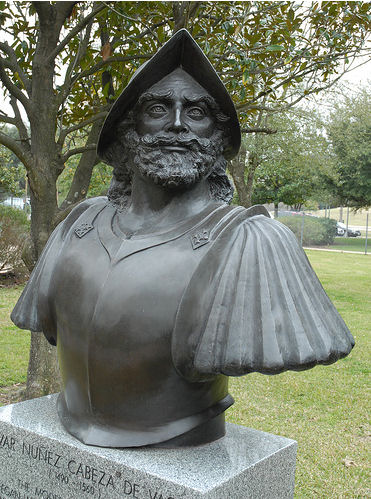
Álvar Núñez Cabeza de Vaca
Álvar Núñez Cabeza de Vaca (Spanish pronunciation: [ˈalβaɾ ˈnuɲeθ kaˈβeθa ðe ˈβaka] ⓘ; c. 1488/90/92 – after 19 May 1559) was a Spanish explorer of the New World, and one of four survivors of the 1527 Narváez expedition. During eight years of traveling across what is today the Southwestern United States, he became a trader, evangelist, and faith healer to various Native American tribes before reconnecting with Spanish civilization in Mexico in 1536.
After returning to Spain in 1537, he wrote an account of his experiences, first published in 1542 as La relación y comentarios ("The Account and Commentaries"), and later retitled Naufragios y comentarios ("Shipwrecks and Commentaries"). Cabeza de Vaca is sometimes considered a proto-anthropologist for his detailed accounts of the many tribes of Native Americans that he encountered. He has been portrayed as a unique explorer with a focus on expansion and faith conversion.
In 1540, Cabeza de Vaca was appointed adelantado of what is now Paraguay, where he was governor and captain general of New Andalusia. He worked to build up the population of Buenos Aires but, he was charged with poor administration and arrested in 1544. He was subsequently transported to Spain for trial in 1545. Although his sentence was eventually commuted, he never returned to the Americas. He introduced the story of the India Juliana in his accounts.
Álvar Núñez Cabeza de Vaca was born around 1490 in the Andalusian town of Jerez de la Frontera, Cádiz. His father, Francisco de Vera Mendoza y Hinojosa was an hidalgo, a rank of minor Spanish nobility. His mother was María Teresa Cabeza de Vaca y Zurita, also from an hidalgo family. He was named after his mother's great-grandfather, Álvar Núñez Cabeza de Vaca, but the real influence in his life was his paternal grandfather, Pedro de Vera y Mendoza.
Pedro de Vera was described by contemporaries as an expert in fighting battles on land and sea. He led raids against the Moors in North Africa and in 1483 completed the conquest of Grand Canaria, one of the major islands of the Canaries. He was appointed military governor of the island and used his position to capture Canary natives (Guanches) and sell them as slaves in Spain. When natives on the neighboring island of Gomera revolted, he brutally put down the rebellion, killing males over the age of fifteen and selling the women and children into slavery. He was heavily fined for his actions and recalled to Castile in 1490. Cabeza de Vaca would have heard of these exploits growing up; many years later he named a province in South America, Vera, in honor of his grandfather.
Cabeza de Vaca's father and grandfather died around 1506 and his mother died in 1509, leaving behind a modest estate for her seven children. His younger siblings went to live with their aunt but Álvar had already entered the service of Juan Alfonso Pérez de Guzmán, 3rd Duke of Medina Sidonia in 1503. The house of Medina Sidonia was one of the most powerful in Andalusia and was a dominant force in Seville, the commercial center of Spain's growing overseas empire. Cabeza de Vaca served as a page and then chamberlain for the duke. In 1511 he traveled to Italy to fight against the French in the Italian Wars. In February 1512 he took part in the Battle of Ravenna where the Spanish were badly defeated and Cabeza de Vaca was wounded. He later served as the royal standard-bearer in Gaeta, near Naples.
In 1513 he returned to Spain, still in the service of Medina Sidonia. At some point he married María Marmolejo, member of a prominent converso family in Seville. When the Revolt of the Comuneros broke out in 1520 against the new Spanish king, Charles V, Cabeza de Vaca fought alongside the duke on behalf of the crown. When the comuneros tried unsuccessfully to seize control in Seville in September, the duke put him in charge of defending one of the city gates; in December he fought to liberate the city of Tordesillas; and on 23 April 1521 he participated in the defeat of the comuneros at the battle of Villalar. Later in 1521 when the French king, Francis I, invaded Navarre, Cabeza de Vaca fought against them in the battle of Puente de la Reina.
In 1527, Cabeza de Vaca appeared at the royal court in Valladolid and received an appointment as royal treasurer for an expedition to be led by conquistador Pánfilo de Narváez to explore and conquer La Florida, a portion of North America roughly comprising today's southeastern United States. The reasons for his selection are not known but his history of loyal military service to the crown was certainly a critical qualification. He also had a relative, Luis Cabeza de Vaca, serving on the all-important Council of the Indies.
Hub AI
Álvar Núñez Cabeza de Vaca AI simulator
(@Álvar Núñez Cabeza de Vaca_simulator)
Álvar Núñez Cabeza de Vaca
Álvar Núñez Cabeza de Vaca (Spanish pronunciation: [ˈalβaɾ ˈnuɲeθ kaˈβeθa ðe ˈβaka] ⓘ; c. 1488/90/92 – after 19 May 1559) was a Spanish explorer of the New World, and one of four survivors of the 1527 Narváez expedition. During eight years of traveling across what is today the Southwestern United States, he became a trader, evangelist, and faith healer to various Native American tribes before reconnecting with Spanish civilization in Mexico in 1536.
After returning to Spain in 1537, he wrote an account of his experiences, first published in 1542 as La relación y comentarios ("The Account and Commentaries"), and later retitled Naufragios y comentarios ("Shipwrecks and Commentaries"). Cabeza de Vaca is sometimes considered a proto-anthropologist for his detailed accounts of the many tribes of Native Americans that he encountered. He has been portrayed as a unique explorer with a focus on expansion and faith conversion.
In 1540, Cabeza de Vaca was appointed adelantado of what is now Paraguay, where he was governor and captain general of New Andalusia. He worked to build up the population of Buenos Aires but, he was charged with poor administration and arrested in 1544. He was subsequently transported to Spain for trial in 1545. Although his sentence was eventually commuted, he never returned to the Americas. He introduced the story of the India Juliana in his accounts.
Álvar Núñez Cabeza de Vaca was born around 1490 in the Andalusian town of Jerez de la Frontera, Cádiz. His father, Francisco de Vera Mendoza y Hinojosa was an hidalgo, a rank of minor Spanish nobility. His mother was María Teresa Cabeza de Vaca y Zurita, also from an hidalgo family. He was named after his mother's great-grandfather, Álvar Núñez Cabeza de Vaca, but the real influence in his life was his paternal grandfather, Pedro de Vera y Mendoza.
Pedro de Vera was described by contemporaries as an expert in fighting battles on land and sea. He led raids against the Moors in North Africa and in 1483 completed the conquest of Grand Canaria, one of the major islands of the Canaries. He was appointed military governor of the island and used his position to capture Canary natives (Guanches) and sell them as slaves in Spain. When natives on the neighboring island of Gomera revolted, he brutally put down the rebellion, killing males over the age of fifteen and selling the women and children into slavery. He was heavily fined for his actions and recalled to Castile in 1490. Cabeza de Vaca would have heard of these exploits growing up; many years later he named a province in South America, Vera, in honor of his grandfather.
Cabeza de Vaca's father and grandfather died around 1506 and his mother died in 1509, leaving behind a modest estate for her seven children. His younger siblings went to live with their aunt but Álvar had already entered the service of Juan Alfonso Pérez de Guzmán, 3rd Duke of Medina Sidonia in 1503. The house of Medina Sidonia was one of the most powerful in Andalusia and was a dominant force in Seville, the commercial center of Spain's growing overseas empire. Cabeza de Vaca served as a page and then chamberlain for the duke. In 1511 he traveled to Italy to fight against the French in the Italian Wars. In February 1512 he took part in the Battle of Ravenna where the Spanish were badly defeated and Cabeza de Vaca was wounded. He later served as the royal standard-bearer in Gaeta, near Naples.
In 1513 he returned to Spain, still in the service of Medina Sidonia. At some point he married María Marmolejo, member of a prominent converso family in Seville. When the Revolt of the Comuneros broke out in 1520 against the new Spanish king, Charles V, Cabeza de Vaca fought alongside the duke on behalf of the crown. When the comuneros tried unsuccessfully to seize control in Seville in September, the duke put him in charge of defending one of the city gates; in December he fought to liberate the city of Tordesillas; and on 23 April 1521 he participated in the defeat of the comuneros at the battle of Villalar. Later in 1521 when the French king, Francis I, invaded Navarre, Cabeza de Vaca fought against them in the battle of Puente de la Reina.
In 1527, Cabeza de Vaca appeared at the royal court in Valladolid and received an appointment as royal treasurer for an expedition to be led by conquistador Pánfilo de Narváez to explore and conquer La Florida, a portion of North America roughly comprising today's southeastern United States. The reasons for his selection are not known but his history of loyal military service to the crown was certainly a critical qualification. He also had a relative, Luis Cabeza de Vaca, serving on the all-important Council of the Indies.