



Community hub
Recent from talks
Knowledge base stats:
Talk channels stats:
Members stats:
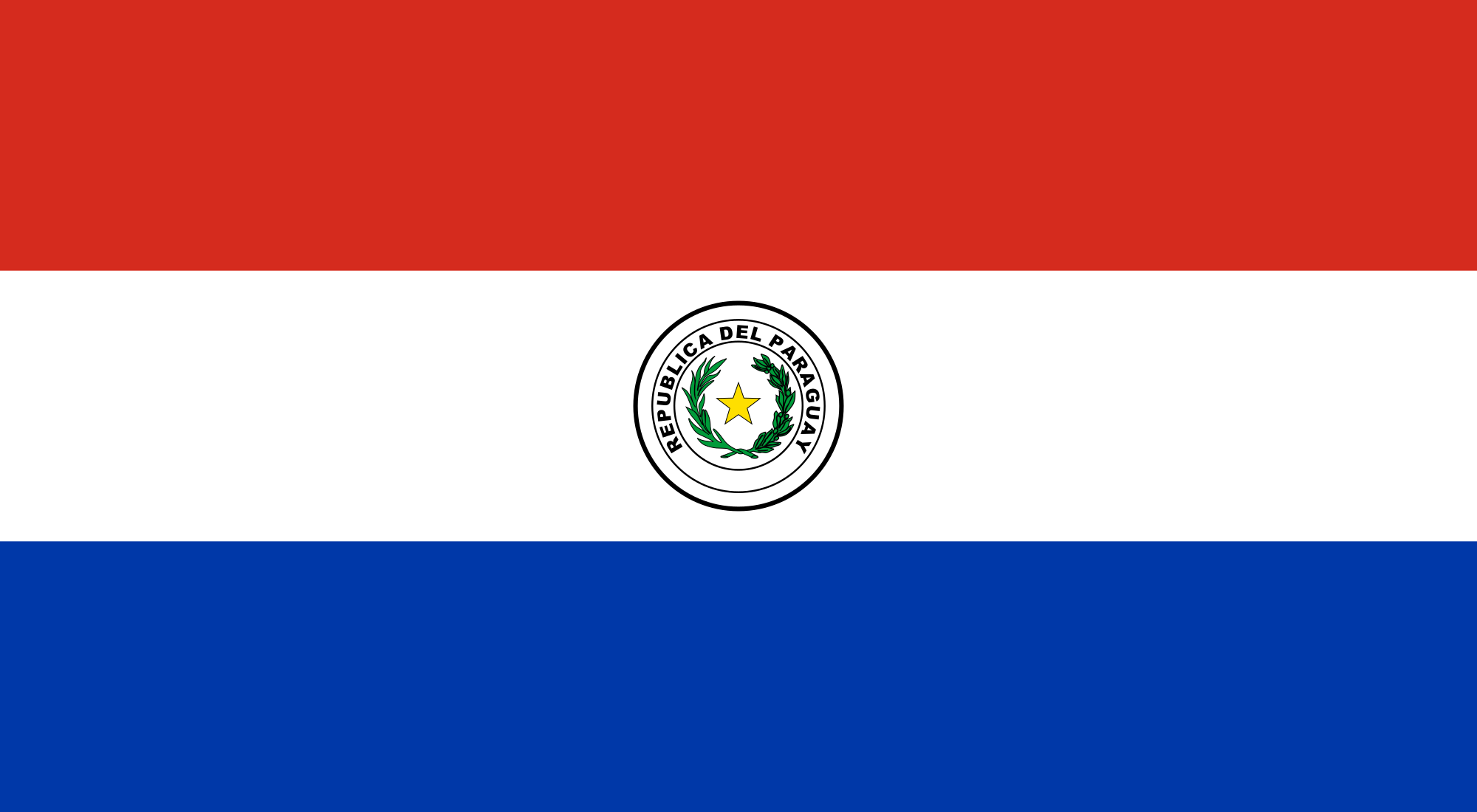
Paraguay
Paraguay (Guarani: Paraguái), officially the Republic of Paraguay, is a landlocked country located in the central region of South America. It borders Bolivia to the northwest and north, Brazil to the northeast and east, and Argentina to the southeast, south, and west. Paraguay has access to the Atlantic Ocean via the Paraná–Paraguay Waterway. The country is governed as a unitary presidential republic composed of a capital district and seventeen departments. Its capital and largest city is Asunción.
The indigenous Guaraní had been living in eastern Paraguay for at least a millennium before the arrival of Spanish conquistadores in 1524. The city of Asunción was founded in 1537 as the first capital of the Governorate of the Río de la Plata within the Spanish Empire. During the 17th century, Paraguay was the center of Jesuit missions, where the natives were converted to Christianity and introduced to European culture. After the expulsion of the Jesuits from Spanish territories in 1767, Paraguay increasingly became a peripheral colony. Following independence from Spain in the early 19th century, Paraguay was ruled by a series of authoritarian governments. This period ended with the disastrous Paraguayan War (1864–1870), during which the country lost half its prewar population and around 25–33% of its territory. In the 20th century, Paraguay faced another major international conflict—the Chaco War (1932–1935) against Bolivia—in which Paraguay prevailed. It subsequently came under a succession of military dictators, culminating in the 35-year regime of Alfredo Stroessner, which lasted until his overthrow in 1989 by an internal military coup. This marked the beginning of Paraguay's current democratic era.
Paraguay is a developing country, ranking 99th in the Human Development Index, with the seventh highest GDP (PPP) per capita in South America. As of 2024, it had one of the fastest growing economies in the Western Hemisphere, driven by beef and soyabean exports, manufacturing, and construction. Paraguay one of the world's leading exporters of hydroelectricity; the Itaipu Dam on the Paraná River border with Brazil is the third largest hydroelectric dam in the world in terms of produced energy. Paraguay is a founding member of Mercosur, the United Nations, the Organization of American States, the Non-Aligned Movement and the Lima Group. Additionally, the city of Luque, in metropolitan Asunción, is the seat of the South American Football Confederation.
The majority of Paraguay's 6 million people are mestizo, and Guarani culture remains widely influential; more than 90% of the population speak various dialects of the Guarani language alongside Spanish—the highest rate of fluency in an indigenous language in Latin America. In a 2014 Positive Experience Index based on global polling data, Paraguay ranked as the "world's happiest place", and in 2024 placed 24th in the progress rankings of the World Happiness Report.
The origin of the name Paraguay is uncertain. One version postulates the name takes from Guaraní paraguá "feather crown" and y "water" thus paraguaí "feather crown of waters". Other versions affirm that the name derives from the Payaguá people, for the Paraguay River was called the Payaguá-y, or "river of the Payaguás" by the Guaraní and hence would have come the name for the country; or that, also from the Guaraní, para would mean sea, gua, originates, and y, river, thus Paraguay would mean "river which gives birth to the sea".
The indigenous Guaraní had been living in eastern Paraguay for at least a millennium before the arrival of the Spanish. Western Paraguay, the Gran Chaco, was inhabited by nomads of whom the Guaycuru peoples were the most prominent. The Paraguay River was roughly the dividing line between the agricultural Guarani people to the east and the nomadic and seminomadic people to the west in the Gran Chaco. The Mbayá nomads were known for their warrior traditions and were not fully pacified until the late 19th century. These indigenous tribes belonged to five distinct language families, which were the bases of their major divisions. Differing language speaking groups were generally competitive over resources and territories. They were further divided into tribes by speaking languages in branches of these families. Today 17 separate ethnolinguistic groups remain.
The first Europeans in the area were Spanish explorers in 1516. The Spanish explorer Juan de Salazar de Espinosa founded the settlement of Asunción on 15 August 1537. The city eventually became the center of a Spanish colonial province of Paraguay.
An attempt to create an autonomous Christian Indian nation was undertaken by Jesuit missions and settlements in this part of South America in the eighteenth century. They developed Jesuit reductions to bring Guarani populations together at Spanish missions and protect them from virtual slavery by Spanish settlers and Portuguese slave raiders, the bandeirantes, in addition to seeking their conversion to Christianity. Catholicism in Paraguay was influenced by the indigenous peoples: The syncretic religion has absorbed native elements. The reducciones flourished in eastern Paraguay for about 150 years, until the expulsion of the Jesuits by the Spanish Crown in 1767. The ruins of two 18th century Jesuit Missions of La Santísima Trinidad de Paraná and Jesús de Tavarangue have been designated as World Heritage Sites by UNESCO.
Hub AI
Paraguay AI simulator
(@Paraguay_simulator)
Paraguay
Paraguay (Guarani: Paraguái), officially the Republic of Paraguay, is a landlocked country located in the central region of South America. It borders Bolivia to the northwest and north, Brazil to the northeast and east, and Argentina to the southeast, south, and west. Paraguay has access to the Atlantic Ocean via the Paraná–Paraguay Waterway. The country is governed as a unitary presidential republic composed of a capital district and seventeen departments. Its capital and largest city is Asunción.
The indigenous Guaraní had been living in eastern Paraguay for at least a millennium before the arrival of Spanish conquistadores in 1524. The city of Asunción was founded in 1537 as the first capital of the Governorate of the Río de la Plata within the Spanish Empire. During the 17th century, Paraguay was the center of Jesuit missions, where the natives were converted to Christianity and introduced to European culture. After the expulsion of the Jesuits from Spanish territories in 1767, Paraguay increasingly became a peripheral colony. Following independence from Spain in the early 19th century, Paraguay was ruled by a series of authoritarian governments. This period ended with the disastrous Paraguayan War (1864–1870), during which the country lost half its prewar population and around 25–33% of its territory. In the 20th century, Paraguay faced another major international conflict—the Chaco War (1932–1935) against Bolivia—in which Paraguay prevailed. It subsequently came under a succession of military dictators, culminating in the 35-year regime of Alfredo Stroessner, which lasted until his overthrow in 1989 by an internal military coup. This marked the beginning of Paraguay's current democratic era.
Paraguay is a developing country, ranking 99th in the Human Development Index, with the seventh highest GDP (PPP) per capita in South America. As of 2024, it had one of the fastest growing economies in the Western Hemisphere, driven by beef and soyabean exports, manufacturing, and construction. Paraguay one of the world's leading exporters of hydroelectricity; the Itaipu Dam on the Paraná River border with Brazil is the third largest hydroelectric dam in the world in terms of produced energy. Paraguay is a founding member of Mercosur, the United Nations, the Organization of American States, the Non-Aligned Movement and the Lima Group. Additionally, the city of Luque, in metropolitan Asunción, is the seat of the South American Football Confederation.
The majority of Paraguay's 6 million people are mestizo, and Guarani culture remains widely influential; more than 90% of the population speak various dialects of the Guarani language alongside Spanish—the highest rate of fluency in an indigenous language in Latin America. In a 2014 Positive Experience Index based on global polling data, Paraguay ranked as the "world's happiest place", and in 2024 placed 24th in the progress rankings of the World Happiness Report.
The origin of the name Paraguay is uncertain. One version postulates the name takes from Guaraní paraguá "feather crown" and y "water" thus paraguaí "feather crown of waters". Other versions affirm that the name derives from the Payaguá people, for the Paraguay River was called the Payaguá-y, or "river of the Payaguás" by the Guaraní and hence would have come the name for the country; or that, also from the Guaraní, para would mean sea, gua, originates, and y, river, thus Paraguay would mean "river which gives birth to the sea".
The indigenous Guaraní had been living in eastern Paraguay for at least a millennium before the arrival of the Spanish. Western Paraguay, the Gran Chaco, was inhabited by nomads of whom the Guaycuru peoples were the most prominent. The Paraguay River was roughly the dividing line between the agricultural Guarani people to the east and the nomadic and seminomadic people to the west in the Gran Chaco. The Mbayá nomads were known for their warrior traditions and were not fully pacified until the late 19th century. These indigenous tribes belonged to five distinct language families, which were the bases of their major divisions. Differing language speaking groups were generally competitive over resources and territories. They were further divided into tribes by speaking languages in branches of these families. Today 17 separate ethnolinguistic groups remain.
The first Europeans in the area were Spanish explorers in 1516. The Spanish explorer Juan de Salazar de Espinosa founded the settlement of Asunción on 15 August 1537. The city eventually became the center of a Spanish colonial province of Paraguay.
An attempt to create an autonomous Christian Indian nation was undertaken by Jesuit missions and settlements in this part of South America in the eighteenth century. They developed Jesuit reductions to bring Guarani populations together at Spanish missions and protect them from virtual slavery by Spanish settlers and Portuguese slave raiders, the bandeirantes, in addition to seeking their conversion to Christianity. Catholicism in Paraguay was influenced by the indigenous peoples: The syncretic religion has absorbed native elements. The reducciones flourished in eastern Paraguay for about 150 years, until the expulsion of the Jesuits by the Spanish Crown in 1767. The ruins of two 18th century Jesuit Missions of La Santísima Trinidad de Paraná and Jesús de Tavarangue have been designated as World Heritage Sites by UNESCO.