
Recent from talks
Moors
Knowledge base stats:
Talk channels stats:
Members stats:
Moors
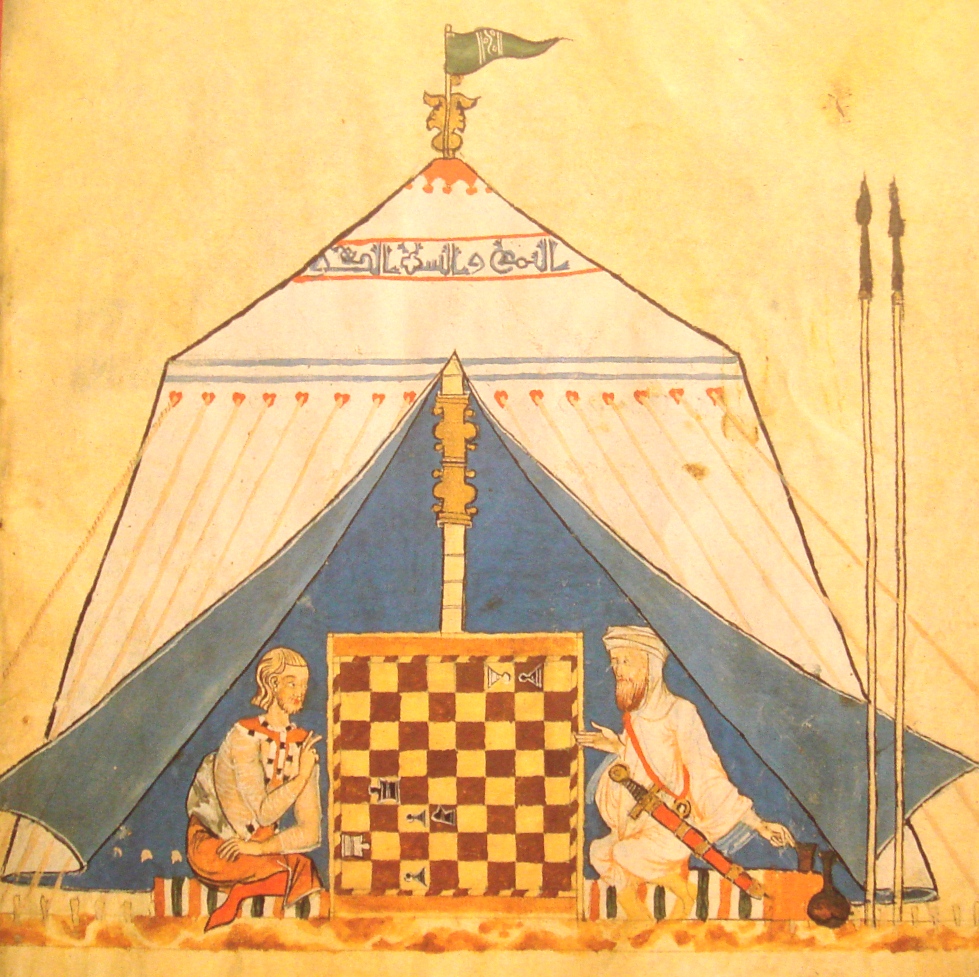
The term Moor is an exonym used in European languages to designate primarily the Muslim populations of North Africa (the Maghreb) and the Iberian Peninsula (particularly al-Andalus) during the Middle Ages.
Moors are not a single, distinct or self-defined people. Europeans of the Middle Ages and the early modern period variously applied the name to Arabs, Berbers, Muslim Europeans, and black peoples. The term has been used in a broad sense to refer to Muslims in general, especially those of Arab or Berber descent, whether living in al-Andalus or North Africa. Related terms such as English "Blackamoor" were also used to refer to black Africans generally in the early modern period. The 1911 Encyclopædia Britannica observed that the term "Moors" had "no real ethnological value." The word has racial connotations and it has fallen out of fashion among scholars since the mid-20th century.
The word is also used when denoting various other specific ethnic groups in western Africa and some parts of Asia. During the colonial era, the Portuguese introduced the names "Ceylon Moors" and "Indian Moors" in South Asia and Sri Lanka, now official ethnic designations on the island nation, and the Bengali Muslims were also called Moors. In the Philippines, the longstanding Muslim community, which predates the arrival of the Spanish, now self-identifies as the "Moro people", an exonym introduced by Spanish colonizers due to their Muslim faith.[citation needed] In modern-day Mauritania, the terms "Black moors" and "white Moors" are used to refer to the Haratin and Beidane peoples, respectively.
The etymology of the word "Moor" is uncertain, although it can be traced back to the Phoenician term Mahurin, meaning "Westerners". From Mahurin, the ancient Greeks derive Mauro, from which Latin derives Mauri. The word "Moor" is presumably of Phoenician origin. Some sources attribute a Hebrew origin to the word.
During the classical period, the Romans interacted with, and later conquered, parts of Mauretania, a state that covered modern northern Morocco, western Algeria, and the Spanish cities Ceuta and Melilla. The Berber tribes of the region were noted in the Classics as Mauri, which was subsequently rendered as "Moors" in English and in related variations in other European languages. Mauri (Ancient Greek: Μαῦροι) is recorded as the native name by Strabo in the early 1st century. This appellation was also adopted into Latin, whereas the Greek name for the tribe was Maurusii (Ancient Greek: Μαυρούσιοι). The Moors were also mentioned by Tacitus as having revolted against the Roman Empire in 24 AD.
During the Latin Middle Ages, Mauri was used to refer to Berbers and Arabs in the coastal regions of Northwest Africa. The 16th century scholar Leo Africanus (c. 1494–1554) identified the Moors (Mauri) as the native Berber inhabitants of the former Roman Africa Province (Roman Africans).
As it was Muslim Berbers and Arabs who conquered the Iberian Peninsula from North Africa in 711, the word has been applied to the inhabitants of the peninsula under Muslim rule (known in this context as al-Andalus). The term could also be applied to the Muslims of Sicily, who began to arrive there during the Aghlabid conquest of the 9th century. The word passed into Spanish, Portuguese, and Italian as Moros or other cognates. The Emirate of Granada, the last Muslim state on the Iberian Peninsula, was conquered by the Spanish in 1492, resulting in all remaining Muslims in this area to pass under Christian rule. These Muslims and their descendants were thereafter known as Moriscos ('Moorish' or 'Moor-like') up until their final expulsion from Spain in 1609.
The word was more commonly also a racial term for dark-skinned or black people, which is the meaning with which it also passed into English as early as the 14th century. In medieval European literature, the term often denotes Muslim foes of Christian Europe in a derogatory manner. During the Renaissance and the early modern period, it became associated with more romanticized depictions, even when Muslims were otherwise depicted negatively. In works of this period, the "Moor" may appear as a courageous warrior, a sexually overt personality, or other stereotypes. Examples of such characters are found in the Spanish Poem of the Cid and in Shakespeare's Othello.
Hub AI
Moors AI simulator
(@Moors_simulator)
Moors
The term Moor is an exonym used in European languages to designate primarily the Muslim populations of North Africa (the Maghreb) and the Iberian Peninsula (particularly al-Andalus) during the Middle Ages.
Moors are not a single, distinct or self-defined people. Europeans of the Middle Ages and the early modern period variously applied the name to Arabs, Berbers, Muslim Europeans, and black peoples. The term has been used in a broad sense to refer to Muslims in general, especially those of Arab or Berber descent, whether living in al-Andalus or North Africa. Related terms such as English "Blackamoor" were also used to refer to black Africans generally in the early modern period. The 1911 Encyclopædia Britannica observed that the term "Moors" had "no real ethnological value." The word has racial connotations and it has fallen out of fashion among scholars since the mid-20th century.
The word is also used when denoting various other specific ethnic groups in western Africa and some parts of Asia. During the colonial era, the Portuguese introduced the names "Ceylon Moors" and "Indian Moors" in South Asia and Sri Lanka, now official ethnic designations on the island nation, and the Bengali Muslims were also called Moors. In the Philippines, the longstanding Muslim community, which predates the arrival of the Spanish, now self-identifies as the "Moro people", an exonym introduced by Spanish colonizers due to their Muslim faith.[citation needed] In modern-day Mauritania, the terms "Black moors" and "white Moors" are used to refer to the Haratin and Beidane peoples, respectively.
The etymology of the word "Moor" is uncertain, although it can be traced back to the Phoenician term Mahurin, meaning "Westerners". From Mahurin, the ancient Greeks derive Mauro, from which Latin derives Mauri. The word "Moor" is presumably of Phoenician origin. Some sources attribute a Hebrew origin to the word.
During the classical period, the Romans interacted with, and later conquered, parts of Mauretania, a state that covered modern northern Morocco, western Algeria, and the Spanish cities Ceuta and Melilla. The Berber tribes of the region were noted in the Classics as Mauri, which was subsequently rendered as "Moors" in English and in related variations in other European languages. Mauri (Ancient Greek: Μαῦροι) is recorded as the native name by Strabo in the early 1st century. This appellation was also adopted into Latin, whereas the Greek name for the tribe was Maurusii (Ancient Greek: Μαυρούσιοι). The Moors were also mentioned by Tacitus as having revolted against the Roman Empire in 24 AD.
During the Latin Middle Ages, Mauri was used to refer to Berbers and Arabs in the coastal regions of Northwest Africa. The 16th century scholar Leo Africanus (c. 1494–1554) identified the Moors (Mauri) as the native Berber inhabitants of the former Roman Africa Province (Roman Africans).
As it was Muslim Berbers and Arabs who conquered the Iberian Peninsula from North Africa in 711, the word has been applied to the inhabitants of the peninsula under Muslim rule (known in this context as al-Andalus). The term could also be applied to the Muslims of Sicily, who began to arrive there during the Aghlabid conquest of the 9th century. The word passed into Spanish, Portuguese, and Italian as Moros or other cognates. The Emirate of Granada, the last Muslim state on the Iberian Peninsula, was conquered by the Spanish in 1492, resulting in all remaining Muslims in this area to pass under Christian rule. These Muslims and their descendants were thereafter known as Moriscos ('Moorish' or 'Moor-like') up until their final expulsion from Spain in 1609.
The word was more commonly also a racial term for dark-skinned or black people, which is the meaning with which it also passed into English as early as the 14th century. In medieval European literature, the term often denotes Muslim foes of Christian Europe in a derogatory manner. During the Renaissance and the early modern period, it became associated with more romanticized depictions, even when Muslims were otherwise depicted negatively. In works of this period, the "Moor" may appear as a courageous warrior, a sexually overt personality, or other stereotypes. Examples of such characters are found in the Spanish Poem of the Cid and in Shakespeare's Othello.
Recent media