
Recent from talks
Cadillac Series 70
Knowledge base stats:
Talk channels stats:
Members stats:
Cadillac Series 70
The Cadillac Series 70 (models 70 and 75) is a full-size V8-powered series of cars that were produced by Cadillac from the 1930s to the 1980s. It replaced the 1935 355E as the company's mainstream car just as the much less expensive Series 60 was introduced. The Series 72 and 67 were similar to the Series 75 but the 72 and 67 were produced on a slightly shorter and longer wheelbase respectively. The Series 72 was only produced in 1940 and the Series 67 was only produced in 1941 and 1942. For much of the postwar era, it was the top-of-the-line Cadillac, and was Cadillac's factory-built limousine offering.
Production of the short wheelbase Series 70 ceased in 1938, but reappeared briefly as the relatively expensive Series 70 Eldorado Brougham four-door hardtop from 1957 to 1958, while the long wheelbase Series 75 made a final appearance in the 1987 model year.
The 1936 Series 70 and 75 both had V-shaped windshield styles by Fleetwood. A narrower radiator shell was supported by the new louver style "Convex vee" grill. Headlights were mounted on the radiator shell. Parking lights were inside the headlights. Front fenders were new with a crease along the center line. The cowl vent was changed back to opening forward. There were built-in trunks on "touring" styles, town cars and four-door convertibles. Coupes and two-door convertibles had rumble seats plus a separate door for the spare tire at the extreme rear of the deck. All bodies now featured the Fisher Turret Top.
The Series 70 and 75 were powered by the new 346 cu in (5.7 L) Monobloc V8, This 135 hp (101 kW) engine was both less expensive and more powerful, and the stylish body by Fleetwood should have made the Series 70 and 75 an instant hit. However, the high price (US$2,445 and up ($55,402 in 2024 dollars )) limited their appeal in the Great Depression era. Only 5,248 were sold for 1936.
In 1937 bodies were the same except for drip moldings running from the bottom of the front pillar up and over the doors and rear quarter window, new fenders and bumpers, headlights rigidly attached (adjusted by moving reflector), wheel discs incorporated a hubcap, and a built-in trunk was incorporated on most bodies. A die-cast eggcrate grille was used, but the hood louver treatment differed from that used in Fisher bodied cars. Chrome die cast strips were used at the rear of the hood side panels. A seven-passenger Fisher-bodied Special touring sedan, without a division window was offered on the 138.0 in (3,505 mm) wheelbase. These two body styles had the eggcrate hood louvers typical of all Fisher bodied Cadillacs for 1937. The Business car line included eight-passenger versions of these Special sedans plus eight-passenger versions of Fleetwood body styles. The eighth passenger was seated with two others on auxiliary seats. A commercial chassis on a 156.0 in (3,962 mm) wheelbase was offered. Engine changes included a lighter flywheel, a generator relocated in the vee, an oil filter, a new carburetor with full automatic electric choke, an oil bath cleaner, and a relocated distributor. A new transmission design featured pin-type synchronizers, shifter rails relocated to the side of the case, a cover on the bottom of the case, and an extension integral with the transmission mainshaft. Sales totaled 4,332.
For 1938 the Series 70 and Fisher-bodied Series 75 Specials were dropped. The Series 75 used a 141 in (3,600 mm) wheelbase and now only offered bodies by Fleetwood.
In 1938 the Cadillac Series 65 and the Series 75 shared a new front end style featuring a massive vertical cellular grille, three sets of horizontal bars on the hood sides, alligator hood, and headlights on the filler space between the fenders and the hood. Optional sidemount covers were hinged to the fenders. Quarter windows were of sliding rather than hinged construction. The rear of the body had rounder corners and more smoothly blended lines. Trunks had more of an appearance of being an integral part of the body. Bodies were all steel except for wooden main sills. New chassis details included a column gear shift, horns just behind the grille, battery under the right hand side of the hood, transverse muffler just behind the fuel tank, wheels by a different manufacturer, "Synchro-Flex" flywheel, hypoid rear axle and the deletion of the oil filter. All Cadillacs shared the same 346 in³ L-head V8, although the 75 generated 140 hp (104 kW) instead of 135 hp (101 kW) like the rest of the line thanks to a higher 6.70:1 compression ratio, necessitating the use of higher octane fuel.
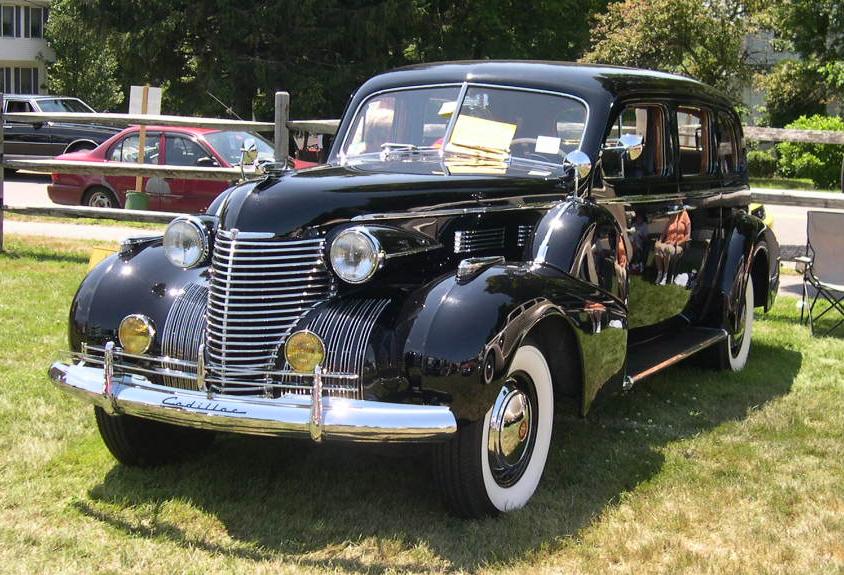
For 1939, all Cadillac V8s had new grille styling; similar in appearance but different in detail dimensions on each series. The pointed center grille and the functional side grilles were die-cast, with fine pitch bars. A single die-cast louver was positioned to the rear of each hood side panel. Headlights were once again attached to the radiator casing. Chassis changes included: tube and fin radiator core; sea shell horns under the hood; 10mm spark plugs.
Hub AI
Cadillac Series 70 AI simulator
(@Cadillac Series 70_simulator)
Cadillac Series 70
The Cadillac Series 70 (models 70 and 75) is a full-size V8-powered series of cars that were produced by Cadillac from the 1930s to the 1980s. It replaced the 1935 355E as the company's mainstream car just as the much less expensive Series 60 was introduced. The Series 72 and 67 were similar to the Series 75 but the 72 and 67 were produced on a slightly shorter and longer wheelbase respectively. The Series 72 was only produced in 1940 and the Series 67 was only produced in 1941 and 1942. For much of the postwar era, it was the top-of-the-line Cadillac, and was Cadillac's factory-built limousine offering.
Production of the short wheelbase Series 70 ceased in 1938, but reappeared briefly as the relatively expensive Series 70 Eldorado Brougham four-door hardtop from 1957 to 1958, while the long wheelbase Series 75 made a final appearance in the 1987 model year.
The 1936 Series 70 and 75 both had V-shaped windshield styles by Fleetwood. A narrower radiator shell was supported by the new louver style "Convex vee" grill. Headlights were mounted on the radiator shell. Parking lights were inside the headlights. Front fenders were new with a crease along the center line. The cowl vent was changed back to opening forward. There were built-in trunks on "touring" styles, town cars and four-door convertibles. Coupes and two-door convertibles had rumble seats plus a separate door for the spare tire at the extreme rear of the deck. All bodies now featured the Fisher Turret Top.
The Series 70 and 75 were powered by the new 346 cu in (5.7 L) Monobloc V8, This 135 hp (101 kW) engine was both less expensive and more powerful, and the stylish body by Fleetwood should have made the Series 70 and 75 an instant hit. However, the high price (US$2,445 and up ($55,402 in 2024 dollars )) limited their appeal in the Great Depression era. Only 5,248 were sold for 1936.
In 1937 bodies were the same except for drip moldings running from the bottom of the front pillar up and over the doors and rear quarter window, new fenders and bumpers, headlights rigidly attached (adjusted by moving reflector), wheel discs incorporated a hubcap, and a built-in trunk was incorporated on most bodies. A die-cast eggcrate grille was used, but the hood louver treatment differed from that used in Fisher bodied cars. Chrome die cast strips were used at the rear of the hood side panels. A seven-passenger Fisher-bodied Special touring sedan, without a division window was offered on the 138.0 in (3,505 mm) wheelbase. These two body styles had the eggcrate hood louvers typical of all Fisher bodied Cadillacs for 1937. The Business car line included eight-passenger versions of these Special sedans plus eight-passenger versions of Fleetwood body styles. The eighth passenger was seated with two others on auxiliary seats. A commercial chassis on a 156.0 in (3,962 mm) wheelbase was offered. Engine changes included a lighter flywheel, a generator relocated in the vee, an oil filter, a new carburetor with full automatic electric choke, an oil bath cleaner, and a relocated distributor. A new transmission design featured pin-type synchronizers, shifter rails relocated to the side of the case, a cover on the bottom of the case, and an extension integral with the transmission mainshaft. Sales totaled 4,332.
For 1938 the Series 70 and Fisher-bodied Series 75 Specials were dropped. The Series 75 used a 141 in (3,600 mm) wheelbase and now only offered bodies by Fleetwood.
In 1938 the Cadillac Series 65 and the Series 75 shared a new front end style featuring a massive vertical cellular grille, three sets of horizontal bars on the hood sides, alligator hood, and headlights on the filler space between the fenders and the hood. Optional sidemount covers were hinged to the fenders. Quarter windows were of sliding rather than hinged construction. The rear of the body had rounder corners and more smoothly blended lines. Trunks had more of an appearance of being an integral part of the body. Bodies were all steel except for wooden main sills. New chassis details included a column gear shift, horns just behind the grille, battery under the right hand side of the hood, transverse muffler just behind the fuel tank, wheels by a different manufacturer, "Synchro-Flex" flywheel, hypoid rear axle and the deletion of the oil filter. All Cadillacs shared the same 346 in³ L-head V8, although the 75 generated 140 hp (104 kW) instead of 135 hp (101 kW) like the rest of the line thanks to a higher 6.70:1 compression ratio, necessitating the use of higher octane fuel.
For 1939, all Cadillac V8s had new grille styling; similar in appearance but different in detail dimensions on each series. The pointed center grille and the functional side grilles were die-cast, with fine pitch bars. A single die-cast louver was positioned to the rear of each hood side panel. Headlights were once again attached to the radiator casing. Chassis changes included: tube and fin radiator core; sea shell horns under the hood; 10mm spark plugs.
Recent media