



Community hub
Recent from talks
Knowledge base stats:
Talk channels stats:
Members stats:
Calaveras River
The Calaveras River is a river in the San Joaquin Valley of California.
It flows roughly southwest for 51.9 miles (83.5 km) from the confluence of its north and south forks in Calaveras County to its confluence with the San Joaquin River in the city of Stockton.
In the past, it has been used for agriculture and irrigation, drinking water, and for recreational purposes. There have been many improvement projects on the Calaveras River to address its pollution and efficiency for local residents.
The Spanish word calaveras means "skulls." The river was said to have been named by Spanish explorer Gabriel Moraga in 1806 when he found many skulls of Native Americans along its banks. He believed they had either died of famine or been killed in tribal conflicts over hunting and fishing grounds.
Later, human remains were of the native Miwuk people killed by Spanish soldiers after they banded together to rise against Spanish missionaries. The Stanislaus River is named for Estanislau, a coastal Miwuk who escaped from Mission San Jose in the late 1830s. He is reported to have raised a small group of men with crude weapons, hiding in the foothills when the Spanish attacked. The Miwuk were quickly decimated by Spanish gunfire.
In 1836, John Marsh, Jose Noriega, and a party of men, went exploring in Northern California. They made camp along a river bed in the evening, and when they woke up the next morning, discovered that they had camped in the midst of a great quantity of skulls and bones. They also gave the river the appropriate name: Calaveras.
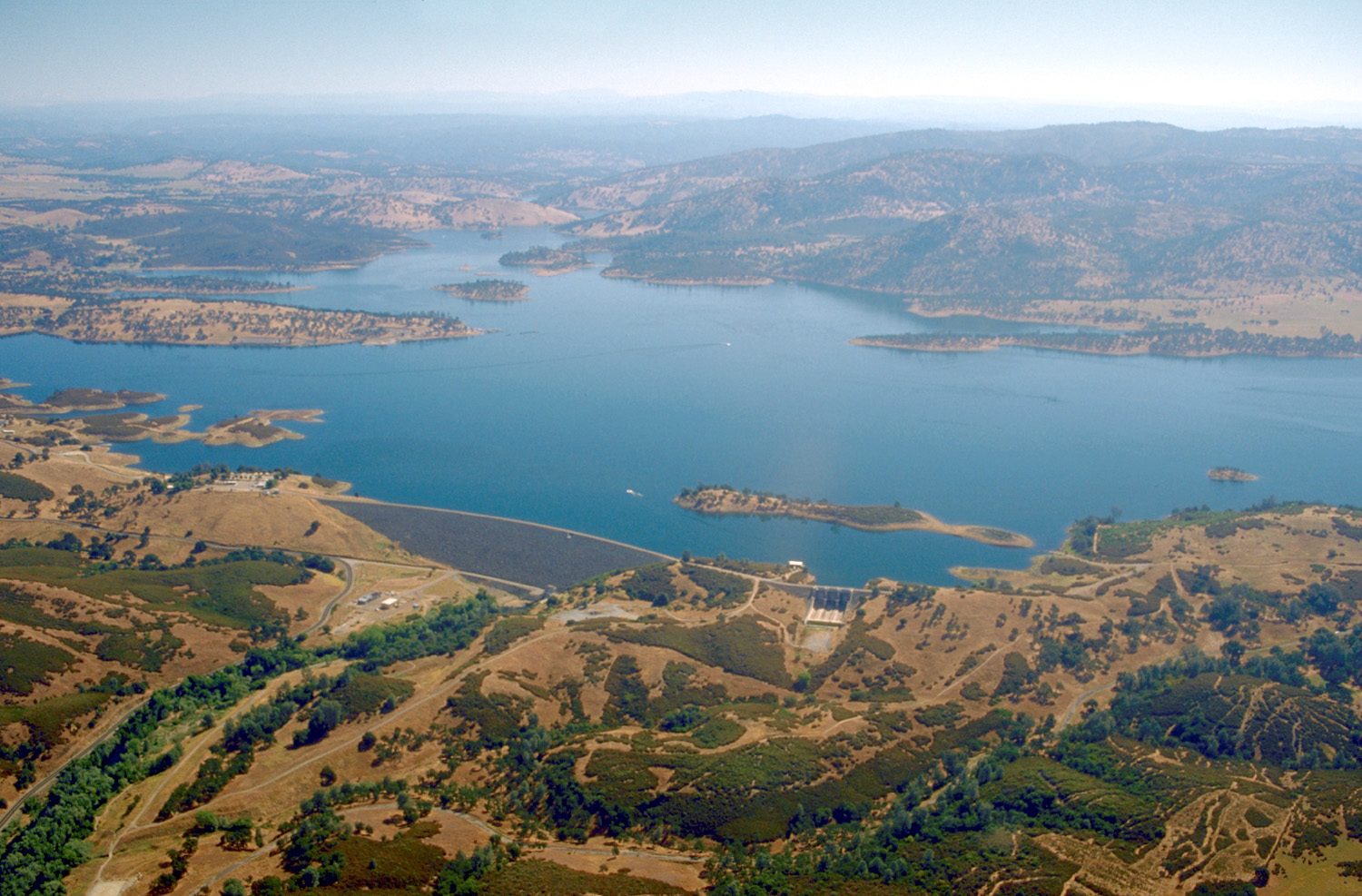
The North Fork Calaveras River and South Fork Calaveras River unite to form the mainstem Calaveras River just above New Hogan Lake. This reservoir is the only lake on the river. It is formed by New Hogan Dam, which was completed in 1963. The dam was built by the United States Army Corps of Engineers, primarily for flood control. The dam also provides drinking water, water for irrigation, hydroelectricity and recreation, including fishing, camping, swimming and water skiing.
Downstream from the Calaveras River is Mildred Island, a submerged island that also provides recreation such as fishing.
Hub AI
Calaveras River AI simulator
(@Calaveras River_simulator)
Calaveras River
The Calaveras River is a river in the San Joaquin Valley of California.
It flows roughly southwest for 51.9 miles (83.5 km) from the confluence of its north and south forks in Calaveras County to its confluence with the San Joaquin River in the city of Stockton.
In the past, it has been used for agriculture and irrigation, drinking water, and for recreational purposes. There have been many improvement projects on the Calaveras River to address its pollution and efficiency for local residents.
The Spanish word calaveras means "skulls." The river was said to have been named by Spanish explorer Gabriel Moraga in 1806 when he found many skulls of Native Americans along its banks. He believed they had either died of famine or been killed in tribal conflicts over hunting and fishing grounds.
Later, human remains were of the native Miwuk people killed by Spanish soldiers after they banded together to rise against Spanish missionaries. The Stanislaus River is named for Estanislau, a coastal Miwuk who escaped from Mission San Jose in the late 1830s. He is reported to have raised a small group of men with crude weapons, hiding in the foothills when the Spanish attacked. The Miwuk were quickly decimated by Spanish gunfire.
In 1836, John Marsh, Jose Noriega, and a party of men, went exploring in Northern California. They made camp along a river bed in the evening, and when they woke up the next morning, discovered that they had camped in the midst of a great quantity of skulls and bones. They also gave the river the appropriate name: Calaveras.
The North Fork Calaveras River and South Fork Calaveras River unite to form the mainstem Calaveras River just above New Hogan Lake. This reservoir is the only lake on the river. It is formed by New Hogan Dam, which was completed in 1963. The dam was built by the United States Army Corps of Engineers, primarily for flood control. The dam also provides drinking water, water for irrigation, hydroelectricity and recreation, including fishing, camping, swimming and water skiing.
Downstream from the Calaveras River is Mildred Island, a submerged island that also provides recreation such as fishing.