



Community hub
Recent from talks
Knowledge base stats:
Talk channels stats:
Members stats:
Achilles tendon
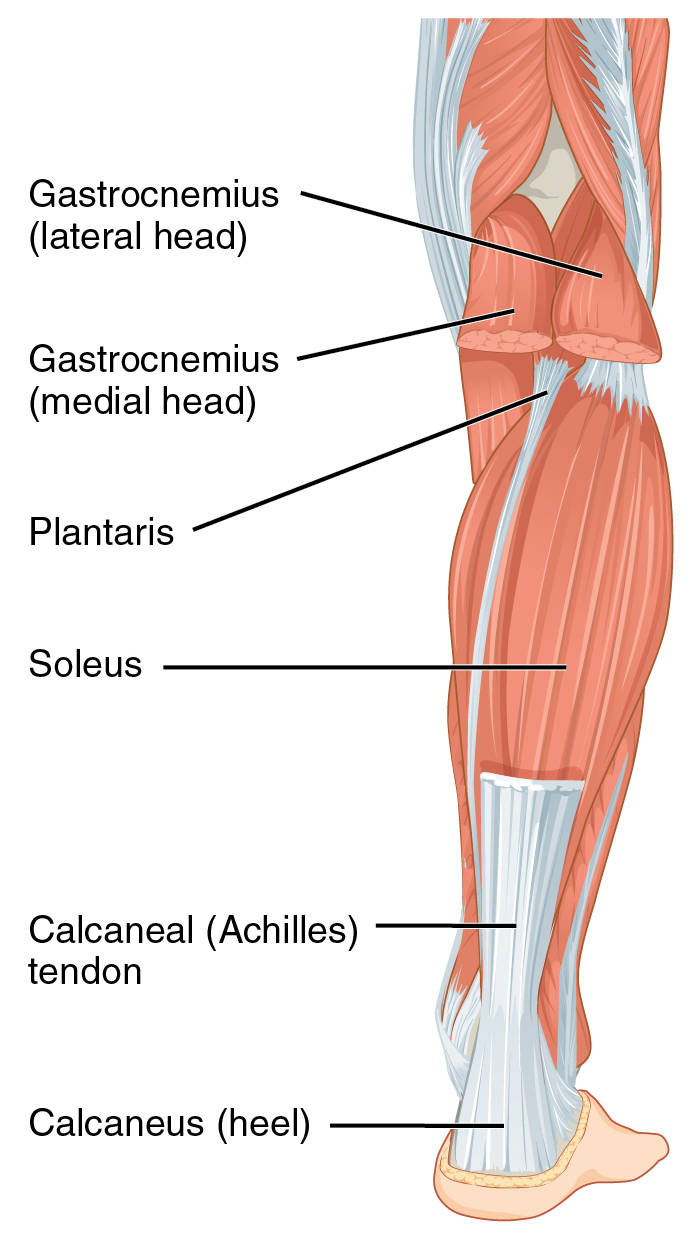
The Achilles tendon or heel cord, also known as the calcaneal tendon, is a tendon at the back of the lower leg, and is the thickest in the human body. It serves to attach the plantaris, gastrocnemius (calf) and soleus muscles to the calcaneus (heel) bone. These muscles, acting via the tendon, cause plantar flexion of the foot at the ankle joint, and (except the soleus) flexion at the knee.
Abnormalities of the Achilles tendon include inflammation (Achilles tendinitis), degeneration, rupture, and becoming embedded with cholesterol deposits (xanthomas).
The Achilles tendon was named in 1693 after the Greek hero Achilles.
The oldest-known written record of the tendon being named after Achilles is in 1693 by the Flemish/Dutch anatomist Philip Verheyen. In his widely used text Corporis Humani Anatomia he described the tendon's location and said that it was commonly called "the cord of Achilles." The tendon has been described as early as the time of Hippocrates, who described it as the "tendo magnus" (Latin for "great tendon")[dubious – discuss] and by subsequent anatomists prior to Verheyen as "chorda Hippocratis" (Latin for "Hippocrates' string").
Verheyen referred to the mythological account of Achilles being held by the heel by his mother Thetis when she dipped him in the River Styx as a baby to render his body invulnerable. As the heel by which she held him was not touched by the water, it was his one vulnerable spot (hence the expression "Achilles' heel") and he was eventually killed by a poison dart to the heel. The name thus also refers to the particularly disabling and painful effect of an injury to this tendon. The first closed rupture was described by Ambroise Pare in the sixteenth century.
The Achilles tendon is also known as the "tendo calcaneus" (Latin for "calcaneal tendon"). Because eponyms (names relating to people) have no relationship to the subject matter, most anatomical eponyms also have scientifically descriptive terms. The term calcaneal comes from the Latin calcaneum, meaning heel.
The Achilles tendon connects muscle to bone, like other tendons, and is located at the back of the lower leg. The Achilles tendon connects the gastrocnemius and soleus muscles to the calcaneal tuberosity on the calcaneus (heel bone). The tendon begins near the middle of the calf, and receives muscle fibers on its inner surface, particularly from the soleus muscle, almost to its lower end. Gradually thinning below, it inserts into the middle part of the back of the calcaneus bone. The tendon spreads out somewhat at its lower end so that its narrowest part is about 4 cm (1.6 in) above its insertion.
The tendon is covered by the fascia and skin, and stands out prominently behind the bone; the gap is filled up with areolar and adipose tissue. A bursa (Achilles bursa) lies between the tendon and the upper part of the calcaneus. It is about 15 centimetres (6 in) long.
Hub AI
Achilles tendon AI simulator
(@Achilles tendon_simulator)
Achilles tendon
The Achilles tendon or heel cord, also known as the calcaneal tendon, is a tendon at the back of the lower leg, and is the thickest in the human body. It serves to attach the plantaris, gastrocnemius (calf) and soleus muscles to the calcaneus (heel) bone. These muscles, acting via the tendon, cause plantar flexion of the foot at the ankle joint, and (except the soleus) flexion at the knee.
Abnormalities of the Achilles tendon include inflammation (Achilles tendinitis), degeneration, rupture, and becoming embedded with cholesterol deposits (xanthomas).
The Achilles tendon was named in 1693 after the Greek hero Achilles.
The oldest-known written record of the tendon being named after Achilles is in 1693 by the Flemish/Dutch anatomist Philip Verheyen. In his widely used text Corporis Humani Anatomia he described the tendon's location and said that it was commonly called "the cord of Achilles." The tendon has been described as early as the time of Hippocrates, who described it as the "tendo magnus" (Latin for "great tendon")[dubious – discuss] and by subsequent anatomists prior to Verheyen as "chorda Hippocratis" (Latin for "Hippocrates' string").
Verheyen referred to the mythological account of Achilles being held by the heel by his mother Thetis when she dipped him in the River Styx as a baby to render his body invulnerable. As the heel by which she held him was not touched by the water, it was his one vulnerable spot (hence the expression "Achilles' heel") and he was eventually killed by a poison dart to the heel. The name thus also refers to the particularly disabling and painful effect of an injury to this tendon. The first closed rupture was described by Ambroise Pare in the sixteenth century.
The Achilles tendon is also known as the "tendo calcaneus" (Latin for "calcaneal tendon"). Because eponyms (names relating to people) have no relationship to the subject matter, most anatomical eponyms also have scientifically descriptive terms. The term calcaneal comes from the Latin calcaneum, meaning heel.
The Achilles tendon connects muscle to bone, like other tendons, and is located at the back of the lower leg. The Achilles tendon connects the gastrocnemius and soleus muscles to the calcaneal tuberosity on the calcaneus (heel bone). The tendon begins near the middle of the calf, and receives muscle fibers on its inner surface, particularly from the soleus muscle, almost to its lower end. Gradually thinning below, it inserts into the middle part of the back of the calcaneus bone. The tendon spreads out somewhat at its lower end so that its narrowest part is about 4 cm (1.6 in) above its insertion.
The tendon is covered by the fascia and skin, and stands out prominently behind the bone; the gap is filled up with areolar and adipose tissue. A bursa (Achilles bursa) lies between the tendon and the upper part of the calcaneus. It is about 15 centimetres (6 in) long.