Hubbry Logo
CandoniCandoniMain
Open search
Candoni
Community hub
Candoni
logo
8 pages, 0 posts
0 subscribers
Be the first to start a discussion here.
Candoni
Candoni
from Wikipedia

Candoni, officially the Municipality of Candoni (Hiligaynon: Banwa sang Candoni; Cebuano: Lungsod sa Candoni; Tagalog: Bayan ng Candoni), formerly known as Tabla Valley, is a municipality in the province of Negros Occidental, Philippines. According to the 2024 census, it has a population of 22,083 people, making it the least populated municipality in the province.[5]

Key Information

Etymology

[edit]

Candoni was derived from the native phrase Kan Dune,[6] which translates to "belonging to Dune", a legendary beautiful maiden named Dionesia who committed suicide after being forced by her parents to marry a man she did not love.

History

[edit]

Formerly a barrio of the Municipality of Cauayan, Candoni started as the center of the Tabla Valley Settlement founded in 1935 by Santiago H. Diego, a prominent man from the Municipality of Isabela. He led a group of settlers with a pioneering spirit and prompted by the desire to have a piece of land they could call their own. Pooling their resources and organizing themselves into a cooperative they called Tablenos, the settlers started clearing the valley starting from where the town is now located. They toiled the forests enduring hardships, but many of them died of malaria.

Their efforts were noticed by the Provincial Government who supported them, starting with Gov. Emilio Gaston to Gov. Valenciano Gatuslao, who along with then Speaker Gil Montilla, helped them appeal to President Manuel Roxas in Malacanang for tangible government aid, which came in the form of the road from Dancalan, Ilog to Candoni, following the trail blazed by the Tablenos.

Candoni was finally declared a municipality on August 22, 1958, through Executive Order No. 314 signed by President Carlos P. Garcia. It was inaugurated on August 12, 1961, with Benjamin R. Nava as its first acting mayor.

Recent history of Candoni again showed its people's struggle, this time, against the turmoils brought about by the insurgency problem. Fed up with being caught in the crossfire of battles between rebels and government forces, the people of Sitio Cantomanyog in Barangay Haba of the town declared their area as a "Zone of Peace", the first in the country ever to be declared as such by the residents composed of some 40 families, and this policy is respected by both rebels and government troops.

Geography

[edit]

Candoni is 130 kilometres (81 mi) from provincial capital Bacolod and 40 kilometres (25 mi) from Sipalay. It is approximately four hour drive from Bacolod City aboard a public utility vehicle and about two hours and 45 minutes on a private car. From Bacolod City, buses are available at Bacolod South Terminal. From Kabankalan City, one can take the public utility jeepneys or buses going to this town. Candoni is the third town with highest elevation in Negros Occidental after Don Salvador Benedicto and San Carlos City.

Climate

[edit]
Climate data for Candoni, Negros Occidental
Month Jan Feb Mar Apr May Jun Jul Aug Sep Oct Nov Dec Year
Mean daily maximum °C (°F) 29
(84)
30
(86)
31
(88)
32
(90)
30
(86)
29
(84)
28
(82)
28
(82)
28
(82)
28
(82)
29
(84)
29
(84)
29
(85)
Mean daily minimum °C (°F) 21
(70)
21
(70)
22
(72)
23
(73)
24
(75)
24
(75)
24
(75)
24
(75)
24
(75)
24
(75)
23
(73)
22
(72)
23
(73)
Average precipitation mm (inches) 45
(1.8)
37
(1.5)
62
(2.4)
93
(3.7)
190
(7.5)
259
(10.2)
284
(11.2)
236
(9.3)
244
(9.6)
247
(9.7)
162
(6.4)
86
(3.4)
1,945
(76.7)
Average rainy days 10.8 8.4 12.7 16.3 26.7 28.5 29.1 28.0 27.4 28.5 23.4 15.5 255.3
Source: Meteoblue (modeled/calculated data, not measured locally)[7]

Barangays

[edit]

Candoni is politically subdivided into 9 barangays. Each barangay consists of puroks and some have sitios.

Barangay Location Classification Population
(May, 2010)[8]
Population
(August, 2015)
Agboy Upland Rural 1,749 1,902
Banga Upland Rural 1,961 1,853
Cabia-an Upland Rural 1,316 1,352
Caningay Upland Rural 3,026 3,066
Gatuslao Upland Rural 2,433 2,289
Haba Upland Rural 2,123 2,335
Payauan Upland Rural 2,346 2,326
Poblacion East Poblacion Urban 3,007 3,386
Poblacion West Poblacion Urban 3,375 3,280

As of 2015, Candoni has a total population of 21,789 and its registered voting population (as of 2015) is 12,449.

Demographics

[edit]
Population census of Candoni
YearPop.±% p.a.
1970 10,258—    
1975 12,614+4.23%
1980 10,831−3.00%
1990 16,638+4.39%
1995 17,004+0.41%
2000 19,987+3.53%
2007 21,748+1.17%
2010 21,336−0.69%
2015 21,789+0.40%
2020 23,751+1.83%
2024 22,083−1.73%
Source: Philippine Statistics Authority[9][10][11][12][13]

Economy

[edit]

Poverty incidence of Candoni

10
20
30
40
50
60
70
2000
64.44
2003
48.26
2006
45.00
2009
41.88
2012
29.37
2015
25.49
2018
24.78
2021
30.34

Source: Philippine Statistics Authority[14][15][16][17][18][19][20][21]

Candoni public market

Candoni is a fourth class municipality. It is a hinterland town and heavily dependent on agriculture, its main products are sugarcane, rice, corn and coffee. Candoni posted more than 200% rice sufficiency for 2017 and 2018.

Financial

[edit]
Year National rank^ Provincial rank^^ Assets Liabilities Net assets Revenue
2017 427 9 286,665.00 60,476.00 226,188.00 98,036.00
2016 1009 16 138,747.00 56,695.00 82,052.00 90,144.00
2015 806 15 120,049.00 40,234.00 79,815.00 79,913.00

Source: Commission on Audit of the Philippines

^ Among 1,489 municipalities in 2015 - 2016 and 1,488 in 2017 based on net assets.

^^ Among 19 municipalities based on net assets.

Palm oil plantation project

[edit]

In 2009, the DENR awarded a 25 years Integrated Forest Management Agreement to Hacienda Asia Plantation Incorporated, owned by DMCI Holdings, which also owns the Semirara Mining and Power Corporation. HAPI is a joint venture between farmer Alfred Joseph Araneta and Isidro A. Consunji-Luz Consuelo Consunji family's Sirawai Plywood and Lumber Corporation. The palm seedlings were imported from Costa Rica, Papua New Guinea, and Malaysia. Currently, HAPI has 300 farm workers with P440 daily wage each.

The residents, including the Paghidaet sa Kausawagan Development Group and Kilusang Magbubukid ng Pilipinas-Negros contested the legality of the sale of their 6,652-hectare forest land, including 4,000 hectares populated by Indigenous Peoples. They also opposed their ancestral land's reclassification for palm tree agriculture. The PHP 2-billion palm oil plantation project straddles in Barangays Gatuslao, Agboy, and Payauan. HAPI's heavy equipment destroyed their corn, pineapple, sugarcane, and vegetables plantations. About 1,000 families face eviction, displacement and livelihood disruption amid the LGU's offer to create 3,000 new jobs. The Gatuslao Agro-Forestry, Banana and Sugarcane Farmers’ Association announced the filing of Writ of Kalikasan against HAPI to stop the project's implementation. Mayor Rey R. Ruiz offered a “win-win” solution in a dialogue with affected 100 farmers.[22]

Tourism

[edit]

Candoni have the following tourism sites:

  • Sitio Cantomanyog Zone of Peace, Barangay Haba
  • Hinarap Falls, Barangay Agboy
  • Pineapple Farm, Barangay Gatuslao
  • Twin Cave, Barangay West
  • Kennington Hill Nature Park, Brgy West and Gatuslao
  • Mount Tahutay, Barangay Caningay
  • Shang Spring Resort, Barangay East
  • Tigmaya-Paco Road

Zone of Peace

[edit]
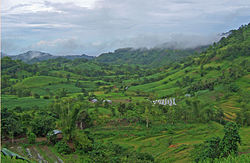
On the road to Candoni, Negros Occidental

The Sitio of Cantomanyog in Barangay Haba was the first[23] Zone of Peace in the Philippines. Peace Zone culture is so influential that the people of Cantomanyog were able to produce cultural products therefrom like oral history of Cantomanyog, poetry and music to the extent that it inspired a cluster of communities to do same.

The first skirmish between the NPA and the military happened in Southern Negros in September 1971. With the information that the NPA had a base in the towns of Candoni and Kabankalan, the military immediately sent troops in the said area to hunt down the rebels. The NPA's popularity in the hinterlands of Southern Negros, where government was seldom seen and felt, could be explained by its ability to dispense swift, revolutionary justice and maintain order in the community. On April 18, 1989, an undetermined number of NPA guerillas launched a surprise attack on the 7th IB, Alpha Company Detachment at Caningay, Candoni. The Caningay raid was one of the NPA's most daring attacks on a military outpost in Candoni.

In 1989, on the island of Negros, because of the inhuman conditions in the evacuation centers, nearly 300 persons - most of them were children - died from malnutrition and measles as the result of the U.S.-organized bombing raid, "Operation Thunderbolt" in the municipalities of Candoni, Hino–baan, Ilog, Cauayan, Kabankalan and Sipalay popularly referred to as the CHICKS area. The people of Cantomanyog began to ask themselves, "Why is this war happening here?"

In November 1989, the Area Core Group leaders of the Gagmay'ng Kristiyanong Katilingban of Cantomanyog (GKK) or the Basic Ecclesial Community of Cantomanyog (BEC) after their usual panimbahon (community prayer meeting) discussed the peace zone concept. On December 4, 1989, the Basic Christian Community of Cantomanyog gathered for a General assembly wherein a Resolution to Establish the Zone of Peace was read, passed and approved. Their simple declaration was delivered to both the Armed Forces of the Philippines and the New People's Army. The NPA and the AFP respected the Zone of Peace.

On February 16, 1990, during a worship service and Eucharist, Natividad Epalan, a community leader holding her two-year-old child, read a statement declaring the village of Cantomanyog to be the first "zone of peace" in the Philippines.

"Our village is open to everyone whose intentions are good," she read. "We wish to be free of the danger of weapons of war and death…Therefore, whoever enters this zone of peace should not bring any guns with them."

On 25 May 1993, Senator Rodolfo G. Biazon sponsored a resolution passed by the Senate as Resolution No. 435 urging the Executive Department for the declaration of Cantomanyog and the other six Peace Zones as Special Development Areas. President Ramos, consequently and in cognizance to the Comprehensive Peace Policy, recognized the legitimacy of the said Peace Zones and further declared them as Special Development Areas (SDAs). Each of the seven SDAs was allocated P5,000,000.00 for community development projects through the then National Program for Unification and Development Council now part of the Office of the Presidential Adviser on the Peace Process under the Office of the President.

Sit-an Cave

[edit]

Sit-an Cave is a natural marvel that extends about one hundred fifty meters from its entrance to its hindmost part which resembles a church-like cavern with cool natural pool with overflowing water ranging from knee-high to waistline depth that forms an underground stream running along the columns of stalactites that hung like a pendant from its roof.

Festivals

[edit]

The Dinagyaw sa Tablas Festival is the annual town fiesta happen every February 7–11 and it is also called Feast of Our Lady of Lourdes. The Dinagyaw sa Tablas Festival aims to project and manifest the spirit of cooperation exerted by the Tablenos when they trail blazed the wilderness of the Tabla Velley and established the Tabla Valley settlement that became the predecessor of Candoni.

Dinagyaw came from the word dagyaw a Hiligaynon term which means a group of people helping each other to perform a specific task.

Aside from the annual town fiesta, Candonians also enjoy from multiple Barangay and community fiestas whole year-round.

Education

[edit]

Candoni has only one school district, District of Candoni. There are 18 public elementary schools, 3 public secondary schools and 1 private secondary school. During the school year 2015–2016, there are 4,335 elementary pupils, 1,271 public high school students and more or less 500 private high school students.

Elementary

[edit]
School ID School name Barangay No. of pupils
(SY 2015–2016)
116940 Agboy ES Agboy 170
116941 Bali ES Agboy 88
116942 Banga ES Banga 379
116943 Cabia-an ES Cabia-an 139
116944 Calamunding ES Gatuslao 78
116945 Candoni Central ES Poblacion West 1,281
116947 Cantacson ES Caningay 90
116948 Cantomanyog ES Haba 105
180519 Cogon ES Gatuslao 44
116946 Galicano Temporosa I Memorial ES Caningay 521
116949 Gatuslao ES Gatuslao 298
116950 Guinsiliban ES Payauan 78
116951 Haba ES Haba 299
180512 Nava ES Agboy 60
116952 Panacmalan ES Poblacion East 105
116953 Payauan ES Payauan 472
116954 Salarongon ES Haba 89
180514 Soso ES Gatuslao 45

High school

[edit]
School ID School name Barangay No. of students
(SY 2015–2016)
Type
302606 Caningay NHS Caningay 402 Public
302607 Caningay NHS - Banga Ext. Banga 255 Public
302608 Quirico G. Manzano Memorial NHS Poblacion West 614 Public
na Our Lady of Lourdes HS Poblacion East no data Private

There are also two (2) Annex High School Campuses, the Gatuslao Campus under Quirico G. Manzano Memorial NHS and the Payauan Campus under Caningay NHS.

Tertiary

[edit]

The Municipal Government of Candoni and Negros Occidental State College of Agriculture (NESCA), now Central Philippines State University (CPSU) entered into a Memorandum of Agreement to install a tertiary school campus. The Central Philippine State University, Candoni Campus currently offers four (4) 4-year course Programs[24] such as Bachelor in Animal Science, Bachelor in Elementary Education, Bachelor in Secondary Education, Bachelor of Science in Agriculture.

Notable personalities

[edit]
  • Leopoldo Serantes – competed at the 1988 Seoul Olympics in the Light Flyweight (-48 kg) division winning the bronze medal
  • Romel Oliveros – a super flyweight national boxer
  • Elisheba Etabag Manzano – 2007 Gold Medal (Top 1) – Highest Achievement Award for Certified Internal Auditor exam.
  • Mary Grace Baloyo – was a First lieutenant in the Philippine Air Force who posthumously received the Philippines' highest military award for courage - the Medal of Valor

References

[edit]
[edit]
Revisions and contributorsEdit on WikipediaRead on Wikipedia
from Grokipedia
Candoni, officially the Municipality of Candoni, is a landlocked fourth-class municipality in the southern part of Negros Occidental province, within the Negros Island Region of the Philippines. As of the 2020 Census conducted by the Philippine Statistics Authority, it had a population of 23,751 distributed across nine barangays covering 220.95 square kilometers, yielding a density of 107 inhabitants per square kilometer. The municipality, situated at coordinates 9°50′N 122°39′E and an elevation of 165 meters, originated as the Tabla Valley Settlement founded in 1935 by Santiago H. Diego, initially as a barrio of Cauayan before being established as an independent municipality via Executive Order No. 314 on August 22, 1958. Its economy centers on agriculture, including rice cultivation in rural valleys, with recent expansions into large-scale palm oil plantations that have generated employment but sparked local concerns over land use and environmental impacts.

Geography

Location and physical features

Candoni is an inland municipality in the southeastern portion of Negros Occidental province, Philippines, within the Negros Island Region. Its municipal center is situated at approximately 9°50′ North latitude and 122°39′ East longitude. The area spans 191.70 square kilometers and lies roughly 130 kilometers south-southwest of Bacolod City, the provincial capital. The terrain consists primarily of hills and mountains, with an average elevation of 308 meters and the municipal center at about 184 meters above sea level. This topography features valleys suitable for agriculture alongside steeper slopes that constrain urban expansion. Natural boundaries include the Sipalay River, which traverses parts of the municipality and contributes to the local drainage system. Candoni borders Cauayan municipality to the north, Sipalay City to the west, and Hinoba-an to the south, with eastern limits approaching Negros Oriental province. Remnant natural forests cover about 29% of the land area, though deforestation has reduced this extent in recent decades. The landscape's elevation variations and river proximity shape its agricultural focus while presenting challenges for infrastructure development.

Climate

Candoni experiences a tropical monsoon climate, characterized by consistently high humidity and two distinct seasons: a drier period from late November to late May and a wetter season from late May to mid-November. Average annual temperatures range from 23°C (73°F) to 31°C (88°F), with minimal seasonal variation and daytime highs rarely exceeding 32°C or dropping below 22°C. Annual precipitation totals approximately 2,000 mm, with the wet season accounting for the majority through frequent showers and thunderstorms; August sees the highest likelihood of precipitation at over 80% of days with at least 1 mm of rain. The drier season features fewer rainy days, averaging around 4-5 per month in March, though light rains can still occur. Regional data from nearby stations in southern Negros Occidental indicate variability influenced by the Philippine Area of Responsibility for tropical cyclones, which amplify rainfall during the wet months. The municipality's inland position and elevations ranging from 100 to 500 meters above sea level create microclimatic differences, with higher terrains experiencing slightly lower temperatures (by 1-2°C) and increased cloud cover compared to lowland areas. This topography contributes to localized orographic rainfall enhancement during monsoon periods. Tropical cyclones periodically intensify weather patterns, as evidenced by Super Typhoon Odette (international name Rai) in December 2021, which delivered extreme winds exceeding 200 km/h and heavy rainfall, leading to heightened runoff and potential geomorphic changes such as riverbank scouring in Candoni's riverine valleys. Such events underscore the area's exposure within the typhoon belt, though long-term records show irregular frequency tied to Pacific storm tracks.

Barangays

Candoni is administratively subdivided into 9 barangays, all classified as rural except for the urban portions of Poblacion East. These subdivisions encompass the municipality's total land area of 220.95 square kilometers and function as the basic units of local governance, handling community-level administration and services. The barangays are: Agboy, Banga, Cabia-an, Caningay, Gatuslao, Haba, Payauan, Poblacion East, and Poblacion West. Poblacion East and Poblacion West collectively form the municipal center, housing key government offices and facilities. The remaining barangays primarily facilitate rural governance and support the local economy through agricultural land management and basic infrastructure maintenance.

History

Etymology

The name Candoni derives from the Visayan phrase kan Dune, translating to "belonging to Dune," in reference to a legendary maiden named Dionesia (also recorded as Kandunay in some accounts). Local tradition holds that Dionesia was renowned for her beauty and tragically ended her life following the death of her lover, after which the settlement adopted the name to commemorate her. This etymological origin appears consistently in regional historical narratives, though primary documentation from Spanish colonial records or early American-era surveys does not explicitly detail the naming event, suggesting it emerged from oral histories among early settlers and indigenous groups in the Tabla Valley area during the early 20th century. The phrase reflects Visayan linguistic patterns, where kan denotes possession or association, underscoring the cultural practice of naming places after pivotal figures or events in communal memory.

Pre-independence era

Prior to organized lowland settlement, the upland territory of what is now Candoni was sparsely inhabited by indigenous groups including the Magahat-Bukidnon and Ati tribes, who relied on subsistence practices such as hunting, gathering, and rudimentary swidden farming in the forested interior of southern Negros Occidental. These communities maintained traditional lifestyles with minimal external influence until the early 20th century, as the region's rugged terrain limited integration into broader Visayan migration patterns from nearby Panay Island. During the Spanish colonial period from the late 16th to late 19th century, the Candoni area remained largely undeveloped and outside the hacienda system that concentrated on lowland sugar estates along Negros Occidental's coasts, with land use patterns dictated by vast friar estates and communal holdings in adjacent municipalities like Cauayan. The interior's isolation preserved indigenous presence while coastal economic activities, including initial sugar monoculture expansions by Cebuano and Ilonggo migrants, exerted indirect pressure on peripheral lands through resource extraction and occasional forays for timber. In the American colonial era, following cadastral surveys initiated around 1903 to delineate public and private lands across the Philippines, the Tabla Valley in the Candoni vicinity was targeted for agricultural resettlement to alleviate population pressures in densely settled areas. In 1935, Santiago H. Diego, a resident of Isabela, Negros Occidental, founded the Tabla Valley Settlement with an initial group of 48 male pioneers tasked with clearing dense forests for cultivation, establishing the core of future settlement patterns centered on rice paddies and upland farms. This effort drew subsequent migrants from Panay and Cebu, fostering family-based homesteads focused on staple crop production amid rudimentary infrastructure, including hand-cleared trails that served as primary access until gravel roads emerged in the early 1940s. Economic activities emphasized self-sufficient farming, with limited commercialization due to poor connectivity and the absence of major cash crop plantations in the valley.

Post-independence development

Candoni was formally established as a municipality on July 28, 1958, through Executive Order No. 314, which segregated the barrios of Candoni, Basak, and Cabatuan from the Municipality of Cauayan in Negros Occidental, upon the recommendation of the provincial board, to address the area's growing population and administrative needs. This creation marked a key post-independence milestone, enabling localized governance and development initiatives separate from Cauayan, with the new municipality comprising sufficient territory and projected revenues to sustain operations. In the 1960s and 1970s, Candoni experienced incremental infrastructure expansion, including basic road networks and school facilities, aligned with national rural development programs aimed at improving access in agricultural hinterlands. These efforts facilitated connectivity to nearby towns and supported local farming communities, though progress remained modest due to the area's remote terrain and reliance on subsistence agriculture. The 1970s and 1980s brought significant challenges, including widespread rural poverty intensified by the collapse of sugar prices and the Negros famine, alongside communist insurgency by the New People's Army, which had been active in Negros Occidental's remote areas since around 1980, leading to sporadic violence and displacement in rural municipalities like Candoni. In response, residents of Sitio Cantomanyog in Barangay Haba established the country's first civilian-declared Zone of Peace in the mid-1980s, committing to neutrality by prohibiting entry of armed groups from both government forces and insurgents, thereby fostering local stability through community-led conflict avoidance and peacebuilding. This initiative, later formalized in declarations around 1989, exemplified grassroots efforts to resolve insurgency-related tensions without external mediation, contributing to reduced local hostilities by the late 1980s.

Local government

Administrative structure

Candoni functions as a third-class municipality under Philippine local government law, with its administrative framework defined by the Local Government Code of 1991 (Republic Act No. 7160), which decentralizes authority from the national to local levels for efficient delivery of services such as public works, health, and agriculture. The executive branch is led by the mayor, elected for a three-year term, who oversees day-to-day operations, enforces ordinances, and manages municipal resources including personnel and budget allocation. The legislative arm, the Sangguniang Bayan, comprises the vice-mayor as presiding officer and eight sanggunian members elected concurrently with the mayor every three years, responsible for enacting local legislation, approving appropriations, and conducting oversight of executive functions. This body holds regular sessions to address municipal priorities, with powers limited to matters not reserved for higher government tiers, ensuring fiscal autonomy within income constraints typical of third-class units (average annual income between P50 million and P100 million as of the 2024 reclassification). At the subunit level, Candoni's administration extends to its barangays, each governed by an elected punong barangay and sangguniang barangay, which implement municipal directives while exercising localized authority over community affairs under the same code's provisions for grassroots governance. Municipal services, funded primarily through local revenues and national allocations, prioritize agricultural extension programs, rural infrastructure, and essential utilities like water supply, reflecting the area's predominantly agrarian profile.

Elected officials and recent elections

In the May 12, 2025, municipal elections, Ray R. Ruiz of the Padayon Pilipino Party (PFP) was re-elected mayor of Candoni, obtaining 7,164 votes or 43.53% of the votes cast, defeating Angelo "Doc Litoy" Bernardez of the Nationalist People's Coalition (NPC) who garnered 6,156 votes or 37.41%. Ruiz's victory marked continuity in leadership, as he had previously won the mayoralty in the 2022 elections under the PDP-Laban banner. Odi Javellana of Lakas-CMD was elected vice mayor with 7,801 votes or 47.40%, surpassing Celot Borromeo of NPC, who received 5,050 votes or 30.69%. The elections involved 16,457 registered voters across Candoni's precincts, with results based on 100% reporting as of May 15, 2025. Voter turnout aligned with the provincial average of approximately 83% in Negros Occidental, reflecting sustained civic engagement in local races. The outcomes suggest alignment between the PFP-led mayoralty and Lakas-CMD vice mayoralty, potentially supporting ongoing local coalitions focused on administrative stability amid competing NPC candidacies. No major shifts in priorities were evident from the vote distribution, consistent with Ruiz's prior term emphasizing municipal governance.

Demographics

Population statistics

According to the 2020 Census of Population and Housing, the municipality of Candoni recorded a total population of 23,751 persons, distributed across its 9 barangays. This figure marked an increase from 21,768 in the 2015 census, reflecting an average annual population growth rate of 1.8 percent over the intervening period. Candoni covers a land area of 220.95 square kilometers, yielding a population density of approximately 107 persons per square kilometer as of 2020. The municipality's settlement pattern is predominantly rural, with the urban component limited primarily to the poblacion barangays, consistent with its classification as a fourth-class municipality in an agrarian province. Age distribution data from the 2020 census highlights a youth bulge characteristic of rural Philippine locales, with notable concentrations in younger cohorts: under 5 years (around 10 percent), 5-9 years (11 percent), and 10-14 years (11 percent), comprising over 30 percent of the total population under 15 years old. This structure underscores limited urbanization and reliance on agriculture, though specific fertility and migration dynamics influencing these trends remain aligned with provincial patterns in Negros Occidental.

Ethnic and linguistic composition

The ethnic composition of Candoni primarily consists of Negrenses, the Visayan subgroup associated with Negros Occidental, who are of Austronesian Malay descent and trace their roots to precolonial migrations from Panay Island. These settlers established dominance in the area following the formal organization of Tabla Valley Settlement in 1935, integrating with earlier inhabitants through intermarriage and shared agrarian lifestyles. Indigenous Negrito groups, including the Ati and Ata (also known as Magahat-Bukidnon in some contexts), represent a minor ethnic presence confined largely to forested uplands, where they historically practiced swidden farming before partial assimilation into lowland communities. Linguistically, Hiligaynon (commonly referred to as Ilonggo) serves as the dominant language, spoken by the vast majority of residents as their primary tongue, consistent with provincial patterns where it accounts for 77-85% usage among the household population. Cebuano influences persist among a secondary group, stemming from 20th-century migrations by Cebuano-speaking settlers who contributed to early land cultivation efforts in the municipality. English and Filipino (based on Tagalog) function as auxiliary languages in official and educational settings, but daily communication remains rooted in Hiligaynon due to Candoni's rural character and limited external influx. Post-colonial patterns of cultural assimilation have homogenized much of the ethnic and linguistic landscape, with indigenous Ati and Ata communities adopting Hiligaynon as a lingua franca while retaining select ancestral practices, such as claims to forest domains amid ongoing land disputes. This integration, accelerated by Spanish and American administrative policies favoring lowland expansion, has curtailed distinct indigenous identities, resulting in low overall diversity despite historical multi-group settlement. Candoni's hinterland isolation further constrains linguistic variation, preventing the urban-driven pluralism seen in coastal Negros centers.

Economy

Traditional agriculture and industries

Candoni's traditional economy revolves around subsistence and cash crop agriculture, with rice, corn, and sugarcane as primary staples supporting local livelihoods. Sugarcane farming, integral to Negros Occidental's agricultural heritage, involves smallholder practices focused on sustainable yield management through seminars on modern techniques. Rice and corn cultivation, often rain-fed in the municipality's hilly terrain, face periodic challenges like drought, which affected thousands of hectares province-wide in 2024. Coconut production contributes to cash income via copra, aligning with regional patterns where these crops dominate rural output. Livestock raising, including hogs and poultry, supplements farming revenues, though province-level inventories show modest declines in production volumes amid feed cost pressures. Small-scale fishing in local rivers and limited forestry activities provide ancillary employment, but these remain marginal compared to field crops. Preceding large-scale developments, poverty incidence in Negros Occidental's rural areas exceeded 20 percent as of 2015, underscoring vulnerabilities in traditional agrarian systems reliant on volatile markets and weather. Government agricultural extension efforts, evolving from national programs in the mid-20th century, have targeted yield improvements through technical training and input access, empirically raising productivity in staple crops like rice via hybrid varieties and soil management since the 1970s initiatives. In Visayas, such services correlate with enhanced sugarcane efficiency, though adoption varies by farmer access in remote areas like Candoni.

Financial services and commerce

Financial services in Candoni are primarily supported by local credit cooperatives, including the Candoni Government Employees Credit Cooperative (CANGEM), registered on January 1, 2012, which provides credit and savings options tailored to public sector workers in the municipality. Access to formal banking remains limited, with no dedicated rural banks operating within Candoni itself; residents often rely on microfinance programs and cooperatives in Negros Occidental for agricultural loans and small-scale financing, reflecting the rural character of the area where such institutions address gaps left by commercial banks. Commerce revolves around the public market in Poblacion, the central hub for local trade in goods, produce, and daily necessities, fostering exchange among residents and supporting small vendors. Remittances from overseas Filipino workers supplement household incomes in Candoni, aligning with national patterns where personal remittances reached US$3.33 billion in June 2025, aiding consumption and local economic stability in rural municipalities like this one. Digital financial access, including ATMs, is constrained due to the town's remote location, prompting dependence on informal networks and periodic visits to larger centers for advanced services.

Palm oil plantation project

Project overview and implementation

The palm oil plantation project in Candoni was initiated by Hacienda Asia Plantations, Inc. (HAPI), a subsidiary affiliated with DM Consunji Inc. and the broader Consunji Group, focusing on large-scale agricultural development in Negros Occidental. The project targets the establishment of an oil palm nursery and subsequent commercial plantation across approximately 6,652 hectares in the hilly interior barangays of Gatuslao, Agboy, and Payauan. Initial earth-moving activities, including road construction and quarry operations to improve site access, began in early 2025 to prepare the terrain for phased planting of oil palm seedlings starting later that year. HAPI's development plan emphasizes conversion of underutilized or fallow lands previously dominated by sugar and rice cultivation into oil palm estates, with an integrated oil mill capacity of 30-45 tons per hour planned on-site. The initiative aligns with the company's shift toward biofuel and plantation crops, building on prior ventures like jatropha feedstock production in the region. As of mid-2025, the project remained in pre-operational stages pending environmental clearances, with public scoping sessions conducted to outline the scope and logistics.

Economic benefits and job creation

The Hacienda Asia Plantations Inc. (HAPI) palm oil project in Candoni has generated over 500 direct employment opportunities by mid-2025, primarily in plantation operations, land preparation, and maintenance activities. These positions have been filled largely by local residents from barangays such as Gatuslao and Agboy, reducing the need for out-migration to urban centers for work. Initial projections for the 6,652-hectare development estimated up to 3,000 jobs upon full scaling, including roles in harvesting, processing, and logistics. Local hiring has contributed to household income stabilization in a region historically reliant on subsistence agriculture, where average rural wages remain below national medians. The project's downstream effects include opportunities in supply chain support, such as seedling nurseries and transport, fostering ancillary jobs within Negros Occidental's agro-processing sector. Combined with related initiatives like reforestation, total workforce expansion in Candoni could approach 2,500 personnel, enhancing revenue retention in the local economy. Palm oil yields per hectare—typically 3-4 tons annually in mature plantations—offer higher returns than traditional crops like rice or corn in the area, with potential for export integration into the Philippines' growing vegetable oil supply chain, though domestic production remains nascent. This shift supports poverty alleviation by providing year-round employment, contrasting with seasonal farming vulnerabilities.

Regulatory compliance and environmental concerns

The Environmental Management Bureau (EMB) Region VI issued a cease and desist order (CDO) on June 5, 2025, against Hacienda Asia Plantations Inc. (HAPI) for its oil palm plantation project in Candoni, Negros Occidental, due to the absence of an Environmental Compliance Certificate (ECC). The order, served on June 13, 2025, halted quarry operations, road construction, earth-moving activities, and other project implementation pending ECC issuance. As of August 27, 2025, the CDO remained in full effect, with the Department of Environment and Natural Resources (DENR)-EMB denying HAPI's petition to lift it, citing ongoing evaluation of the ECC application. The ECC application process requires assessment of potential environmental impacts, including deforestation, soil erosion from inadequate control measures, and biodiversity loss in the project area spanning Barangays Gatuslao and others. Regional monitoring has documented earth-moving activities contributing to erosion and habitat degradation prior to the CDO. Broader studies on oil palm expansion indicate monoculture plantations reduce biodiversity by fragmenting habitats and displacing native species, with high rates of associated forest loss observed in Southeast Asian contexts applicable to Philippine settings. Palm oil cultivation demands substantial water resources, exacerbating runoff and sedimentation in tropical regions like the Philippines, which can lead to eutrophication and oxygen depletion in nearby aquatic systems. HAPI's project commitments include replanting protocols to mitigate some soil and habitat effects, though these remain unverified under the suspended ECC review. The EMB has placed the ECC application on hold pending resolution of procedural gaps, such as documentation of free, prior, and informed consent from affected indigenous groups.

Social impacts and community responses

Farmers and indigenous groups in Candoni, primarily from the Gatuslao Agro-Forestry, Banana, and Sugarcane Farmers’ Association (GABASFA) and representing Magahat and Bukidnon communities, staged protests starting in May 2024 against the palm oil project, alleging displacement of approximately 100 to 1,000 families from ancestral lands in Barangays Gatuslao, Agboy, and Payauan without free, prior, and informed consent (FPIC). Specific cases included the bulldozing of a 5-hectare sugarcane farm owned by residents Carlito and Leslie Catacata in Barangay Gatuslao, and the relocation of 30 households in Sitio Cogon, with activists claiming deceptive tactics such as unfulfilled promises of roads, schools, and hospitals to secure agreements. These groups, supported by environmental advocates like Negros Initiatives for Climate and Environment (NICE), demanded revocation of the project's Integrated Forest Management Agreement (IFMA), highlighting risks to long-term land tenure and livelihoods dependent on traditional agriculture. In response, Candoni Mayor Ray Ruiz stated in July 2024 that no families would be displaced or farms disturbed, emphasizing extensive community consultations, voluntary agreements with Hacienda Asia Plantations Inc. (HAPI), and potential livelihood enhancements through employment opportunities, particularly for indigenous peoples, to stimulate the local economy. However, Ruiz later issued a final notice in June 2025 ordering HAPI to suspend operations pending an environmental compliance certificate (ECC), reflecting shifting local administrative concerns amid ongoing complaints. Negros Occidental Governor Eugenio Jose Lacson similarly urged a temporary halt to earth-moving activities in June 2025, citing community apprehensions over the project's social footprint, though some officials continued to describe it as an economic boon. Community sentiments remained divided as of October 2025, with proponents arguing for job creation and infrastructure gains against opponents' fears of irreversible loss of ancestral domains and farming viability, exacerbated by reports of harassment against protesters; an international solidarity mission in October 2025 echoed calls for IFMA cancellation, but no final resolution had been reached, leaving land tenure uncertainties unresolved.

Tourism

Natural sites

Sit-an Cave, situated in the municipality of Candoni, Negros Occidental, is a prominent limestone cavern extending approximately 150 meters from its entrance to a rear chamber that features stalactite formations resembling a church interior. The cave's geological structure supports moderate exploration, with an accessible entry point suitable for visitors equipped for basic spelunking, though it lacks advanced facilities. In Barangay Haba, Sitio Cantomanyog holds historical significance as the site of the Philippines' first declared Zone of Peace, established on December 26, 1989, by approximately 40 resident families seeking to exclude their rural territory—encompassing forested and hilly terrain—from armed confrontations between Philippine Armed Forces and New People's Army insurgents during the late 1980s insurgency. This community-initiated pact neutralized the area from military operations, preserving its natural landscape of woodlands and elevations amid broader anti-insurgency efforts that extended into the 1990s and 2000s through related peace zone programs. Candoni's topography includes forested uplands and trails leading to elevated natural features, such as Mount Tahutay, a landmark peak offering views of the surrounding rural terrain, with rudimentary paths providing access for hikers navigating the municipality's third-highest town elevation in Negros Occidental at around 192 meters. These routes traverse basic infrastructure in wooded areas, emphasizing the region's geological and vegetative characteristics over developed amenities.

Cultural festivals and peace initiatives

The Dinagyaw sa Tablas Festival, held annually from February 6 to 11, centers on the feast of the town's patron saint, Our Lady of Lourdes, with the climax on February 11 emphasizing communal bayanihan through dagyaw gatherings that feature cultural performances, civic parades, and harvest-themed activities rooted in local traditions. This event, originating in Barangay Tablas, promotes unity and cultural heritage amid rural agrarian life, drawing participants from across Candoni's 13 barangays for week-long festivities that include sports, music, and religious processions. Barangay-level celebrations, such as those in Haba and other communities, often align with patron saint feasts but remain modest, incorporating traditional dances and communal meals without large-scale tourism infrastructure due to limited rural access. In response to armed conflicts involving communist insurgents in the 1980s, residents of Sitio Cantomanyog in Barangay Haba declared their area a Zone of Peace on December 26, 1989, marking the first such community-led initiative in the Philippines by prohibiting firearms, rebel recruitment, and military operations to maintain civilian neutrality and stability. This grassroots effort, sustained through local assemblies and livelihood programs, expanded influence post-2000 via national recognition and support for similar zones, reducing violence in Negros Occidental's southern interior despite ongoing regional insurgent activity. The zone's model of territorial neutrality has indirectly bolstered local festivals by fostering a secure environment for community events, though eco-tourism linkages remain nascent owing to infrastructural constraints.

Education

Primary and secondary schools

Public primary education in Candoni is delivered through a network of public elementary schools under the Department of Education's Division of Negros Occidental, with institutions such as Candoni Central Elementary School (School ID 116945) and Galicano Temporosa I Memorial Elementary School (School ID 116946) serving as key facilities. Additional elementary schools, including Banga Elementary School, Cantacson Elementary School, Gatuslao Elementary School, Salarongon Elementary School, Guinsiliban Elementary School, and Payauan Elementary School, are dispersed across the municipality's 12 barangays to accommodate local populations, particularly in remote and indigenous communities. Secondary education centers on public institutions like Quirico G. Manzano Memorial National High School, located in Poblacion West, which functions as a primary hub for junior and senior high levels, and Caningay National High School, offering curricula including Technical-Vocational-Livelihood tracks and Science, Technology, and Engineering classes. A private option, Our Lady of Lourdes High School of Candoni (School ID 404039), provides Humanities and Social Sciences strands for senior high school students. These schools face operational challenges in rural settings, including multi-grade teaching in remote elementary facilities and factors impacting academic performance among indigenous students, such as instructional and classroom management issues documented in district-specific studies. Enrollment data specific to Candoni remains limited in public DepEd reports, though provincial trends indicate high enrollment rates in public K-12 institutions, reaching 94% of targets.

Tertiary institutions and literacy rates

Candoni hosts the Central Philippines State University (CPSU) Candoni Campus, a state-run institution established in 2006 as an extension of the former Negros State College of Agriculture, focusing primarily on agricultural and related programs such as Bachelor of Science in Agriculture and Bachelor in Animal Science. This campus benefits from the Universal Access to Quality Tertiary Education Act of 2017, providing free tuition to eligible students and emphasizing practical training in farming technologies suited to the municipality's rural economy. For non-agricultural degrees, residents often rely on institutions in nearby Himamaylan or larger urban centers like Kabankalan, due to the limited scope of local offerings. Vocational training in agriculture is prominent, with CPSU partnering with the Technical Education and Skills Development Authority (TESDA) to deliver courses in organic production and sustainable farming practices, including scholarships, allowances, and hands-on skills for local farmers and youth. These programs address the area's agricultural dependence, enhancing employability without requiring relocation. Literacy rates in Negros Occidental, encompassing Candoni, reflect rural challenges, with the province recording a basic literacy rate of 83.4% in the 2024 Functional Literacy, Education, and Mass Media Survey (FLEMMS), lower than the national simple literacy figure of 97% for persons aged 5 and over from the 2020 Census of Population and Housing. Government initiatives, including the Negros Occidental Scholarship Program (NOSP), support rural youth access to higher education by covering tuition, fees, books, and uniforms for over 500 grantees annually from low-income families, prioritizing academic merit and need to boost post-secondary enrollment. CPSU also maintains internal scholarships funded by budgets and donors to aid deserving students in agricultural fields.

Notable personalities

References

Add your contribution
Related Hubs
User Avatar
No comments yet.