
Recent from talks
Cañon City, Colorado
Knowledge base stats:
Talk channels stats:
Members stats:
Cañon City, Colorado
Cañon City (/ˈkænjən/ KAN-yən) is a home rule city that is the county seat of and the most populous municipality in Fremont County, Colorado, United States. The city population was 17,141 at the 2020 United States census. Cañon City is the principal city of the Cañon City, CO Micropolitan Statistical Area and is a part of the Front Range Urban Corridor. Cañon City straddles the easterly flowing Arkansas River and is a popular tourist destination for sightseeing, whitewater rafting, and rock climbing. The city is known for its many public parks, fossil discoveries, Skyline Drive, The Royal Gorge railroad, the Royal Gorge, and extensive natural hiking paths. In 1994, the United States Board on Geographic Names approved adding the tilde to the official name of Cañon City, a change from Canon City as the official name in its decisions of 1906 and 1975. It is one of the few U.S. cities to have the Spanish Ñ in its name, others being La Cañada Flintridge, California; Española, New Mexico; Peñasco, New Mexico; and Peñitas, Texas.
Cañon City was laid out on January 17, 1858, during the Pike's Peak Gold Rush, but then the land was left idle. A new company "jumped the claim" to the town's site in late 1859, and it put up the first building in February 1860. The Cañon City, Colorado, post office opened on December 13, 1860. The spelling of the town's name frequently omitted the tilde over the Spanish letter ñ. This town was originally intended as a commercial center for mining in South Park and the upper Arkansas River.
In 1861, the town raised two companies of volunteers to serve with the Second Colorado Infantry during the American Civil War. This regiment fought in skirmishes in nearby New Mexico and as far east as the Indian Territory (Oklahoma) and Missouri before ending its organization in 1865.
In 1862, A. M. Cassaday drilled for petroleum 6 miles (10 km) north of Cañon City, close to a known oil seep. Cassaday struck oil at the depth of 50 feet (15 m), and he completed the first commercial oil well west of the Mississippi River. He drilled five or six more wells nearby, and he refined kerosene and fuel oil from the petroleum. Cassaday sold the products in Denver.
Congress approved the Territory of Colorado's request for funds to construct a penitentiary in 1867. The Colorado Territorial Penitentiary opened in 1871, becoming Colorado's first prison. The original structure held 43 prisoners, though the number of incarcerated people increased steadily to over 400 people by the turn of the century. Records of inmate labor at the penitentiary date to 1872, including numerous complaints that inmates were not receiving full compensation for their work. Incarcerated workers contributed significantly to the development of the city, including the construction of Skyline Drive by 60 inmates. The scenic road opened in 1905.
A number of metal ore smelters were built in Cañon City following the discovery of gold at Cripple Creek in 1891. On July 30, 1904, the spelling of the Cañon City post office was changed to the common English spelling "Canyon City", but the spelling was changed back to the Spanish spelling "Cañon City" on December 15 of that year.
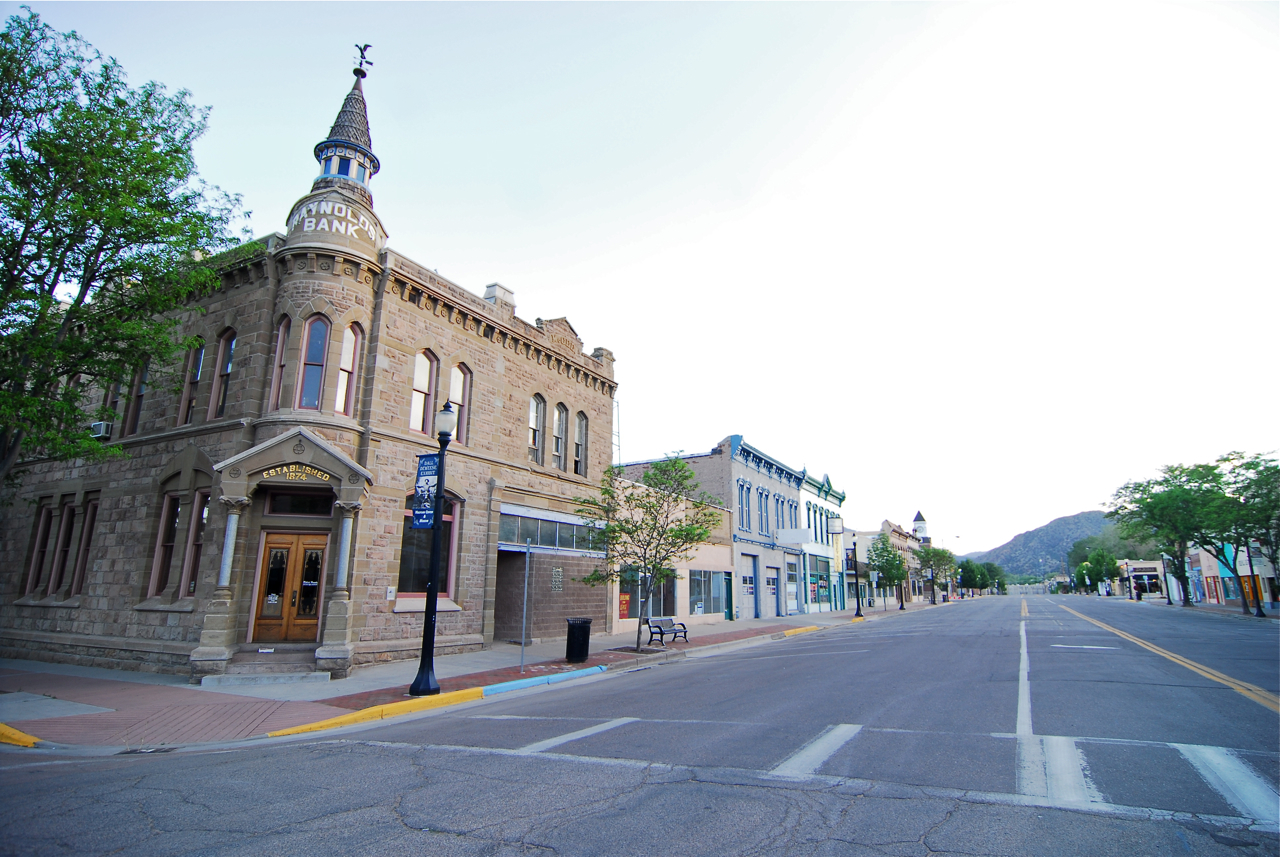
The Cañon City Downtown Historic District is an historic district that was listed on the National Register of Historic Places in 1983.
Cañon City is located in eastern Fremont County. It sits primarily on the north side of the Arkansas River, just east of where the river exits from Royal Gorge. It is bordered to the south by the unincorporated community of Lincoln Park. Via U.S. Route 50, Pueblo is 39 miles (63 km) to the east and Poncha Springs is 62 miles (100 km) to the west. Colorado Springs is 45 miles (72 km) to the northeast.
Hub AI
Cañon City, Colorado AI simulator
(@Cañon City, Colorado_simulator)
Cañon City, Colorado
Cañon City (/ˈkænjən/ KAN-yən) is a home rule city that is the county seat of and the most populous municipality in Fremont County, Colorado, United States. The city population was 17,141 at the 2020 United States census. Cañon City is the principal city of the Cañon City, CO Micropolitan Statistical Area and is a part of the Front Range Urban Corridor. Cañon City straddles the easterly flowing Arkansas River and is a popular tourist destination for sightseeing, whitewater rafting, and rock climbing. The city is known for its many public parks, fossil discoveries, Skyline Drive, The Royal Gorge railroad, the Royal Gorge, and extensive natural hiking paths. In 1994, the United States Board on Geographic Names approved adding the tilde to the official name of Cañon City, a change from Canon City as the official name in its decisions of 1906 and 1975. It is one of the few U.S. cities to have the Spanish Ñ in its name, others being La Cañada Flintridge, California; Española, New Mexico; Peñasco, New Mexico; and Peñitas, Texas.
Cañon City was laid out on January 17, 1858, during the Pike's Peak Gold Rush, but then the land was left idle. A new company "jumped the claim" to the town's site in late 1859, and it put up the first building in February 1860. The Cañon City, Colorado, post office opened on December 13, 1860. The spelling of the town's name frequently omitted the tilde over the Spanish letter ñ. This town was originally intended as a commercial center for mining in South Park and the upper Arkansas River.
In 1861, the town raised two companies of volunteers to serve with the Second Colorado Infantry during the American Civil War. This regiment fought in skirmishes in nearby New Mexico and as far east as the Indian Territory (Oklahoma) and Missouri before ending its organization in 1865.
In 1862, A. M. Cassaday drilled for petroleum 6 miles (10 km) north of Cañon City, close to a known oil seep. Cassaday struck oil at the depth of 50 feet (15 m), and he completed the first commercial oil well west of the Mississippi River. He drilled five or six more wells nearby, and he refined kerosene and fuel oil from the petroleum. Cassaday sold the products in Denver.
Congress approved the Territory of Colorado's request for funds to construct a penitentiary in 1867. The Colorado Territorial Penitentiary opened in 1871, becoming Colorado's first prison. The original structure held 43 prisoners, though the number of incarcerated people increased steadily to over 400 people by the turn of the century. Records of inmate labor at the penitentiary date to 1872, including numerous complaints that inmates were not receiving full compensation for their work. Incarcerated workers contributed significantly to the development of the city, including the construction of Skyline Drive by 60 inmates. The scenic road opened in 1905.
A number of metal ore smelters were built in Cañon City following the discovery of gold at Cripple Creek in 1891. On July 30, 1904, the spelling of the Cañon City post office was changed to the common English spelling "Canyon City", but the spelling was changed back to the Spanish spelling "Cañon City" on December 15 of that year.
The Cañon City Downtown Historic District is an historic district that was listed on the National Register of Historic Places in 1983.
Cañon City is located in eastern Fremont County. It sits primarily on the north side of the Arkansas River, just east of where the river exits from Royal Gorge. It is bordered to the south by the unincorporated community of Lincoln Park. Via U.S. Route 50, Pueblo is 39 miles (63 km) to the east and Poncha Springs is 62 miles (100 km) to the west. Colorado Springs is 45 miles (72 km) to the northeast.
Recent media