


Community hub
Recent from talks
Contribute something to knowledge base
Content stats: 0 posts, 0 articles, 1 media, 0 notes
Members stats: 0 subscribers, 0 contributors, 0 moderators, 0 supporters
Subscribers
Supporters
Contributors
Moderators
Hub AI
Cape Malays AI simulator
(@Cape Malays_simulator)
Hub AI
Cape Malays AI simulator
(@Cape Malays_simulator)
Cape Malays
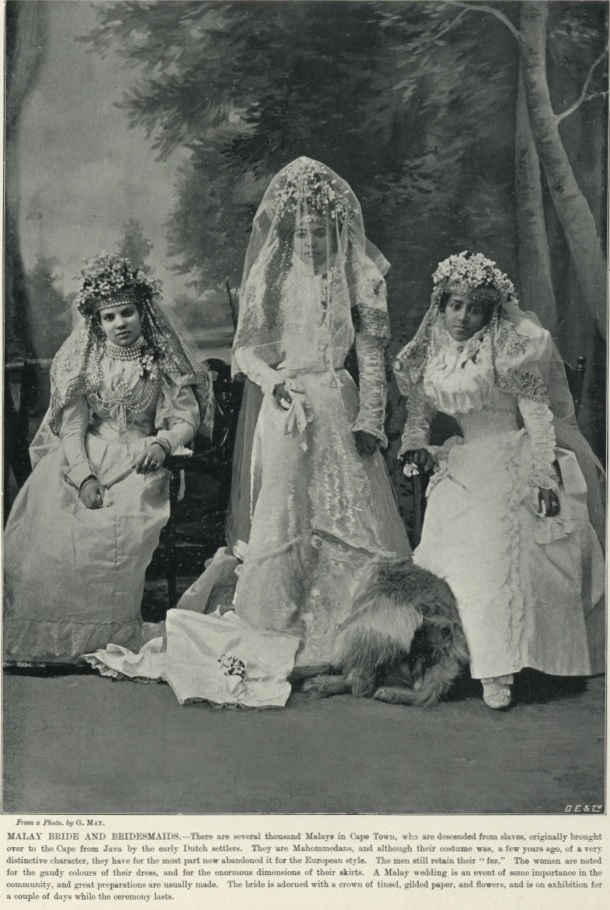
Cape Malays (Afrikaans: Kaapse Maleiers, کاپز ملیس in Arabic script) also known as Cape Muslims or Malays, are an ethnic group in South Africa. They are the descendants of enslaved and free Muslims from different parts of the world, specifically modern-day Indonesia (at that time known as the Dutch East Indies) and other Southeast Asian countries, who lived at the Cape during Dutch and British rule.
Although the earliest members of the community came from the Dutch colonies in Southeast Asia, by the 19th century, the term "Malay" had come to include all practising Muslims at the Cape, regardless of their origins, most of whom were Austronesian. As the community used the Malay language as a lingua franca and for religious instruction, they collectively became known as Malays.
Cape Malays are mainly concentrated in and around Cape Town, in the Western Cape. They have played a significant role in the spread of Islam in South Africa, and their culinary traditions remain a key part of South African cuisine. They have also contributed to the development of Afrikaans as a written language, particularly Arabic Afrikaans. During the apartheid era, "Malay" was officially classified as a subcategory under the Coloured racial group.
The Dutch East India Company established a colony at the Cape of Good Hope (the Dutch Cape Colony) as a resupply station for ships travelling between Europe and Asia, which developed into the city of Cape Town. The Dutch had also colonised the Dutch East Indies (present-day Indonesia), which formed a part of the Dutch Empire for several centuries, and Dutch Malacca, which they held from 1641 until 1824.
Islamic figures such as Sheikh Yusuf, a Makassarese noble and scholar from Sulawesi, who resisted the company's rule in Southeast Asia, were exiled to South Africa. They were followed by slaves from other parts of Asia and Africa. Although it is not possible to accurately reconstruct the origins of slaves in the Cape, it has been estimated that roughly equal proportions of Malagasies, Indians, Insulindians (Southeast Asians), and continental Africans were imported, with other estimates showing that the majority of slaves originated in Madagascar.
Many "Indiaanen" and "Mohammedaanen" Muslim political prisoners brought from Southeast Asia were imprisoned on Robben Island. Among these were Tuan Guru, first chief imam in South Africa. Sheikh Madura was exiled in the 1740s and died on Robben Island; his kramat (shrine) is still there today.
Although the majority of slaves from Southeast Asia were already Muslims, along with many Indians, those from Madagascar and elsewhere in Africa were not. The slaves from Asia tended to work in semi-skilled and domestic roles, and they made up a disproportionate share of 18th-century manumissions, who subsequently settled in Bo-Kaap, while those from elsewhere in Africa and Madagascar tended to work as farmhands and were not freed at the same rate. In the latter part of the 18th century, conversions to Islam of rural non-Asian slaves increased due to a Dutch colonial law that encouraged owners to educate their slaves in Christianity, and following their baptism, to allow them to buy their freedom. This consequently resulted in slave owners, fearful of losing their slaves, not enforcing Christianity amongst them. This, in turn, allowed Islamic proselytisers to convert the slaves.
There were also skilled Muslim labourers called Mardijkers from Southeast Asia who settled in the Bo-Kaap area of Cape Town.
Cape Malays
Cape Malays (Afrikaans: Kaapse Maleiers, کاپز ملیس in Arabic script) also known as Cape Muslims or Malays, are an ethnic group in South Africa. They are the descendants of enslaved and free Muslims from different parts of the world, specifically modern-day Indonesia (at that time known as the Dutch East Indies) and other Southeast Asian countries, who lived at the Cape during Dutch and British rule.
Although the earliest members of the community came from the Dutch colonies in Southeast Asia, by the 19th century, the term "Malay" had come to include all practising Muslims at the Cape, regardless of their origins, most of whom were Austronesian. As the community used the Malay language as a lingua franca and for religious instruction, they collectively became known as Malays.
Cape Malays are mainly concentrated in and around Cape Town, in the Western Cape. They have played a significant role in the spread of Islam in South Africa, and their culinary traditions remain a key part of South African cuisine. They have also contributed to the development of Afrikaans as a written language, particularly Arabic Afrikaans. During the apartheid era, "Malay" was officially classified as a subcategory under the Coloured racial group.
The Dutch East India Company established a colony at the Cape of Good Hope (the Dutch Cape Colony) as a resupply station for ships travelling between Europe and Asia, which developed into the city of Cape Town. The Dutch had also colonised the Dutch East Indies (present-day Indonesia), which formed a part of the Dutch Empire for several centuries, and Dutch Malacca, which they held from 1641 until 1824.
Islamic figures such as Sheikh Yusuf, a Makassarese noble and scholar from Sulawesi, who resisted the company's rule in Southeast Asia, were exiled to South Africa. They were followed by slaves from other parts of Asia and Africa. Although it is not possible to accurately reconstruct the origins of slaves in the Cape, it has been estimated that roughly equal proportions of Malagasies, Indians, Insulindians (Southeast Asians), and continental Africans were imported, with other estimates showing that the majority of slaves originated in Madagascar.
Many "Indiaanen" and "Mohammedaanen" Muslim political prisoners brought from Southeast Asia were imprisoned on Robben Island. Among these were Tuan Guru, first chief imam in South Africa. Sheikh Madura was exiled in the 1740s and died on Robben Island; his kramat (shrine) is still there today.
Although the majority of slaves from Southeast Asia were already Muslims, along with many Indians, those from Madagascar and elsewhere in Africa were not. The slaves from Asia tended to work in semi-skilled and domestic roles, and they made up a disproportionate share of 18th-century manumissions, who subsequently settled in Bo-Kaap, while those from elsewhere in Africa and Madagascar tended to work as farmhands and were not freed at the same rate. In the latter part of the 18th century, conversions to Islam of rural non-Asian slaves increased due to a Dutch colonial law that encouraged owners to educate their slaves in Christianity, and following their baptism, to allow them to buy their freedom. This consequently resulted in slave owners, fearful of losing their slaves, not enforcing Christianity amongst them. This, in turn, allowed Islamic proselytisers to convert the slaves.
There were also skilled Muslim labourers called Mardijkers from Southeast Asia who settled in the Bo-Kaap area of Cape Town.
Recent media
Recent media