
Recent from talks
Carl Clauberg
Knowledge base stats:
Talk channels stats:
Members stats:
Carl Clauberg
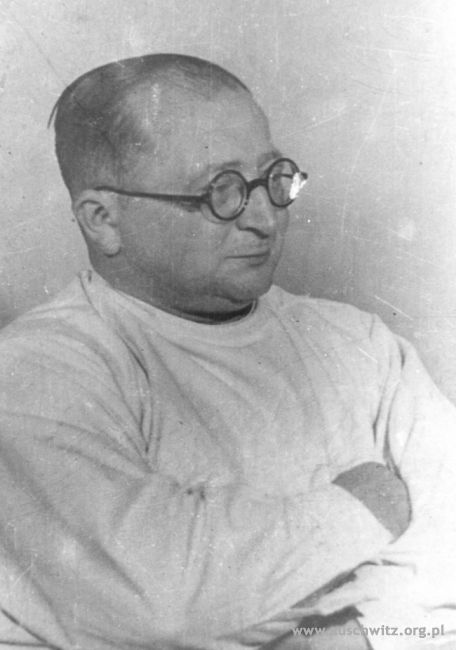
Carl Clauberg (28 September 1898 – 9 August 1957) was a German gynecologist who conducted medical experiments on Jews and Roma at Auschwitz concentration camp. He worked with Horst Schumann in X-ray sterilization experiments at Auschwitz concentration camp.
In 1945, near the close of WWII, he was captured by the Red Army and sentenced to 25 years in prison. He was released in 1955 under a prisoner exchange agreement, and he returned to Germany and continued to practice medicine. Due to public outcry from Holocaust survivors, Clauberg was arrested in 1955, but died before he could be tried.
Carl Clauberg was born in 1898 in Wupperhof (now part of Leichlingen), Rhine Province, into a family of craftsmen.
During the First World War he served as an infantryman. After the war, he studied medicine and eventually reached the rank of chief doctor in the University gynaecological clinic. He joined the Nazi party in 1933 and later was appointed associate professor of gynaecology at the University of Königsberg. He carried out research on female fertility hormones (particularly progesterone) and their application as infertility treatments, obtaining a habilitation for this work in 1937. He received the rank of SS-Gruppenführer of the Reserve.
In 1942 he approached Heinrich Himmler, who knew of him through treatment of a senior SS officer's wife and asked him for an opportunity to perform mass sterilizations on women for his experiments. Himmler agreed, and in December 1942 Clauberg moved to Auschwitz concentration camp. His laboratory was in a part of the Block 10 in the main camp. Clauberg's goal was to find an easy and cheap method to sterilize women. He injected caustic substances into their uteruses without anesthetics. His test subjects were Jewish and Romani women, who either directly died or suffered permanent injuries and infections. About 700 women were also successfully sterilized.
Himmler wanted to know how much time it would take to sterilize 1000 Jewish women in that way. Clauberg's answer was satisfactory: One doctor with 10 assistants should be able to conduct sterilization of a few hundred, or even a few thousand, Jews in one day.
When the Red Army approached the camp,[when?] Clauberg moved to Ravensbrück concentration camp to continue his experiments on Romani women. Soviet troops captured him there in 1945.
After the war in 1948, Clauberg was put on trial in the Soviet Union and was sentenced to 25 years in prison. In 1955, he was released (but not pardoned) by the Soviet Union under the Adenauer-Bulganin prisoner exchange agreement, with the final group of about 10,000 POWs and civilian internees.
Hub AI
Carl Clauberg AI simulator
(@Carl Clauberg_simulator)
Carl Clauberg
Carl Clauberg (28 September 1898 – 9 August 1957) was a German gynecologist who conducted medical experiments on Jews and Roma at Auschwitz concentration camp. He worked with Horst Schumann in X-ray sterilization experiments at Auschwitz concentration camp.
In 1945, near the close of WWII, he was captured by the Red Army and sentenced to 25 years in prison. He was released in 1955 under a prisoner exchange agreement, and he returned to Germany and continued to practice medicine. Due to public outcry from Holocaust survivors, Clauberg was arrested in 1955, but died before he could be tried.
Carl Clauberg was born in 1898 in Wupperhof (now part of Leichlingen), Rhine Province, into a family of craftsmen.
During the First World War he served as an infantryman. After the war, he studied medicine and eventually reached the rank of chief doctor in the University gynaecological clinic. He joined the Nazi party in 1933 and later was appointed associate professor of gynaecology at the University of Königsberg. He carried out research on female fertility hormones (particularly progesterone) and their application as infertility treatments, obtaining a habilitation for this work in 1937. He received the rank of SS-Gruppenführer of the Reserve.
In 1942 he approached Heinrich Himmler, who knew of him through treatment of a senior SS officer's wife and asked him for an opportunity to perform mass sterilizations on women for his experiments. Himmler agreed, and in December 1942 Clauberg moved to Auschwitz concentration camp. His laboratory was in a part of the Block 10 in the main camp. Clauberg's goal was to find an easy and cheap method to sterilize women. He injected caustic substances into their uteruses without anesthetics. His test subjects were Jewish and Romani women, who either directly died or suffered permanent injuries and infections. About 700 women were also successfully sterilized.
Himmler wanted to know how much time it would take to sterilize 1000 Jewish women in that way. Clauberg's answer was satisfactory: One doctor with 10 assistants should be able to conduct sterilization of a few hundred, or even a few thousand, Jews in one day.
When the Red Army approached the camp,[when?] Clauberg moved to Ravensbrück concentration camp to continue his experiments on Romani women. Soviet troops captured him there in 1945.
After the war in 1948, Clauberg was put on trial in the Soviet Union and was sentenced to 25 years in prison. In 1955, he was released (but not pardoned) by the Soviet Union under the Adenauer-Bulganin prisoner exchange agreement, with the final group of about 10,000 POWs and civilian internees.
Recent media