
Recent from talks
Carl Michael Bellman
Knowledge base stats:
Talk channels stats:
Members stats:
Carl Michael Bellman
Carl Michael Bellman (Swedish pronunciation: [ˈkɑːɭ ˈmîːkaɛl ˈbɛ̌lːman] ⓘ; 4 February 1740 – 11 February 1795) was a Swedish songwriter, composer, musician, poet, and entertainer. He is a central figure in the Swedish song tradition and remains a powerful influence in Swedish music, as well as in Scandinavian literature, to this day. He has been compared to Shakespeare, Beethoven, Mozart, and Hogarth, but his gift, using elegantly rococo classical references in comic contrast to sordid drinking and prostitution—at once regretted and celebrated in song—is unique.
Bellman is best known for two collections of poems set to music, Fredman's epistles (Fredmans epistlar) and Fredman's songs (Fredmans sånger). Each consists of about 70 songs. The general theme is drinking, but the songs "most ingeniously" combine words and music to express feelings and moods ranging from humorous to elegiac, romantic to satirical.
Bellman's patrons included King Gustav III of Sweden, who called him a master improviser. Bellman's songs continue to be performed and recorded by musicians from Scandinavia and in other languages, including English, French, German, Italian, and Russian. Several of his songs including Gubben Noak and Fjäriln vingad are known by heart by many Swedes. His legacy further includes a museum in Stockholm and a society that fosters interest in him and his work.
Carl Michael Bellman was born on 4 February 1740 in the Stora Daurerska house, which was one of the finest in the Södermalm district of Stockholm. The house was the property of his maternal grandmother, Catharina von Santen, who had brought up his father, orphaned as a small child. Carl Michael's parents were Johan Arndt Bellman, a civil servant, and Catharina Hermonia, daughter of the priest of the local Maria parish. Her family was wholly Swedish, whereas Johan's family had German origins: they had come from Bremen in about 1660. When Carl Michael was four the family moved to a smaller, single storey dwelling called the Lilla Daurerska house. He briefly went to a local school, but was educated mainly by private tutors. He was the eldest of 15 children who lived long enough for their births to be registered. His parents had intended him to become a priest, but he fell ill with a fever, and on recovering found he could express any thought in rhyming verse. His parents appointed a tutor called Ennes who Bellman called "a genius". Bellman was taught French, German, Italian, English, and Latin. He read Horace and Boileau; Ennes taught him to write poetry and to translate French and German hymns. He was familiar with stories from the Bible including the Apocrypha, many of which found their way into the songs he composed in later life. However, expenses including the Swedish tradition of hospitality left the family with no money to start him off in life with a journey to the south of Europe, such as to Spain to visit his uncle, Jacob Martin Bellman, who was the Swedish Consul in Cádiz. Carl Michael translated a French book by Du Four and dedicated it to his uncle, but the hint was ignored. Deep in debt, at the end of 1757 the family sent Carl Michael to Sweden's central bank Riksbanken as an unpaid trainee. He had no aptitude for numbers, instead discovering the taverns and brothels which were to figure so largely in his songs.
As the banking career was not working out – and as trainees were (after a period with a relaxed regime) again required to sit an exam, for which Bellman was ill-equipped – he took a break in 1758, going to Uppsala University, where Linnaeus was professor of botany. The idea of attending lectures was no more congenial than banking, and he stayed only one term; one of his songs (FS 28) records that "He contemplated Uppsala—the beer stung his mouth—love distracted his wits..." However, he met young men (such as Carl Bonde) from wealthy and noble families, went drinking with them, and started to entertain them with his songs. Bellman returned to the bank job, and seems quickly to have fallen into financial difficulty: "a jungle of debts, sureties and bondsmen began to proliferate around him." The character of bailiff Blomberg appears in his songs (e.g. FS 14), constantly trying to track down debtors and seize all their property. The law allowed the bankrupt only one way to escape from debtors' prison: to leave Sweden. In 1763, Bellman ran away to Norway. From the safety of Halden (then called Fredrikshald) he writes to the Council applying first for a passport, and then for a safe-conduct, both of which were granted. Meanwhile, his father had first mortgaged the Lilla Daurerska house, and then sold it: the family's finances were no better than his own. Even worse, by April 1764 the Bank had become tired of the riotous behaviour of its young men: its investigations showed that Bellman had been the ringleader, leading them (the Bank wrote) into "gambling, masquerades, picnics and suchlike". Bellman resigned, his safe banking career at an end.
In 1765, Bellman's parents died; deeply moved, he wrote a religious poem. Then his fortunes improved: someone found him a job, first in the Office of Manufactures, then in the Customs, and he was able once again to live happily in Stockholm, observing the people of the city, with at least a modest salary. In 1768, his life's work as we now know it got under way:
Bellman had begun to compose an entirely new sort of song. A genre which 'had no model and can have no successors' (Kellgren), these songs were to grow swiftly in number until they made up the great work on which Bellman's reputation as a poet chiefly rests.
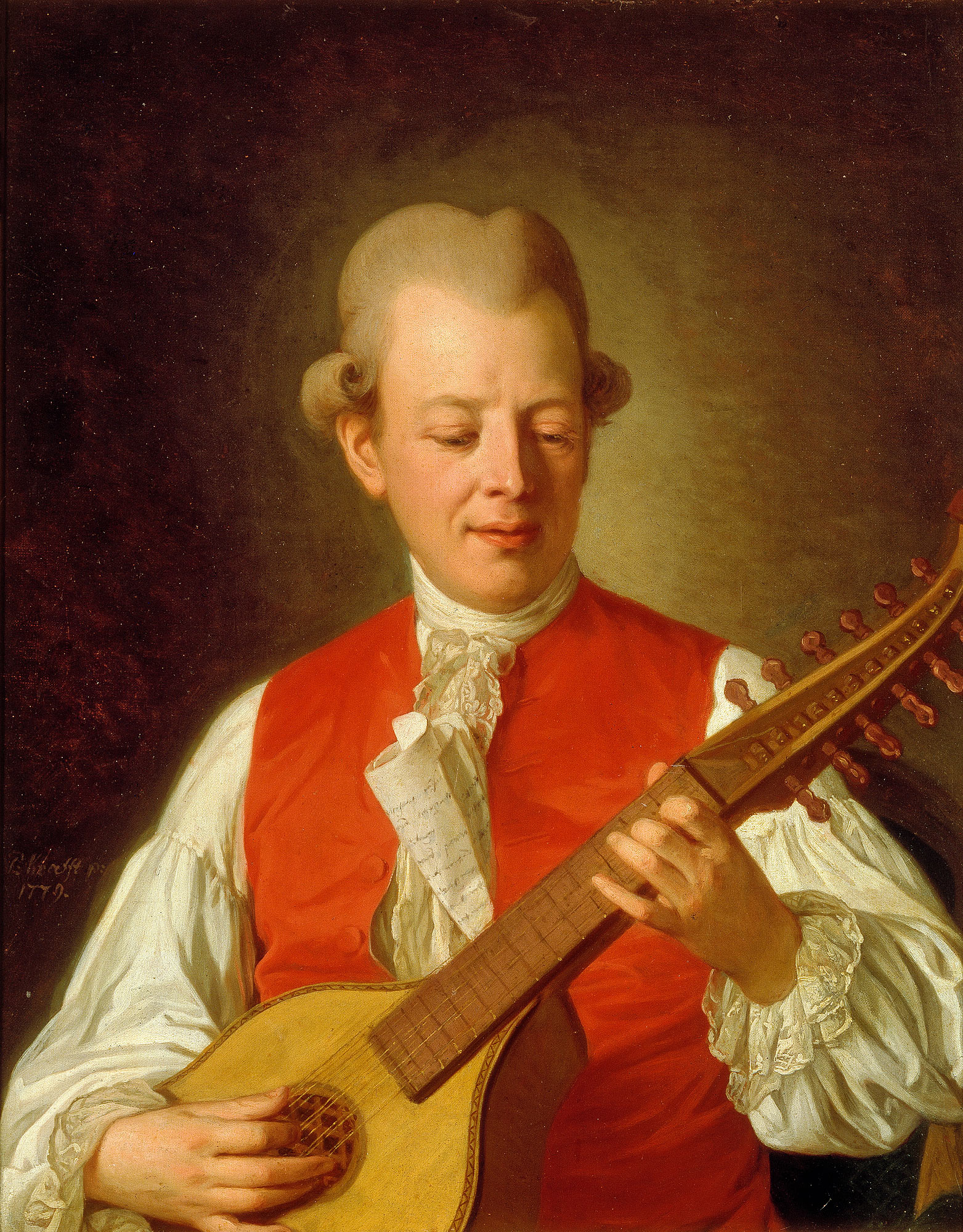
Bellman mostly played the cittern, becoming the most famous player of this instrument in Sweden. His portrait by Per Krafft shows him playing an oval instrument with twelve strings, arranged as six pairs. His first songs were "parody songs", a common form of entertainment at the time.
Hub AI
Carl Michael Bellman AI simulator
(@Carl Michael Bellman_simulator)
Carl Michael Bellman
Carl Michael Bellman (Swedish pronunciation: [ˈkɑːɭ ˈmîːkaɛl ˈbɛ̌lːman] ⓘ; 4 February 1740 – 11 February 1795) was a Swedish songwriter, composer, musician, poet, and entertainer. He is a central figure in the Swedish song tradition and remains a powerful influence in Swedish music, as well as in Scandinavian literature, to this day. He has been compared to Shakespeare, Beethoven, Mozart, and Hogarth, but his gift, using elegantly rococo classical references in comic contrast to sordid drinking and prostitution—at once regretted and celebrated in song—is unique.
Bellman is best known for two collections of poems set to music, Fredman's epistles (Fredmans epistlar) and Fredman's songs (Fredmans sånger). Each consists of about 70 songs. The general theme is drinking, but the songs "most ingeniously" combine words and music to express feelings and moods ranging from humorous to elegiac, romantic to satirical.
Bellman's patrons included King Gustav III of Sweden, who called him a master improviser. Bellman's songs continue to be performed and recorded by musicians from Scandinavia and in other languages, including English, French, German, Italian, and Russian. Several of his songs including Gubben Noak and Fjäriln vingad are known by heart by many Swedes. His legacy further includes a museum in Stockholm and a society that fosters interest in him and his work.
Carl Michael Bellman was born on 4 February 1740 in the Stora Daurerska house, which was one of the finest in the Södermalm district of Stockholm. The house was the property of his maternal grandmother, Catharina von Santen, who had brought up his father, orphaned as a small child. Carl Michael's parents were Johan Arndt Bellman, a civil servant, and Catharina Hermonia, daughter of the priest of the local Maria parish. Her family was wholly Swedish, whereas Johan's family had German origins: they had come from Bremen in about 1660. When Carl Michael was four the family moved to a smaller, single storey dwelling called the Lilla Daurerska house. He briefly went to a local school, but was educated mainly by private tutors. He was the eldest of 15 children who lived long enough for their births to be registered. His parents had intended him to become a priest, but he fell ill with a fever, and on recovering found he could express any thought in rhyming verse. His parents appointed a tutor called Ennes who Bellman called "a genius". Bellman was taught French, German, Italian, English, and Latin. He read Horace and Boileau; Ennes taught him to write poetry and to translate French and German hymns. He was familiar with stories from the Bible including the Apocrypha, many of which found their way into the songs he composed in later life. However, expenses including the Swedish tradition of hospitality left the family with no money to start him off in life with a journey to the south of Europe, such as to Spain to visit his uncle, Jacob Martin Bellman, who was the Swedish Consul in Cádiz. Carl Michael translated a French book by Du Four and dedicated it to his uncle, but the hint was ignored. Deep in debt, at the end of 1757 the family sent Carl Michael to Sweden's central bank Riksbanken as an unpaid trainee. He had no aptitude for numbers, instead discovering the taverns and brothels which were to figure so largely in his songs.
As the banking career was not working out – and as trainees were (after a period with a relaxed regime) again required to sit an exam, for which Bellman was ill-equipped – he took a break in 1758, going to Uppsala University, where Linnaeus was professor of botany. The idea of attending lectures was no more congenial than banking, and he stayed only one term; one of his songs (FS 28) records that "He contemplated Uppsala—the beer stung his mouth—love distracted his wits..." However, he met young men (such as Carl Bonde) from wealthy and noble families, went drinking with them, and started to entertain them with his songs. Bellman returned to the bank job, and seems quickly to have fallen into financial difficulty: "a jungle of debts, sureties and bondsmen began to proliferate around him." The character of bailiff Blomberg appears in his songs (e.g. FS 14), constantly trying to track down debtors and seize all their property. The law allowed the bankrupt only one way to escape from debtors' prison: to leave Sweden. In 1763, Bellman ran away to Norway. From the safety of Halden (then called Fredrikshald) he writes to the Council applying first for a passport, and then for a safe-conduct, both of which were granted. Meanwhile, his father had first mortgaged the Lilla Daurerska house, and then sold it: the family's finances were no better than his own. Even worse, by April 1764 the Bank had become tired of the riotous behaviour of its young men: its investigations showed that Bellman had been the ringleader, leading them (the Bank wrote) into "gambling, masquerades, picnics and suchlike". Bellman resigned, his safe banking career at an end.
In 1765, Bellman's parents died; deeply moved, he wrote a religious poem. Then his fortunes improved: someone found him a job, first in the Office of Manufactures, then in the Customs, and he was able once again to live happily in Stockholm, observing the people of the city, with at least a modest salary. In 1768, his life's work as we now know it got under way:
Bellman had begun to compose an entirely new sort of song. A genre which 'had no model and can have no successors' (Kellgren), these songs were to grow swiftly in number until they made up the great work on which Bellman's reputation as a poet chiefly rests.
Bellman mostly played the cittern, becoming the most famous player of this instrument in Sweden. His portrait by Per Krafft shows him playing an oval instrument with twelve strings, arranged as six pairs. His first songs were "parody songs", a common form of entertainment at the time.
Recent media