


Community hub
Recent from talks
Contribute something to knowledge base
Content stats: 0 posts, 0 articles, 1 media, 0 notes
Members stats: 0 subscribers, 0 contributors, 0 moderators, 0 supporters
Subscribers
Supporters
Contributors
Moderators
Hub AI
Carlo Curti AI simulator
(@Carlo Curti_simulator)
Hub AI
Carlo Curti AI simulator
(@Carlo Curti_simulator)
Carlo Curti
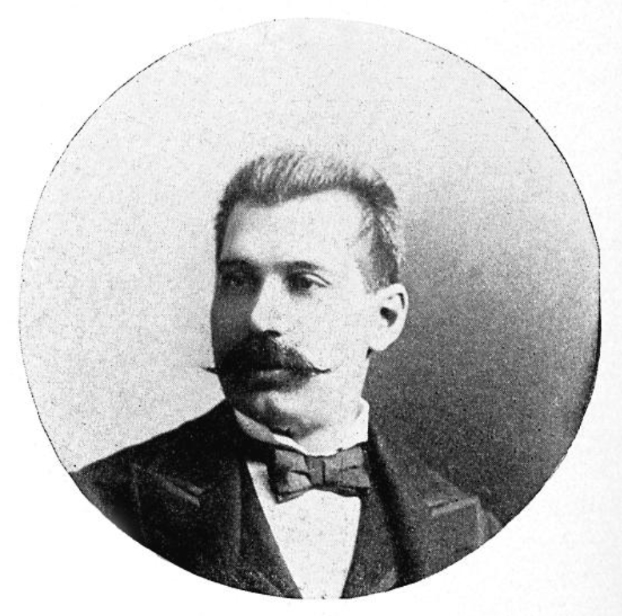
Carlo Curti (6 May 1859 – 8 May 1922), also known as Carlos Curti, was an Italian musician, composer and bandleader. He moved to the United States whose most lasting contribution to American society was popularizing the mandolin in American music by starting a national "grass-roots mandolin orchestra craze" (that lasted from 1880 until the 1920s).
He also contributed to Mexican society in 1884 by creating one of Mexico's oldest orchestras, the Mexican Typical Orchestra. The orchestra under his leadership represented Mexico at the New Orleans Cotton Exhibition. As with his Spanish Students, Curti dressed his Mexican band in costumes, choosing the charro cowboy outfit. The patriotic value of having Mexico represented on the international stage gave a boost to mariachi bands (which had normally been repressed by social elites); the mariachis began using charro outfits as Curti's orchestra had done, expressing pride in being Mexican. Curti's Orquestra Típica Mexicana has been called the "predecessor of the Mariachi bands."
He was an orchestra leader, composer, educator at the Conservatorio Nacional de Música (Mexican National Conservatory of Music), xylophonist, violinist, mandolinist and author of a mandolin method. He directed the orchestra at the New York's Waldorf-Astoria hotel in his later career.
Also known as a composer of zarzuelas and dance music, among his most noted tunes are "La Tipica" and "Flower of Mexico". His brother was harpist Giovanni (Juan or John) Curti, who also was a member of his orchestra.
Curti was born in Gallicchio, province of Potenza, Basilicata. About five years after he arrived in the United States (c.1875), Curti saw the opportunity to imitate one of the great acts of his day, the Estudiantina Figaro, also known as the Estudiantina Figueroa or "Spanish Students" troupe, a costumed, dancing, bandurria-playing group from Spain that was touring in the United States (as well as the United Kingdom and parts of South America in the early 1880s). Curti had experience in show business, working with a small traveling opera, along with his brother John. He took advantage, figuring that people wouldn't see the difference when he (an Italian) pretended to be Spanish. He even started using Carlos, instead of Carlo.
He established a group similar to the Spanish Students, but made up of Italians playing mandolins (because of the similarity to violins, which they knew). The group blatantly used the Spanish Students' name while touring the United States. He later admitted what he had done, and started another group or changed his groups' name to the "Roman Students".
The imitators' use of mandolins helped to generate enormous public interest in an instrument previously relatively unknown in the United States. They left an impression on the people who saw them, and the mandolin, rather than the bandurria became established in the United States and Europe.
Curti took his knowledge of the elaborate costumed performances he had participated in and organized since coming to the United States, and created a new show in Mexico, what became the Orquesta Típica Mexicana (Mexican Typical Orchestra). The Mexican Typical Orchestra was originally conceived by the salterio player Encarnación García and bandolónist Andrés Díaz de la Vega but its creation was consolidated in the hands of its director and founder, xylophone player and composer Carlos Curti, in August 1884.
Carlo Curti
Carlo Curti (6 May 1859 – 8 May 1922), also known as Carlos Curti, was an Italian musician, composer and bandleader. He moved to the United States whose most lasting contribution to American society was popularizing the mandolin in American music by starting a national "grass-roots mandolin orchestra craze" (that lasted from 1880 until the 1920s).
He also contributed to Mexican society in 1884 by creating one of Mexico's oldest orchestras, the Mexican Typical Orchestra. The orchestra under his leadership represented Mexico at the New Orleans Cotton Exhibition. As with his Spanish Students, Curti dressed his Mexican band in costumes, choosing the charro cowboy outfit. The patriotic value of having Mexico represented on the international stage gave a boost to mariachi bands (which had normally been repressed by social elites); the mariachis began using charro outfits as Curti's orchestra had done, expressing pride in being Mexican. Curti's Orquestra Típica Mexicana has been called the "predecessor of the Mariachi bands."
He was an orchestra leader, composer, educator at the Conservatorio Nacional de Música (Mexican National Conservatory of Music), xylophonist, violinist, mandolinist and author of a mandolin method. He directed the orchestra at the New York's Waldorf-Astoria hotel in his later career.
Also known as a composer of zarzuelas and dance music, among his most noted tunes are "La Tipica" and "Flower of Mexico". His brother was harpist Giovanni (Juan or John) Curti, who also was a member of his orchestra.
Curti was born in Gallicchio, province of Potenza, Basilicata. About five years after he arrived in the United States (c.1875), Curti saw the opportunity to imitate one of the great acts of his day, the Estudiantina Figaro, also known as the Estudiantina Figueroa or "Spanish Students" troupe, a costumed, dancing, bandurria-playing group from Spain that was touring in the United States (as well as the United Kingdom and parts of South America in the early 1880s). Curti had experience in show business, working with a small traveling opera, along with his brother John. He took advantage, figuring that people wouldn't see the difference when he (an Italian) pretended to be Spanish. He even started using Carlos, instead of Carlo.
He established a group similar to the Spanish Students, but made up of Italians playing mandolins (because of the similarity to violins, which they knew). The group blatantly used the Spanish Students' name while touring the United States. He later admitted what he had done, and started another group or changed his groups' name to the "Roman Students".
The imitators' use of mandolins helped to generate enormous public interest in an instrument previously relatively unknown in the United States. They left an impression on the people who saw them, and the mandolin, rather than the bandurria became established in the United States and Europe.
Curti took his knowledge of the elaborate costumed performances he had participated in and organized since coming to the United States, and created a new show in Mexico, what became the Orquesta Típica Mexicana (Mexican Typical Orchestra). The Mexican Typical Orchestra was originally conceived by the salterio player Encarnación García and bandolónist Andrés Díaz de la Vega but its creation was consolidated in the hands of its director and founder, xylophone player and composer Carlos Curti, in August 1884.
Recent media
Recent media