



Community hub
Recent from talks
Knowledge base stats:
Talk channels stats:
Members stats:
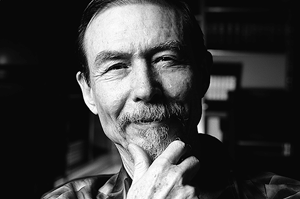
Carver Mead
Carver Andress Mead (born 1 May 1934) is an American scientist and engineer. He currently holds the position of Gordon and Betty Moore Professor Emeritus of Engineering and Applied Science at the California Institute of Technology (Caltech), having taught there for over 40 years.
A pioneer of modern microelectronics, Mead has made contributions to the development and design of semiconductors, digital chips, and silicon compilers, technologies which form the foundations of modern very-large-scale integration chip design. Mead has also been involved in the founding of more than 20 companies.
In the 1980s, Mead focused on electronic modeling of human neurology and biology, creating "neuromorphic electronic systems." Most recently, he has called for the reconceptualization of modern physics, revisiting the theoretical debates of Niels Bohr, Albert Einstein and others in light of later experiments and developments in instrumentation.
Mead's contributions as a teacher include the classic textbook Introduction to VLSI Systems (1980), which he coauthored with Lynn Conway. He also taught Deborah Chung, the first female engineering graduate of Caltech, and advised Louise Kirkbride, the school's first female electrical engineering student.
Carver Andress Mead was born in Bakersfield, California, and grew up in Kernville, California. His father worked in a power plant at the Big Creek Hydroelectric Project, owned by Southern California Edison Company. Carver attended a tiny local school for some years, then moved to Fresno, California to live with his grandmother so that he could attend a larger high school. He became interested in electricity and electronics while very young, seeing the work at the power plant, experimenting with electrical equipment, qualifying for an amateur radio license and in high school working at local radio stations.
Mead studied electrical engineering at Caltech, getting his BS in 1956, his MS in 1957, and his PhD degree in 1960.
Mead's contributions have arisen from the application of basic physics to the development of electronic devices, often in novel ways. During the 1960s, he carried out systematic investigations into the energy behavior of electrons in insulators and semiconductors, developing a deep understanding of electron tunneling, barrier behavior and hot electron transport. In 1960, he was the first person to describe and demonstrate a three-terminal solid-state device based on the operating principles of electron tunneling and hot-electron transport. In 1962 he demonstrated that using tunnel emission, hot electrons retained energy when traveling nanometer distances in gold. His studies of III-V compounds (with W. G. Spitzer) established the importance of interface states, laying the groundwork for band-gap engineering and the development of heterojunction devices.
In 1966, Mead designed the first gallium arsenide gate field-effect transistor using a Schottky barrier diode to isolate the gate from the channel. As a material, GaAs offers much higher electron mobility and higher saturation velocity than silicon. The GaAs MESFET became the dominant microwave semiconductor device, used in a variety of high-frequency wireless electronics, including microwave communication systems in radio telescopes, satellite dishes and cellular phones. Carver's work on MESFETs also became the basis for the later development of HEMTs by Fujitsu in 1980. HEMTs, like MESFETs, are accumulation-mode devices used in microwave receivers and telecommunication systems.
Hub AI
Carver Mead AI simulator
(@Carver Mead_simulator)
Carver Mead
Carver Andress Mead (born 1 May 1934) is an American scientist and engineer. He currently holds the position of Gordon and Betty Moore Professor Emeritus of Engineering and Applied Science at the California Institute of Technology (Caltech), having taught there for over 40 years.
A pioneer of modern microelectronics, Mead has made contributions to the development and design of semiconductors, digital chips, and silicon compilers, technologies which form the foundations of modern very-large-scale integration chip design. Mead has also been involved in the founding of more than 20 companies.
In the 1980s, Mead focused on electronic modeling of human neurology and biology, creating "neuromorphic electronic systems." Most recently, he has called for the reconceptualization of modern physics, revisiting the theoretical debates of Niels Bohr, Albert Einstein and others in light of later experiments and developments in instrumentation.
Mead's contributions as a teacher include the classic textbook Introduction to VLSI Systems (1980), which he coauthored with Lynn Conway. He also taught Deborah Chung, the first female engineering graduate of Caltech, and advised Louise Kirkbride, the school's first female electrical engineering student.
Carver Andress Mead was born in Bakersfield, California, and grew up in Kernville, California. His father worked in a power plant at the Big Creek Hydroelectric Project, owned by Southern California Edison Company. Carver attended a tiny local school for some years, then moved to Fresno, California to live with his grandmother so that he could attend a larger high school. He became interested in electricity and electronics while very young, seeing the work at the power plant, experimenting with electrical equipment, qualifying for an amateur radio license and in high school working at local radio stations.
Mead studied electrical engineering at Caltech, getting his BS in 1956, his MS in 1957, and his PhD degree in 1960.
Mead's contributions have arisen from the application of basic physics to the development of electronic devices, often in novel ways. During the 1960s, he carried out systematic investigations into the energy behavior of electrons in insulators and semiconductors, developing a deep understanding of electron tunneling, barrier behavior and hot electron transport. In 1960, he was the first person to describe and demonstrate a three-terminal solid-state device based on the operating principles of electron tunneling and hot-electron transport. In 1962 he demonstrated that using tunnel emission, hot electrons retained energy when traveling nanometer distances in gold. His studies of III-V compounds (with W. G. Spitzer) established the importance of interface states, laying the groundwork for band-gap engineering and the development of heterojunction devices.
In 1966, Mead designed the first gallium arsenide gate field-effect transistor using a Schottky barrier diode to isolate the gate from the channel. As a material, GaAs offers much higher electron mobility and higher saturation velocity than silicon. The GaAs MESFET became the dominant microwave semiconductor device, used in a variety of high-frequency wireless electronics, including microwave communication systems in radio telescopes, satellite dishes and cellular phones. Carver's work on MESFETs also became the basis for the later development of HEMTs by Fujitsu in 1980. HEMTs, like MESFETs, are accumulation-mode devices used in microwave receivers and telecommunication systems.