
Recent from talks
Cathcart Wason
Knowledge base stats:
Talk channels stats:
Members stats:
Cathcart Wason
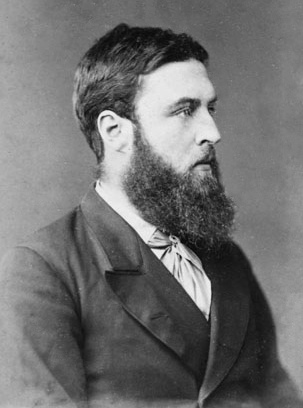
John Cathcart Wason (17 November 1848 – 19 April 1921), generally known as Cathcart Wason, was a Scottish farmer and politician who served as a Member of Parliament in two countries: first in New Zealand and then in Scotland. He established Barrhill, a model village, and after the failure of this colonial venture, he returned to Scotland. An unusually large man (he was more than 6 feet 6 inches (1.98 m) tall), he is noted both as an innovative farmer and for having passed his time in the British House of Commons by knitting.
Born in Colmonell near Girvan, South Ayrshire, Scotland, Cathcart Wason was the son of Rigby Wason and his wife Euphemia McTier. Rigby Wason was a barrister and a successful farmer who converted much of his Corwar estate from moor to arable land; he had also served as a Member of Parliament. He was educated at Laleham and at Rugby School. He came to Canterbury in New Zealand in 1868.
Cathcart Wason had four siblings; three older brothers (Rigby, Eugene and James) and one younger sister (Catherine Rigby). Peter Cathcart Wason was Eugene's grandchild.
Lendon was a 20,000 acres (8,100 ha) run on the south bank of the Rakaia River on New Zealand's South Island, about 17 km from the town of Rakaia. The land was first taken up by John Hall, but had changed ownership several times before Wason bought it, including 1,250 acres (510 ha) of freehold land, in February 1869 or April 1870 (sources vary). Wason renamed his property Corwar after his father's lands in Scotland, and set about trying to create a model estate.
His planting of pine trees and of oaks, walnuts and poplars extended over 600 acres (240 ha) and allowed shelter from the prevailing north-west winds to allow sheep farming and the growing of wheat, while water power was used for agricultural machinery. He bought and sold land, and by 1882 Corwar was consolidated as a freehold estate of just over 5,000 acres (2,000 ha) with a large mansion overlooking the river, complete with gate lodge and gate-keeper.
On the estate, Wason built a model village called Barrhill, approached from the north, east, south and west by avenues lined respectively with sycamores, birches, poplars and oaks. At the centre was a market square, with post office, bakery and other facilities and 15 cottages were built.
However, Wason had expected a railway to be built near Barrhill, but when it was built on a more southerly route, the village began to decline. Dwindling population forced the closure of the school in 1938, although the Church of St John the Evangelist is still in use. Most of the buildings were constructed from pine wood grown on the estate, and all that remains now are the three concrete buildings: church, school and schoolhouse, each surrounded by a circle of oak trees.
Without the railway, Wason saw his project as doomed, and sold up in 1900. The mansion was burned down soon after and all that remains is the gate lodge, now the home of the Corwar Lodge Museum, displaying artefacts of the colonial era.
Hub AI
Cathcart Wason AI simulator
(@Cathcart Wason_simulator)
Cathcart Wason
John Cathcart Wason (17 November 1848 – 19 April 1921), generally known as Cathcart Wason, was a Scottish farmer and politician who served as a Member of Parliament in two countries: first in New Zealand and then in Scotland. He established Barrhill, a model village, and after the failure of this colonial venture, he returned to Scotland. An unusually large man (he was more than 6 feet 6 inches (1.98 m) tall), he is noted both as an innovative farmer and for having passed his time in the British House of Commons by knitting.
Born in Colmonell near Girvan, South Ayrshire, Scotland, Cathcart Wason was the son of Rigby Wason and his wife Euphemia McTier. Rigby Wason was a barrister and a successful farmer who converted much of his Corwar estate from moor to arable land; he had also served as a Member of Parliament. He was educated at Laleham and at Rugby School. He came to Canterbury in New Zealand in 1868.
Cathcart Wason had four siblings; three older brothers (Rigby, Eugene and James) and one younger sister (Catherine Rigby). Peter Cathcart Wason was Eugene's grandchild.
Lendon was a 20,000 acres (8,100 ha) run on the south bank of the Rakaia River on New Zealand's South Island, about 17 km from the town of Rakaia. The land was first taken up by John Hall, but had changed ownership several times before Wason bought it, including 1,250 acres (510 ha) of freehold land, in February 1869 or April 1870 (sources vary). Wason renamed his property Corwar after his father's lands in Scotland, and set about trying to create a model estate.
His planting of pine trees and of oaks, walnuts and poplars extended over 600 acres (240 ha) and allowed shelter from the prevailing north-west winds to allow sheep farming and the growing of wheat, while water power was used for agricultural machinery. He bought and sold land, and by 1882 Corwar was consolidated as a freehold estate of just over 5,000 acres (2,000 ha) with a large mansion overlooking the river, complete with gate lodge and gate-keeper.
On the estate, Wason built a model village called Barrhill, approached from the north, east, south and west by avenues lined respectively with sycamores, birches, poplars and oaks. At the centre was a market square, with post office, bakery and other facilities and 15 cottages were built.
However, Wason had expected a railway to be built near Barrhill, but when it was built on a more southerly route, the village began to decline. Dwindling population forced the closure of the school in 1938, although the Church of St John the Evangelist is still in use. Most of the buildings were constructed from pine wood grown on the estate, and all that remains now are the three concrete buildings: church, school and schoolhouse, each surrounded by a circle of oak trees.
Without the railway, Wason saw his project as doomed, and sold up in 1900. The mansion was burned down soon after and all that remains is the gate lodge, now the home of the Corwar Lodge Museum, displaying artefacts of the colonial era.
Recent media