



Community hub
Recent from talks
Knowledge base stats:
Talk channels stats:
Members stats:
Catheter ablation
Catheter ablation is a procedure that uses radio-frequency energy or other sources to terminate or modify a faulty electrical pathway from sections of the heart of those who are prone to developing cardiac arrhythmias such as atrial fibrillation, atrial flutter and Wolff-Parkinson-White syndrome. If not controlled, such arrhythmias increase the risk of ventricular fibrillation and sudden cardiac arrest. The ablation procedure can be classified by energy source: radiofrequency ablation and cryoablation.
Catheter ablation may be recommended for a recurrent or persistent arrhythmia resulting in symptoms or other dysfunction. Atrial fibrillation frequently results from bursts of tachycardia that originate in muscle bundles extending from the atrium to the pulmonary veins. Pulmonary vein isolation by transcatheter ablation can restore sinus rhythm.
Catheter ablation of most arrhythmias has a high success rate. Success rates for Wolff–Parkinson–White syndrome (WPW) have been as high as 95% For Supraventricular tachycardia (SVT), single procedure success is 91% to 96% (95% Confidence Interval) and multiple procedure success is 92% to 97% (95% Confidence Interval). For atrial flutter, single procedure success is 88% to 95% (95% Confidence Interval) and multiple procedure success is 95% to 99% (95% Confidence Interval). For automatic atrial tachycardias, the success rates are 70–90%.[citation needed] The potential complications include bleeding, blood clots, pericardial tamponade, and heart block, but these risks are very low, ranging from 2.6 to 3.2%.
For non-paroxysmal atrial fibrillation, a 2016 systematic review compared catheter ablation to heart rhythm drugs. After 12 months, participants receiving catheter ablation were more likely to be free of atrial fibrillation, and less likely to need cardioversion. However, the evidence quality ranged from moderate to very low A 2006 study, including both paroxysmal and non-paroxysmal atrial fibrillation, found that the success rates are 28% for single procedures. Often, several procedures are needed to raise the success rate to a 70–80% range. One reason for this may be that once the heart has undergone atrial remodeling as in the case of chronic atrial fibrillation patients, largely 50 and older, it is much more difficult to correct the 'bad' electrical pathways. Young people with AF with paroxysmal, or intermittent, AF therefore have an increased chance of success with an ablation since their heart has not undergone atrial remodeling yet.[citation needed] Several experienced teams of electrophysiologists in US heart centers claim they can achieve up to a 75% success rate.[citation needed]
Pulmonary vein isolation has been found to be more effective than optimized antiarrhythmic drug therapy for improving quality of life at 12 months after treatment.
Catheter ablation has been found to improve mental health outcomes in individuals with symptomatic atrial fibrillation.
A 2018 study showed efficacy of cardiac ablation for treatment of Premature Ventricular Contraction as 94.1%.
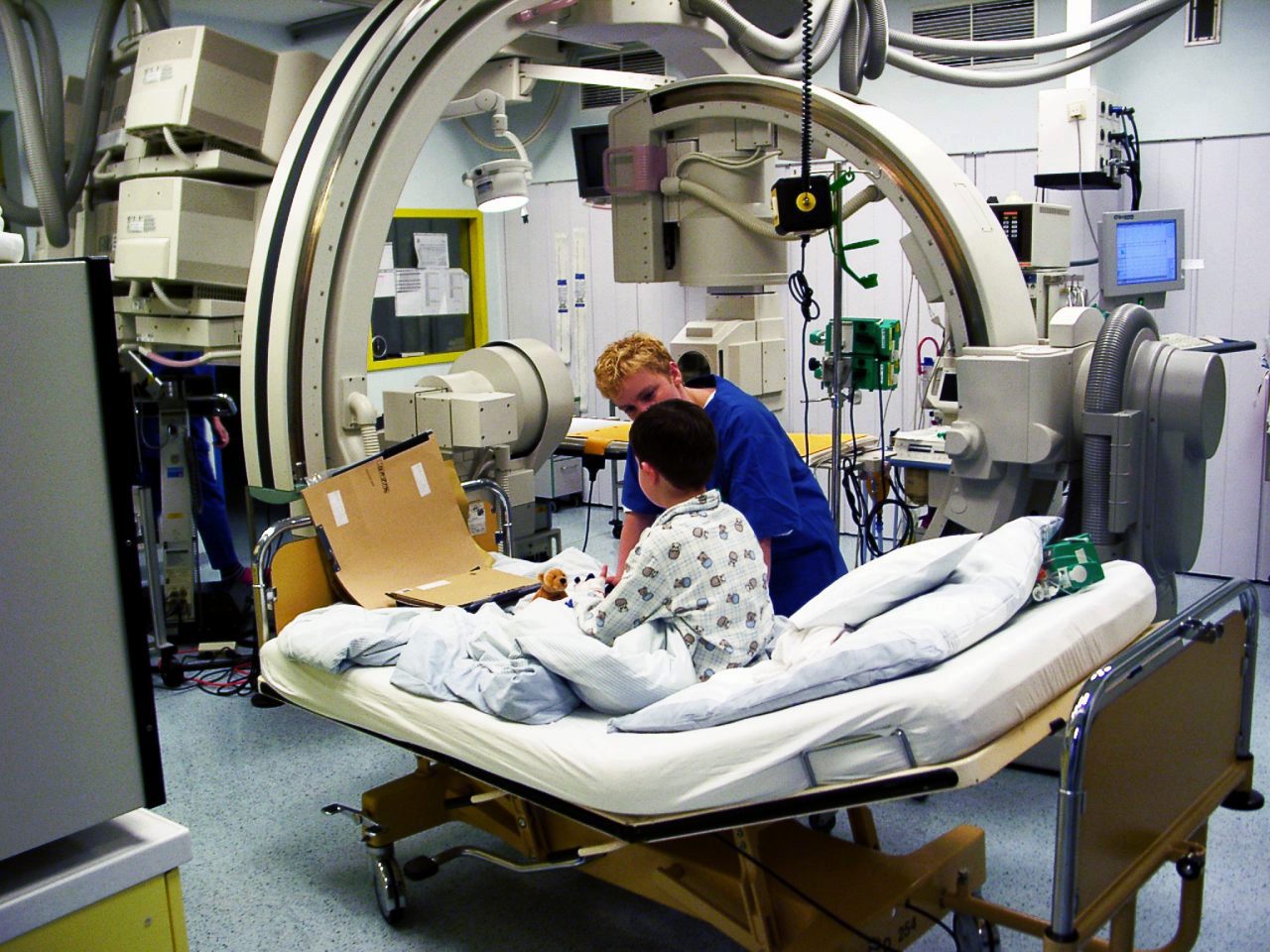
Catheter ablation is usually performed by an electrophysiologist (a specially trained cardiologist) in a cath lab.
Hub AI
Catheter ablation AI simulator
(@Catheter ablation_simulator)
Catheter ablation
Catheter ablation is a procedure that uses radio-frequency energy or other sources to terminate or modify a faulty electrical pathway from sections of the heart of those who are prone to developing cardiac arrhythmias such as atrial fibrillation, atrial flutter and Wolff-Parkinson-White syndrome. If not controlled, such arrhythmias increase the risk of ventricular fibrillation and sudden cardiac arrest. The ablation procedure can be classified by energy source: radiofrequency ablation and cryoablation.
Catheter ablation may be recommended for a recurrent or persistent arrhythmia resulting in symptoms or other dysfunction. Atrial fibrillation frequently results from bursts of tachycardia that originate in muscle bundles extending from the atrium to the pulmonary veins. Pulmonary vein isolation by transcatheter ablation can restore sinus rhythm.
Catheter ablation of most arrhythmias has a high success rate. Success rates for Wolff–Parkinson–White syndrome (WPW) have been as high as 95% For Supraventricular tachycardia (SVT), single procedure success is 91% to 96% (95% Confidence Interval) and multiple procedure success is 92% to 97% (95% Confidence Interval). For atrial flutter, single procedure success is 88% to 95% (95% Confidence Interval) and multiple procedure success is 95% to 99% (95% Confidence Interval). For automatic atrial tachycardias, the success rates are 70–90%.[citation needed] The potential complications include bleeding, blood clots, pericardial tamponade, and heart block, but these risks are very low, ranging from 2.6 to 3.2%.
For non-paroxysmal atrial fibrillation, a 2016 systematic review compared catheter ablation to heart rhythm drugs. After 12 months, participants receiving catheter ablation were more likely to be free of atrial fibrillation, and less likely to need cardioversion. However, the evidence quality ranged from moderate to very low A 2006 study, including both paroxysmal and non-paroxysmal atrial fibrillation, found that the success rates are 28% for single procedures. Often, several procedures are needed to raise the success rate to a 70–80% range. One reason for this may be that once the heart has undergone atrial remodeling as in the case of chronic atrial fibrillation patients, largely 50 and older, it is much more difficult to correct the 'bad' electrical pathways. Young people with AF with paroxysmal, or intermittent, AF therefore have an increased chance of success with an ablation since their heart has not undergone atrial remodeling yet.[citation needed] Several experienced teams of electrophysiologists in US heart centers claim they can achieve up to a 75% success rate.[citation needed]
Pulmonary vein isolation has been found to be more effective than optimized antiarrhythmic drug therapy for improving quality of life at 12 months after treatment.
Catheter ablation has been found to improve mental health outcomes in individuals with symptomatic atrial fibrillation.
A 2018 study showed efficacy of cardiac ablation for treatment of Premature Ventricular Contraction as 94.1%.
Catheter ablation is usually performed by an electrophysiologist (a specially trained cardiologist) in a cath lab.