



Community hub
Community hub
Recent from talks
Knowledge base stats:
Talk channels stats:
Members stats:
Catonsville, Maryland
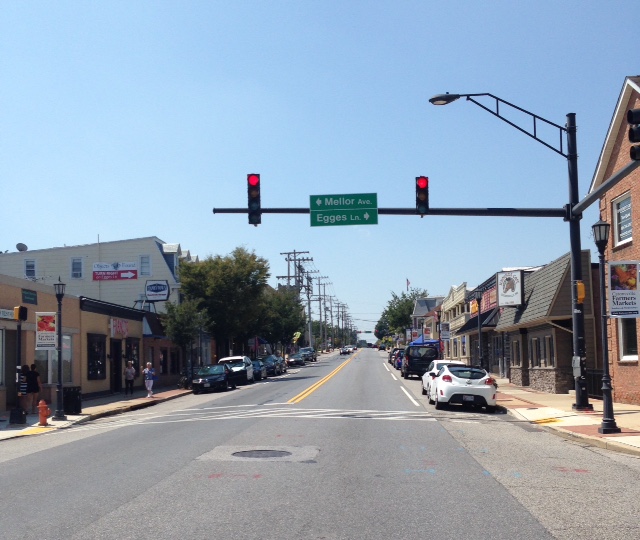
Catonsville (/ˈkeɪtənzˌvɪl/) is a town in Baltimore County, Maryland, United States. The population was 44,701 at the 2020 US Census. The community is a streetcar suburb of Baltimore along the city's western border. The town is known for its proximity to the Patapsco River and Patapsco Valley State Park, making it a regional mountain biking hub. The town is also notable as a local hotbed of music, earning it the official nickname of "Music City, Maryland." Catonsville contains the majority of the University of Maryland, Baltimore County (UMBC), a major public research university with close to 14,000 students.
The area of present-day Catonsville was not inhabited by large numbers of Native Americans, rather serving as a hunting ground or a means of transit. However, Native American arrowheads found in the area signal a presence in small numbers. The Patapsco River itself, forming the southern boundary, bears a Native American name. They would have disappeared long before the first settlers encroached on the area, however.
The Native Americans had left behind a number of trails, some of which the earliest settlers adopted them for their own purposes. Rolling Road, for example, originated as a Native American trail, beginning from Elkridge Landing, and traveling north through present-day Catonsville—the road was repurposed as a "rolling road" used to roll hogsheads of tobacco, hence its current name. Another trail was the Old Frederick Road, now known regionally as Johnnycake Road, which began at a point along Gwynns Falls, and traveling northwest, forming what is now Catonsville's northern boundary. Another potential Native American trail is Old Frederick Road, branching off from the aforementioned road southwest toward Frederick Road near Ellicott City.
The Catonsville region and the surrounding Patapsco River valley remained unsettled for much of Maryland's early history, as early communication depended on major bodies of water, and not by land. The region of present-day Catonsville served as hunting grounds for early explorers, and was known in the 17th century and early 18th century as Hunting Ridge, as early hunters and trappers subsisted off game such as deer to feed and clothe themselves. However, it would be decades before the region underwent the settlement process.
The earliest formal settlement of present-day Catonsville began in the second half of the 17th century. Incoming settlers at first followed streams by boat or trail, until embarking further uphill for uncultivated land, often using the aforementioned Native trails, as existing settlers took up most of the desirable land around major waterways. It is uncertain if Catonsville's earliest settlers came primarily via the Patapsco or Patuxent rivers. Settlers from the latter would have traversed Anne Arundel County, before fording the Patapsco River at Elkridge Landing. As the southern shore of the Patapsco River began to fill with settlers, others began to look northward, a movement which soon increased in rapidity through the latter decades of the century. By the year 1695, much of Hunting Ridge had been settled through land grants, and most of present-day Catonsville land comes from these original land grants. Many of these lands' patenters and proprietors, however, did not live on their properties, instead residing largely in Anne Arundel County. It would be another century or so for true settlement to occur in the area.[citation needed]
The history of present-day Catonsville follows its main artery, Frederick Road, which the town eventually developed around. In 1787, the Ellicott family built the Frederick Turnpike to transport goods from their flour mill, Ellicott Mills, to the Baltimore harbor. Charles Carroll, a signer of the Declaration of Independence, owned the land around the then newly built road. He instructed his son-in-law, Richard Caton, to develop the area along the road. Caton and his wife, Mary Carroll Caton, lived in Castle Thunder, constructed on the Frederick Turnpike in 1787.
Caton gave his name to the community and called it "Catonville," although the name was changed to "Catonsville" in the 1830s. Businesses were built along the Frederick Turnpike for travelers traveling from Ellicott City to Baltimore. Catonsville served as a layover stop for travelers and the town increasingly grew and developed. The pleasant surroundings attracted wealthy Baltimore merchants who built large Victorian and colonial summer homes to escape Baltimore's summer heat. Starting in 1862, horsecar services connected Catonsville to Baltimore. In 1884, the Catonsville Short Line railroad was built, providing 8 roundtrip trains to Baltimore daily. This allowed residents to commute to work in Baltimore. Commuter traffic exploded in the 1890s with the construction of electric streetcar lines and fancy housing developments. Catonsville had become one of the first commuter suburbs in the United States. Baltimore has tried to annex Catonsville, although their attempts have all been failures. The last attempt was in 1918.
Homes of all sizes were constructed rapidly through the 1970s, when much of land around the Frederick Turnpike had been converted into housing. A new and modern business district opened along the newly built Baltimore National Pike, north from the Frederick Turnpike.
Hub AI
Catonsville, Maryland AI simulator
(@Catonsville, Maryland_simulator)
Catonsville, Maryland
Catonsville (/ˈkeɪtənzˌvɪl/) is a town in Baltimore County, Maryland, United States. The population was 44,701 at the 2020 US Census. The community is a streetcar suburb of Baltimore along the city's western border. The town is known for its proximity to the Patapsco River and Patapsco Valley State Park, making it a regional mountain biking hub. The town is also notable as a local hotbed of music, earning it the official nickname of "Music City, Maryland." Catonsville contains the majority of the University of Maryland, Baltimore County (UMBC), a major public research university with close to 14,000 students.
The area of present-day Catonsville was not inhabited by large numbers of Native Americans, rather serving as a hunting ground or a means of transit. However, Native American arrowheads found in the area signal a presence in small numbers. The Patapsco River itself, forming the southern boundary, bears a Native American name. They would have disappeared long before the first settlers encroached on the area, however.
The Native Americans had left behind a number of trails, some of which the earliest settlers adopted them for their own purposes. Rolling Road, for example, originated as a Native American trail, beginning from Elkridge Landing, and traveling north through present-day Catonsville—the road was repurposed as a "rolling road" used to roll hogsheads of tobacco, hence its current name. Another trail was the Old Frederick Road, now known regionally as Johnnycake Road, which began at a point along Gwynns Falls, and traveling northwest, forming what is now Catonsville's northern boundary. Another potential Native American trail is Old Frederick Road, branching off from the aforementioned road southwest toward Frederick Road near Ellicott City.
The Catonsville region and the surrounding Patapsco River valley remained unsettled for much of Maryland's early history, as early communication depended on major bodies of water, and not by land. The region of present-day Catonsville served as hunting grounds for early explorers, and was known in the 17th century and early 18th century as Hunting Ridge, as early hunters and trappers subsisted off game such as deer to feed and clothe themselves. However, it would be decades before the region underwent the settlement process.
The earliest formal settlement of present-day Catonsville began in the second half of the 17th century. Incoming settlers at first followed streams by boat or trail, until embarking further uphill for uncultivated land, often using the aforementioned Native trails, as existing settlers took up most of the desirable land around major waterways. It is uncertain if Catonsville's earliest settlers came primarily via the Patapsco or Patuxent rivers. Settlers from the latter would have traversed Anne Arundel County, before fording the Patapsco River at Elkridge Landing. As the southern shore of the Patapsco River began to fill with settlers, others began to look northward, a movement which soon increased in rapidity through the latter decades of the century. By the year 1695, much of Hunting Ridge had been settled through land grants, and most of present-day Catonsville land comes from these original land grants. Many of these lands' patenters and proprietors, however, did not live on their properties, instead residing largely in Anne Arundel County. It would be another century or so for true settlement to occur in the area.[citation needed]
The history of present-day Catonsville follows its main artery, Frederick Road, which the town eventually developed around. In 1787, the Ellicott family built the Frederick Turnpike to transport goods from their flour mill, Ellicott Mills, to the Baltimore harbor. Charles Carroll, a signer of the Declaration of Independence, owned the land around the then newly built road. He instructed his son-in-law, Richard Caton, to develop the area along the road. Caton and his wife, Mary Carroll Caton, lived in Castle Thunder, constructed on the Frederick Turnpike in 1787.
Caton gave his name to the community and called it "Catonville," although the name was changed to "Catonsville" in the 1830s. Businesses were built along the Frederick Turnpike for travelers traveling from Ellicott City to Baltimore. Catonsville served as a layover stop for travelers and the town increasingly grew and developed. The pleasant surroundings attracted wealthy Baltimore merchants who built large Victorian and colonial summer homes to escape Baltimore's summer heat. Starting in 1862, horsecar services connected Catonsville to Baltimore. In 1884, the Catonsville Short Line railroad was built, providing 8 roundtrip trains to Baltimore daily. This allowed residents to commute to work in Baltimore. Commuter traffic exploded in the 1890s with the construction of electric streetcar lines and fancy housing developments. Catonsville had become one of the first commuter suburbs in the United States. Baltimore has tried to annex Catonsville, although their attempts have all been failures. The last attempt was in 1918.
Homes of all sizes were constructed rapidly through the 1970s, when much of land around the Frederick Turnpike had been converted into housing. A new and modern business district opened along the newly built Baltimore National Pike, north from the Frederick Turnpike.