
Recent from talks
Caversfield
Knowledge base stats:
Talk channels stats:
Members stats:
Caversfield
Caversfield is a village and civil parish about 1+1⁄2 miles (2.4 km) north of the centre of Bicester. In 1844 Caversfield became part of Oxfordshire, but until then it was always an exclave of Buckinghamshire. The 2011 Census recorded the parish's population as 1,788.
The ancient Roman road between Alchester and Towcester, now the A4421, forms the eastern boundary of the parish.
Caversfield's toponym has evolved from Cavrefelle in the 11th century through Kaueresfuld, Chauresfeld, Caffresfeld, Caueresfeud and Kaveresfeld (12th–13th centuries), and by the 18th century it was Catesfield.
Before the Norman Conquest of England the manor was held by one Edward, who was a man of Tostig Godwinson, Earl of Northumbria. The Domesday Book records that in 1086 Caversfield was one of the manors owned by William de Warenne, 1st Earl of Surrey. William's descendants retained Caversfield until the beginning of the 14th century.
By 1317 Caversfield was held by Aymer de Valence, 2nd Earl of Pembroke, and when the Earl died in 1324 it passed to his niece Joan. She was the wife of David II Strathbogie, Earl of Atholl, who although Scottish had become a peer of England after King Robert the Bruce deposed and exiled him for rebellion. Caversfield remained with the Earl of Atholl's descendants until 1375, when it passed to the heirs of a different branch of the de Warenne family.
By the 12th century the Gargate family held the feudal tenancy of Caversfield. In 1236 Muriel de Ros and Isabel de Munbury, the daughters of Hugh Gargate, endowed the tenancy of half of the manor to the Augustinian Priory at Bicester. The priory retained this holding until the Dissolution of the Monasteries after 1536.
In the 13th century the Gargate family owned a watermill, a windmill and a house where the manorial court was held. The watermill was presumably on the small River Bure which rises at Bainton, flows south through Caversfield and Bicester and around Graven Hill, and joins the River Ray at Merton. No trace of either mill is known to survive, and the original manor house has gone.
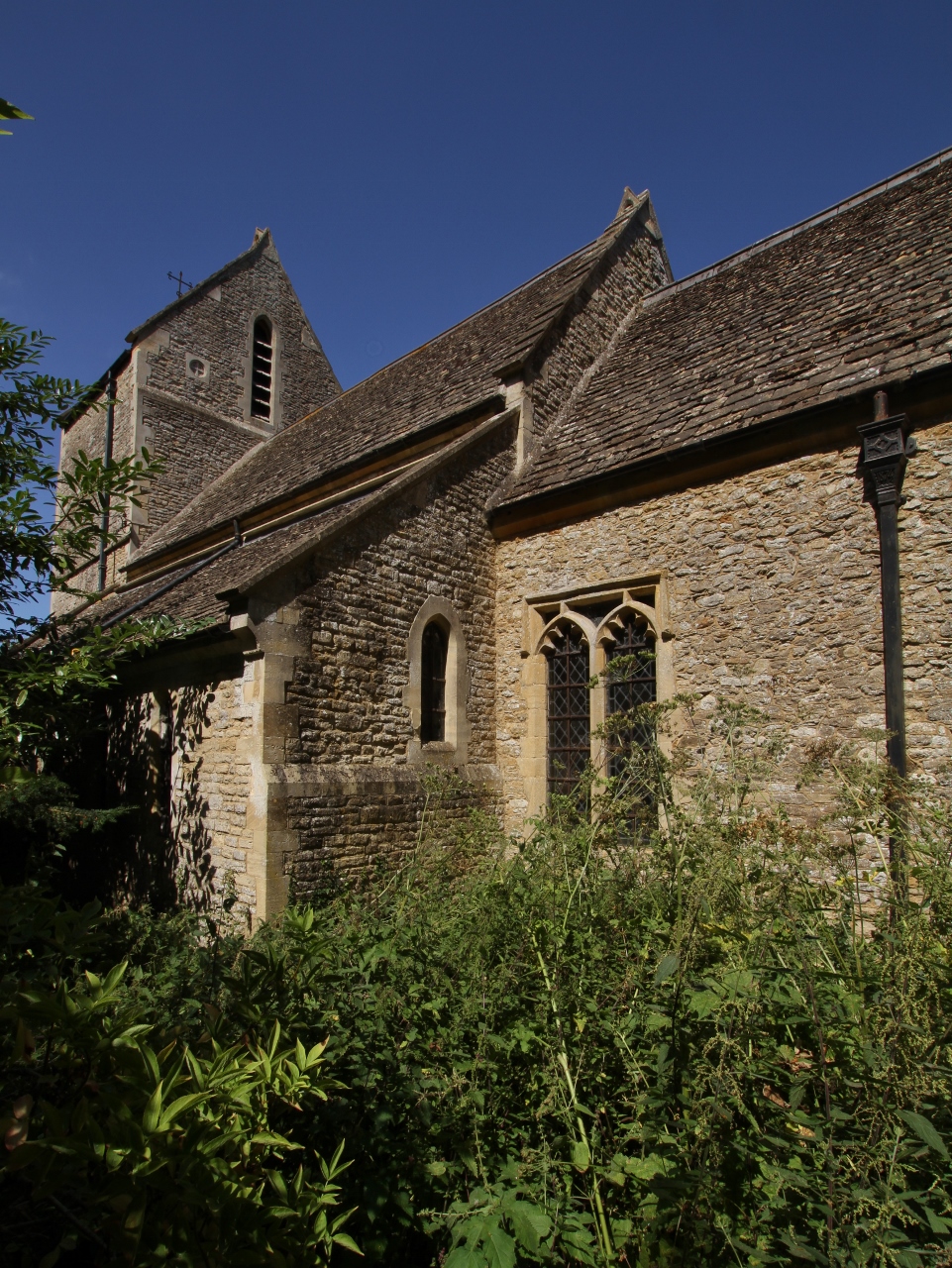
The oldest part of the small Church of England parish church of Saint Laurence is the Saxon ground stage of the bell tower, probably from the 10th century. The nave and chancel were rebuilt late in the 12th century. Early in the 13th century the chancel was remodelled again in the Early English Gothic style with two lancet windows at its east end, and the bell-stage of the tower was either added or rebuilt. The small north and south aisles were added around the same time. Each aisle is linked to the nave by an arcade of two bays, in which the style of the piers is of about AD 1180 but the Early English Gothic style of the arches is of about 1230. The south walls of the church include a lancet window, a Decorated Gothic window from early in the 14th century and a Perpendicular Gothic window from late in the 15th century.
Hub AI
Caversfield AI simulator
(@Caversfield_simulator)
Caversfield
Caversfield is a village and civil parish about 1+1⁄2 miles (2.4 km) north of the centre of Bicester. In 1844 Caversfield became part of Oxfordshire, but until then it was always an exclave of Buckinghamshire. The 2011 Census recorded the parish's population as 1,788.
The ancient Roman road between Alchester and Towcester, now the A4421, forms the eastern boundary of the parish.
Caversfield's toponym has evolved from Cavrefelle in the 11th century through Kaueresfuld, Chauresfeld, Caffresfeld, Caueresfeud and Kaveresfeld (12th–13th centuries), and by the 18th century it was Catesfield.
Before the Norman Conquest of England the manor was held by one Edward, who was a man of Tostig Godwinson, Earl of Northumbria. The Domesday Book records that in 1086 Caversfield was one of the manors owned by William de Warenne, 1st Earl of Surrey. William's descendants retained Caversfield until the beginning of the 14th century.
By 1317 Caversfield was held by Aymer de Valence, 2nd Earl of Pembroke, and when the Earl died in 1324 it passed to his niece Joan. She was the wife of David II Strathbogie, Earl of Atholl, who although Scottish had become a peer of England after King Robert the Bruce deposed and exiled him for rebellion. Caversfield remained with the Earl of Atholl's descendants until 1375, when it passed to the heirs of a different branch of the de Warenne family.
By the 12th century the Gargate family held the feudal tenancy of Caversfield. In 1236 Muriel de Ros and Isabel de Munbury, the daughters of Hugh Gargate, endowed the tenancy of half of the manor to the Augustinian Priory at Bicester. The priory retained this holding until the Dissolution of the Monasteries after 1536.
In the 13th century the Gargate family owned a watermill, a windmill and a house where the manorial court was held. The watermill was presumably on the small River Bure which rises at Bainton, flows south through Caversfield and Bicester and around Graven Hill, and joins the River Ray at Merton. No trace of either mill is known to survive, and the original manor house has gone.
The oldest part of the small Church of England parish church of Saint Laurence is the Saxon ground stage of the bell tower, probably from the 10th century. The nave and chancel were rebuilt late in the 12th century. Early in the 13th century the chancel was remodelled again in the Early English Gothic style with two lancet windows at its east end, and the bell-stage of the tower was either added or rebuilt. The small north and south aisles were added around the same time. Each aisle is linked to the nave by an arcade of two bays, in which the style of the piers is of about AD 1180 but the Early English Gothic style of the arches is of about 1230. The south walls of the church include a lancet window, a Decorated Gothic window from early in the 14th century and a Perpendicular Gothic window from late in the 15th century.
Recent media