
Recent from talks
Cedar Walton
Knowledge base stats:
Talk channels stats:
Members stats:
Cedar Walton
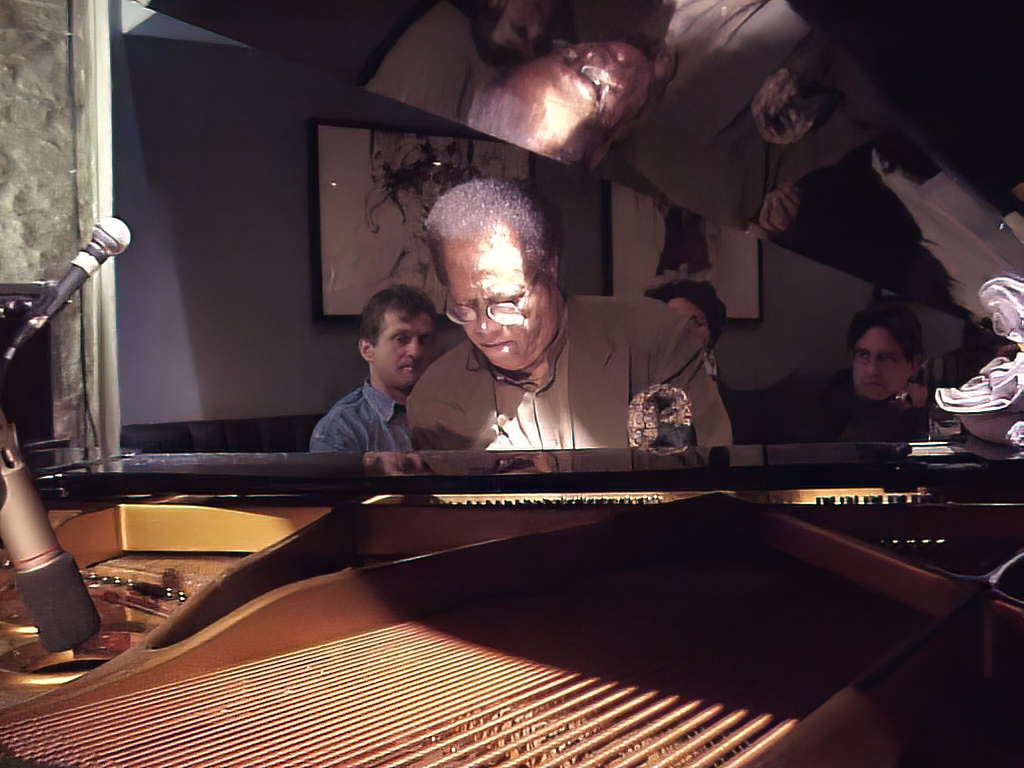
Cedar Anthony Walton Jr. (January 17, 1934 – August 19, 2013) was an American hard bop jazz pianist. He came to prominence as a member of drummer Art Blakey's band, The Jazz Messengers, before establishing a long career as a bandleader and composer. Several of his compositions have become jazz standards, including "Mosaic", "Bolivia", "Holy Land", "Mode for Joe" and "Ugetsu/Fantasy in D".
Walton was born and grew up in Dallas, Texas. His mother Ruth, an aspiring concert pianist, was his first teacher, and took him to jazz performances around Dallas. Walton cited Nat King Cole, Bud Powell, Thelonious Monk and Art Tatum as his major influences on piano. He began emulating these artists' recordings from an early age.
After briefly attending Dillard University in New Orleans, he entered the University of Denver as a composition major, but was encouraged to switch to a music-education program with the goal of a career in the local public school system. This later proved extremely useful, as he learned to play and arrange for various instruments, a talent he honed with Art Blakey's Jazz Messengers.
Walton was tempted by the promise of New York City through his associations with John Coltrane, Charlie Parker, and Richie Powell, whom he met at after-hours sessions around Denver, Colorado. In 1955, he decided to leave school and drove with a friend to New York City. He quickly got recognition from Johnny Garry, who ran Birdland at the time.
Walton was drafted into the U.S. Army and stationed in Germany, cutting short his rising status in the after-hours jazz scene. In the Army he played with musicians Leo Wright, Don Ellis and Eddie Harris. On his discharge after two years, he picked up where he left off, playing as a sideman with Kenny Dorham, on whose 1958 album This Is the Moment!, he made his recording debut. He joined the Jazztet led by Benny Golson and Art Farmer and played with them from 1958 to 1961. In April 1959 he recorded an alternate take of "Giant Steps" with John Coltrane, though he did not solo. In the early 1960s Walton joined Art Blakey's Jazz Messengers as a pianist-arranger (on the same day Freddie Hubbard joined the group), where, for the next three years, he wrote and arranged such originals as "Ugetsu" and "Mosaic".[citation needed]
He left the Messengers in 1964 and by the late 1960s was part of the house rhythm section at Prestige Records. In addition to releasing his own recordings there, he recorded with Sonny Criss, Pat Martino, Eric Kloss, and Charles McPherson. For a year, he was Abbey Lincoln's accompanist, and recorded with Lee Morgan from 1966 to 1968. In the mid-1970s he led the funk group Mobius. He arranged and recorded for Etta James from the mid-1990s on, helping her win a Grammy Award for Best Jazz Vocal Album for Mystery Lady: Songs of Billie Holiday (RCA Victor) in 1994.
Many of Walton's compositions have become jazz standards, including "Firm Roots", "Bolivia" (perhaps his best known), "Holy Land", "Mode for Joe" and "Cedar's Blues". One of his oldest compositions is "Fantasy in D", recorded as "Ugetsu" by Art Blakey in 1963, and as "Polar AC" by Freddie Hubbard, first in 1971.
In January 2010, Walton was inducted as a National Endowment for the Arts Jazz Master.
Hub AI
Cedar Walton AI simulator
(@Cedar Walton_simulator)
Cedar Walton
Cedar Anthony Walton Jr. (January 17, 1934 – August 19, 2013) was an American hard bop jazz pianist. He came to prominence as a member of drummer Art Blakey's band, The Jazz Messengers, before establishing a long career as a bandleader and composer. Several of his compositions have become jazz standards, including "Mosaic", "Bolivia", "Holy Land", "Mode for Joe" and "Ugetsu/Fantasy in D".
Walton was born and grew up in Dallas, Texas. His mother Ruth, an aspiring concert pianist, was his first teacher, and took him to jazz performances around Dallas. Walton cited Nat King Cole, Bud Powell, Thelonious Monk and Art Tatum as his major influences on piano. He began emulating these artists' recordings from an early age.
After briefly attending Dillard University in New Orleans, he entered the University of Denver as a composition major, but was encouraged to switch to a music-education program with the goal of a career in the local public school system. This later proved extremely useful, as he learned to play and arrange for various instruments, a talent he honed with Art Blakey's Jazz Messengers.
Walton was tempted by the promise of New York City through his associations with John Coltrane, Charlie Parker, and Richie Powell, whom he met at after-hours sessions around Denver, Colorado. In 1955, he decided to leave school and drove with a friend to New York City. He quickly got recognition from Johnny Garry, who ran Birdland at the time.
Walton was drafted into the U.S. Army and stationed in Germany, cutting short his rising status in the after-hours jazz scene. In the Army he played with musicians Leo Wright, Don Ellis and Eddie Harris. On his discharge after two years, he picked up where he left off, playing as a sideman with Kenny Dorham, on whose 1958 album This Is the Moment!, he made his recording debut. He joined the Jazztet led by Benny Golson and Art Farmer and played with them from 1958 to 1961. In April 1959 he recorded an alternate take of "Giant Steps" with John Coltrane, though he did not solo. In the early 1960s Walton joined Art Blakey's Jazz Messengers as a pianist-arranger (on the same day Freddie Hubbard joined the group), where, for the next three years, he wrote and arranged such originals as "Ugetsu" and "Mosaic".[citation needed]
He left the Messengers in 1964 and by the late 1960s was part of the house rhythm section at Prestige Records. In addition to releasing his own recordings there, he recorded with Sonny Criss, Pat Martino, Eric Kloss, and Charles McPherson. For a year, he was Abbey Lincoln's accompanist, and recorded with Lee Morgan from 1966 to 1968. In the mid-1970s he led the funk group Mobius. He arranged and recorded for Etta James from the mid-1990s on, helping her win a Grammy Award for Best Jazz Vocal Album for Mystery Lady: Songs of Billie Holiday (RCA Victor) in 1994.
Many of Walton's compositions have become jazz standards, including "Firm Roots", "Bolivia" (perhaps his best known), "Holy Land", "Mode for Joe" and "Cedar's Blues". One of his oldest compositions is "Fantasy in D", recorded as "Ugetsu" by Art Blakey in 1963, and as "Polar AC" by Freddie Hubbard, first in 1971.
In January 2010, Walton was inducted as a National Endowment for the Arts Jazz Master.
Recent media