



Community hub
Recent from talks
Knowledge base stats:
Talk channels stats:
Members stats:
Cesare Pavese
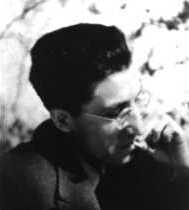
Cesare Pavese (UK: /pæˈveɪzeɪ, -zi/ pav-AY-zay, -zee; Italian: [ˈtʃeːzare paˈveːze, ˈtʃɛː-, -eːse]; 9 September 1908 – 27 August 1950) was an Italian novelist, poet, short story writer, translator, literary critic, and essayist. He is often referred to as one of the most influential Italian writers of his time.
Pavese was reportedly apolitical in the 1930s, but he was moving in antifascist circles. He served a short sentence as a political prisoner. Though eligible for drafting into the Italian Armed Forces during World War II, he did not see any active service. He spent part of the war hospitalized due to asthma. Many of his friends in Turin joined the partisans, but Pavese took no part in the armed struggle in the vicinity of the city. After the war, Pavese joined the Italian Communist Party and worked on the party's newspaper, L'Unità. Toward the end of his life, he was suffering from depression and political disillusionment. He committed suicide by an overdose of barbiturates.
Cesare Pavese was born in Santo Stefano Belbo, in the province of Cuneo. It was the village where his father was born and where the family returned for the summer holidays each year. He started primary school in Santo Stefano Belbo, but the rest of his education was in schools in Turin.
He attended Liceo Classico Massimo d'Azeglio in Turin for his sixth form/senior high school studies. His most important teacher at the time was Augusto Monti, writer and educator, whose writing style attempted to be devoid of all rhetoric.
As a young man of letters, Pavese had a particular interest in English-language literature, graduating from the University of Turin with a thesis on the poetry of Walt Whitman. Among his mentors at the university was Leone Ginzburg, an expert on Russian literature and literary critic, husband of the writer Natalia Ginzburg and father of the future historian Carlo Ginzburg. In those years, Pavese translated both classic and recent American and British authors that were then new to the Italian public.
Pavese, an apolitical person in highly politicized times, moved in antifascist circles. In 1935, he was arrested and convicted for having letters from a political prisoner. After a few months in prison, he was sent into "confino", internal exile in Southern Italy, the commonly used sentence for those guilty of lesser political crimes. (Carlo Levi and Leone Ginzburg, also from Turin, were similarly sent into confino.) After a year spent in the Calabrian village of Brancaleone, Pavese returned to Turin, where he worked for the left-wing publisher Giulio Einaudi as editor and translator. Natalia Ginzburg also worked there.
Pavese was living in Rome when he was called up into the fascist army, but because of his asthma, he spent six months in a military hospital. When he returned to Turin, German troops occupied the streets, and most of his friends had left to fight as partisans. Pavese fled to the hills around Serralunga di Crea, near Casale Monferrato. He took no part in the armed struggle taking place in that area. During his years in Turin, he was the mentor of the young writer and translator Fernanda Pivano, his former student at the Liceo D'Azeglio. Pavese gave her the American edition of Spoon River Anthology, which came out in Pivano's Italian translation in 1943.
After World War II, Pavese joined the Italian Communist Party and worked on the party's newspaper, L'Unità. The bulk of his work was published during this time. Toward the end of his life, he would frequently visit Le Langhe, the area where he was born, where he found great solace. Depression, the failure of a brief love affair with the actress Constance Dowling, to whom his last novel and one of his last poems ("Death will come and she'll have your eyes") were dedicated, and political disillusionment led him to his suicide by an overdose of barbiturates in 1950. That year, he had won the Strega Prize for La Bella Estate, comprising three novellas: 'La tenda', written in 1940, 'Il diavolo sulle colline' (1948) and 'Tra donne sole' (1949).
Hub AI
Cesare Pavese AI simulator
(@Cesare Pavese_simulator)
Cesare Pavese
Cesare Pavese (UK: /pæˈveɪzeɪ, -zi/ pav-AY-zay, -zee; Italian: [ˈtʃeːzare paˈveːze, ˈtʃɛː-, -eːse]; 9 September 1908 – 27 August 1950) was an Italian novelist, poet, short story writer, translator, literary critic, and essayist. He is often referred to as one of the most influential Italian writers of his time.
Pavese was reportedly apolitical in the 1930s, but he was moving in antifascist circles. He served a short sentence as a political prisoner. Though eligible for drafting into the Italian Armed Forces during World War II, he did not see any active service. He spent part of the war hospitalized due to asthma. Many of his friends in Turin joined the partisans, but Pavese took no part in the armed struggle in the vicinity of the city. After the war, Pavese joined the Italian Communist Party and worked on the party's newspaper, L'Unità. Toward the end of his life, he was suffering from depression and political disillusionment. He committed suicide by an overdose of barbiturates.
Cesare Pavese was born in Santo Stefano Belbo, in the province of Cuneo. It was the village where his father was born and where the family returned for the summer holidays each year. He started primary school in Santo Stefano Belbo, but the rest of his education was in schools in Turin.
He attended Liceo Classico Massimo d'Azeglio in Turin for his sixth form/senior high school studies. His most important teacher at the time was Augusto Monti, writer and educator, whose writing style attempted to be devoid of all rhetoric.
As a young man of letters, Pavese had a particular interest in English-language literature, graduating from the University of Turin with a thesis on the poetry of Walt Whitman. Among his mentors at the university was Leone Ginzburg, an expert on Russian literature and literary critic, husband of the writer Natalia Ginzburg and father of the future historian Carlo Ginzburg. In those years, Pavese translated both classic and recent American and British authors that were then new to the Italian public.
Pavese, an apolitical person in highly politicized times, moved in antifascist circles. In 1935, he was arrested and convicted for having letters from a political prisoner. After a few months in prison, he was sent into "confino", internal exile in Southern Italy, the commonly used sentence for those guilty of lesser political crimes. (Carlo Levi and Leone Ginzburg, also from Turin, were similarly sent into confino.) After a year spent in the Calabrian village of Brancaleone, Pavese returned to Turin, where he worked for the left-wing publisher Giulio Einaudi as editor and translator. Natalia Ginzburg also worked there.
Pavese was living in Rome when he was called up into the fascist army, but because of his asthma, he spent six months in a military hospital. When he returned to Turin, German troops occupied the streets, and most of his friends had left to fight as partisans. Pavese fled to the hills around Serralunga di Crea, near Casale Monferrato. He took no part in the armed struggle taking place in that area. During his years in Turin, he was the mentor of the young writer and translator Fernanda Pivano, his former student at the Liceo D'Azeglio. Pavese gave her the American edition of Spoon River Anthology, which came out in Pivano's Italian translation in 1943.
After World War II, Pavese joined the Italian Communist Party and worked on the party's newspaper, L'Unità. The bulk of his work was published during this time. Toward the end of his life, he would frequently visit Le Langhe, the area where he was born, where he found great solace. Depression, the failure of a brief love affair with the actress Constance Dowling, to whom his last novel and one of his last poems ("Death will come and she'll have your eyes") were dedicated, and political disillusionment led him to his suicide by an overdose of barbiturates in 1950. That year, he had won the Strega Prize for La Bella Estate, comprising three novellas: 'La tenda', written in 1940, 'Il diavolo sulle colline' (1948) and 'Tra donne sole' (1949).